
How can teams rapidly transform ideas into functional apps? Vibe solutioning blends rapid prototyping, natural language prompts, and iterative workflows, helping teams test, adapt, and launch projects faster without stalling progress.
How do some teams turn a rough idea into a working app so quickly?
It starts at the very first step, which can shape a project's entire journey. According to McKinsey Digital, natural language workflows can cut early development time by up to 40 percent.
But what really sets fast-moving teams apart?
A lot of it comes down to vibe solutioning. By blending rapid prototyping, natural language prompts, and practical workflows, teams can experiment, iterate, and adapt without getting stuck in endless planning.
In this article, we’ll look at how these approaches play out in real development cycles.
Why Teams Lean Toward Prompt-Driven Development?
Enterprises face constant pressure to deliver production-ready applications faster. Teams juggle logic, security, data flows, and usability. And on top of that, deployment paths need to be predictable. So the challenge is finding a process that moves cleanly from idea to code to a full app and finally to real users.
That’s where vibe coding comes in. It allows developers to write in natural language or plain language while still generating functional code. The model can help generate new features, shape a full-stack app, and push projects toward production-ready builds. The process becomes smoother and easier to maintain.
The bonus? Teams with less programming experience can still contribute early. They refine the application manually later, but the heavy lift at the start becomes lighter. This frees time for business logic, interface adjustments, system checks, and meaningful collaboration.
From Prompt to Working Logic
Teams want a system that understands their prompt, grasps the desired outcome, and generates code they can test immediately. Even a simple request like:
“Create a Python function that reads a CSV file and updates the database.”
follows the same pattern.
A typical workflow looks like this:
- Shape the idea.
- Write a natural language prompt describing the function, interface, or system rule.
- Generate code with enough clarity to test.
- Refine the logic, adjust the functionality, and extend the features.
- Move toward deployment.
This loop speeds up early development while keeping room for manual control.
Community Insight
One Reddit user summed it up well:
“My prompt is almost my pair programmer now. I still write code, but the setup grind pretty much vanished.”
Applying Vibe Coding Across Project Teams
Vibe coding fits into existing workflows more naturally than many think.
Here’s how teams approach it:
1. Start with a clear prompt
A well-defined prompt helps the model understand the system, interface, logic, and user interactions. It also serves as a shared reference for the team.
2. Build the first version quickly
The initial version doesn’t need to be perfect. Treat it as a draft. This approach removes friction and gives the team something testable right away.
3. Strengthen functionality iteratively
Developers update code in small increments. They generate new features, refine functions, and clean up code structure, making it easier to scale the app over time.
4. Treat the model as a thinking partner
The model becomes a partner in shaping a vision, comparing ideas, reviewing logic, and testing approaches. Many developers say it changes how they rely on tools day to day.
A Practical Table for Daily Work
| Stage | Prompt Style | Output | Team Action |
|---|---|---|---|
| Planning | plain language | idea outline | refine scope |
| Early build | natural language | initial version of code | test logic |
| Growth stage | targeted prompt | new features | merge and review |
| Pre-launch | structured prompt | production ready updates | run security checks |
| Live stage | iterative prompt | adjustments for scale | track reliability |
This table keeps teams aligned and makes the prompt-driven development cycle tangible.
System Boundaries, Data Workflows, and Integration
Projects usually live inside larger systems. Teams often deal with authentication, databases, or device-specific constraints. That means they can’t rely solely on prompts. They still need to watch security, functionality, and integration closely.
When generating code, developers switch between interface logic, back-end structure, and supportive services. They want predictable system behavior and safe deployment paths.
The model helps teams think through each function, test data flows, and adjust code to fit the larger project. It bridges the gap between planning and deployment.
How Enterprises Apply Vibe Solutioning Patterns
Enterprises need reliable development cycles. Even a small mistake can slow business teams, customer services, or user experiences. That’s why they rely on prompt-driven workflows to generate code quickly without sacrificing reliability.
Rocket: A Vibe Solutioning Platform for Fast Project Cycles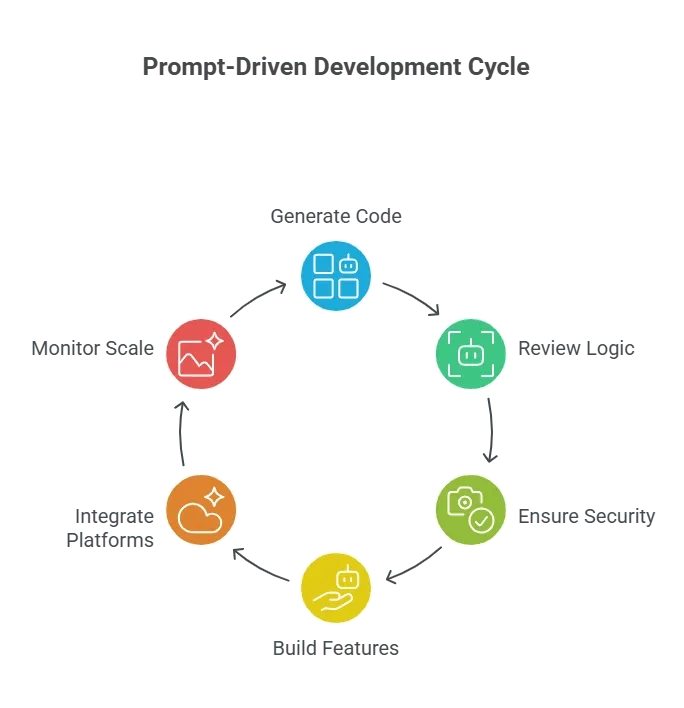
Rocket.new now functions as a full-vibe solutioning platform. It helps teams generate code, shape features, and move toward production-ready builds steadily.
Developers across 180+ countries use it to keep prompt-driven creation close to their daily workflow. The platform blends natural-language prompts with structured tools so teams can build full-stack apps, refine functionality, and deploy without breaking momentum.
Features
- Prompt-to-App Build Flow: Converts natural language prompts into working app foundations within minutes.
- Instant Feature Creation: Generates new features with short prompts without disturbing current logic.
- Interface Auto-Generation: Automatically builds UI components from the prompt to reduce repetitive setup.
- Security Defaults Built In: Prepares safe baseline settings for production ready deployment.
- Authentication Setup: Adds sign-in flows and access rules using guided prompts.
- Deployment Tools: Enables teams to deploy apps directly and manage updates quickly.
Investor and Industry Voices
Salesforce Ventures and Together Fund highlight how teams shorten development cycles using natural language prompts and low-code methods. Developers can create software faster without compromising security or business goals.
Many also reference AI researcher Andrej Karpathy, who describes models as assistants that predictably help structure code. These insights influence how teams approach future development workflows.
How Workflows Shift When Teams Use Prompt-Driven Cycles?
Teams notice two major changes:
First, speed. They move from idea to early code faster than ever. Planning habits shift because functions can be created, tested, and adjusted quickly.
Second, clarity. The model explains logic, outlines steps, and makes functionality easier to understand. Developers refine the work but use prompts to generate code, compare options, and tweak complex areas. Collaboration also improves because workflows are easier to share.
Security checks improve, too. Prompts highlight code risks and flag authentication gaps, making the review cycle lighter and faster.
This helps business teams stay in the loop, watch app progress sooner, and make informed decisions about features, deployment, and scale.
Building Across a Platform With Predictable Behavior
A strong platform keeps teams organized. It manages features, system rules, authentication, and data flow. It also ensures production-ready standards and long-term reliability.
Developers want code they can trust. They want to add features without breaking the app and grow it step by step using natural language prompts or structured updates.
This approach keeps planning, development, and deployment connected while maintaining the project vision.
Applying Vibe Solutioning at Scale
Teams across industries shape projects using natural language prompts, clear ideas, and vibe coding patterns. This approach helps create fully functional software quickly. Combining AI tools, low-code methods, and full-stack creation gives developers control and speed. Teams can build smarter, deliver faster, and scale with confidence.
Table of contents
- -Why Teams Lean Toward Prompt-Driven Development?
- -From Prompt to Working Logic
- -Community Insight
- -Applying Vibe Coding Across Project Teams
- -1. Start with a clear prompt
- -2. Build the first version quickly
- -3. Strengthen functionality iteratively
- -4. Treat the model as a thinking partner
- -A Practical Table for Daily Work
- -System Boundaries, Data Workflows, and Integration
- -How Enterprises Apply Vibe Solutioning Patterns
- -Rocket: A Vibe Solutioning Platform for Fast Project Cyclesimage (73).png
- -Features
- -Investor and Industry Voices
- -How Workflows Shift When Teams Use Prompt-Driven Cycles?
- -Building Across a Platform With Predictable Behavior
- -Applying Vibe Solutioning at Scale