
Rocket.new unifies competitor job data, identifies hiring signals, and converts them into a streamlined workflow, helping teams prioritize outreach, track market moves, and act quickly with data-driven insights in real time.
What makes scattered competitor signals actually useful for teams?
Teams stop chasing separate sources and bring everything into one place. When competitor job postings, LinkedIn posts, and G2 reviews are combined, patterns emerge.
Hiring trends reveal direction. Social posts hint at positioning. Reviews highlight real user pain. When all of this connects, decisions become faster and clearer.
According to McKinsey & Company, companies that use data-driven insights are 23 times more likely to acquire customers. That’s the kind of edge structured signals can bring in today’s fast-moving space.
This blog will show how to connect these signals and turn them into actions your team can actually use.
The problem with scattered competitor signals
Most product teams are not lacking data. They are dealing with too much noise. Information is everywhere, but it rarely connects. What looks like research often turns into a fragmented effort, and that slows everything down.
-
Job postings sit in one tab and show hiring direction
-
LinkedIn posts live elsewhere and hint at messaging or new launches
-
G2 reviews highlight user pain but stay disconnected from strategy
-
Teams keep switching between tools without clear conclusions
-
Signals lose meaning when viewed in isolation
-
Decisions slow down because insights are not structured
A hiring post might point to backend expansion.
A LinkedIn update might suggest a feature rollout. A review might highlight frustration. But when these stay disconnected, the bigger picture gets lost. This is where an AI app approach starts to matter, giving teams one system that connects everything and turns scattered signals into something they can actually use.
Why connecting signals changes everything?
When signals come together, random data starts to make sense. Separate updates might feel small on their own, but once connected, they reveal a clear direction.
-
A company hiring for “AI engineers” shows technical focus
-
Users complaining about missing automation highlight demand
-
A LinkedIn teaser about “upcoming features” hints at what’s next
-
Combined signals point toward a planned AI-driven feature rollout
Now this is no longer random. It becomes a pattern your team can act on.
This is where AI powered systems step in. They don’t just collect data. They structure it and turn raw input into something usable. That’s also why AI app builders are getting more attention. They go beyond building tools and help teams think clearly, move faster, and act with better context.
What Rocket.new actually does?
Rocket.new works as an all-in-one platform. It connects intelligence, context, and execution in the same environment. No switching tabs. No copying notes.
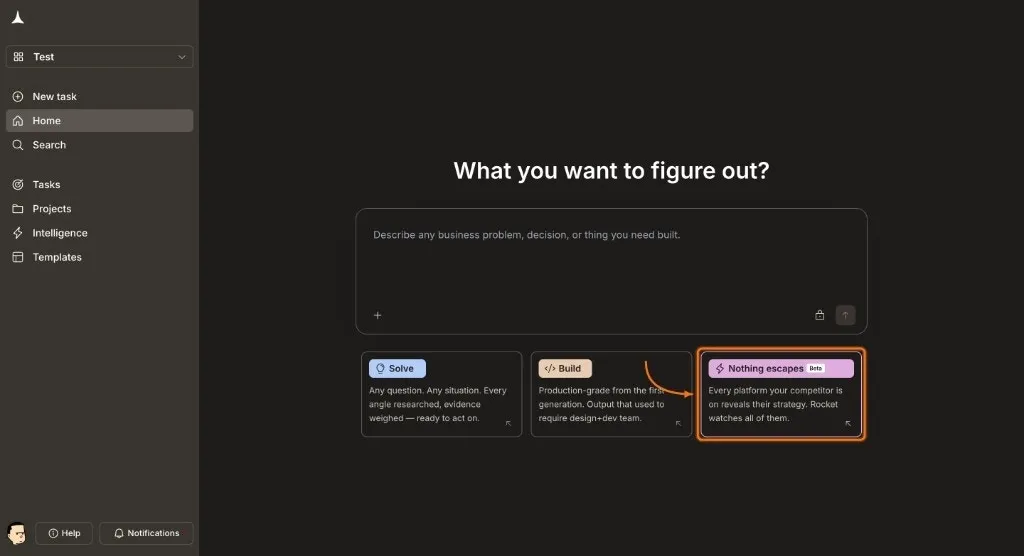 It’s built for teams that want clarity.
-
It gathers competitor signals
-
Turns them into structured insights
-
Helps build web apps and mobile apps based on those insights
This is where full-stack app building meets real market understanding. Instead of guessing what to build, teams use signals to create production-ready apps.
Turning job posts, LinkedIn updates, and reviews into one clear signal
So, how does the connection actually happen?
Rocket pulls data from multiple sources:
-
Job postings show hiring direction
-
LinkedIn posts reflect messaging and positioning
-
G2 reviews highlight user pain points
Then it maps everything into one structured brief. This is powered by AI tools and AI assistance that organize insights into usable formats.
From there, teams can move into app generation directly. That means going from signal to working app without delay.
Turning signals into apps your team can use
Here’s where things get interesting. Rocket does not stop at insights. It pushes toward app building.
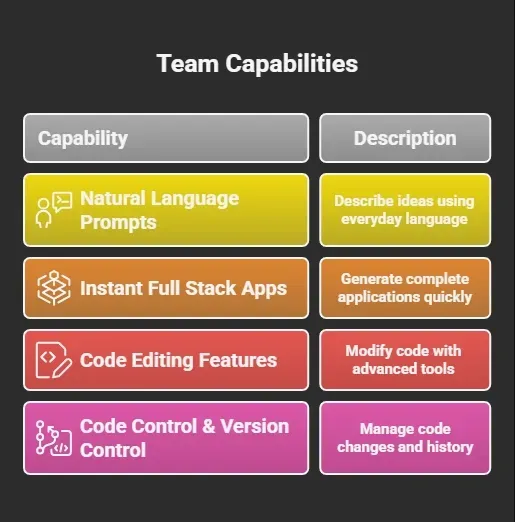 This is not just code generation. It’s structured creation.
The output is production ready code with backend support included and yes, you still get code ownership and code export options.
From idea to working product faster
Next, let’s talk speed. With Rocket, rapid prototyping becomes practical.
Instead of long cycles:
-
You get quick app generation
-
You test a working app
-
You refine using editable code
This works for both web and mobile use cases.
Teams can create:
-
dashboards
-
internal tools
-
user-facing web applications
All inside the same environment.
Feature breakdown from Rocket Intelligence
Rocket Intelligence is designed to turn scattered competitor data into something teams can actually use and act on.
It focuses on clarity, structure, and direct execution so teams don’t get stuck in analysis.
-
Signal collection: Rocket gathers competitor data from multiple channels like job postings, LinkedIn updates, and reviews. This gives teams a broader view of what others are building, hiring for, and talking about.
-
Structured insights: Instead of raw data, it organizes everything into clear summaries. Teams can quickly understand trends, patterns, and possible opportunities without digging through noise.
-
AI powered workflows: Insights are not left hanging. They move directly into workflows where teams can shape ideas and translate them into actual app logic and plans.
-
Build-ready output: Once insights are clear, teams can move into full stack generation and start building immediately without wasting time on setup.
-
Collaboration and access: With built-in collaboration features and access controls, everyone stays aligned and works with the same context.
All of this keeps teams focused on action, not just analysis, and helps them move from insight to execution much faster.
Key features
Rocket focuses on keeping things simple so teams can move from idea to execution without confusion.
Instead of juggling tools, everything sits in one place with features that directly support building and launching apps.
Let’s break it down simply:
| Feature | What it does |
|---|---|
| AI powered app builder | Turns ideas into apps quickly |
| github integration | Syncs with existing workflows |
| custom domains | Helps deploy apps live |
| deployment workflows | Makes releases smooth |
| code download | Gives full access to code |
| custom AI agents | Automates repetitive tasks |
This setup supports both web apps and mobile apps, making it easier for teams to build, launch, and scale without switching between tools.
Building for different teams and users
Rocket is designed for flexibility, so different types of users can work in their own way without friction. It doesn’t limit usage to developers. It opens the door for broader participation across teams.
-
Non technical users can use natural language to describe what they want
-
Developers can refine and improve things with code editing
-
Teams can maintain full backend control for deeper customization
This balance works well for:
-
Small teams that need speed and simplicity
-
Growing startups building and testing ideas
-
Web first teams focused on quick releases
Even casual users can get started with minimal setup and still create something useful without feeling stuck.
Pricing flexibility and scalability
Rocket keeps pricing simple so teams can start small and grow without friction. It gives room to test ideas first and then scale when things start working.
Rocket offers a free tier to get started.
Then it scales with paid plans:
-
Entry paid plans for individuals
-
Advanced paid plans for teams
-
Enterprise paid plans with dedicated support
It also includes:
-
custom domain support for live deployments
-
unlimited users in higher paid plans
-
flexible credit based usage based on needs
You can always contact sales for custom requirements. This setup keeps cost efficiency in place while giving teams the flexibility to scale at their own pace..
Building internal tools and production apps
Rocket is widely used by teams that want to build fast without compromising on structure. It works well for both internal needs and user-facing products, which makes it practical for different use cases.
A lot of teams use Rocket for internal tools because it handles:
-
Complex workflows: It supports complex business logic, so teams can build tools that match real operational needs
-
Reliable backend layer: With built-in backend support, apps don’t need separate setup for data and processing
-
Clear and structured systems: Teams can create organized workflows that are easy to manage and scale
And it still delivers generated apps that are ready to use without heavy setup.
For external use:
-
App distribution options: Apps can be launched on app stores for wider reach
-
Live hosting: Teams can use custom domains to run apps directly on the web
This makes Rocket suitable for both web apps and mobile apps, covering internal operations as well as customer-facing products in one flow.
Why this approach works better?
After that, everything becomes simpler.
Instead of chasing data:
-
Teams act on structured insights
-
Apps reflect real demand
-
Decisions feel grounded
This is where AI app builders show their value. Not just tools, but systems that connect thinking with execution.
Bringing intelligence and app building together
Rocket brings everything into one clear workflow so teams don’t have to switch between thinking and building. It keeps the process simple and focused on action.
Rocket combines:
-
Intelligence: Structured insights guide what to build and why
-
App building: Teams move from ideas to actual apps without delays
-
Execution: Everything flows in one place, from planning to launch
You go from signal to a full stack web solution quickly.
With real code output, code export, and strong GitHub integration, teams stay flexible and in control, and yes, it does a really solid job at keeping everything aligned and moving forward.
Turning scattered competitor signals into clear action
Teams often deal with scattered insights across multiple tools. Job postings, social updates, and reviews stay separate, which slows decisions and creates confusion. Rocket brings everything into one system where signals are structured and usable. It helps teams move from raw input to actual building without wasting time.
When signals come together, clarity improves. Teams act faster and build apps that match real demand. Instead of reacting late, they move early with better direction. The result is smarter decisions, quicker execution, and products that feel aligned with what users actually need.
Try Rocket.new to turn competitor signals into apps your team can actually build and use.
Table of contents
- -The problem with scattered competitor signals
- -Why connecting signals changes everything?
- -What Rocket.new actually does?
- -Turning job posts, LinkedIn updates, and reviews into one clear signal
- -Turning signals into apps your team can use
- -From idea to working product faster
- -Feature breakdown from Rocket Intelligence
- -Key features
- -Building for different teams and users
- -Pricing flexibility and scalability
- -Building internal tools and production apps
- -Why this approach works better?
- -Bringing intelligence and app building together
- -Turning scattered competitor signals into clear action