
Rocket.new aggregates data from competitor platforms, synthesizes patterns, and outputs a single strategic signal. Teams use it to prioritize features, refine positioning, and accelerate product, marketing, and growth decisions with clarity.
What if one system could turn 15 competitor platforms into a single clear signal?
That’s exactly what Rocket.new is designed to do. Instead of jumping between scattered dashboards, it brings research, intelligence, and execution into one place. The shift toward connected systems is already happening fast
The global big data analytics market is projected to reach $655.53 billion by 2029, showing how strongly businesses rely on data for decision-making.
This blog will show how Rocket.new connects competitor platforms, simplifies decisions, and helps teams build with clarity.
The problem with scattered competitor tools
Most businesses don’t lack tools. They have too many. Teams jump between separate tools for research, analytics, dashboards, and execution. That creates a Gap between what data says and what gets built.
Most teams rely on 10 to 15 tools just to track competitors. Each tool shows a piece of the market. None shows the full arc. So decisions become a guess. And when decisions are based on a guess, teams risk building the wrong thing.
That’s where frustration starts.
-
Research lives in one tool
-
Code generation happens somewhere else
-
Strategy is discussed in meetings
-
Execution happens in yet another platform
No shared context. No single signal. Just noise.
When tools stay disconnected, thinking breaks, execution slows down, and the business ends up moving forward without a clear direction.
What Rocket.new changes?
Rocket.new, often referred to as Rocket 1.0, brings everything into one platform. It connects research, intelligence, and execution into a single system.
Instead of switching tools, teams work inside one flow.
-
Research feeds intelligence
-
Intelligence drives strategy
-
Strategy leads directly to build
That’s the core idea behind vibe solutioning. Not just building apps, but solving business questions with context.
Rocket 1.0 positions itself as the world’s first vibe solutioning platform. It’s not just another entry in the long list of AI tools. It connects thinking and execution in a way most tools don’t.
What is vibe solutioning and why it matters
Vibe solutioning is about turning a business question into a working app with clarity.
Instead of asking, “What should we build?”, teams start with context. Then they move into vibe coding, where natural language and intelligence guide the process.
This approach is different from the first generation of tools that focused only on code generation. Those tools helped write a line of code faster. But they didn’t help decide if that code was worth building.
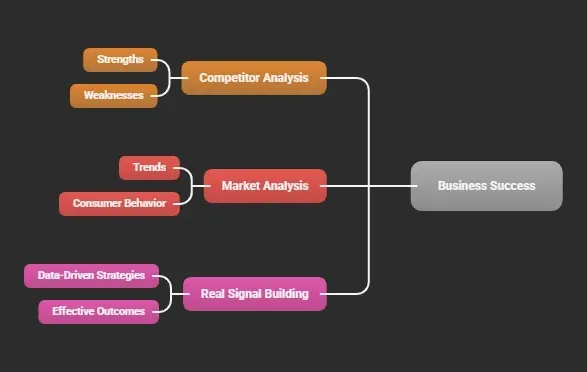 That’s why Rocket 1.0 calls itself the first vibe solutioning platform.
Three capabilities that drive Rocket.new
So, what actually makes Rocket.new work in a practical sense?
It comes down to three core capabilities that connect research, intelligence, and execution into one smooth flow. These aren’t random features. They form the backbone of the entire system and define how teams move from idea to build without confusion.
1. Continuous competitive intelligence
Rocket collects data from competitors, job postings, and product updates. It turns that into structured reports and weekly briefs. This creates continuous competitive intelligence instead of one-time research.
2. Shared context across teams
Everyone works from the same context. Product teams, solo founders, and co-founder groups all see the same signals. No confusion. No repeated research.
3. Direct execution through vibe coding
Once the insight is clear, execution begins. Teams move straight into build. No switching tools. No delay.
When these three capabilities work together, teams stop guessing and start building with clarity, speed, and purpose.
How Rocket.new turns competitors into one signal
Rocket.new takes inputs from multiple competitors. It processes their features, updates, pricing, and positioning. Then it merges that data into one clear signal.
-
Collects updates from multiple competitors across the market
-
Tracks changes in features, pricing, and positioning
-
Connects patterns through continuous research and intelligence
-
Filters noise and highlights what actually matters
-
Converts scattered inputs into one unified view
So instead of 15 dashboards, you get one view.
That view answers a simple business question: “What is happening in the market right now?”
This is not a guess. It’s based on real data and continuous research.
When everything is brought together like this, teams stop reacting to noise and start building based on clear, reliable signals.
How does the system work?
Next, let’s look at the flow from raw competitor data to actual execution.
Rocket.new keeps the process simple, so teams can move from research to launch without losing context in between.
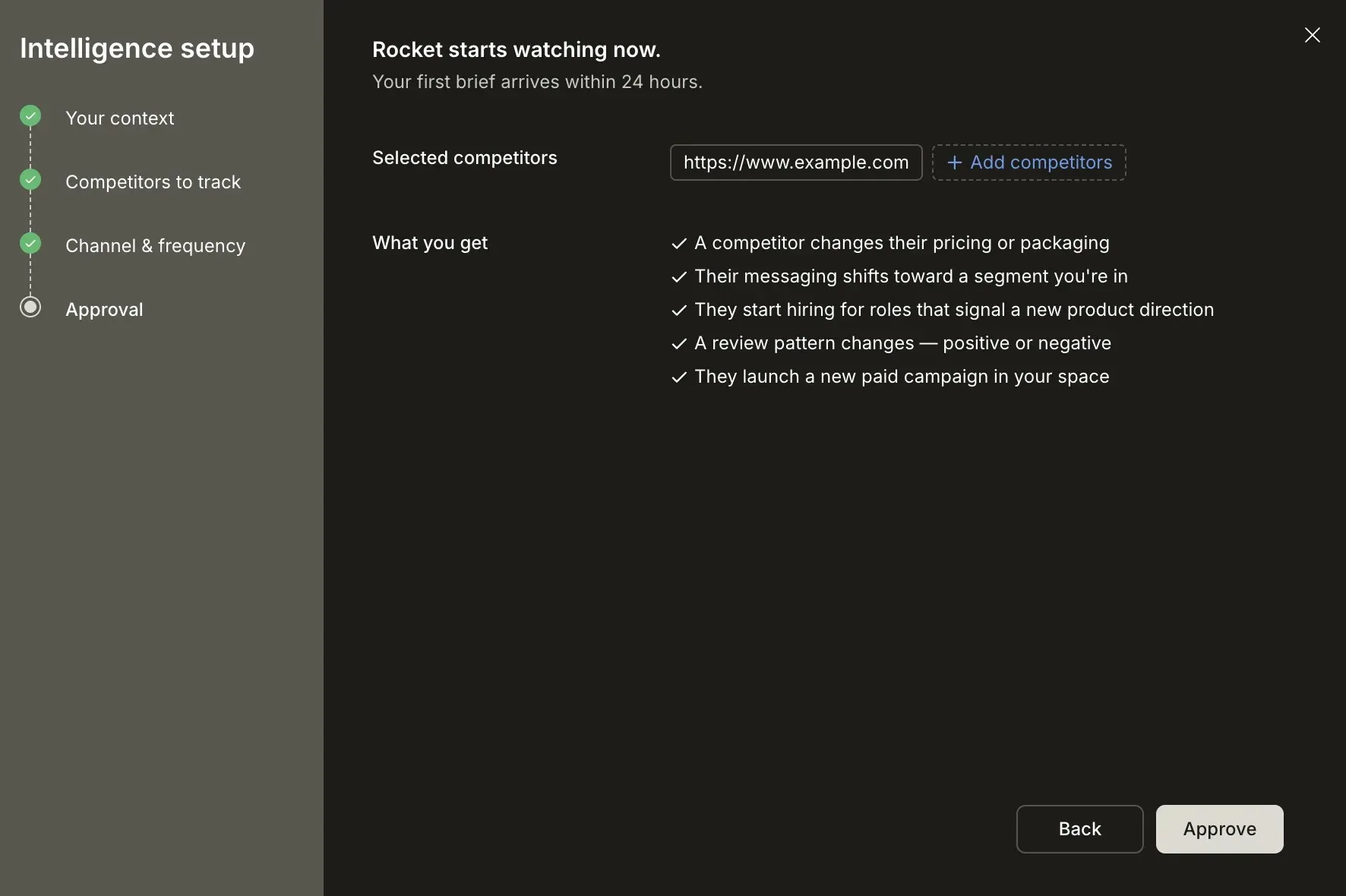
Step 1: Research collection
Rocket gathers data from competitors, web apps, mobile trends, and job postings. This builds a strong base.
Step 2: Intelligence processing
The system organizes that data into insights. It connects patterns across the market.
Step 3: Context creation
All insights are shared across teams. Everyone sees the same story.
Step 4: Build starts
Once clarity is there, the build starts. Teams move into vibe coding and begin creating apps.
Step 5: Execution and launch
Apps are developed, tested, and prepared for launch. Everything happens inside the same platform.
Closing note: This step-by-step flow keeps teams focused, reduces tool-switching, and turns competitor research into action without slowing the project down.
Features from Rocket Intelligence
-
AI powered research summaries
-
Competitive research dashboards
-
Weekly briefs for market updates
-
Shared context for teams
-
Code generation with natural language
-
Version control for projects
-
Export options like zip file
-
Support for production grade apps
-
Tools for performance optimization
-
Responsive UI generation
These features help teams build web apps and mobile apps without juggling separate tools.
Traditional workflow vs Rocket workflow
When you compare the usual way of working with how Rocket.new operates, the difference becomes very clear. One relies on scattered tools and disconnected steps. The other brings everything into one flow.
| Aspect | Traditional Tools | Rocket.new |
|---|---|---|
| Research | Multiple tools | One platform |
| Context | Scattered | Shared context |
| Execution | Separate tools | Integrated build |
| Code generation | Limited | AI powered |
| Decision making | Often a guess | Based on intelligence |
| Speed | Slow | Fast |
| Output | Fragmented | Production grade |
When research, context, and execution stay connected, teams move faster, make clearer decisions, and build with confidence instead of guesswork.
Why most teams struggle without this approach
Most businesses operate with fragmented systems. Research is done once. Then forgotten. Execution happens later with limited context.
This leads to:
-
Building the wrong thing
-
Missing market signals
-
Slow launch cycles
Solo founders feel this even more. They don’t have time to manage 10 tools. Rocket.new solves this by acting as a vibe solutioning platform that connects everything.
Rocket.new for builders and teams
It’s built for anyone involved in building, whether working solo or as part of a group. The structure stays the same, but the value shows up differently for each.
Rocket works for different groups:
Solo founders
Solo founders get one system to handle research, strategy, and build. Instead of juggling separate tools, they can move from idea to execution in one place. This saves time and keeps focus clear.
Teams
Teams benefit from shared context. Everyone sees the same intelligence, which keeps work aligned. No repeated research. No confusion between departments.
Co-founder groups
Co-founder setups gain clearer decision-making through intelligence. With the same context available to everyone, discussions become faster and more focused on action.
This makes Rocket 1.0 practical for real business scenarios, where clarity and speed matter every day.
From idea to app without friction
The journey from idea to a working app should feel smooth, not scattered. Let’s look at how this flow usually works and how Rocket.new simplifies it.
Let’s say a team wants to build web apps.
-
Do competitive research
-
Analyze data
-
Plan features
-
Start coding
-
Research happens inside the platform
-
Intelligence is generated automatically
-
Build starts immediately
Each step traditionally happens in a different tool, while Rocket.new brings them into one continuous flow. This reduces friction and speeds up execution.
When everything stays connected, teams spend less time switching tools and more time actually building something that m
The role of AI tools and code
This is where things start to feel more connected and purposeful. Rocket.new uses AI tools to support both thinking and execution, but it goes beyond just writing code.
It connects:
-
Intelligence
-
Strategy
-
Execution
So every line of code serves a purpose. Instead of random code generation, it focuses on meaningful builds.
When intelligence, strategy, and execution work together, teams don’t just write code, they build with clarity and direction.
Clarity replaces chaos in modern building
Most teams rely on separate tools, which creates confusion, delays, and poor decisions. Research stays scattered, and execution often lacks proper context. As a result, teams spend time switching tools instead of focusing on what actually matters. This leads to slow progress and increases the chances of building the wrong thing, even when the intent is right.
Rocket.new solves this by bringing intelligence, context, and execution into one system. How Rocket.new Turns Competitor Platforms into One Signal is about connecting thinking with execution so teams can build production-grade apps with clarity and purpose.
If you want to stop guessing and start building with clear signals, Rocket.new is worth trying for your next project.
Table of contents
- -The problem with scattered competitor tools
- -What Rocket.new changes?
- -What is vibe solutioning and why it matters
- -Three capabilities that drive Rocket.new
- -1\. Continuous competitive intelligence
- -2\. Shared context across teams
- -3\. Direct execution through vibe coding
- -How Rocket.new turns competitors into one signal
- -How does the system work?
- -Step 1: Research collection
- -Step 2: Intelligence processing
- -Step 3: Context creation
- -Step 4: Build starts
- -Step 5: Execution and launch
- -Features from Rocket Intelligence
- -Traditional workflow vs Rocket workflow
- -Why most teams struggle without this approach
- -Rocket.new for builders and teams
- -Solo founders
- -Teams
- -Co-founder groups
- -From idea to app without friction
- -The role of AI tools and code
- -Clarity replaces chaos in modern building