Sales teams lose high-stakes enterprise deals in the final 48 hours because their data is fragmented, their stakeholder maps are outdated, and competitor moves happen without warning. Rocket.new surfaces competitive signals, consolidates deal context, and maps buyer dynamics in one shared view so every team member walks into the final meeting prepared.
What Happens When Your Sales Team Walks Into the Final 48 Hours Blind?
What does your sales team actually know about a deal 48 hours before it closes?
-
Most teams know less than they think they do
-
Sales reps spend roughly 70% of their time on non-selling tasks, according to the Salesforce 2026 State of Sales report, and that includes scrambling through CRM records, chasing context from past calls, and piecing together data from eight or more tools
-
The final hours of a high-stakes enterprise deal are where all that missing preparation catches up with a sales org
So the real question is: what matters in those final hours, and where does the intelligence come from? This post walks through how AI-powered tools, specifically Rocket.new, change what a sales team sees, knows, and does before the biggest deals of the quarter close.
What Is AI-Powered Sales Intelligence?
AI-powered sales intelligence is the real-time consolidation of competitive signals, stakeholder data, and deal context into a single briefing that a sales team can act on before a high-stakes enterprise close.
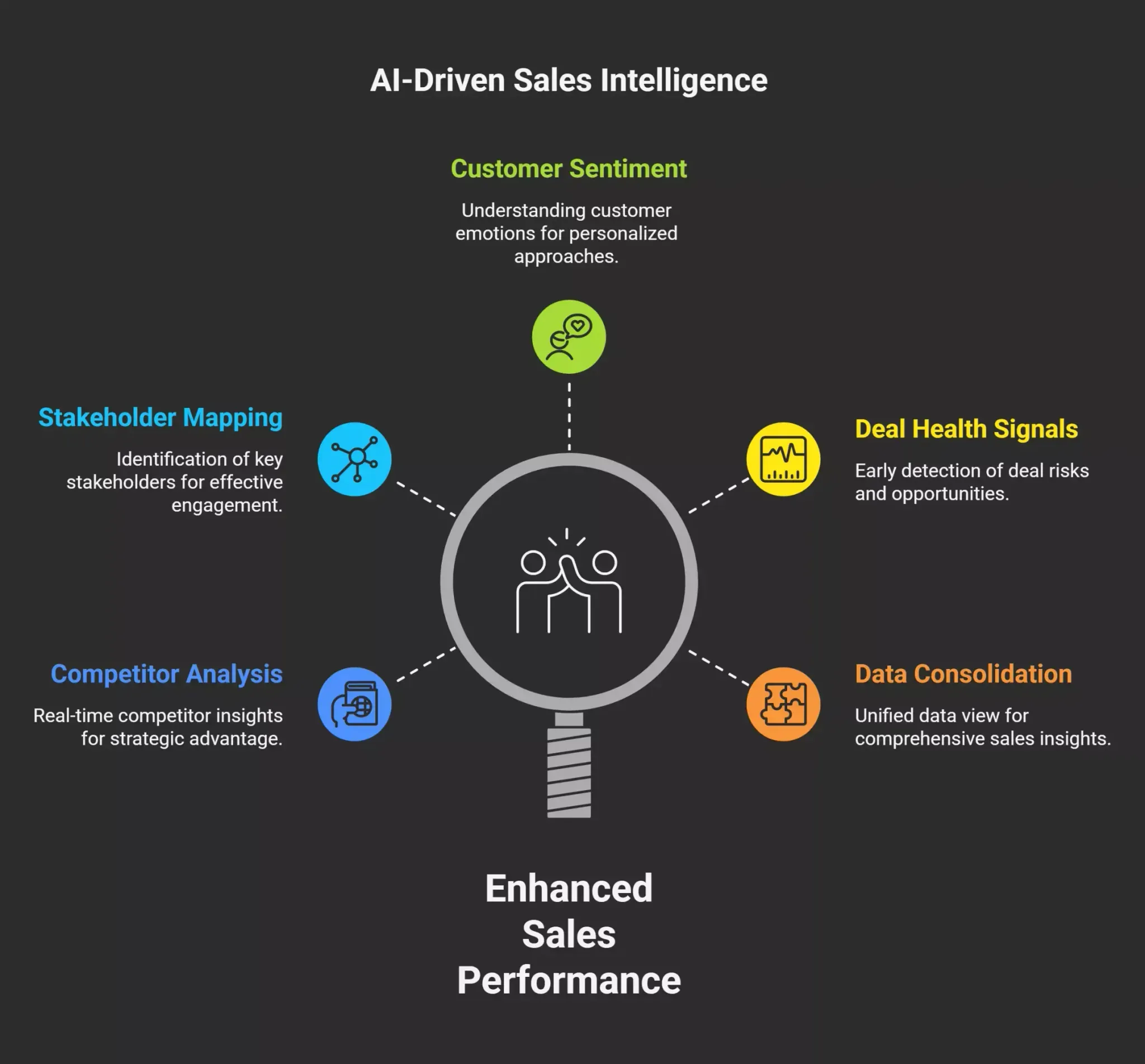 It includes:
-
Competitor pricing changes and product announcements were detected before the final meeting
-
Stakeholder maps identifying who signs, who blocks, and who still needs to be convinced
-
Customer sentiment pulled from call recordings and CRM history
-
Deal health signals flagging champions who went quiet or blockers who just became active
-
Consolidated data from scattered tools in one view, accessible to the full team
Sales teams that bring this kind of intelligence into the final 48 hours close at higher rates because they walk in with accurate context, not outdated assumptions. See how Rocket.new competitive intelligence supports enterprise sales →
Why the Last 48 Hours of a High-Stakes Deal Matter More Than the First 48 Days
Most sales leaders talk about pipeline building. They talk about prospecting. They talk about lead scoring and go-to-market strategy. They talk about customers and how to reach decision makers. But the final 48 hours before an enterprise deal closes get surprisingly little focus in most business planning.
-
Enterprise buyers often use competing bids in the final hours of a deal to pressure pricing and extract last-minute concessions
-
Decision makers who stayed quiet during the sales cycle sometimes surface objections only at the end, when the contract is on the table
-
Competitors monitor high-stakes deals, too, and they time their counter-moves for the moments when your team is most vulnerable
The difference between winning and losing at this stage rarely comes down to product quality. It comes down to data, to knowing which actual decision makers still have unresolved concerns, to understanding what competitors just launched or changed on their pricing pages, and to having accurate data on what the buyer's organization actually cares about right now.
Sales leaders who require stakeholder mapping before every big deal report shorter sales cycles and fewer surprises during the sales process. That matters. Effective deal preparation means aligning multiple stakeholders before the conversation starts, and most teams skip this because the manual research takes too long.
How Sales Reps Actually Spend Their Pre-Close Time
Sales professionals today use an average of eight tools to close deals. That fragmentation leads to lost context and lost focus when a rep switches between platforms every few minutes.
-
Admin work (CRM entry, notes, approvals) takes 20% of a rep's week
-
Prospect research takes 15%, mostly manual
-
Only 28% of total work time goes to active selling
| Activity | % of Rep's Week | Impact on Deal Prep |
|---|---|---|
| CRM data entry and admin | 20% | Pulls reps away from customer engagement |
| Internal meetings | 15% | Often not tied to active deals |
| Prospect and company research | 15% | Manual research across scattered sources |
| Email and inbox management | 10% | Reactive, not strategic |
| Scheduling and coordination | 12% | Adds friction without adding data |
| Active selling and deal work | 28% | The only revenue-generating time |
Sales reps who do prepare thoroughly spend 1 to 3 hours per account on manual research. Multiply that across a pipeline of deals approaching close, and the math breaks down fast. Most teams enter the final 48 hours of a high-stakes deal with incomplete data, outdated competitive intelligence, and a stakeholder map that was last updated weeks ago.
Teams using AI in the past year saw 83% revenue growth versus 66% for teams that did not, according to Salesforce data analyzed by Landbase. The revenue growth gap is real and accelerating, and the difference is most visible in how teams prepare for their biggest deals.
What AI-Powered Deal Intelligence Looks Like Before a Close
AI tools do not replace thinking. They replace the hours of manual research, data consolidation, and signal monitoring that most teams cannot do manually at the speed a 48-hour countdown demands.
The thinking that matters at this stage is strategic thinking: which customers need attention, which decision makers are still uncommitted, and what business context has changed since the last conversation. Companies using AI to handle the data work free up their team for higher-order thinking.
Stakeholder Mapping and Identifying Actual Decision Makers
-
AI-powered platforms map the buyer's organization to identify historical blockers and executive champions
-
They surface which decision makers have engaged with sales content and which have gone silent
-
Stakeholder mapping identifies the people who actually sign, the influencers who shape the conversation, and the blockers who can kill a deal in the final hours
Sales teams that understand who their actual decision makers are and where those decision makers stand can plan their final outreach with precision instead of guessing.
Product managers and product teams on the buyer side often have opinions about your solution that never reach the economic buyer unless someone surfaces them. Companies that map their customers' internal buying committees close at higher rates than companies that skip this step.
Competitive Intelligence Monitoring
-
The platform tracks changes in competitor pricing and feature launches from multiple sources
-
During the final hours before closing, AI monitors competitors' websites, pricing pages, hiring signals, and new feature launches
-
Sales teams use this data to synthesize live signals, protect margins, and counter competitor interference
Enterprise buyers regularly bring competitor quotes into final negotiations. If your sales team does not know that a competitor dropped their price or launched a new feature yesterday, the team walks into that conversation without the research and focus it needs. Competitive intelligence at this stage is table stakes for companies using AI tools.
Customer Sentiment Analysis
-
AI analyzes past sales calls to identify sentiment shifts and buying signals that human review would miss
-
Historical market data helps sales teams shift negotiations from emotional to evidence-based discussions
-
Customers share frustrations and priorities during calls that AI captures and categorizes
Customer success teams often hold data about the buyer's satisfaction, support ticket history, and usage patterns. AI agents pull this into the deal brief automatically.
Data Consolidation Across Scattered Tools
-
AI-powered deal briefs consolidate scattered data from CRM records, past conversations, market intelligence, and customer interactions into a single view
-
Sales teams access insights using natural language queries, not complex CRM dashboards
This is how AI works in practice for a sales org: instead of spending 45 minutes piecing together notes from Salesforce, Gong, LinkedIn articles, Slack threads, and email chains, the rep gets a brief with the answer. That is the difference between walking into a high-stakes negotiation prepared versus walking in with a general sense of the account.
The Preparation Gap Most Teams Still Have
Most teams think they prepare well. The data says otherwise. Sales teams often struggle with last-minute preparation before meetings, which results in longer sales cycles and lower close rates. Customers expect their vendors to know their business, their strategy, and their market challenges before the final meeting. Companies that fail to deliver that level of preparation lose to companies that do.
-
Sales reps spend roughly 70% of their time on non-selling tasks, which include digging through CRM records and trying to piece together what happened on the last call
-
Product marketing materials are often outdated by the time a deal reaches the final stage
-
Revenue operations teams build dashboards, but the dashboards do not tell a rep what to say to a CFO who just received a competing bid
The real problem is not a shortage of data, it is a shortage of context.
The problem-solving here is not about more data. It is about the right data at the right moment, consolidated and contextualized so a human can act on it. That is what separates AI adoption that generates revenue growth from AI adoption that just generates more dashboards nobody reads. When customers talk to a well-prepared rep, they can tell.
When they talk to a rep who just skimmed the CRM notes five minutes before the call, they can tell that too. The thinking behind your strategy shows in the conversation.
Preparation is a cross-functional problem, not just a sales problem.
Marketing leaders and sales leaders both feel this gap. Marketing leaders produce content and research. Sales leaders need that research distilled into something a rep can use during a live call. Cross-functional teams that bridge this gap, connecting product teams, customer success, revenue operations, and sales, close deals faster.
Companies that keep these functions siloed see slower growth. The business outcome is measurable: companies using AI for pre-close strategy report higher win rates and shorter cycles.
How AI Agents and Lead Scoring Reshape Pre-Close Strategy
AI agents and AI-powered lead scoring are not just for top-of-funnel work. They matter during the final hours of a deal, too.
-
AI-powered lead scoring analyzes behavioral signals and firmographic data to help sales teams prioritize which prospects deserve immediate attention
-
Agentic AI systems can identify disengaged prospects, flagging accounts where a champion has gone quiet or a blocker has started engaging with competitor content
-
Generative AI tools draft pre-call briefs, objection-handling scripts, and negotiation frameworks in seconds instead of hours
Sales professionals using AI daily are twice as likely to exceed their targets because AI tools free them from administrative tasks and give them more time for direct engagement with customers. In the AI era, the sales team with better data and better competitive intelligence wins.
Lead scoring at this stage looks different from lead scoring at the top of the funnel. It is about deal health, not lead quality. Agentic AI reads the signals, calling out which deals are at risk and which decision makers need attention, so sales leaders can focus their coaching on the deals that matter most.
Companies using AI for deal scoring talk about it as a shift in strategy: less guesswork, more data-backed decisions. Generative AI also helps product managers and product teams contribute to the deal strategy.
A product roadmap question from the buyer?
AI pulls the relevant details from internal docs and formats a customer-centric response. When customers ask about specific features, the AI tools surface what matters without requiring a product team meeting. Using AI this way, companies give decision makers answers on the spot instead of delaying with follow-up emails.
What Matters for a Go-to-Market Strategy in the Final Hours
A go-to-market strategy usually focuses on the beginning: market entry, positioning, messaging, and lead generation. But go-to-market thinking should extend all the way through the close. The best go-to-market strategies account for the business context of the final conversation, not just the first one.
-
The go-to-market strategy should define what intelligence the sales team needs at each stage, including the final 48 hours
-
Product-led growth motions generate data about how customers actually use a product before buying, and that usage data matters when negotiating enterprise contracts
-
Revenue operations teams should build systems that surface deal-relevant data automatically, not on request
Companies that treat the close as a separate activity from go-to-market leave revenue on the table. The sales org that connects its go-to-market strategy to its close strategy, with AI-powered intelligence bridging the two, is the sales org that wins high-stakes deals consistently. Thinking about go-to-market as a full-cycle strategy, from first touch to close, changes how companies hire, how they train, and how they talk about what matters to customers.
Marketing leaders, sales leaders, and product managers all need to plan for this. The latest episode of nearly every B2B sales podcast in the past year covers some version of this topic: how AI changes the final mile of a deal.
Venture capital firms and venture capitalist partners talk about this when evaluating portfolio companies. The job market for sales professionals now lists "AI proficiency" as a requirement, not a nice-to-have. Using ai is a new job skill, and companies that lag in AI adoption see it in their close rates. Business leaders who are not thinking about this now will face a market that has already moved past them.
Community Take: What Sales Leaders Are Saying
Jacco van der Kooij, founder of Winning by Design and one of the most respected voices in B2B revenue strategy, put it directly on the RevOps FM podcast:
"AI will replace human capacity in sales and marketing roles, the same way that robots have replaced welding in manufacturing jobs. And it will be okay. And we will be better off as a trade because of it." - Source: RevOps FM, Episode #40
That is the thinking driving the fastest-moving sales organizations right now. The co-founder of a mid-stage SaaS company or a co-founder running an enterprise sales org, they are both asking the same question: how do we give our team better intelligence before the deal closes, without adding more headcount or more tools?
LinkedIn articles and podcasts from sales leaders across the industry echo this same point: more data is not the answer. Better data, surfaced at the right time, is. When people talk about using AI in business, this is what they mean: not replacing humans, but giving humans the thinking tools to serve customers and close deals that drive the business forward.
How Rocket.new Delivers Intelligence for High-Stakes Enterprise Deals
Rocket.new is the platform that connects research, building, and competitive intelligence in one system. For a sales team preparing for a high-stakes enterprise deal, Rocket brings together the signals that matter, all in one place, all updated continuously.
Here is what Rocket does for sales teams and companies preparing for high-stakes deal closings:
-
Vibe-solutioning platform: Describe a market problem or deal prep need, and Rocket returns structured research with a clear recommendation
-
25,000+ templates library, free to use: Competitive battle cards, deal briefs, market analysis, and customer-centric pitch frameworks
-
Supports Flutter (mobile) and Next.js (web): Build custom deal tracking or competitive monitoring tools
-
Collaboration features built in: Sales leaders, marketing leaders, product managers, and customer success teams share one context
-
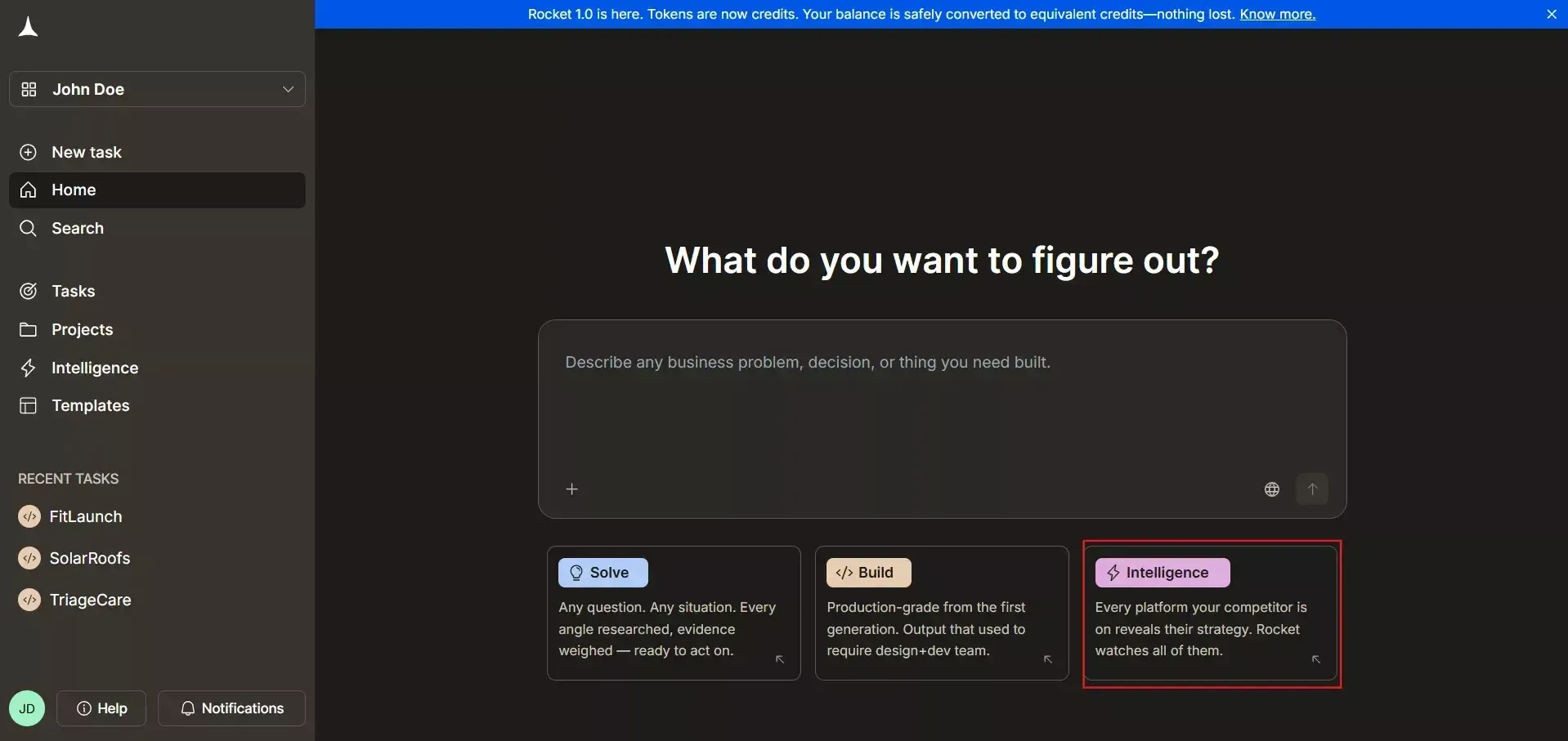
3 Products, One platform: Solve, Build, and Intelligence: Solve answers strategic questions. Build ship tools. Intelligence monitors competitors
Specific Use Cases for Sales Teams Before a Close
-
Competitor pricing and feature monitoring: Rocket Intelligence tracks changes across competitors' websites, pricing pages, hiring signals, press coverage, and social media from multiple sources. Learn more about AI deal brief generation for enterprise sales →
-
Stakeholder research and account mapping: Solve researches the buyer's organization and builds a stakeholder map based on accurate data from public markets filings, LinkedIn articles, and company announcements
-
Pre-call brief generation: Consolidate CRM data, call notes, and competitive intelligence into a single brief for the final meeting
-
Go to market alignment: Product teams, marketing leaders, and sales leaders use Rocket's shared context to match the final pitch to the go-to-market strategy, the product roadmap, and the customer's specific feature requests
Rocket does not add another tool to the stack. It replaces the stack for the thinking, planning, and intelligence work that matters most before a deal closes. Sales teams that use Rocket are moving faster because the platform handles the research while the humans handle the relationships. Claude code and similar tools handle code generation.
Rocket handles the strategic layer: market research, competitive positioning analysis, and the deal intelligence that shapes how a conversation starts and ends. Where Claude code helps developers build, Rocket helps business teams think, plan, and act on market intelligence before the biggest customers make their final decision.
When Accurate Data Meets the Right Moment
Rocket.new surfaces stakeholder maps, competitive moves, customer sentiment shifts, deal health signals, and consolidated data briefs automatically, in one shared context that the entire team can access, from the sales rep to the customer success manager.
None of it matters if the data quality is bad. The difference between companies that close high-stakes deals and companies that lose them comes down to preparation. In the AI era, that means one platform that does the research, surfaces the intelligence, and keeps the team focused on customers instead of data hunts. Rocket.new was built for that. See how sales teams use Rocket to win more competitive deals →
Ready to walk into your next high-stakes deal fully prepared? Rocket.new's Intelligence platform consolidates competitor moves, stakeholder data, and deal context in one shared view for your entire team. Start for free with Rocket.new →
Table of contents
- -What Happens When Your Sales Team Walks Into the Final 48 Hours Blind?
- -What Is AI-Powered Sales Intelligence?
- -Why the Last 48 Hours of a High-Stakes Deal Matter More Than the First 48 Days
- -How Sales Reps Actually Spend Their Pre-Close Time
- -What AI-Powered Deal Intelligence Looks Like Before a Close
- -Stakeholder Mapping and Identifying Actual Decision Makers
- -Competitive Intelligence Monitoring
- -Customer Sentiment Analysis
- -Data Consolidation Across Scattered Tools
- -The Preparation Gap Most Teams Still Have
- -How AI Agents and Lead Scoring Reshape Pre-Close Strategy
- -What Matters for a Go-to-Market Strategy in the Final Hours
- -Community Take: What Sales Leaders Are Saying
- -How Rocket.new Delivers Intelligence for High-Stakes Enterprise Deals
- -Specific Use Cases for Sales Teams Before a Close
- -When Accurate Data Meets the Right Moment