
Ever thought about how safe it really is to use AI that’s handling sensitive work for your business? The answer isn’t just “secure enough.” A secure AI platform is the foundation that protects your data, your users, and your entire system while enabling you to scale with confidence.
What is a secure AI platform, and why does it matter right now?
When relying on AI tools, security must be baked in, not added later.
A report found that more than 60% of organizations feel unprepared for AI-based cyber risks as AI adoption becomes mainstream.
This means businesses that ignore security risks may face data breaches, AI agent misuse, or costly downtime.
Using a secure ai platform ensures that teams can innovate confidently while keeping sensitive data and workflows protected.
Understanding the Safe Side of AI
So AI is everywhere now.
From marketing to customer support and operations, it’s powering smarter processes. But there’s a type of AI agent software that operates autonomously within your systems. These agents can automate work, fetch data automatically, or even trigger business actions without constant oversight. Cool, right?
But if security isn’t given attention, those same agents could become entry points for bad actors.
Think of them like employees, they need permissions, access rules, and boundaries. That’s where a solid security platform comes into play. It ensures that each AI agent behaves appropriately, adheres to the rules, and doesn’t disclose sensitive company information or proprietary data.
Why Security Actually Matters?
Well, every business cares about growth and speed.
But if AI tools aren’t protected, threats such as prompt injection, credential theft, or data leakage can cause significant harm.
What Makes a Security Platform Work for AI?
Let’s look at the core of a platform that keeps AI safe and usable.
| Component | What It Does |
|---|---|
| Access Control | Limits what each AI agent can do |
| Authentication | Verifies every request from users or models |
| Monitoring | Tracks behavior to flag odd activity |
| Compliance Tools | Helps meet legal and internal rules |
| Encryption | Protects data at rest and in motion |
These pieces together help you build AI agents that don’t run wild. They also let teams manage risk while still getting full value from AI.
So, What’s an “AI-Powered Platform”?
When discussing modern business tools, an AI-powered platform is a system that uses models and automation to help users do more with less effort.
Tasks such as writing copy, suggesting insights, and managing workflows can now be done without manual intervention.
But this speed and scale come with questions:
- Can this platform expose sensitive data?
- Are the AI models themselves safe?
- Who controls what the agent does next?
A strong security platform addresses these head-on, ensuring AI-powered workflows remain aligned with policy and subject to human oversight.
Moving Beyond Code: Who Can Use AI Tools
Here’s a question many folks ask: Do you need coding experience to work with AI now?
Well, no. With platforms that offer custom apps, natural-language interfaces, and AI agents, even non-technical professionals can get things done. Whether you’re a product manager, marketer, or designer, AI lets you focus on ideas and outcomes, not syntax.
That said, without a security platform, even simple AI use can create risks if not thought through carefully.
Rocket.new and AI App Creation
Speaking of easy, let’s talk about Rocket. New, a platform that turns ideas into real apps with very little friction. This tool helps users create AI agents and full applications without writing most of the code.
You describe what you want, and Rocket handles everything from backend setup to frontend deployment.
Top Features
- Plain language to app: Describe the app in plain English, and Rocket builds it.
- Full-stack output: It generates frontend, backend, database schemas, user auth, and more.
- Templates and suggestions: Use prebuilt pieces to speed up work.
- Live Preview: See changes instantly while you build.
- Deployment options: Publish on a Rocket domain or bring your own.
This means whether you’re a startup founder testing an idea or part of an enterprise team iterating fast, Rocket gives you a playground to build.
Use Cases From Real Scenarios
- Internal Tools: Teams can use Rocket to quickly build dashboards or workflow apps to track performance and operations without hiring a development team.
- Prototype & MVP: Founders can get a working prototype live in minutes, perfect for pitching investors or getting early users.
- Website + App Bundle: Marketers and product teams can generate both web and mobile builds simultaneously to hit audiences across platforms.
Sure, it’s not perfect for every edge case. But it lowers the barrier to building real applications, especially for those with limited coding experience.
What a Secure AI Platform Means for Your Business
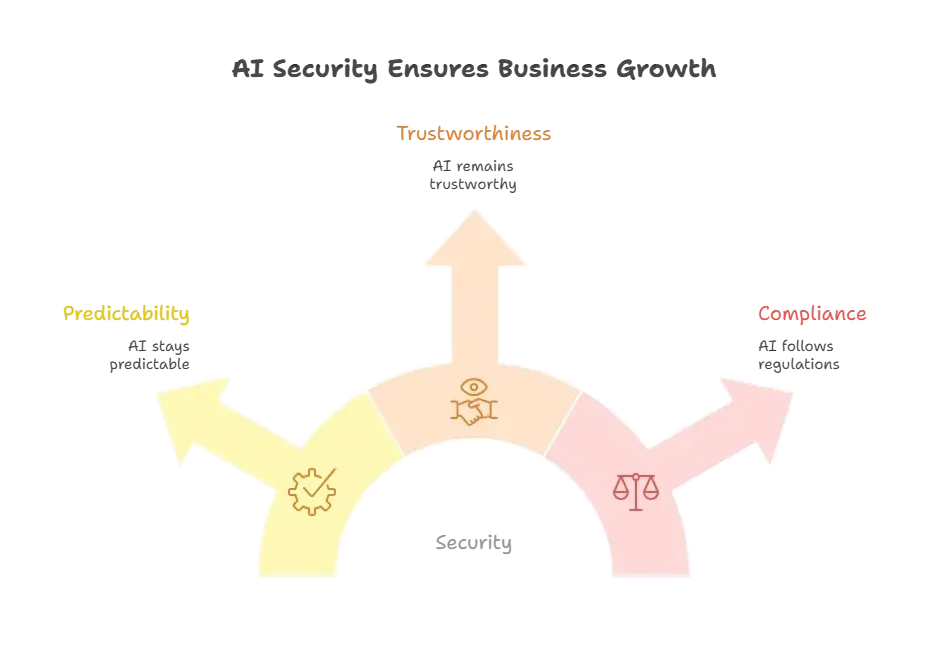
A secure AI platform is more than a buzzword. It’s a strategy for any team that wants AI to remain trustworthy and predictable as it scales. You get protection against threats, keep your data safe, and let your team experiment without fearing a breach.
It also creates breathing room for real progress. With the right guardrails in place, teams can move faster, test ideas in real time, and focus on outcomes instead of constant damage control. That balance between speed and safety helps businesses stay ahead without eroding trust or breaking systems.
Table of contents
- -Understanding the Safe Side of AI
- -Why Security Actually Matters?
- -What Makes a Security Platform Work for AI?
- -So, What’s an “AI-Powered Platform”?
- -Moving Beyond Code: Who Can Use AI Tools
- -Rocket.new and AI App Creation
- -Top Features
- -Use Cases From Real Scenarios
- -What a Secure AI Platform Means for Your Business