
Rocket.new is the vibe solutioning platform for non-technical founders: validate ideas with Solve, build production-ready Next.js and Flutter apps without code, and monitor competitors automatically with Intelligence. One platform, three pillars, no developer needed.
The best ai app builder for non-technical founders does more than generate screens; it validates the idea before a single line of code is written, builds a production-ready product, and monitors the competitive landscape after launch. This guide covers what to look for, how the technology works, and why the right platform changes the entire trajectory of an early-stage build.
What Makes Rocket.new Different from Other AI App Builders
Most AI app builders start at execution. You arrive with an idea and leave with a product. That is useful, but it assumes the thinking has already happened: that the market is understood, the competition is mapped, and the direction is worth pursuing.
Rocket.new is the vibe solutioning platform, the first platform where the thinking and the building happen in the same place. It combines three connected pillars in one workspace:
- Solve: AI-powered market research and decision intelligence. Ask any business question and receive a structured, evidence-backed report covering market sizing, competitive landscape, risks, and a clear recommendation. Export as PDF, PPT, or HTML, and use the output as the foundation for your build.
- Build: Production-ready app generation from natural language, Figma files, or an existing GitHub repo. Web apps run on Next.js; mobile apps on Flutter (iOS and Android, App Store and Google Play submission-ready). Every build ships with SEO-ready structure, WCAG accessibility compliance, and GDPR coverage by default.
- Intelligence: Continuous competitor monitoring across nine signal pillars: website changes, social media, news, GTM activity, product and technology updates, hiring patterns, business and finance signals, reviews, and community sentiment. Set it up once; it runs automatically.
No switching between tools. One platform, one shared context, three pillars.
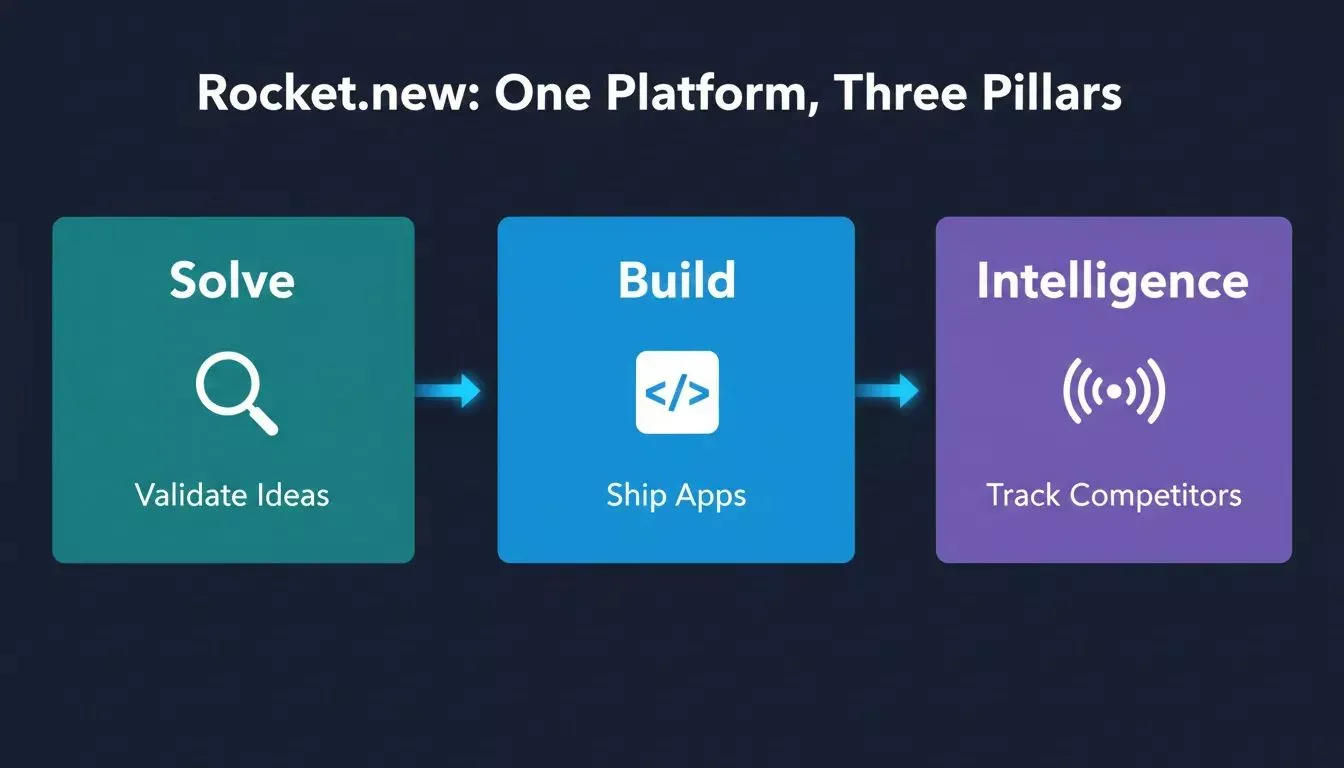
Rocket.new combines Solve, Build, and Intelligence in one shared-context platform
Do You Need to Write Code?
No. Describe what you want in plain language, and Rocket.new produces a production-ready Next.js web app or Flutter mobile app. You also get strategic research through Solve and competitive intelligence through Intelligence; none of it requires writing code.
Account creation takes 30 seconds with Google, SSO, or email. No credit card required to start.
What to Look for in a Modern AI App Builder
Choosing a platform matters more than most founders realize. The wrong choice means rebuilding six months later. These are the features that separate platforms worth using from ones that create new bottlenecks.
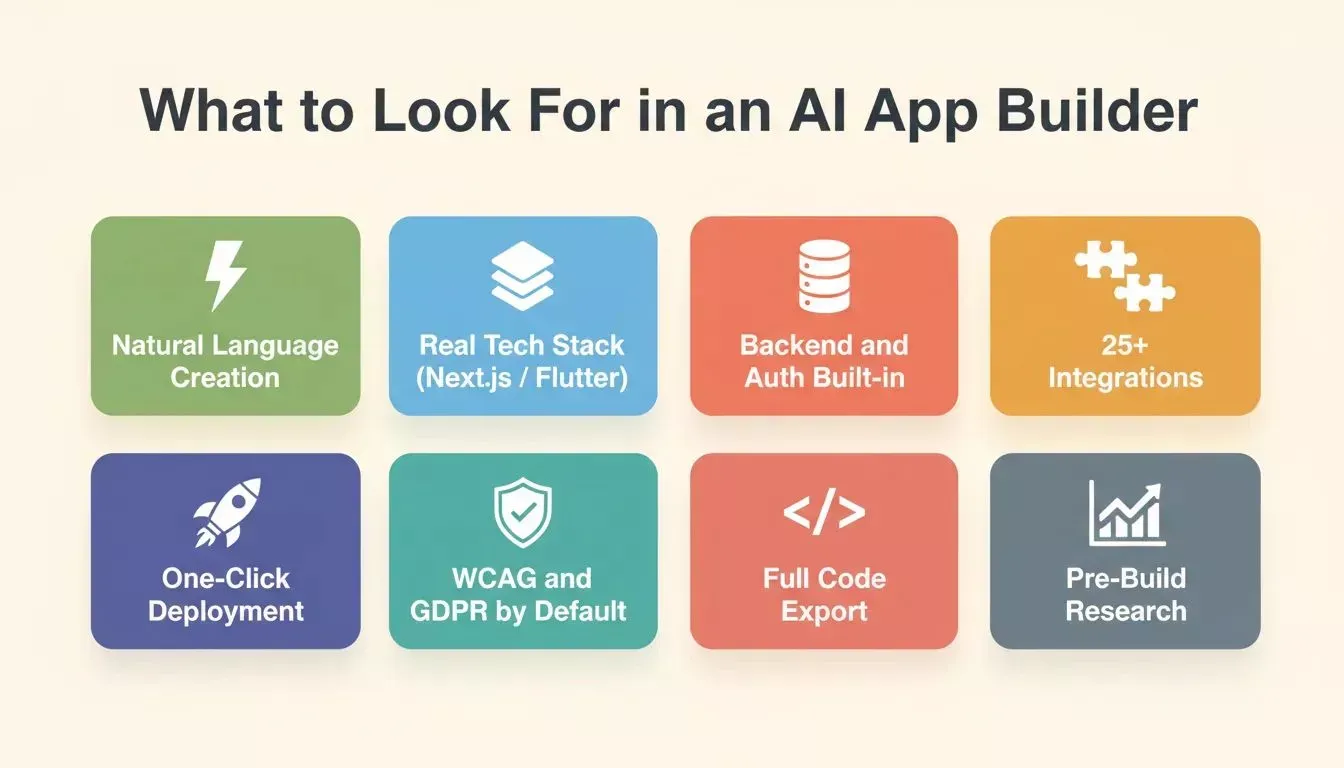
Eight features that define a production-ready AI app builder for non-technical founders
Features That Actually Matter
- Natural language creation: describe an app in plain English and get a working, deployable product, not a wireframe
- Figma-to-code: import a Figma design and generate production-ready React/Next.js (web) or Flutter (mobile) code; note that Figma import is a web-only feature and ungrouped layers need cleanup before import
- Real tech stack: Next.js for web, Flutter for mobile; not a proprietary locked format you cannot export
- Backend and authentication: Supabase integration handles Postgres database, user auth (email/password, social login, magic links), file storage, and edge functions from a single prompt
- 25+ integrations: Stripe, Razorpay, OpenAI, Anthropic, Gemini, Supabase, Airtable, Notion, Linear, Mailchimp, Mixpanel, Google Analytics, Typeform, Calendly, and more, all wired in from chat
- Deployment: one-click publish to a live URL via Netlify, custom domain support, staging and production environments, full version history with one-click rollback
- Code ownership: export the full source code, push to GitHub, continue development locally; you own everything you build
- Pre-build intelligence: validate the idea before writing a line of code, not after
According to Gartner, low-code and no-code platforms are among the fastest-growing segments in enterprise software, driven by demand from non-developer users who need to ship products faster. Forbes notes that the most successful non-technical founders treat competitive awareness as a continuous process, not a one-time research task.
Rocket.new vs. Traditional No-Code Tools vs. AI Code Generators
| Dimension | Traditional No-Code | AI Code Generators | Rocket.new |
|---|---|---|---|
| Pre-build research | None, you bring the strategy | None, you bring the idea | Solve: structured market research, PRDs, competitive analysis built in |
| Tech stack | Proprietary, hard to export | React/Next.js or similar | Next.js (web), Flutter (mobile), real, exportable code |
| Mobile apps | Limited or web-only | Web-focused; mobile limited | Flutter: iOS and Android, App Store and Google Play ready |
| Competitor monitoring | None | None | Intelligence: continuous monitoring across 9 signal pillars |
| Shared context | None | Session-only | Projects: files, research, and decisions persist across every task |
| Default quality | Template-dependent | Varies; often looks AI-generated | SEO, WCAG, GDPR shipped as defaults on every build |
| Integrations | Limited connector library | Varies | 25+ integrations, authenticated once, flow into every build |
The most important column is the first one. Every other builder assumes you already know what to build. Rocket.new is the only platform that helps you figure that out before you start.
How the Build Workflow Works
Understanding the end-to-end process helps non-technical founders plan their build confidently. The diagram below shows how a typical Rocket.new build flows from research to a deployed product.
Rocket.new research-to-launch workflow: Solve validates, Build ships, Intelligence monitors
How Rocket.new Helps Non-Technical Founders Specifically
Rocket.new was built for three user types. Non-technical founders fall into the first: The Builder, someone who needs to go from idea to live product without a development team.
Validate before you build. Use Solve to ask "Is there a market for a SaaS tool that does X?" and receive a structured report covering market size, existing competitors, pricing benchmarks, and a direct recommendation in 60 to 90 minutes, not days. That research becomes the foundation of your Build task automatically. Solve is not a chatbot, it is a structured research engine that runs thousands of queries across 150+ sources simultaneously.
Build the product. Describe your app in plain language and Rocket.new generates a working Next.js app with real UI, navigation, logic, and production-ready code. Most apps generate in one to three minutes. Iterate through chat, Visual Edit (click any element to change it, web only), or direct code edits. The framework is locked once a task is created, so choose web (Next.js) or mobile (Flutter) at the start.
Monitor after launch. Set up Intelligence once with a five-step wizard. It watches your competitors' websites, pricing pages, job postings, social media, and customer reviews automatically. Your first brief arrives within 24 hours. You do not check manually; it tells you when something changes.
According to Statista, the global low-code/no-code platform market is projected to exceed $65 billion by 2027, reflecting the scale of demand from non-technical builders worldwide.
Rocket.new Build: Top Features
- Prompt-based creation: full-stack apps from plain English, including UI, routes, backend logic, and integrations
- Figma to code: import Figma frames and generate production-ready React or Flutter code (web-only; prepare layers and group components before import)
- Backend and auth ready: Supabase scaffolds a Postgres database, authentication, file storage, and edge functions from a single prompt
- Cross-platform: one project for web (Next.js), iOS, and Android (Flutter); submit to App Store and Google Play
- Instant deployment: publish with hosting and custom domain; staging and production environments included
- Full code access: export source code, push to GitHub, continue development locally (paid plan required)
- Advisor Agent: a built-in senior architect sub-agent that resolves error loops and makes architectural decisions automatically when the coding agent gets stuck
One honest caveat: Visual Edit, slash commands, Figma import, and code download are web-only features. If you are working from the Rocket.new iOS app, these require switching to a browser.
What Solve Does for Founders Before They Build
This is the part most AI app builder comparisons miss entirely. Solve is a structured research engine. You describe a business question, and Rocket.new runs thousands of queries across 150+ sources simultaneously. Within 60 to 90 minutes, you receive a structured analytical report covering:
- Market sizing and opportunity assessment
- Competitive landscape with feature and pricing comparisons
- Risk matrix with signal strength ratings (HIGH / MEDIUM / LOW)
- A direct recommendation at the top, not buried in caveats
- An execution path with owners, timelines, and gate conditions
You can upload your own files, pitch decks, financial models, customer research, and Solve reads them structurally. Export the output as PDF, PPT, or HTML for stakeholders. Then open a Build task: the Solve report is already there as context. You do not re-explain it.
The Solve output does not disappear after export; it becomes the foundation of everything that follows in the project. The PRD is present when you open the build task. The competitive brief is present when the landing page is written. Generating MVPs with AI becomes significantly faster when the research and the build share the same context.
What Intelligence Does After You Launch
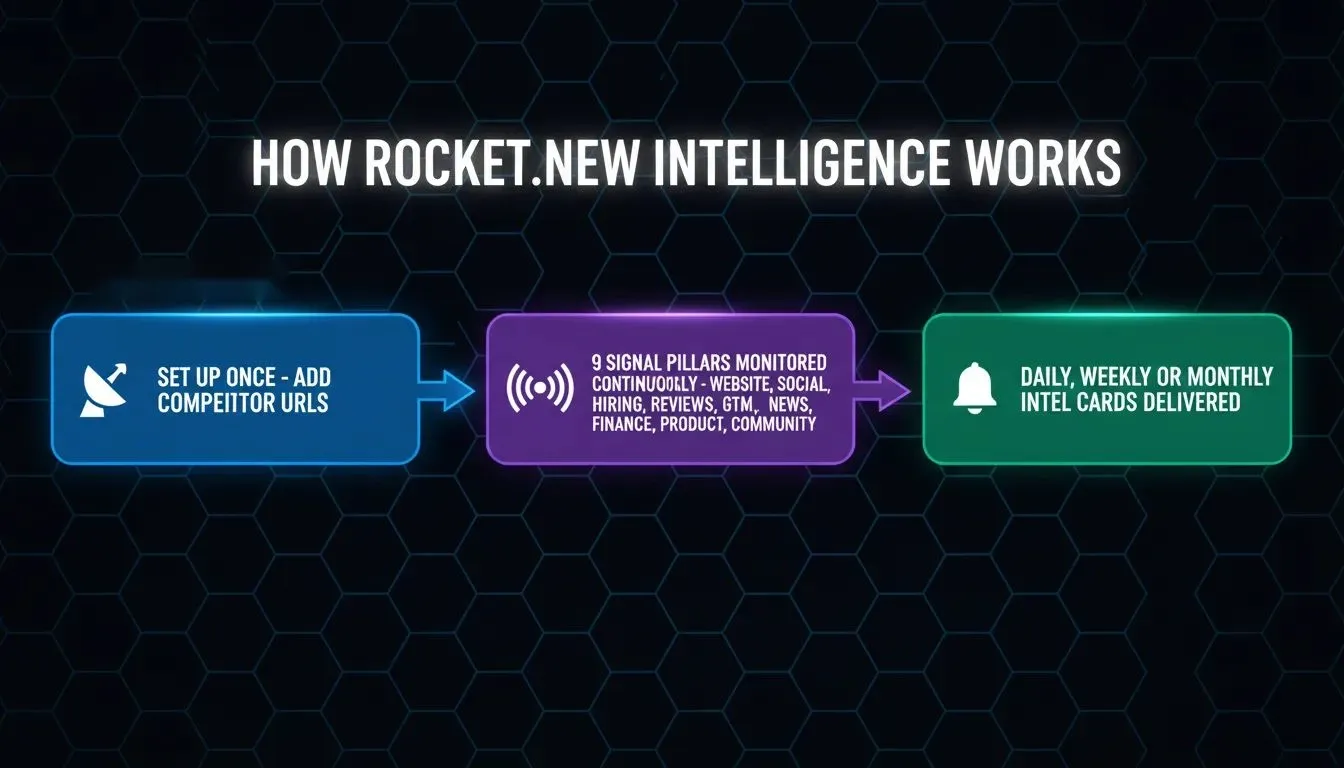
Intelligence monitors nine signal pillars continuously and delivers structured Intel cards to your dashboard
Intelligence watches competitors so you do not have to. Set it up once with a five-step wizard: add your business URL, choose the signal categories that matter (pricing, product updates, hiring, funding, reviews), add competitor URLs, and choose your brief frequency (daily, weekly, or monthly).
From that point, Intelligence monitors across nine pillars: website changes, social media activity, news and press, GTM and advertising, product and technology updates, people and hiring signals, business and finance, customer reviews, and community sentiment. It does not just surface alerts, it delivers Intel cards that connect signals into meaning, framed to your role and current strategic questions.
For founders who want to understand how competitive signals translate into product decisions, the intelligence layer for sales, marketing, and product strategy is worth exploring in depth.
Platform Stats That Matter
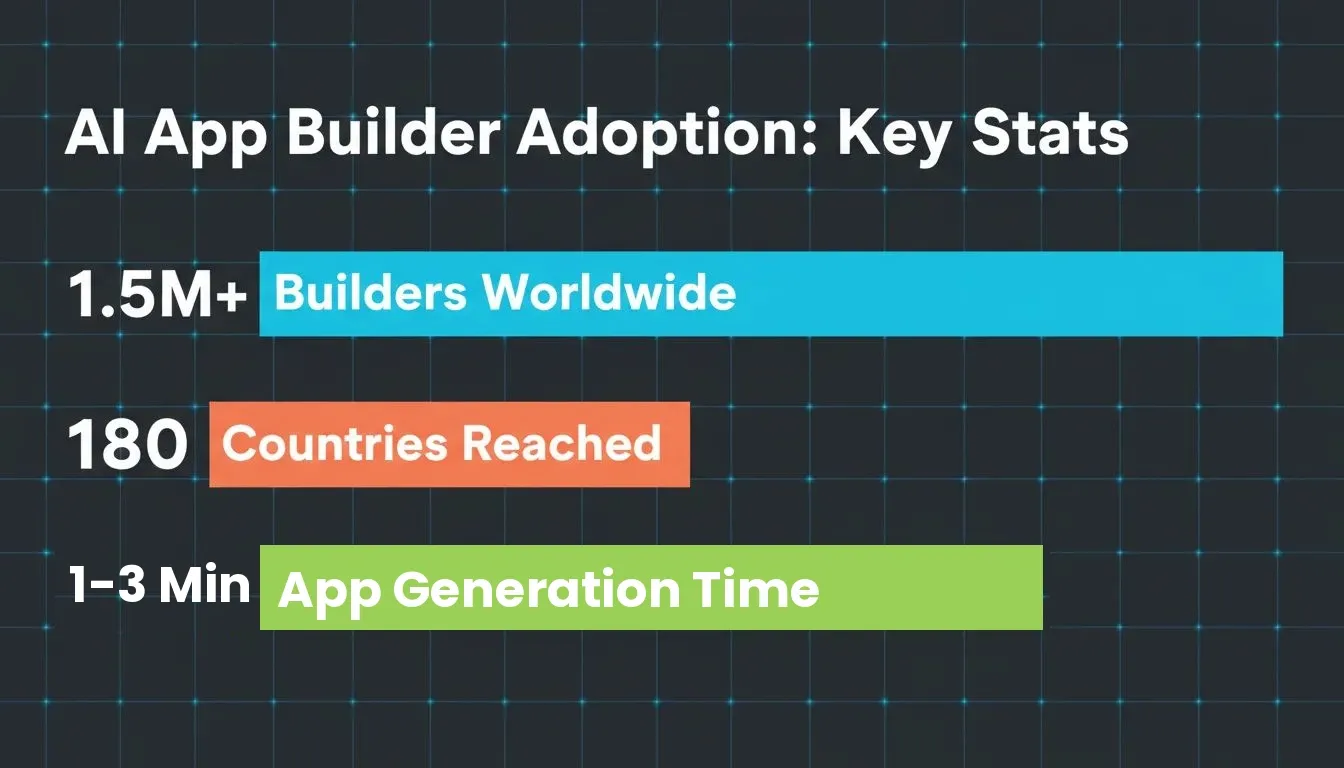
Rocket.new platform reach: 1.5 million builders across 180 countries
Rocket.new has been used by 1.5 million people across 180 countries, from solo founders validating ideas to enterprise teams running strategy and execution on the same platform. Most apps generate in one to three minutes. The platform is backed by Salesforce Ventures and Accel.
How to Choose the Right AI App Builder for Non-Technical Founders
If you are comparing platforms, work through these questions in order:
- Does it validate ideas before you build? If not, you are the research layer. That is an expensive time.
- What tech stack does it generate? Proprietary formats lock you in. Next.js and Flutter are real, portable, hireable stacks.
- Can it build both web and mobile? Rebuilding for a second platform doubles your work.
- Does it include backend and auth? Supabase integration means you do not need a separate backend developer for auth, database, and storage.
- What happens after launch? A platform with no answer to competitor monitoring leaves you flying blind.
A good AI app builder for non-developers should let you shape workflows without code while still providing deeper options, code export, GitHub sync, and direct code editing when you want more control. The ceiling matters as much as the floor.
Non-technical founders often face the same early challenge: MVP feature prioritization before a single line of code is written. Solve addresses this directly by surfacing what the market actually wants, not what seems logical in a vacuum.
Understanding how vibe solutioning differs from traditional development helps founders set the right expectations before they start building. The speed difference is real, but so is the importance of starting with validated direction.
Ready to go from idea to live product without a development team?
Rocket.new is the vibe solutioning platform built for exactly this: validate your idea with Solve, ship your app with Build, and monitor what happens next with Intelligence.
Start building for free; account setup takes 30 seconds. No credit card required.
Table of contents
- -What Makes Rocket.new Different from Other AI App Builders
- -Do You Need to Write Code?
- -What to Look for in a Modern AI App Builder
- -Features That Actually Matter
- -Rocket.new vs. Traditional No-Code Tools vs. AI Code Generators
- -How the Build Workflow Works
- -How Rocket.new Helps Non-Technical Founders Specifically
- -Rocket.new Build: Top Features
- -What Solve Does for Founders Before They Build
- -What Intelligence Does After You Launch
- -Platform Stats That Matter
- -How to Choose the Right AI App Builder for Non-Technical Founders