
How quickly can an idea become a functional app? AI-powered idea to app generators accelerate development, helping teams prototype efficiently, reduce delays, and meet growing market demand.
How fast can an idea turn into a working product today? Very fast.
In 2024, the mobile app market generated over $400 billion in global consumer spending, and that number keeps rising. Clearly, people are eager for new digital products, and they expect them quickly.
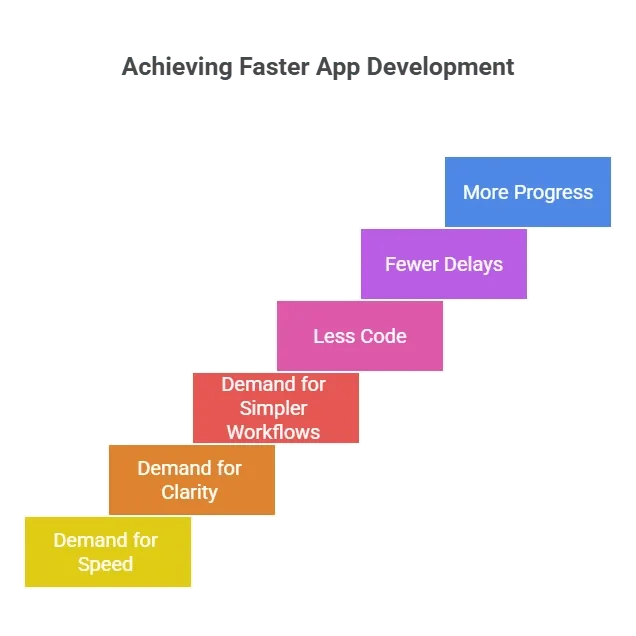
But what does this mean for teams building apps? They face pressure to deliver results fast, execute cleanly, and avoid delays.
Luckily, modern AI is changing the game. With an app generator, teams can move from concept to prototype much faster, skipping repetitive hurdles and focusing on building something that works.
Why Faster Building Flows Matter More Than Ever?
Digital expectations rise every year.
People want mobile experiences that update smoothly, web interfaces that load fast, and systems that connect everything in one place. Companies want the same outcomes without the traditional waiting period.
The old approach required teams to maintain long sprint cycles.
They needed large budgets, deep coding experience, and the patience to go through repeated development loops. But today, AI tools offer a different path. They let teams create mobile app interfaces, connect backend workflows, edit screens, and publish results much quicker.
What AI Brings to the Table in Real Workflows?!
AI doesn’t remove skill. It clears the clutter.
That might be the best way to describe it. Builders can now take a simple prompt and watch the platform assemble screens, connect components, create database entries, shape authentication systems, and place logic exactly where it should go.
When this process runs, people often pause for a moment. It feels strange. The platform generates the structure automatically, and the builder jumps in to refine it. This small shift saves massive time.
What changes for teams day to day?
Teams don’t get stuck writing the same repetitive code.
Designers no longer need to wait for engineering to mock up a visual idea. Product managers can watch the platform build a working app version that can be tested instantly. Even early-stage founders can produce prototypes without spending weeks trying to assemble files, deal with backend logic, or figure out hosting.
They still need to think through the idea. They still need to plan the user flow.
But the time spent on structure, wiring, and deployment gets noticeably lighter.
Teams ship faster. They launch earlier. They collect feedback sooner. The gap between planning and execution becomes smaller.
A Clear Look at Traditional Building Versus AI-Based Platforms
The difference becomes easier to understand when comparing the two processes directly.
| Factor | Traditional App Development | AI-Based Building Tools |
|---|---|---|
| Time to Build | Several weeks or months | Often days |
| Coding Required | High, lots of writing code | Lower, some coding knowledge optional |
| Testing Steps | Manual and repetitive | Automatically handled |
| Deployment | Multi-step and slow | Often one click |
| Cost | High | Lower or free options |
| Scaling | Requires careful setup | Automatically adjusted |
These comparisons show why teams feel more comfortable shifting to systems that can build apps more quickly. The appeal is practical. Less complexity. More speed. Clearer paths toward production.
And no, not everyone abandons traditional workflows. Many combine both approaches. They use AI to build faster and still keep control over core code when needed.
Where AI Platforms Make the Most Impact?
These tools don’t just help with prototypes. They help with real products, internal tools, user-facing systems, and long-term solutions.
What the Flow Looks Like From Idea to Product!
The typical cycle becomes lighter.
Here’s how the flow usually appears:
- Describe the idea in plain language.
- Watch the platform automatically generate screens, backend, components, and logic.
- Edit layouts or add features.
- Test flows across devices.
- Publish to mobile or web.
A few clicks replace a long chain of manual steps. Builders can deliver a working app faster, with a clean structure and ready-to-use pages.
The platform also provides built-in hosting, reducing friction even further. Instead of setting up servers and environments, teams go straight into testing and launch.
Community Insight That Reflects the Growing Trend
People talk about these platforms everywhere. A recent LinkedIn post captured this shift clearly:
“Just built a full working app in 15 minutes — without writing a single line of code. No, this isn’t a gimmick.” They said Rocket generated both frontend and backend from a single prompt.
This reaction shows what many teams express: the relief of moving faster without losing control. The community shares stories about shorter timelines, quicker delivery cycles, and more opportunities to test features with users.
Why These Tools Make Life Easier for Builders
Many teams choose AI platforms to build faster without sacrificing quality. These tools deliver structure without the heavy manual setup. They help teams keep their attention on product decisions rather than technical maintenance.
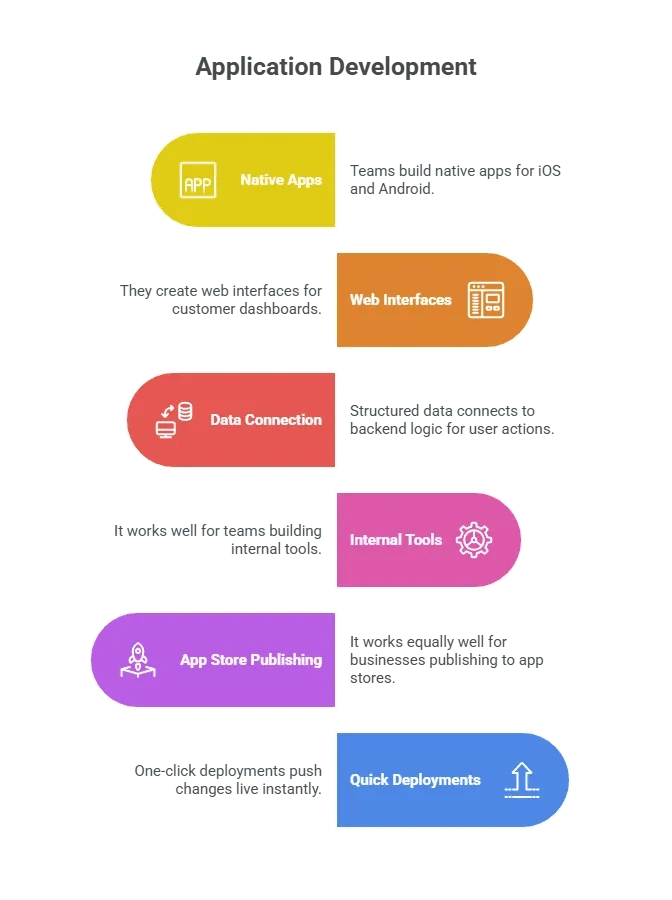
Teams can generate iOS and Android versions. They can publish web portals. They can test features instantly and scale as the user base grows. All of this works without piecing together dozens of files and writing code for every small element.
People enjoy the focus shift. Instead of spending hours debugging, they can think about user flow and business goals.
Real-World Use Cases That Show the Flexibility
Practical examples help illustrate the impact:
- Companies create internal dashboards to manage operations.
- Field teams use Android apps built in a single afternoon.
- Retail businesses publish mobile tools for customers.
- Startups ship web apps for early testing.
- Teams upgrade old software by generating modern versions.
- Service providers publish phone-friendly portals.
All these outputs come from the same workflow. Create, edit, test, publish. The apps meet real demands and live on real devices.
The flexibility stands out because builders can edit screens anytime. They can add components, attach files, integrate Google Maps, or change database entries without breaking earlier work.
Rocket.new: A Smooth Option for Fast Creation
Rocket.new has gained interest because the entire creation flow stays balanced and simple. This Vibe Solution platform lets teams describe their idea, generate screens, and adjust details without feeling overwhelmed.
Top Features of Rocket.new
- Prompt-based full-stack app generation: Describe your idea in plain English, and Rocket.new builds the frontend, backend, and integrations automatically.
- Figma to code conversion: Turn Figma designs into fully functional, responsive web or mobile code.
- Built-in backend and authentication: Database schemas, user auth, API endpoints, and security ready without manual setup.
- Cross-platform output: Build web apps or mobile apps for both iOS and Android from the same project.
- One-click deployment with hosting: Deploy instantly with support for custom domains.
- Full code export and ownership: Retain access to the generated code for manual edits or further development.
- Run precise actions with commands: Use / to execute actions and @ to scope edits from chat—fast, clear, and controlled.
People appreciate how Rocket.new blends structure with freedom. You can build fast, then refine the app until it feels complete.
What Happens Once the App Goes Live?
Publishing might feel like the final step, but it’s only the beginning. Once users interact with the product, teams start seeing how the app holds up. These AI-generated apps are prepared for real traffic and real workflows.
Teams can push updates quickly. They can fix issues or add features without long delays. The app updates on the user’s device or in the user's web browser instantly, keeping the experience smooth.
This rhythm helps teams stay connected with users. They can respond sooner, adjust features, and improve the experience without long cycles.
How Prompting Shapes the Creation Flow
Prompt-driven building feels natural once teams get used to it.
The process is simple. Describe the idea, the users, and the needed features. The platform generates structure automatically.
Good prompts make the result cleaner. Mention the purpose. Describe the flow. List the screens. The platform handles the rest and writes the code behind the scenes.
Teams then jump in to refine things. They edit pages, update logic, test interactions, and adjust components until the app feels right.
Testing and Iteration That Fits Modern Workflows
Testing becomes easier with AI tools. Teams can:
- Run tests inside the platform.
- Preview screens across phone sizes.
- Edit and retest instantly.
- Skip manual file setup.
- Manage database changes without breaking anything.
People like this because it removes friction. They can test new ideas as soon as they think of them.
Turning Ideas Into Real Products With an Idea to App Generator
Teams today expect shorter timelines, smoother workflows, and better results. AI-based platforms give them that path. They let people build mobile, web, and native apps that support real users and scale with real business needs.
The cycle becomes simple: create, edit, test, and launch. And with the right tools, the best app generator helps turn early ideas into something fully functional that people can use in everyday life.
Table of contents
- -Why Faster Building Flows Matter More Than Ever?
- -What AI Brings to the Table in Real Workflows?!
- -What changes for teams day to day?
- -A Clear Look at Traditional Building Versus AI-Based Platforms
- -Where AI Platforms Make the Most Impact?
- -What the Flow Looks Like From Idea to Product!
- -Community Insight That Reflects the Growing Trend
- -Why These Tools Make Life Easier for Builders
- -Real-World Use Cases That Show the Flexibility
- -Rocket.new: A Smooth Option for Fast Creation
- -Top Features of Rocket.new
- -What Happens Once the App Goes Live?
- -How Prompting Shapes the Creation Flow
- -Testing and Iteration That Fits Modern Workflows
- -Turning Ideas Into Real Products With an Idea to App Generator