
Rocket.new combines idea validation (Solve), AI app building in Next.js and Flutter (Build), and competitor monitoring (Intelligence) in one platform. Validated ideas ship faster because research, building, and monitoring share context without switching tools.
Rocket.new helps turn validated ideas into production-ready apps much faster than traditional development or other AI platforms. Its AI-driven workflows, full code ownership, and built-in backend, mobile, and deployment tools remove major build friction. Once your idea is validated, Rocket accelerates the path from prompt to live app in just a few steps.
Rocket.new is a vibe solutioning platform that combines strategic research, AI app building, and competitive intelligence into a single product. Validated ideas reach production faster here because the platform covers the full arc, from idea validation in Solve, through Next.js and Flutter app generation in Build, to ongoing competitor monitoring in Intelligence, without switching tools or losing context between steps.
The Shift from Idea to App in 2026
AI-driven development can reduce build time by up to 50% for digital products, according to McKinsey. That means teams can move from prototype to production with fewer delays, fewer errors, and less manual effort.
But raw build speed is only half the equation. The other half is knowing what to build before writing a single line of code. Most AI tools skip that step entirely. Rocket does not.
This guide covers the full loop: how Solve validates your idea, how Build turns it into a production-ready app in Next.js or Flutter, and how Intelligence keeps you ahead of competitors after you ship.
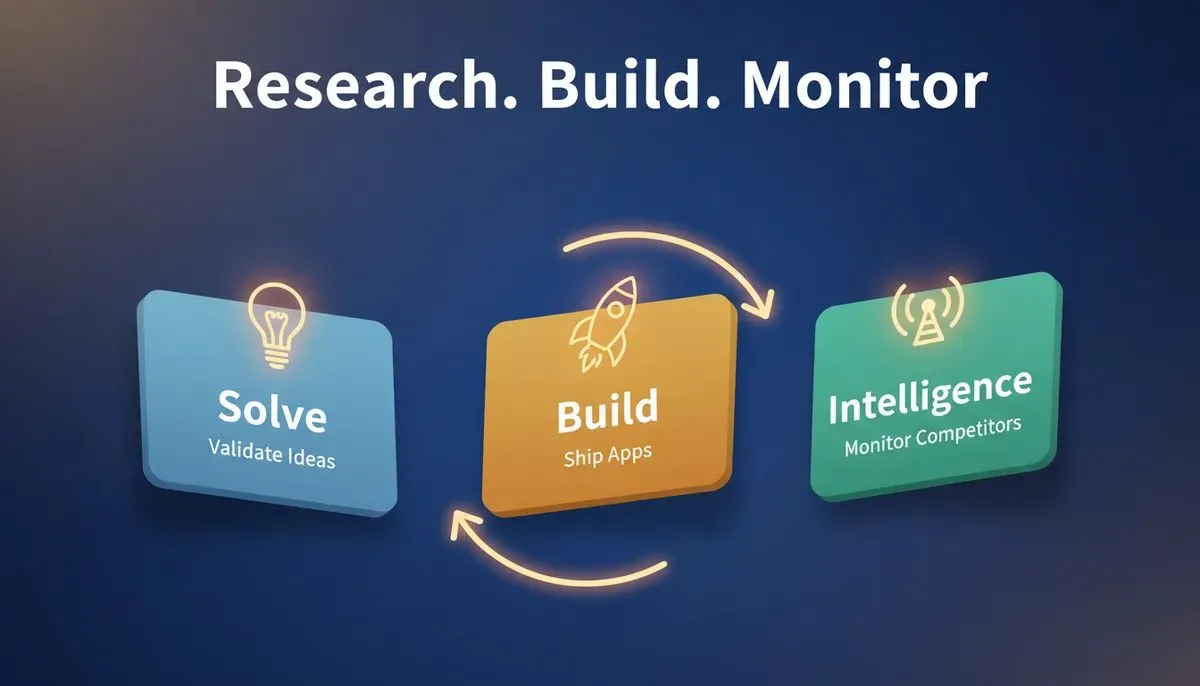
Rocket.new operates across three connected pillars: Solve for research, Build for app generation, and Intelligence for competitor monitoring.
What the old process looked like
- Long cycles of writing code from scratch with no validated direction
- Constant debugging and fixing errors after the fact
- Managing backend systems and infrastructure manually
- Switching between research tools, builders, and monitoring dashboards
- Context lost at every handoff between thinking and execution
What's changed in 2026
- AI validates market direction before the first line of code is written
- Natural language descriptions generate production-ready Next.js or Flutter apps
- Backend, auth, and database scaffold automatically via Supabase integration
- Competitive signals surface in a live dashboard without manual tracking
- One platform holds the research, the build, and the monitoring, nothing re-explained
Not all tools handle this shift well. Some break on edge cases. Others lock you out of your own code. The gap Rocket closes is the one between thinking and execution.
What Rocket.new Actually Is
Rocket.new is a vibe solutioning platform, the first platform where the thinking and the building happen in the same place. It operates across three pillars that share context and feed into each other.
Vibe Solutioning is not a replacement for vibe coding. It is the upstream category that makes vibe coding worth doing. It starts before the first prompt: with strategic intelligence that tells you what the market looks like, who is already building in it, and whether the direction holds up.
| Pillar | What It Does | What It Produces |
|---|---|---|
| Solve | Validates ideas, runs market research, generates PRDs | Structured reports as PDF, HTML, or PowerPoint |
| Build | Generates production-ready apps from natural language | Next.js web apps and Flutter iOS/Android mobile apps |
| Intelligence | Monitors competitors continuously across nine signal pillars | Live Intel cards and daily briefs in your sidebar |
Each pillar works independently. Use one, two, or all three. When used together, the Solve research that validated your direction becomes the foundation of your Build task automatically, no re-explaining, no copy-pasting between tools.
Step 1: Validate with Solve Before You Build
Most builders skip validation. They describe an app, generate it, and discover the market problem three months later. Solve is built to prevent that.
Describe your idea or business question in plain language. Rocket frames the problem before research begins, identifying market dynamics, competitive landscape, risks, and opportunities, then runs queries across 150+ sources simultaneously. Within 60 to 90 minutes, you have a structured report covering 8 to 12 sections with findings tagged by signal strength.
The output is a structured analytical deliverable: a verdict at the top, core objectives, key findings with evidence, a competitive landscape map, a risk matrix, and an execution path. Export it as PDF, HTML, or PowerPoint for stakeholders. You can also learn how Solve turns a business question into a structured research report before your first build task.
The Solve output does not disappear after export. It becomes the foundation of your Build task. The PRD is present when you open the builder. The competitive brief is present when the landing page is written. Nothing is re-explained.
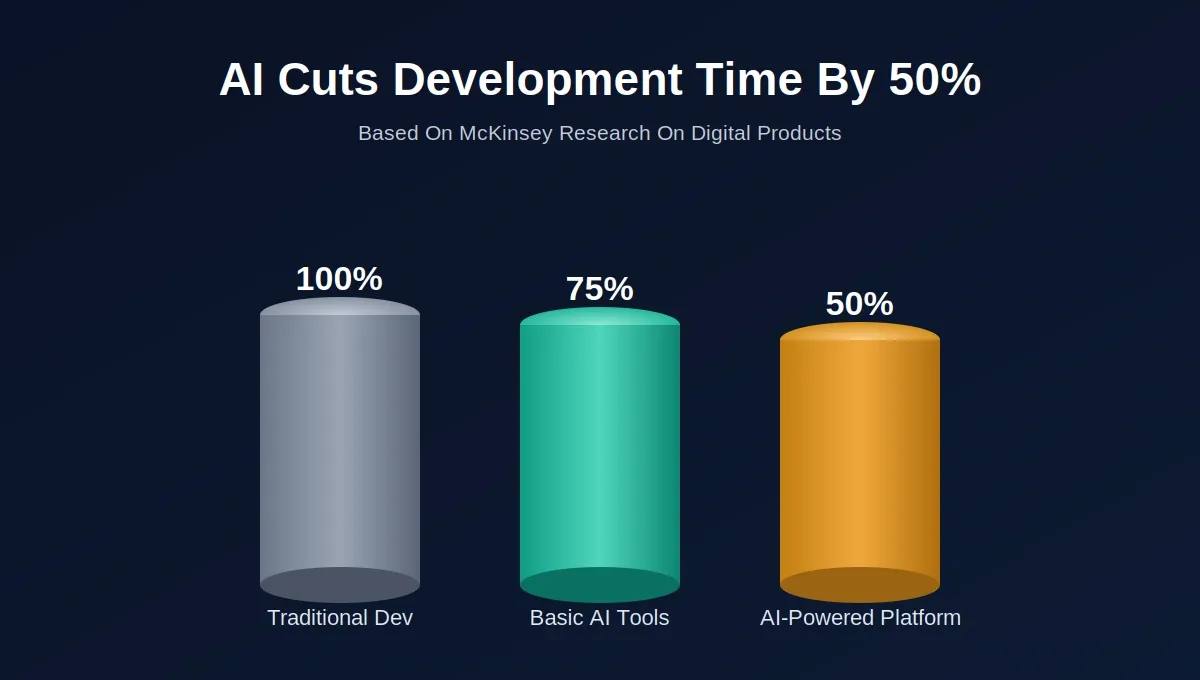
AI-driven development reduces build time by up to 50% compared to traditional methods, and Rocket's integrated research-to-build loop compounds that advantage further.
Step 2: Build with Real Code in Next.js or Flutter
Once your direction is validated, Build generates a production-ready app from a natural language description. The framework is assigned automatically: Next.js for web apps, Flutter for iOS and Android mobile apps.
This is not a prototype or a mockup. What comes back is working, deployable code.
The Rocket Build workflow: describe, generate, refine, and deploy, all in one platform.
How a Build task works
Describe your app, plain language, include app type, key screens, and features. Rocket surfaces clarifying questions about target users, data model, and design direction before generating, so the first version reflects genuine product thinking.
Generate: Rocket plans the architecture, writes production-ready code, and shows a live preview. Most apps generate in 1 to 3 minutes.
Refine: iterate through Chat (natural language), Visual Edit (click any element to update it directly), or Code (edit source files directly). No change limit.
Launch: deploy to a live URL with one action. Connect a custom domain, download the source code, or push directly to GitHub. Mobile apps can be shared as a web preview, downloaded as an Android APK, or submitted to Google Play and the Apple App Store.
Code ownership
Build produces real code you can download or connect to GitHub. You own it. If you want to continue development outside Rocket, take the codebase and go. For Next.js projects, two-way GitHub code sync is supported, chat edits in Rocket sync back to your repository. You can also understand why Rocket generates Next.js and Flutter specifically and what that means for your codebase.
Step 3: Monitor Competitors with Intelligence
Shipping is not the end. Intelligence watches every public platform a competitor operates on, website changes, pricing shifts, hiring spikes, product releases, social signals, news coverage, and ad spend, and delivers structured Intel cards to a live dashboard in your sidebar.
Nine signal pillars cover the full competitive surface: Website, Social Media, News and Media, GTM (ads, SEO, creator partnerships), Product and Technology, People and Hiring, Business and Finance, Reviews and Community, and more.
When a competitor makes a move, Intelligence surfaces it as a structured Intel card, not a raw alert, but a framed read that connects the signal to what it means for your business. That card can trigger a new Solve analysis or a Build update directly, closing the loop. Teams that use competitive intelligence to inform their builds consistently ship more defensible products.
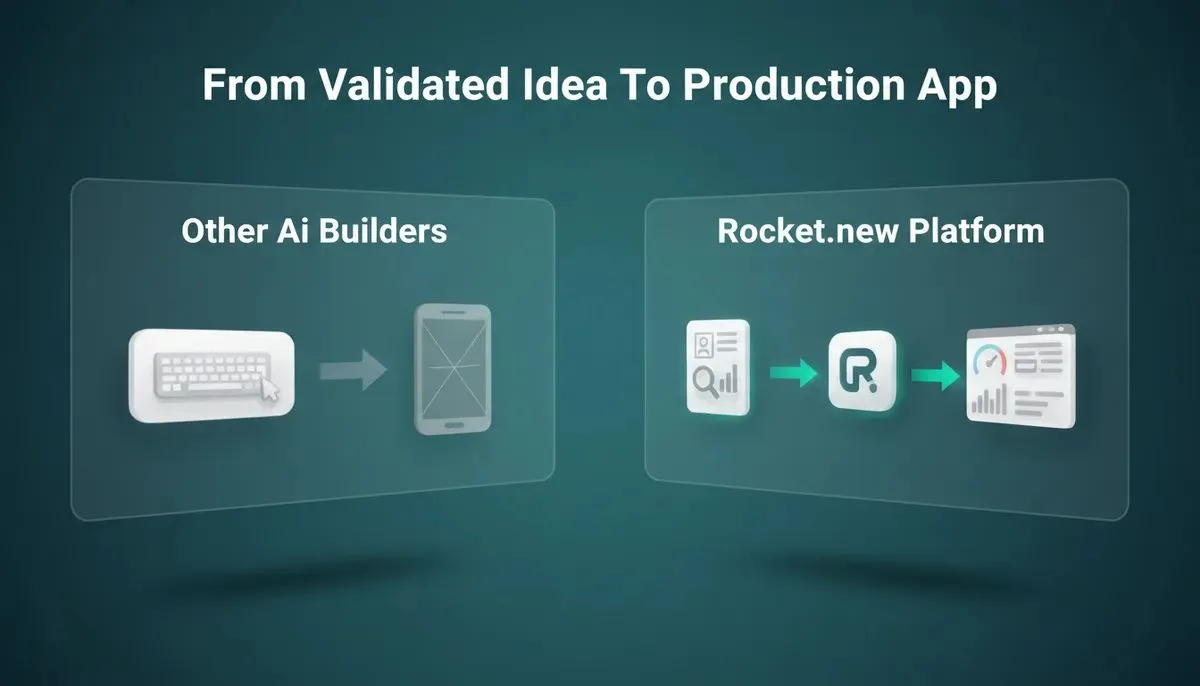
While other builders start at execution, Rocket.new starts with validated research, builds production-grade code, and monitors competitors after launch.
Key Features That Speed Things Up
| Feature | What It Does | Why It Matters |
|---|---|---|
| Solve research | Validates idea, generates PRD before building | Builds start from a real foundation, not a guess |
| Next.js generation | Production web apps from natural language | No framework setup, no boilerplate |
| Flutter generation | iOS and Android from a single codebase | App Store and Google Play ready |
| Supabase integration | Backend, auth, database scaffold from chat | No manual backend configuration |
| GitHub sync | Two-way code sync with your repository | Full developer control, no lock-in |
| 25+ connectors | Stripe, OpenAI, Notion, Linear, Airtable, and more | Authenticate once, flows into every build |
| Intelligence dashboard | Nine-pillar competitor monitoring | Continuous signals without manual tracking |
| Shared project context | Solve findings carry into Build tasks automatically | No re-explaining between steps |
Rocket vs Other Platforms
The comparison that matters is not feature-by-feature. It is about where the work starts.
| Dimension | Lovable / Bolt / v0 | Cursor | Rocket.new |
|---|---|---|---|
| Pre-build research | Not included | Not included | Solve — built in |
| Web app stack | Varies | Varies | Next.js |
| Mobile app stack | Not included | Not included | Flutter (iOS and Android) |
| Code ownership | Varies | Yes | Yes — download or GitHub sync |
| Competitor monitoring | Not included | Not included | Intelligence — built in |
| Shared context across tasks | Not included | Not included | Projects architecture |
Lovable, Bolt, and v0 build what you tell them to build. They are fast and capable at the execution step. Rocket figures out what is worth building, then builds it, then monitors what happens after it ships.
Cursor is an excellent AI coding IDE for developers who already know what to build. Everything before that moment is Rocket's territory.
Handling Data, Backend, and Storage
Backend setup is where most AI builders stall. Rocket handles it through Supabase integration — scaffold a complete backend with a Postgres database, user authentication, file storage, and edge functions from a single chat prompt.
What you can wire up from chat:
- User authentication (email, Google, GitHub, Apple sign-in)
- Database schema with row-level security policies
- File storage buckets for avatars, documents, and media
- Edge functions for serverless backend logic and webhooks
Beyond Supabase, 25+ connectors span payments (Stripe, Razorpay), AI models (OpenAI, Anthropic, Gemini), email (Resend, SendGrid, Mailchimp), analytics (Google Analytics, Mixpanel), CRM (HubSpot), and productivity tools (Notion, Linear, Airtable). Authenticate once and they flow into every build. Developers who want to go deeper can explore how Rocket's Supabase integration works end to end.
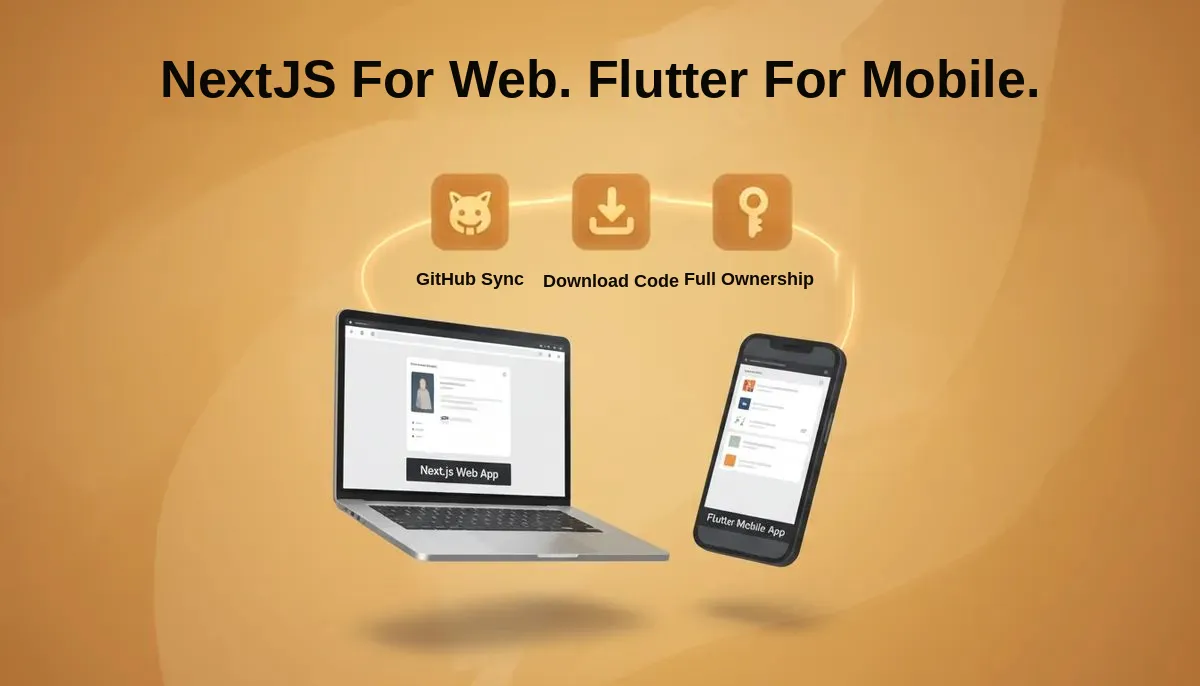
Rocket.new generates Next.js for web and Flutter for mobile, both with real, downloadable code you can connect to GitHub.
What Ships by Default
Every Rocket build includes SEO-ready structure, WCAG accessibility compliance, GDPR coverage, and performance optimization. These are the baseline, not optional extras. Built-in analytics track visitors, conversions, and Core Web Vitals after launch without additional setup.
Staging and production environments come standard, with full version history and one-click rollback. You can improve without risk, nothing built is ever gone. For teams that want to understand exactly what production-grade from the first generation means in practice, this breakdown of Rocket's default build standards covers every layer.
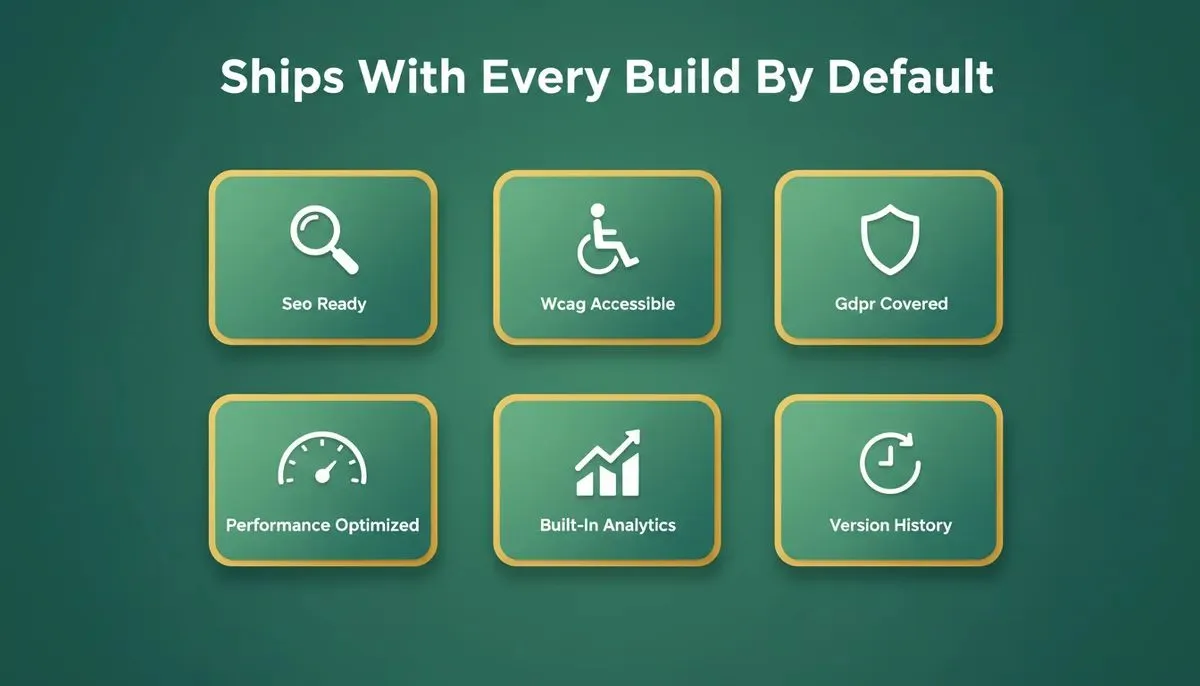
Every Rocket.new build ships with SEO, WCAG accessibility, GDPR coverage, performance optimization, and built-in analytics as defaults.
User Insight
Here's a real perspective shared on LinkedIn:
"I built a fully functional app in just 15 minutes without writing a single line of code… Rocket gives you the final product a production-ready app with frontend, backend, auth, payments, and real logic." — LinkedIn
The claim is specific and checkable: frontend, backend, auth, payments, and real logic, in 15 minutes. That is not a prototype. That is what production-ready app generation looks like when the platform handles the full stack.
Why Validated Ideas Move Faster Here
Once your idea is validated, the bottleneck shifts entirely to execution speed. Three things slow that down on every other platform: you have to validate somewhere else and carry the context manually, the build produces a prototype that needs significant rework before production, and you have no signal on what competitors are doing while you build.
Rocket removes all three:
- Solve validates the direction and the output becomes the Build foundation automatically
- Build generates production-grade Next.js and Flutter apps, not prototypes, with SEO, accessibility, GDPR, and performance built in by default
- Intelligence monitors competitors continuously so you are not building blind
The result is a tighter loop from validated idea to deployed app to competitive awareness, all inside one platform with shared context that compounds across every task. Founders who want to see this loop in action can follow the complete research-to-deployed-app workflow Rocket is built around.
Pricing and Access
Rocket.new offers a free tier, sign up in about 30 seconds with Google, Apple, or email, no credit card required. Paid plans scale with usage via a single credit balance shared across Solve research, Build generation, and Intelligence monitoring tasks. For current plan details and credit pricing, see the Rocket.new pricing page.
Ready to Validate and Ship Your App Faster
If your idea is validated and you are ready to ship, Rocket.new is the fastest path from research to production. Solve validates the direction.
Build generates production-ready Next.js and Flutter apps with full code ownership. Intelligence monitors competitors after you launch. Start building for free, no credit card required.
Table of contents
- -The Shift from Idea to App in 2026
- -What the old process looked like
- -What's changed in 2026
- -What Rocket.new Actually Is
- -Step 1: Validate with Solve Before You Build
- -Step 2: Build with Real Code in Next.js or Flutter
- -How a Build task works
- -Code ownership
- -Step 3: Monitor Competitors with Intelligence
- -Key Features That Speed Things Up
- -Rocket vs Other Platforms
- -Handling Data, Backend, and Storage
- -What Ships by Default
- -User Insight
- -Why Validated Ideas Move Faster Here
- -Pricing and Access
- -Ready to Validate and Ship Your App Faster