
Vibe coding shifts the software developer's role from writing syntax to directing AI. Developers become architects of intent, reviewing, validating, and shaping systems rather than assembling them line by line.
Does vibe coding replace the software developer?
No. It redefines what the work actually is.
McKinsey research shows that over 40 percent of development tasks could be supported by AI-assisted coding and natural language instructions by 2030. That number keeps rising as teams fold AI into daily work.
Many developers say the process feels different. More conversational. More fluid. This shift, widely called vibe coding, is reshaping expectations across software engineering.
Teams now ask: how does vibe coding impact the role of a software developer? The answer is not about replacement. It is about redistribution of where the hard work actually lives.
What Vibe Coding is?
Vibe coding is a development method in which developers describe goals, flows, features, or constraints in concise natural language, and AI-assisted coding tools respond by producing functional code or scaffolding quickly.
Instead of manually writing everything from scratch, a developer guides execution like an architect shaping a blueprint. Conversation replaces boilerplate. Structure replaces repetition.
Instead of thinking, "How do I write this function?" the thought becomes, "What should this do, and what does success look like?" That reframe changes everything downstream, from the skills that matter to the mistakes that get made.
A Simple Reframe
Rather than tackling a blank file, developers describe intent:
- What should the system accomplish?
- What outcome matters most?
- What does success look like for the end user?
AI generates the structure. The developer validates, refines, and directs. For a deeper foundation on this topic, see what vibe coding is and how it works.
Why Vibe Coding Gains Traction in Software Development
Developers face constant pressure to deliver working software, ship prototypes, maintain existing code, and respond to changing requirements. Traditional coding often traps teams inside a tangle of backend logic and infrastructure details before any visible progress appears.
By contrast, vibe coding flips the typical order. Instead of spending days assembling scaffolding, teams generate code quickly, validate ideas early, and revise direction when needed. The intent is not to replace engineers. It is to reduce friction in software development.
According to the Stack Overflow Developer Survey, over 76 percent of developers are using or planning to use AI tools in their workflow. That figure underscores how mainstream AI-assisted coding has become across the industry.
Real-World Workflow Shifts
Vibe coding touches nearly every branch of software development. The biggest shifts appear in structure and pacing. Development teams now delegate routine setup to AI assistants while keeping human oversight over code quality, architecture, testing, and production security.
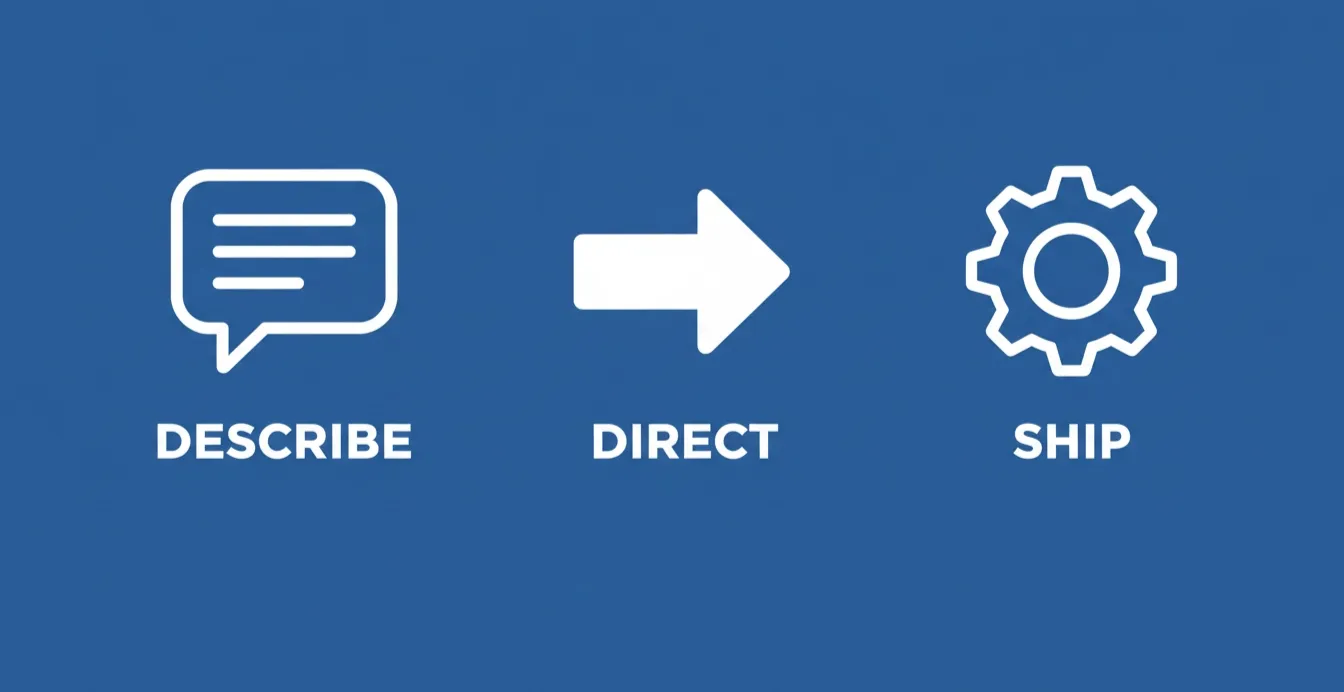 How the developer's daily workflow shifts under vibe coding: from writing code to directing AI output
Traditional vs. Vibe Coding Workflow
| Area | Traditional Software Development | Vibe Coding Workflow |
|---|---|---|
| Starting point | Blank editor, define structure manually | Natural language description of desired outcome |
| Time spent | Primarily writing and assembling code | Reviewing, adjusting, and guiding AI output |
| Tool focus | IDE first, automation later | AI-assisted from the beginning |
| Team energy | Syntax- and boilerplate-driven | Architectural and exploratory |
| Results | Slower visible progress | Faster iteration and working code early |
| Skill premium | Syntax memorization, typing speed | Clarity of thought, system judgment |
In many teams, developers now write code only when nuance requires precision. The daily rhythm shifts from write, debug, and repeat to describe, review, direct, and validate.
What This Means Day-to-Day
A developer using vibe coding in software development does not start their morning with a blank file. They start with a description. They review what the AI produced, ask whether it matches intent, refine, test, and decide what comes next.
This shift is well documented in the broader conversation around vibe coding vs. traditional coding. The comparison reveals just how different the two approaches feel in practice.
The Human Side: Mindset and Responsibility
Even with impressive capabilities, vibe coding still requires human oversight. Automated structures may introduce bugs, misinterpret requirements, or surface confusing error messages. Engineers need strong architectural judgment to verify that everything behaves safely in production environments.
That responsibility does not vanish. It intensifies.
The expectation shifts toward a skill set focused on:
- Reviewing and validating logic before it ships
- Articulating outcomes with enough clarity that AI can act on them
- Evaluating whether AI-generated code aligns with system expectations
- Interpreting results across large, interconnected software systems
The Skills That Now Matter Most
The impact of vibe coding in the role of a software developer is most visible in what skills become valuable. Syntax recall matters less. These capabilities matter more:
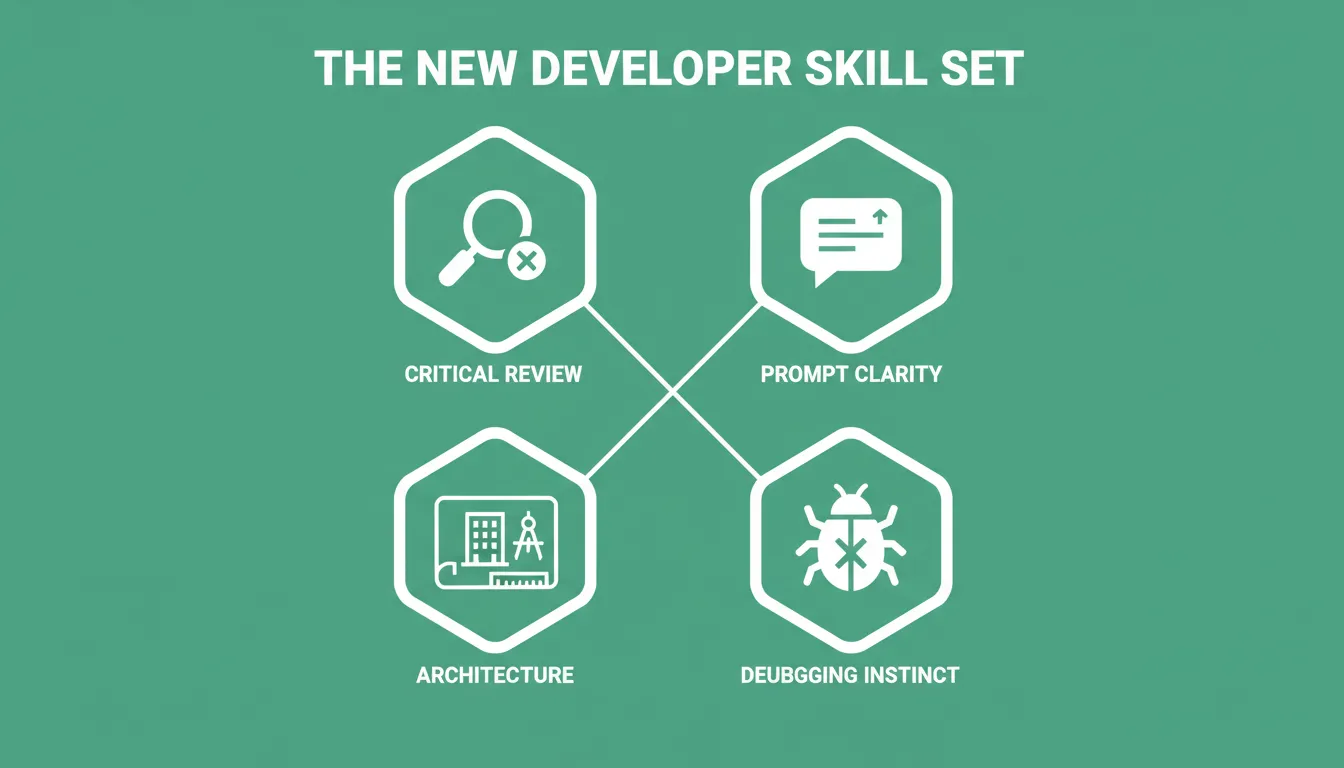 The four core skill areas that define high-performing developers in AI-assisted software development
Architectural reasoning means understanding how systems connect, where failure propagates, and what decisions are hard to reverse.
Prompt precision means describing intent clearly enough that AI produces useful output on the first pass. Vague instructions produce vague results.
Critical evaluation means reading AI-generated code with the same skepticism you would apply to a junior engineer's pull request.
Debugging instinct means knowing where to look when something is wrong, even when you did not write the code yourself.
Developers who want to build these skills faster can explore how to start vibe coding with no experience, a practical starting point for anyone making the transition.
How Teams Adapt Inside Modern Environments
Inside modern teams, vibe coding in software development encourages new collaborative rhythms. Teams write plan-level specs in natural language first, reference existing architecture second, and generate implementation scaffolding through AI-assisted development.
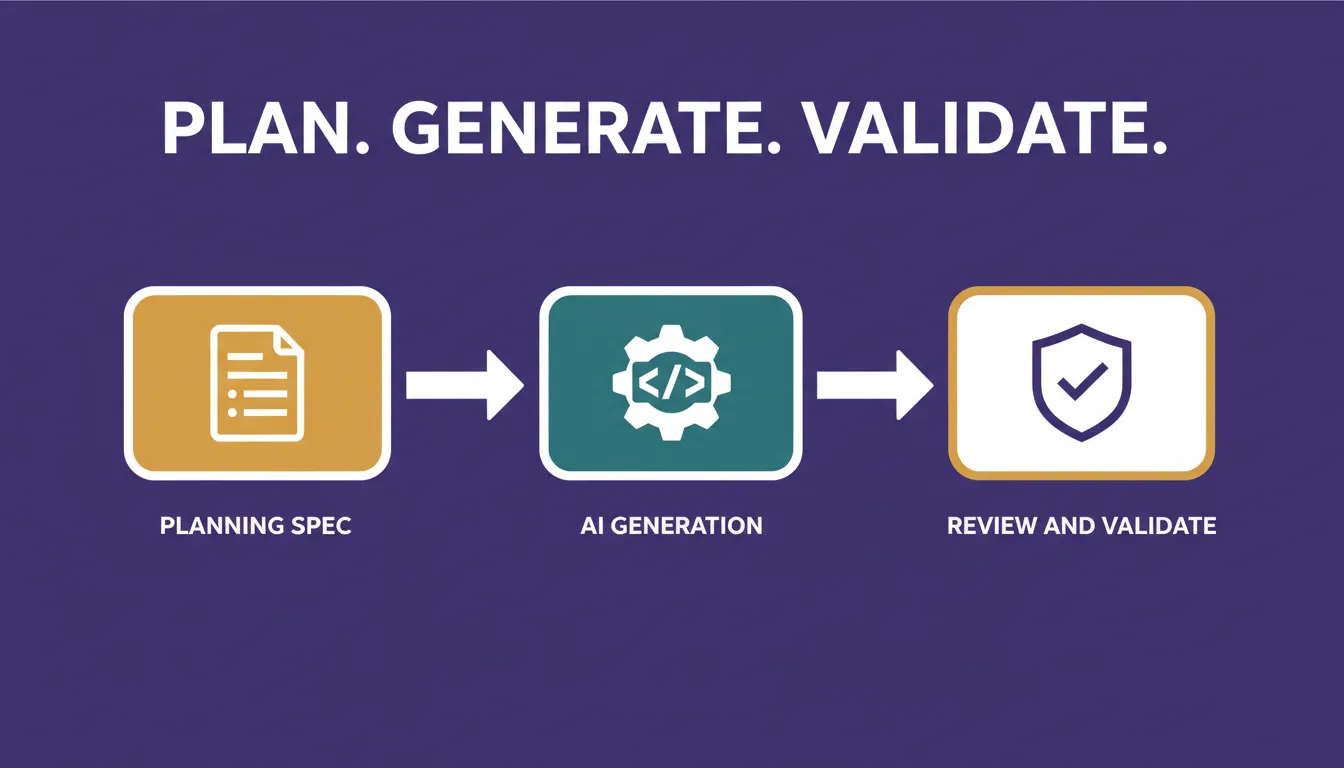
The three-phase team workflow that replaces traditional sprint cycles in vibe coding environments
Key Changes Appearing in Practice
- More planning discussions before the first commit
- Faster syncing between back-end and front-end teams
- Shared comprehension among product, QA, and engineering
- Greater involvement from non-technical stakeholders via natural language descriptions
- Shorter feedback loops between idea and working prototype
A subtle shift emerges in how engineers see themselves: less like laborers of syntax, more like designers of behavior.
Community Insight
A comment circulating on Reddit captures the sentiment well. From r/programming:
"We've reached a point where the bottleneck isn't typing. It's deciding what's worth building. AI doesn't remove developers. It demands better thinkers."
That observation holds. The developers who thrive in vibe coding environments are not the fastest typists. They are the clearest thinkers.
Where Vibe Coding Changes Developer Responsibilities
The role of a modern software developer is evolving toward a more strategic, less mechanical approach. An engineer becomes the interpreter of intent and the reviewer of actual code produced.
Instead of stitching APIs manually, the focus shifts to shaping flows, managing architecture, collaborating with AI agents, and supervising long-term decisions.
Developer Role Evolution
The evolution of the software developer role from traditional coding to vibe coding and beyond
Practical Uses Appearing in Software Development Today
In web app projects, AI-assisted workflows significantly shorten iteration cycles. In internal dashboards, backend systems, and integration projects, the approach lets companies build software that once required weeks of setup in just days.
Examples from the Field
- Generating boilerplate CRUD architecture for a web app through natural language descriptions
- Building data pipelines or integration flows through structured explanation
- Deploying AI agents to automate tests or environment setup
- Fast scaffolding that allows teams to validate ideas before committing full resources
- Prototyping features in hours rather than days, then deciding whether to build them properly
When AI handles the assembly, engineers reclaim time to think about what they are actually building and why.
What Vibe Coding Does Not Solve
Vibe coding solves the execution bottleneck. It does not, however, solve the thinking bottleneck. The quality of what comes out depends entirely on what you bring to the tool.
If the direction is wrong, the code will be wrong, and it will be wrong faster than ever before. The developer who understands this is the one who uses vibe coding well. This is precisely why teams are exploring how to build a startup with vibe coding. The strategic thinking still has to come first.
Impact on Training and How Developers Learn
New developers learn differently under vibe coding. Large language models flatten learning curves by offering feedback loops without the fear of looking confused. Students practice explaining their goals rather than memorizing syntax.
That said, this shift demands stronger clarity of thought. Vague instructions lead to vague results. That is not a limitation of the tool. It is a signal about the quality of the thinking behind it.
The New Muscle Groups Developers Train
- Taste: knowing what good output looks like, even when you did not produce it
- Accuracy in describing behavior: communicating intent precisely enough to be actionable
- Critical evaluation of working output: reading AI-generated code with genuine skepticism
- Awareness of structure, performance, and consequences: understanding what the code does at a system level
Clear thinking becomes architecture. The developer who can describe a system precisely is the developer who can build it well, with or without AI.
What This Means for Hiring
Hiring changes. Interview questions change. Instead of evaluating typing speed, companies evaluate communication precision. Instead of checking syntax memorization, they assess pattern recognition, debugging instincts, and architecture fluency.
Roles shift from builder-of-lines to conductor-of-outcomes. That shift is both subtle and significant.
Rocket: Where Vibe Coding Meets Vibe Solutioning
Vibe coding answers "how do I build this?" It assumes the thinking has already happened, that the idea is worth building, the market is understood, and the direction is right. Most of the time, that assumption is wrong.
Rocket is the world's first Vibe Solutioning platform. 1.5 million people have tried Rocket across 180 countries. The distinction matters: Rocket starts before the first line of code. Solve generates market analysis, competitive intelligence, and strategic direction. Build generates the product from that thinking. Context means every build starts from the full accumulated intelligence of the project, with nothing re-explained and everything compounded.
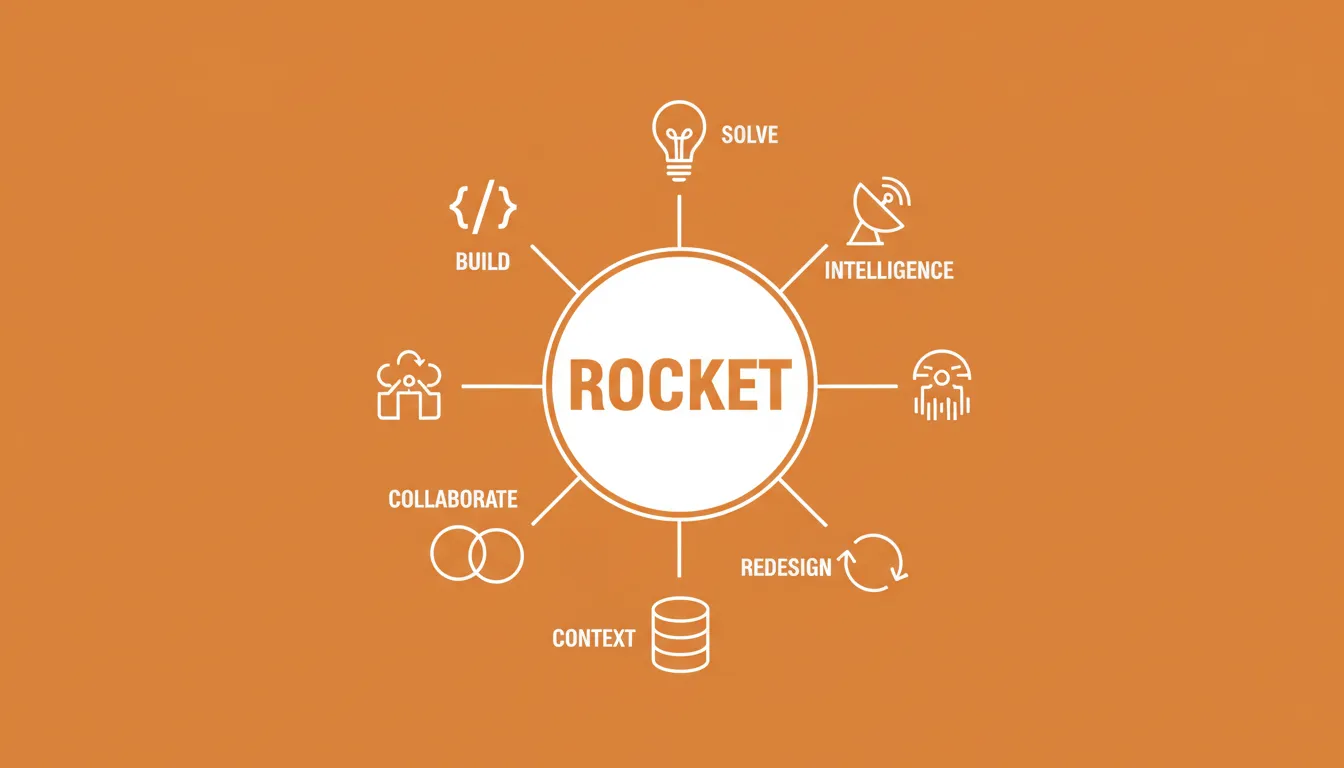
Rocket's six connected pillars, where the thinking and the building happen in the same place
What Rocket Builds With You
- Production-grade web apps in Next.js and mobile apps in Flutter
- Context-aware builds that start from your research, not a blank prompt
- 25+ integrations including Stripe, Supabase, Notion, Linear, and Airtable; authenticate once and they flow into every build
- Every product ships with SEO-ready structure, WCAG accessibility compliance, and GDPR coverage by default
To understand where the industry is heading next, explore vibe coding vs. agentic coding and the shift in developer mindset. And before you start building, common vibe coding mistakes is a useful read.
Rocket Capabilities at a Glance
| Pillar | What It Does | Primary Users |
|---|---|---|
| Solve | Any business question to a structured research report with evidence and recommendations | Founders, PMs, strategy teams |
| Build | Natural language to production-grade web apps, mobile apps, and landing pages | Developers, designers, founders |
| Intelligence | Continuous competitor monitoring across every public platform | Sales, marketing, product, strategy |
| Redesign | Eight slash commands to reimagine any existing website | Growth teams, agencies, developers |
| Context | Shared project memory; add files once and every task inherits everything | All teams |
| Collaborate | Team workspaces with role-based access and inline comments | Enterprise and growing teams |
How Does Vibe Coding Impact a Software Developer: The Direct Answer
Vibe coding impacts the role of a software developer in five concrete ways.
First, execution shifts to direction. The developer describes what should happen. AI produces the first draft. The developer validates, refines, and decides what comes next.
Second, syntax matters less and clarity matters more. The ability to describe a system precisely, its behavior, its constraints, and its edge cases, becomes the primary technical skill.
Third, responsibility intensifies, not diminishes. AI-generated code still needs architectural judgment to verify it behaves safely in production.
Fourth, iteration accelerates. Teams validate ideas in hours rather than weeks. The feedback loop between concept and working code compresses dramatically.
Fifth, the thinking before the build becomes the differentiator. Any developer can generate code with AI. The developer who understands what to build, and why, is the one who ships something worth using.
The Developer Role Is Not Disappearing. It Is Deepening.
How does vibe coding impact the role of a software developer? It moves the hardest work earlier in the process. The question of what to build, whether the direction is right, whether the system is sound, and whether the output solves the problem, now sits squarely with the developer, not the AI.
Vibe coding is not the end of software engineering. It is the beginning of a version where thinking is the craft. The developers who understand this will not be displaced by AI. They will be the ones directing it.
Rocket is built for exactly that moment, where the thinking and the building happen in the same place. Start building on Rocket and see what it means to build from a foundation that was properly laid.
Table of contents
- -What Vibe Coding is?
- -A Simple Reframe
- -Why Vibe Coding Gains Traction in Software Development
- -Real-World Workflow Shifts
- -Traditional vs. Vibe Coding Workflow
- -What This Means Day-to-Day
- -The Human Side: Mindset and Responsibility
- -The Skills That Now Matter Most
- -How Teams Adapt Inside Modern Environments
- -Key Changes Appearing in Practice
- -Community Insight
- -Where Vibe Coding Changes Developer Responsibilities
- -Developer Role Evolution
- -Practical Uses Appearing in Software Development Today
- -Examples from the Field
- -What Vibe Coding Does Not Solve
- -Impact on Training and How Developers Learn
- -The New Muscle Groups Developers Train
- -What This Means for Hiring
- -Rocket: Where Vibe Coding Meets Vibe Solutioning
- -What Rocket Builds With You
- -Rocket Capabilities at a Glance
- -How Does Vibe Coding Impact a Software Developer: The Direct Answer
- -The Developer Role Is Not Disappearing. It Is Deepening.