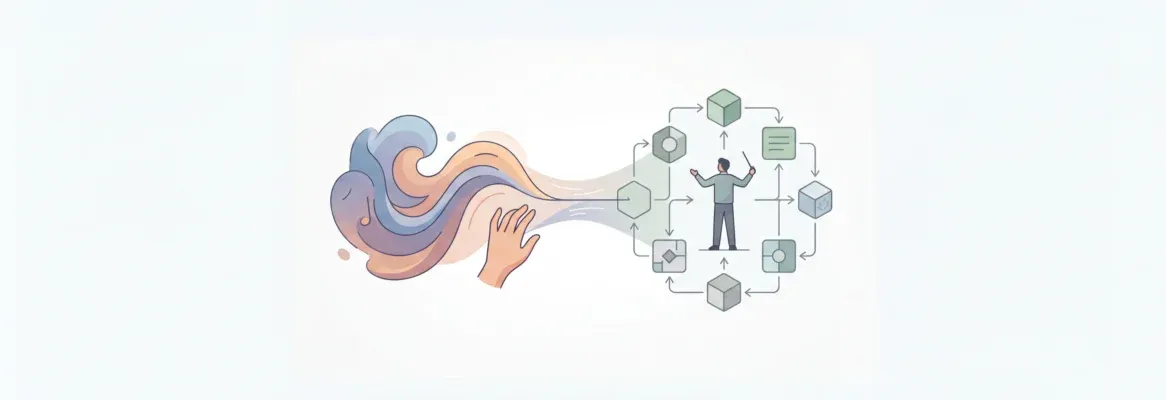
Vibe coding lets developers describe what they want in natural language while AI generates code. Agentic coding goes further: autonomous AI agents plan, execute, and test with minimal input. Both reshape the developer role from writer to orchestrator.
Key Takeaways
- Vibe coding = describe what you want in natural language; AI generates working code you review and refine.
- Agentic coding = set a goal; autonomous AI agents plan, execute, test, and report with minimal intervention.
- The shift is not about tools; it is about developer mindset: from writing code to orchestrating intelligent systems.
- Neither approach replaces developers; both change where technical depth is applied.
- The most effective teams blend both, using vibe coding for speed and agentic systems for scale.
From Syntax Mastery to Developer's Mindset
Software engineering is shifting focus from syntax mastery to how developers think.
The term vibe coding vs agentic coding captures this evolution perfectly. It's not about new tools, but a new mindset.
Developers now use natural language to create complex features instantly. AI agents can even plan, write, and test code without constant supervision.
So, what happens when developers stop coding line by line and start managing intelligent systems instead?
This blog breaks down how these two approaches differ, where they intersect, and what they mean for the future of software development.
Understanding the Paradigms
What is Vibe Coding?
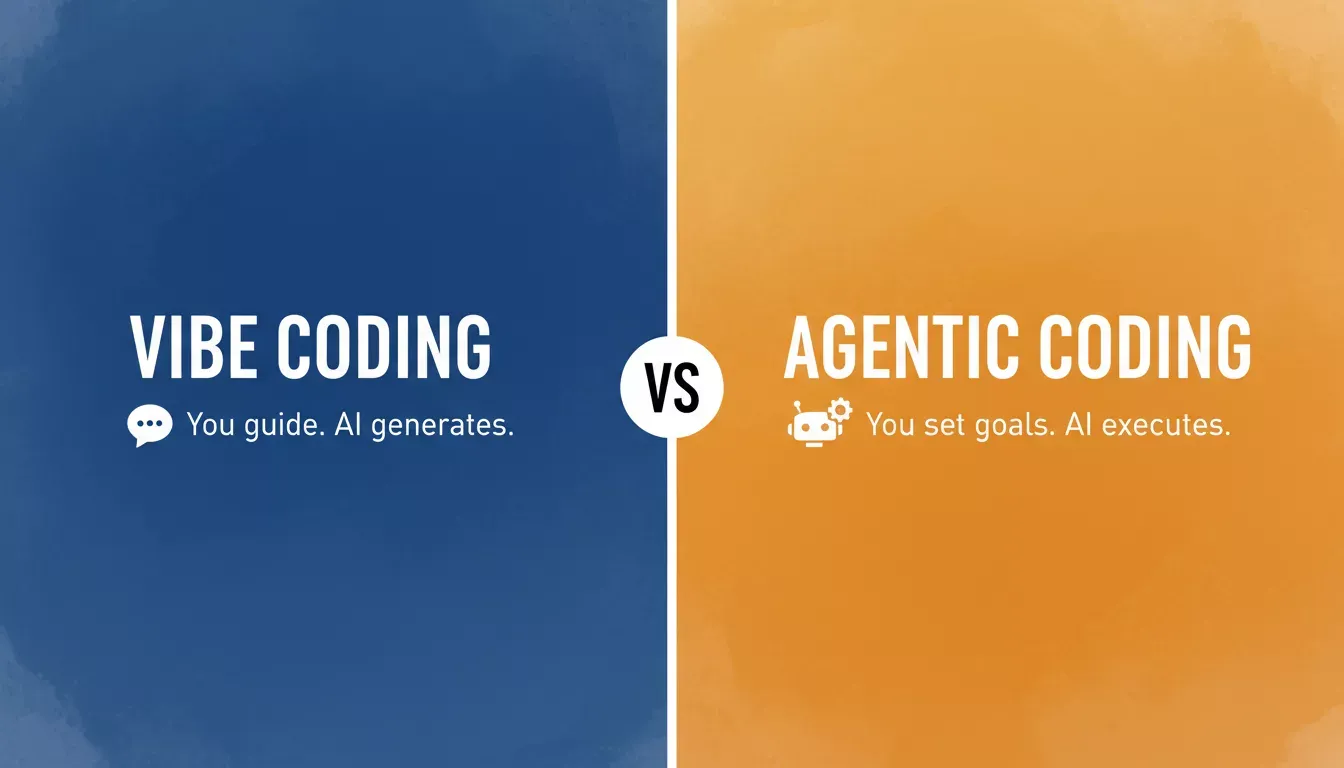
Vibe coding is a conversational approach to building software where developers describe desired outcomes in natural language, and AI generates working code. The term was coined by AI researcher Andrej Karpathy, who described it as communicating intent rather than specifying logic. You express the "vibe" of what you want and let the model handle the implementation.
This method gives developers freedom to focus on design and business logic while leaving repetitive work to AI. Instead of managing syntax, you manage intent.
Vibe coding thrives during rapid prototyping or internal tools where flexibility and speed are key. It lets you move from concept to deployment without waiting for full code cycles.
What is Agentic Coding?
Agentic coding takes automation further. It uses agentic AI systems that can plan, reason, and execute multiple coding tasks with minimal human intervention.
You don't give detailed prompts. You give objectives like "Refactor the API layer for scalability and update all related documentation." The AI agent then plans, executes, tests, and reports the results.
This approach fits enterprise software development where complex tasks demand consistency, testing, and compliance. It requires developers to think like orchestrators of autonomous systems rather than manual coders. Understanding the distinction between agentic AI vs AI agents is essential for teams adopting this paradigm.
Vibe Coding vs Agentic Coding: Key Differences at a Glance
| Feature | Vibe Coding | Agentic Coding |
|---|---|---|
| Developer Role | Writes prompts, reviews outputs | Defines goals, manages autonomous systems |
| System Autonomy | Moderate | High |
| Ideal Use Case | Prototyping, testing, small apps | Large systems, CI/CD, automation |
| Risk Factor | Maintainability issues | Lack of transparency in AI logic |
| Review Process | Manual | Automated with human checkpoints |
| AI Interaction | Conversational, iterative | Goal-oriented, multi-step execution |
| Skill Emphasis | Prompt crafting, design thinking | System architecture, orchestration |
Why the Shift in Thinking Matters
The shift changes what expertise means: developers move from writing code to directing intelligent systems, and the value they create moves upstream with them.
Instead of mastering syntax, developers now focus on collaborating with AI. In vibe coding, the human still drives creativity and testing. In agentic coding, the human manages system behavior and quality standards.
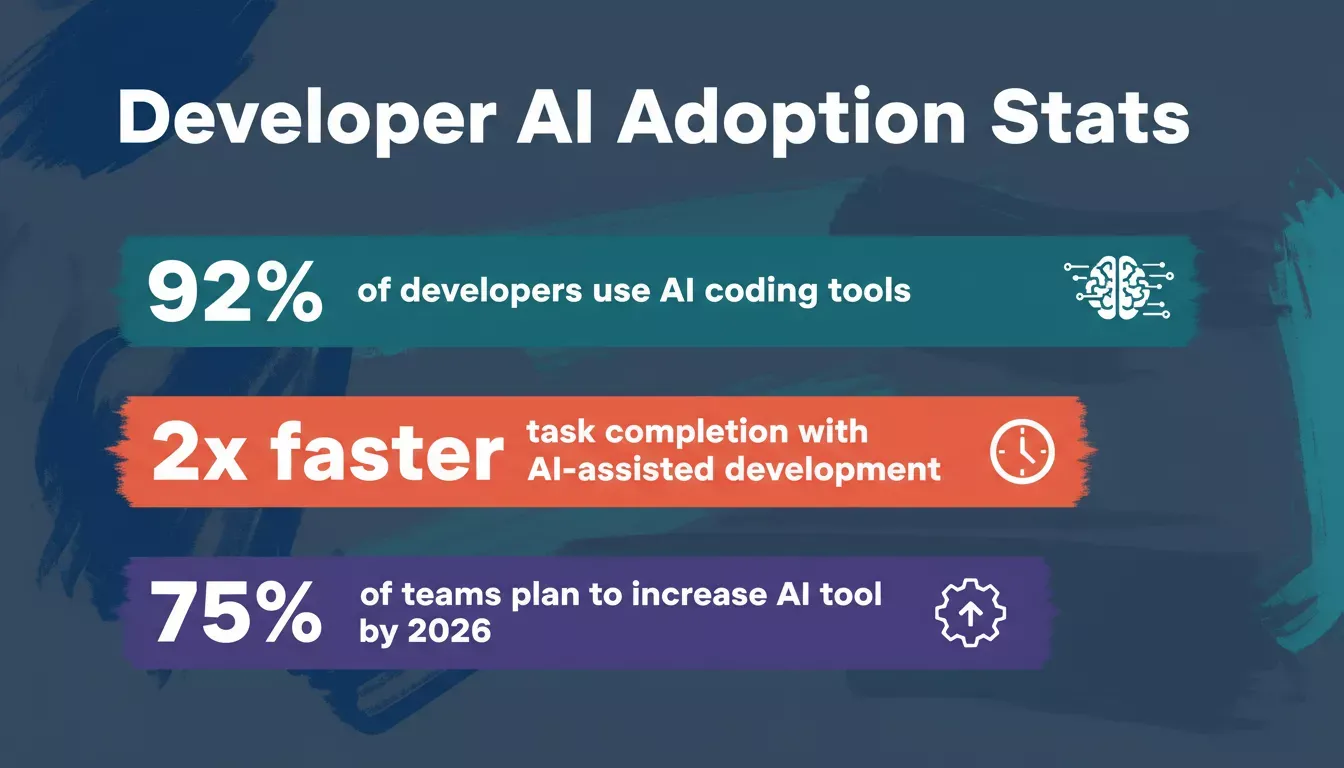
It's a move from doing the work to directing the work. This evolution does not remove technical depth; it changes where that depth is applied. From writing code to managing context, structure, and AI interactions. 92% of developers were already using AI coding tools in some form by 2024, signaling how fast this shift is accelerating.
What is the Difference Between Vibe Coding and Agentic Coding?
The core difference is the level of human direction required.
Vibe coding is interactive: the developer stays in the loop, reviewing each output and steering the next prompt.
Agentic coding is autonomous: the developer sets a goal and the AI system decomposes, executes, and validates it with minimal check-ins.
Both use natural language as the interface, but agentic systems operate across longer time horizons and more complex task graphs. For a deeper technical treatment, the arXiv paper on Agentic AI Software Engineering is worth reading alongside this post.
The Developer's New Role
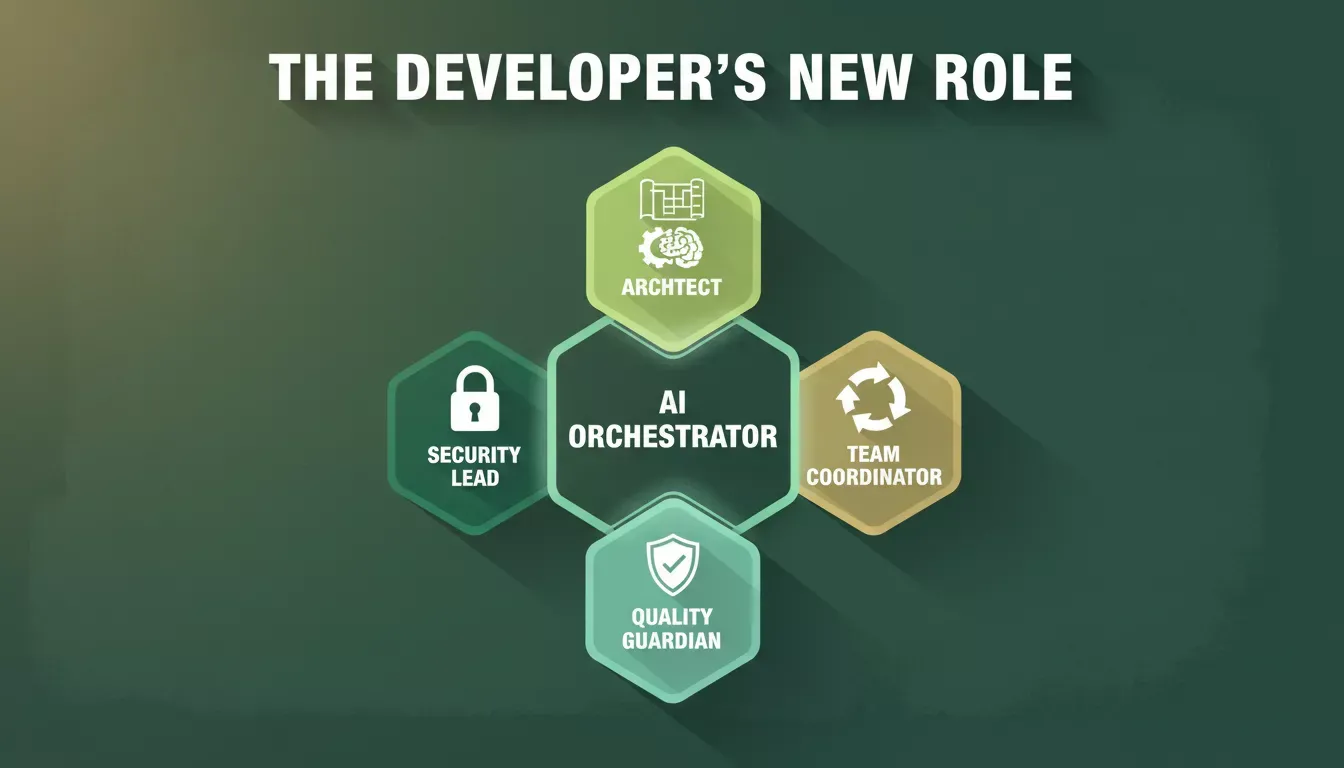
Developers are no longer just code writers. They become designers of intent and reviewers of AI-generated outputs.
- Architectural Decisions: They define system design, not just function definitions.
- Quality Standards: They decide what counts as good code and maintain reliability.
- Business Logic: They ensure AI-generated code meets core business requirements.
- Security Oversight: They handle audits, regulatory compliance, and safety checks.
- Team Collaboration: They coordinate between human teammates and AI agents.
The future developer is both creator and conductor, guiding AI systems through human judgment and technical clarity. This shift is already reshaping how vibe coding impacts developer roles across the industry.
Expert Tips for Developers
- Build systems, not snippets: Think about how modules fit into long-term architecture.
- Establish guardrails: Set limits on what AI agents can modify.
- Maintain oversight: Always review generated code before deployment.
- Provide context: Natural language prompts perform best with detailed input.
- Act as architects: Focus on clarity, structure, and overall design instead of line editing.
Mastering prompt engineering best practices is one of the highest-leverage skills a developer can build in either paradigm. The quality of your output is directly proportional to the quality of your input.
Security and Quality
Even when AI handles most tasks, quality and security must remain human responsibilities.
In vibe coding, developers test outputs and correct logic directly. In agentic coding, AI may run automated tests, but humans must validate the architecture and ensure compliance.
Maintaining standards prevents quality drift and ensures consistency with organizational goals. Understanding AI in backend development is critical for teams adopting agentic systems, since backend logic is where most compliance and security risks live.
Comparing the Workflows
Vibe Coding Workflow
Vibe coding: developer-guided, iterative, conversational.
Agentic Coding Workflow
Agentic coding: goal-oriented, autonomous, developer-supervised.
How Rocket Fits In
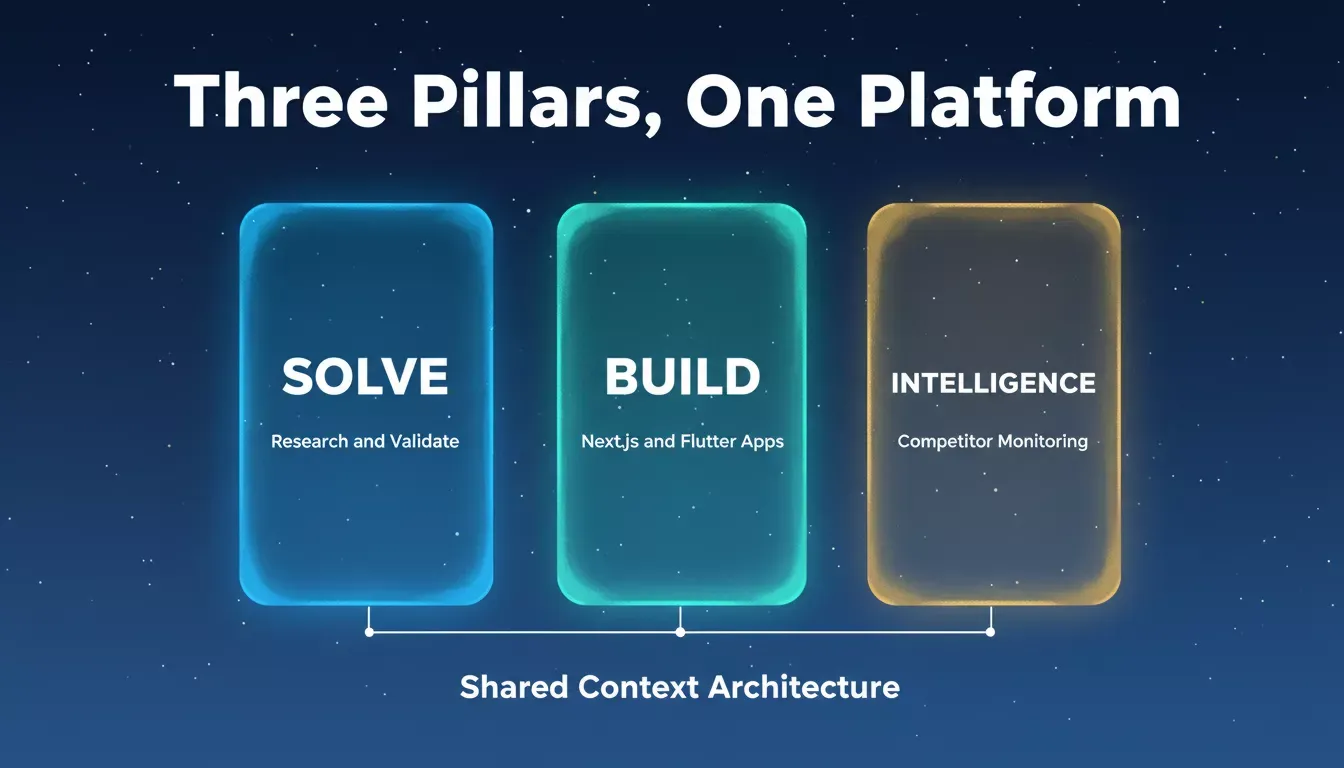
Rocket.new is not a code generator that is "evolving toward" agentic capabilities, it is already an agentic platform, organized around three named pillars that work independently and share context when used together:
- Solve validates ideas, runs market research, creates PRDs, and delivers structured reports with data, insights, and recommendations. Any business question is answered in 60 to 90 minutes.
- Build generates production-ready Next.js web apps and Flutter mobile apps from natural language, Figma files, or existing GitHub repositories. Every build ships with SEO-ready structure, WCAG accessibility compliance, GDPR coverage, and performance optimization by default.
- Intelligence monitors competitors continuously across every public platform they operate on, delivering automated daily briefs, pricing change alerts, and trend signals to a live dashboard.
How agentic behavior is already live in Build: During a Build session, Rocket.new runs specialized sub-agents for different task types. A backend agent manages routes, logic, data, and integrations. An Advisor Agent acts as a built-in senior architect, diagnosing root causes, resolving error loops, and making architectural decisions automatically. Precision Mode provides 100+ structured slash and @ commands for granular, file-level control over generated applications.
The tech stack is specific and checkable: Web apps are built in Next.js; mobile apps in Flutter. Backend support includes native Supabase integration for the database, auth, file storage, and edge functions. Payments connect via Stripe. Deployment goes to Netlify with one click or to a custom domain. 25+ integrations, including Google Analytics, Airtable, Linear, Notion, and OpenAI, authenticate once and flow into every build.
The platform is organized around Tasks (a single unit of work: one Solve report, one Build session, one Intelligence setup) and Projects (groups of related tasks with shared context, uploaded files, and connected services). Account creation takes about 30 seconds.
Where is Each Approach Used in Practice?
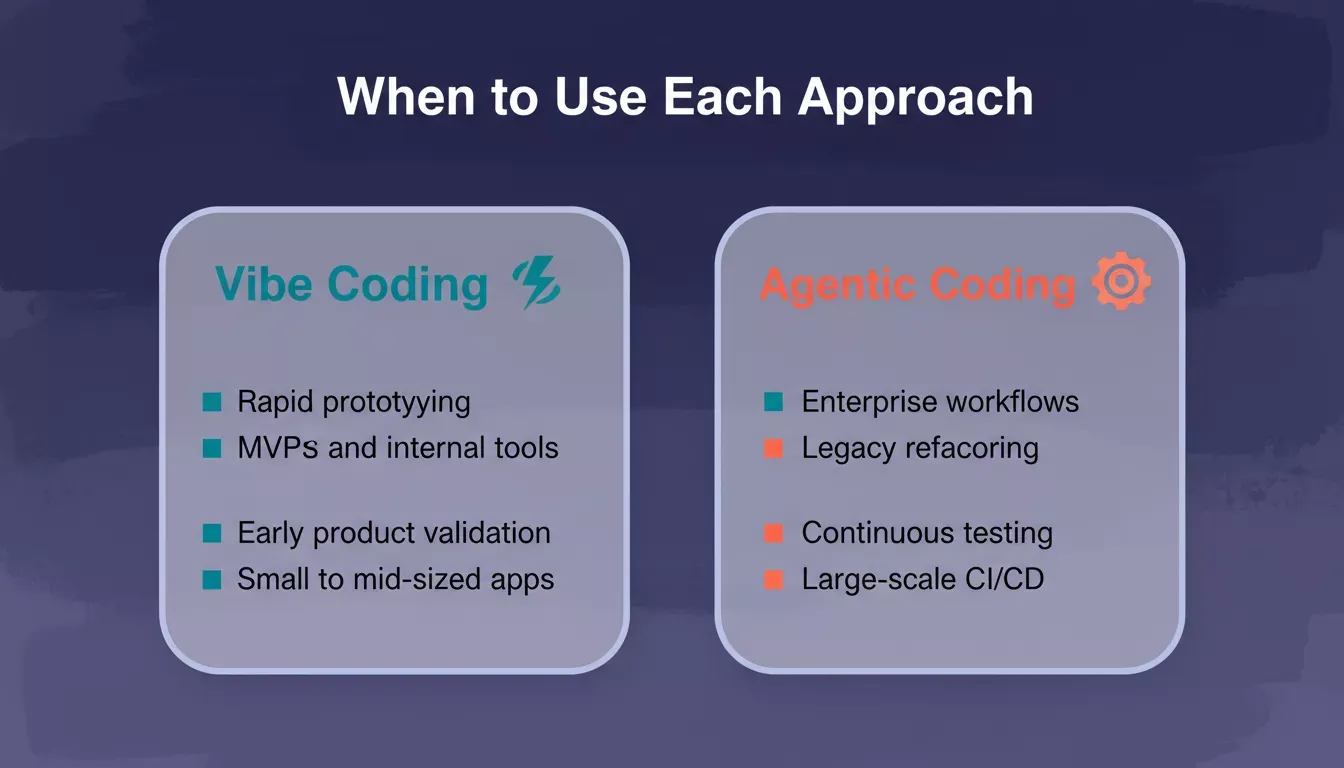
- Vibe coding: Teams use it for MVPs, internal tools, and early product validation, anywhere speed and iteration matter more than scale.
- Agentic systems: Used for legacy refactoring, continuous regression testing, and large-scale CI/CD automation, anywhere consistency and multi-step execution matter more than interactivity.
- Hybrid: Most modern teams blend both. Vibe coding handles the creative, exploratory phase; agentic systems take over for structured, repeatable execution.
Teams that adopt a full-stack AI builder get the best of both worlds: the speed of vibe coding for early stages and the reliability of agentic execution for production.
When to Use Each
You don't need to choose one permanently.
- Use Vibe Coding when you're testing concepts or need flexibility.
- Adopt Agentic Systems for structured, enterprise-grade workflows.
- Blend Both Approaches for end-to-end coverage across your team.
The hybrid model is proving most effective for modern teams that want speed without losing control.
Team and Cultural Shifts
Team dynamics are changing. Developers now collaborate not only with each other but also with AI agents. Product managers define goals using natural-language prompts, while reviewers assess AI-generated results rather than manually reviewing every function.
To keep collaboration strong: maintain documentation so AI understands project context; track changes transparently by auditing both human and AI commits; review consistently to maintain code quality across every merge; and align teams around clarity so everyone understands where AI fits in the process.
These practices make vibe and agentic coding sustainable at scale. Teams that invest in code collaboration tools alongside AI workflows consistently outperform those that treat AI as a solo productivity tool.
Navigating the Shift
The shift between vibe coding and agentic coding is more than a tool change; it's a mindset evolution.
Vibe coding brings creativity and agility. Agentic coding adds automation and scalability. Together, they represent the next logical step in how software engineers think, collaborate, and build.
In this new phase of software development, the most successful teams will not choose one side. They will balance both, using AI as a creative collaborator while maintaining the human insight that defines great engineering.
Ready to experience both vibe coding and agentic capabilities in one platform? Rocket.new is the complete vibe solutioning platform, combining Solve (research and validation), Build (production-ready Next.js and Flutter apps), and Intelligence (continuous competitor monitoring) in a single workspace with shared context.
Whether you're prototyping your next MVP or orchestrating complex AI-driven workflows, Rocket gives you the tools to build smarter and ship faster.
Start building for free and see the difference for yourself.
Table of contents
- -From Syntax Mastery to Developer's Mindset
- -Understanding the Paradigms
- -What is Vibe Coding?
- -What is Agentic Coding?
- -Vibe Coding vs Agentic Coding: Key Differences at a Glance
- -Why the Shift in Thinking Matters
- -What is the Difference Between Vibe Coding and Agentic Coding?
- -The Developer's New Role
- -Expert Tips for Developers
- -Security and Quality
- -Comparing the Workflows
- -Vibe Coding Workflow
- -Agentic Coding Workflow
- -How Rocket Fits In
- -Where is Each Approach Used in Practice?
- -When to Use Each
- -Team and Cultural Shifts
- -Navigating the Shift