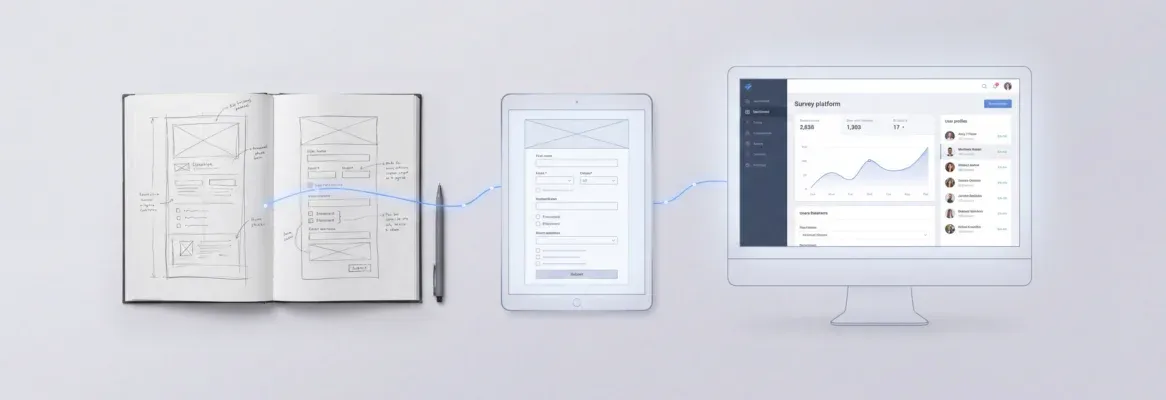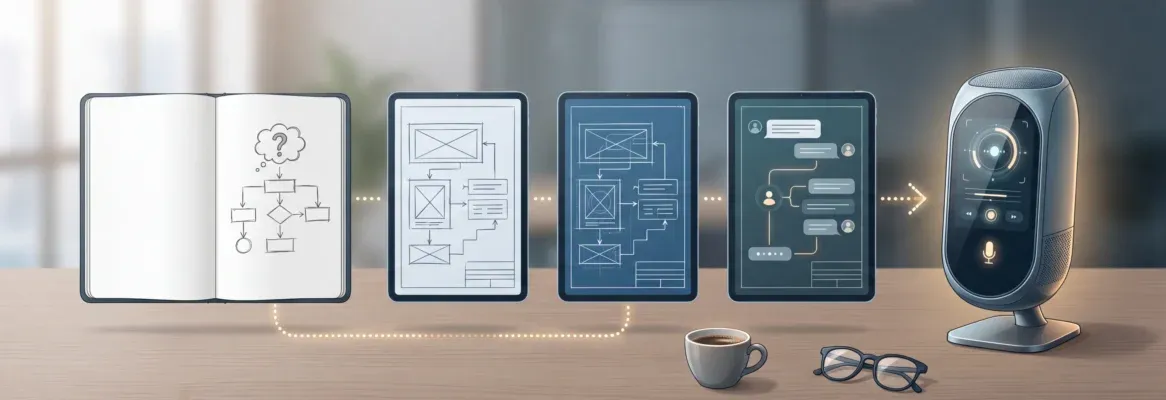
How can you turn ideas into prototypes fast? Vibe coding lets product managers guide AI to build apps quickly, reducing development time and reshaping workflows, as AI-driven software creation rapidly gains adoption.
How to turn an idea into a working prototype?
With modern AI tools and vibe coding, product managers can describe an idea in simple terms and get working apps up and running almost instantly. Instead of manually writing code for weeks, they guide AI to generate working software and refine it step by step.
The trend is growing quickly. According to TechCrunch, about 25% of startups in Y Combinator’s Winter 2025 batch had codebases that were roughly 95% AI-generated, showing how quickly AI-assisted development is spreading.
So let’s talk about how vibe coding works and why it is becoming part of modern product management.
What is Vibe Coding?
At its core, vibe coding is a coding approach where people describe what they want, and AI tools generate the code. Instead of manually writing code line by line, you explain the idea and let AI handle the heavy lifting.
The concept was popularized by computer scientist Andrej Karpathy, who described it as a way to give instructions in natural language while AI produces the underlying code.
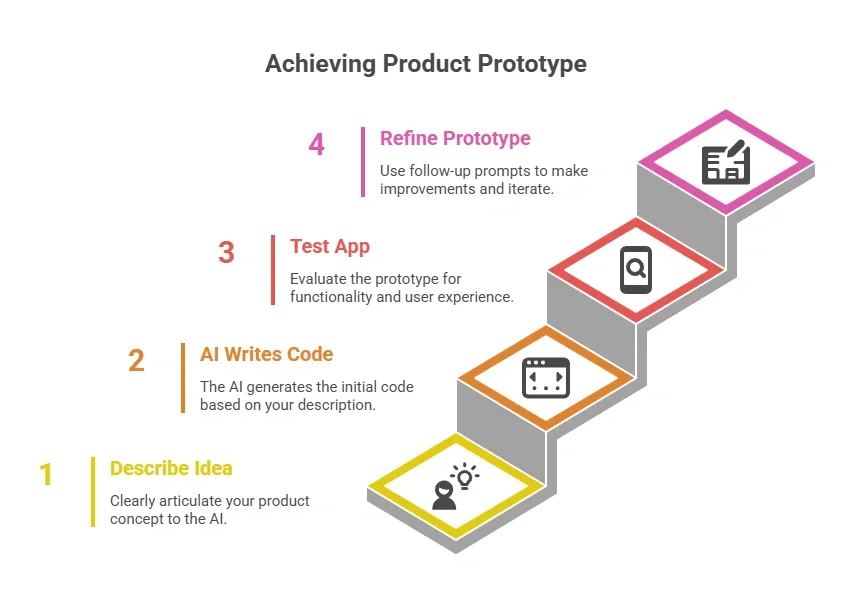
This means product managers can create software prototypes quickly without becoming full developers. The goal is not perfect code. The goal is a working code that helps validate an idea quickly.
Why Product Managers are Starting to Vibe Code
Traditional software development takes time. Product managers often wait weeks for engineers to build prototypes. Vibe coding changes that process.
Now product managers can:
- Test an idea quickly
- Create a quick prototype
- Validate user needs
- Share a clickable prototype with users or stakeholders
This shift lets product managers focus on product thinking and user needs, while AI handles much of the code generation.
A typical flow now looks like this:
| Step | What Happens |
|---|---|
| Idea | Product manager defines the problem |
| Prompt | Initial prompt is written in an AI studio or tool |
| Code generation | AI creates generated code |
| Prototype | A working prototype is produced |
| Feedback | Users test the app |
| Iteration | Follow up prompts improve features |
Instead of weeks of development, a prototype might appear in minutes.
The Tools Behind Vibe Coding
The rise of vibe coding is closely tied to AI tools designed for rapid prototyping. These tools combine generative AI with software development workflows.
Common tools used in vibe coding include:
- AI studio environments
- AI coding assistants
- prompt based development tools
- agent based AI coding platforms
Many of these platforms use an AI agent to manage tasks like:
- Generating file structure
- Fixing bugs
- Writing code
- Suggesting new features
Some tools even run the app instantly so users can test it right away.
For product managers, this means apps can be built without deep technical fluency. You describe the idea, paste prompts in a text box, and run stuff.
From Idea to Prototype in Minutes
In traditional programming, turning an idea into a working app could take days or weeks of planning, writing code, and debugging. With vibe coding, product managers can move from idea to prototype in minutes using AI-assisted tools.
Let’s walk through how vibe coding works in practice.
Step 1: Start With the Idea
Every product starts with an idea.
The idea usually comes from:
- User research
- Bug reports
- Market feedback
- Internal tools needed by teams
A product manager identifies a real problem users face. Then they plan how a small prototype might solve it.
Step 2: Write the Initial Prompt
Next comes the initial prompt. Instead of writing code, the product manager writes instructions like:
"Create a simple task manager app with a dashboard and daily checklist."
This prompt goes into an AI coding tool or AI studio. The AI generates the first version of the app.
Step 3: Generate the Prototype
Now AI produces AI generated code and builds the app.
In many cases the system will automatically:
- Create the file structure
- Connect APIs
- Generate UI components
- Run the software
The result is a quick prototype. Not perfect. But functional.
Step 4: Improve With Follow Up Prompts
Once the prototype works, product managers refine it.
They might ask AI to:
- Add new features
- Fix bugs
- Improve UI
- Update generated code
This is where vibe coding becomes iterative. Each prompt modifies the underlying code. This process allows rapid iteration and experimentation.
The biggest shift here is speed. Instead of waiting through long software development cycles, product managers can quickly create and test ideas. A simple prompt can turn an idea into a working prototype, helping teams learn faster and build better apps for users.
Community Insight
Here’s a quote from a LinkedIn discussion about Rocket.new:
“Rocket.new isn’t just another AI code generator it listens to natural-language prompts and delivers production-ready apps, collapsing the gap between vision and execution.”
This insight reflects a growing shift in how software gets built. Instead of long development cycles, people can describe their idea and see apps take shape quickly. For product managers, this is especially powerful.
The Benefits for Product Managers
Vibe coding brings several advantages for product managers. It allows them to test ideas faster and communicate better with developers while focusing more on users and product direction.
Faster Prototypes
- Product managers can create a prototype in minutes.
- This helps test ideas earlier.
Better Communication With Developers
- Instead of abstract documents, PMs can show a working prototype.
- Developers then refine the production codebase.
Rapid Experimentation
- Product teams can test multiple ideas quickly.
- Throwaway weekend projects can become real products.
Stronger Product Thinking
- Because coding becomes easier, PMs spend more time focusing on users and features.
Overall, vibe coding helps product managers validate ideas faster and turn concepts into working apps quickly.
The Limits of Vibe Coding
Vibe coding is powerful but not perfect. AI-generated code can still have issues, especially when apps grow larger or move toward production.
Hidden Costs
- AI-generated apps may include messy code or unnecessary dependencies.
Bug Reports
- More experimentation means more bug reports.
Maintenance
- Generated code may be hard to maintain in large software systems.
Security Risks
- Some AI-generated code lacks strong security practices.
Developers still play a critical role. They review the code and integrate it into a production codebase.
Vibe coding works well for prototypes, but strong developer involvement is still needed for stable software systems.
A Quick Note on Product Manager Skills
Vibe coding does not replace product management skills. Instead, it adds new skills to the PM toolkit.
Product managers still need:
- Strong product thinking
- User research insights
- Market awareness
- Clear writing and communication
AI handles much of the coding work. The PM role remains focused on product direction.
Rocket.new: Launching Ideas into Working Apps
Rocket.new is a vibe coding platform designed to help people quickly turn ideas into working apps. Instead of writing code manually, users describe what they want, and the platform generates the software using AI-assisted workflows.
In simple terms, it works like a technical co-founder. You write a prompt, the system generates the code, and within minutes, you can test a working prototype.
Top Features
- Prompt to App Creation: Builds apps directly from single prompts
- Figma Import: Converts design files into live, editable layouts
- AI-Powered Backend: Automatically handles logic, data, and workflows
- Custom Domain Support: Publishes projects with a branded domain
- Code Export: Allows developers to extend or customize later
- Live Preview: Shows instant updates while editing
These tools help product managers build a quick prototype and test ideas with users without long development cycles.
Build Almost Anything With a Prompt
One interesting part of Rocket.new is how flexible it is. A single prompt can turn an idea into working software.
You can build things like:
- MVPs for startup ideas
- dashboards for tracking data
- simple internal tools for teams
- small apps for testing product features
Instead of spending time writing code or copying and pasting from different sources, users describe what they want and let the platform generate the code. Then they refine it with follow-up prompts until the prototype works the way they want.
The Future of Vibe Coding
Vibe coding is still evolving. Generative AI continues to improve.
AI coding systems are getting better at:
- Understanding prompts
- Generating working code
- Fixing bugs automatically
We may also see stronger AI agents that manage entire software workflows.
The future likely involves AI-assisted product building, where product managers and developers collaborate with intelligent tools.
Developers still maintain complex systems. Product managers guide the product vision. AI handles much of the repetitive coding work.
Faster Prototypes with Vibe Coding
Traditional programming slows down experimentation. Product managers often rely on developers for every prototype, which delays testing new ideas. With vibe coding for product managers, teams can generate software prototypes quickly using AI tools instead of manually writing code.
This shift does not replace developers. It simply helps product managers test ideas faster, validate user needs, and refine product direction before full development begins.
Table of contents
- -What is Vibe Coding?
- -Why Product Managers are Starting to Vibe Code
- -The Tools Behind Vibe Coding
- -From Idea to Prototype in Minutes
- -Step 1: Start With the Idea
- -Step 2: Write the Initial Prompt
- -Step 3: Generate the Prototype
- -Step 4: Improve With Follow Up Prompts
- -Community Insight
- -The Benefits for Product Managers
- -Faster Prototypes
- -Better Communication With Developers
- -Rapid Experimentation
- -Stronger Product Thinking
- -The Limits of Vibe Coding
- -Hidden Costs
- -Bug Reports
- -Maintenance
- -Security Risks
- -A Quick Note on Product Manager Skills
- -Rocket.new: Launching Ideas into Working Apps
- -Top Features
- -Build Almost Anything With a Prompt
- -The Future of Vibe Coding
- -Faster Prototypes with Vibe Coding