
How do vibe coding and vibe solution impact development speed? Vibe coding emphasizes creative, iterative programming, while vibe solution focuses on structured problem-solving, shaping how software is built and scaled efficiently.
Have you noticed how app development today often feels like a mix of creativity and speed?
Modern developers are increasingly using AI tools to generate code, refine ideas, and test features rapidly.
In fact, AI assistance can help developers produce working prototypes up to 3 times faster than traditional coding methods, enabling rapid iteration and experimentation.
At the heart of this shift are two mindsets: vibe coding and vibe solution. Both influence how developers think, how code grows, and how software scales, making it crucial to understand the difference.
What Exactly is Vibe Coding?
Vibe coding isn’t about replacing developers with AI. It’s about collaboration, letting human creativity guide AI to generate code quickly. Developers provide high-level instructions or natural-language prompts, and AI tools turn those ideas into working code, handling repetitive tasks, UI components, and even backend logic.
The strength of vibe coding lies in speed. It’s idea-first, allowing developers to prototype, test, and refine concepts rapidly. This approach is ideal for throwaway weekend projects, experimental features, or early-stage MVPs.
Some key aspects of vibe coding include:
- Writing prompts in plain language to describe features
- Using AI tools to generate code efficiently
- Debugging and refining generated code
- Running tests quickly to verify functionality
The mindset encourages experimentation. Developers can let the code grow organically, iterate quickly, and learn from each run. However, unclear prompts or missing logic can lead to code that works in some cases but fails in edge scenarios.
Vibe Solution: Structured Thinking for Scalable Apps
If vibe coding is about quickly generating code from natural language prompts, the vibe solution takes it further.
Think of it as the bigger picture: a workflow that goes beyond just writing code. It automates repetitive tasks, streamlines processes, and lets developers focus on high-level logic and scale projects efficiently.
In simple terms, vibe coding is the method, while vibe solution is the platform or workflow that uses that method to build and grow applications.
Unlike vibe coding, where AI is more of a creative partner, the vibe solution treats AI as a support system.
Developers spend less time on boilerplate or copy-paste tasks and more time designing architecture, planning backend logic, integrating external APIs, and thinking about performance. The workflow mirrors traditional software engineering practices, but with AI smoothing out repetitive work and speeding up processes.
This approach becomes especially important for full-stack apps, enterprise software, or projects that need to scale reliably. By focusing on structure and long-term planning, Vibe Solution ensures apps grow without introducing random changes, technical debt, or hidden bugs.
Some key elements of the Vibe solution include:
- Planning architecture and designing solutions thoughtfully
- Integrating APIs and managing backend logic efficiently
- Setting up testing frameworks to ensure scalability
- Maintaining performance and reliability across the app
By combining structured thinking with AI assistance, the Vibe solution enables teams to move from rapid prototypes to production-ready apps without sacrificing control over quality or scalability.
Workflow Differences Between Vibe Coding and Vibe Solution
Knowing the difference between vibe coding and vibe solution helps decide which approach to use at each stage of a project. Often, teams start with vibe coding to explore ideas quickly, then shift to vibe solution for structure and scaling.
Here’s a clear comparison:
| Aspect | Vibe Coding | Vibe Solution |
|---|---|---|
| Approach | Idea-first and iterative: focus on experimenting and getting code running fast | Solution-first and structured: focus on planning, architecture, and building scalable systems |
| AI Role | Acts as a creative partner, generating code quickly based on natural language prompts | Acts as a support system, helping automate tasks, refine logic, and ensure scalable performance |
| Best For | Rapid experimentation, weekend projects, MVPs, or feature prototypes | Production-ready applications, full-stack projects, and apps that need long-term reliability |
| Skill Emphasis | Creativity, writing prompts, quick debugging, and testing ideas | Architecture, backend logic, testing frameworks, and problem-solving at scale |
| Mindset Shift | Play with code, iterate fast, let ideas grow organically | Plan carefully, validate designs, and ensure code evolves without random changes or technical debt |
Most teams find that blending both approaches works best. Start with vibe coding to test and iterate ideas quickly, then transition to vibe solution to refine, optimize, and scale the app reliably.
How AI Tools Shape This Shift?
AI platforms are central to this evolution.
Tools like Rocket.new, Replit, Cursor, and Dreamflow make it possible to generate code in ways that weren’t feasible before. But tools alone aren’t enough.
Developers must know when to use vibe coding versus vibe solution. Starting with vibe coding can speed up ideation, but without moving to the vibe solution, apps risk becoming unmaintainable. Conversely, jumping straight into the vibe solution without prototyping can slow innovation.
Practical tips for using AI tools effectively:
- Define clear goals before generating code
- Understand the platform’s strengths and limits
- Combine natural language prompts with logic hints
- Review and refine generated code to handle edge cases
- Test frequently to catch bugs early
AI doesn’t replace coding knowledge. Instead, it shifts the focus toward managing complexity, refining ideas, and improving the overall development process.
Rocket.new: Streamlining Vibe Workflows
Rocket.new is a vibe solutioning platform that helps developers move from idea to production-ready app quickly and efficiently. It combines AI-assisted workflows with structured development features, allowing teams to experiment freely while keeping code scalable and maintainable.
Top features of Rocket.new include:
- Prompt-based full-stack app generation: Describe your idea in text, and Rocket.new builds the frontend, backend, and integrations automatically.
- Figma to code conversion: Turn Figma designs into fully functional, responsive web or mobile apps without manual effort.
- Built-in backend and authentication: Databases, user authentication, API endpoints, and security are ready to go, no setup required.
- Cross-platform output: Build web apps or mobile apps for iOS and Android from the same project seamlessly.
- One-click deployment with hosting: Launch your app instantly, with support for custom domains included.
- Full code export and ownership: Retain complete access to the generated code for manual edits or further development.
- Run precise actions with commands: Use / to execute actions and @ to scope edits from chat—fast, clear, and controlled.
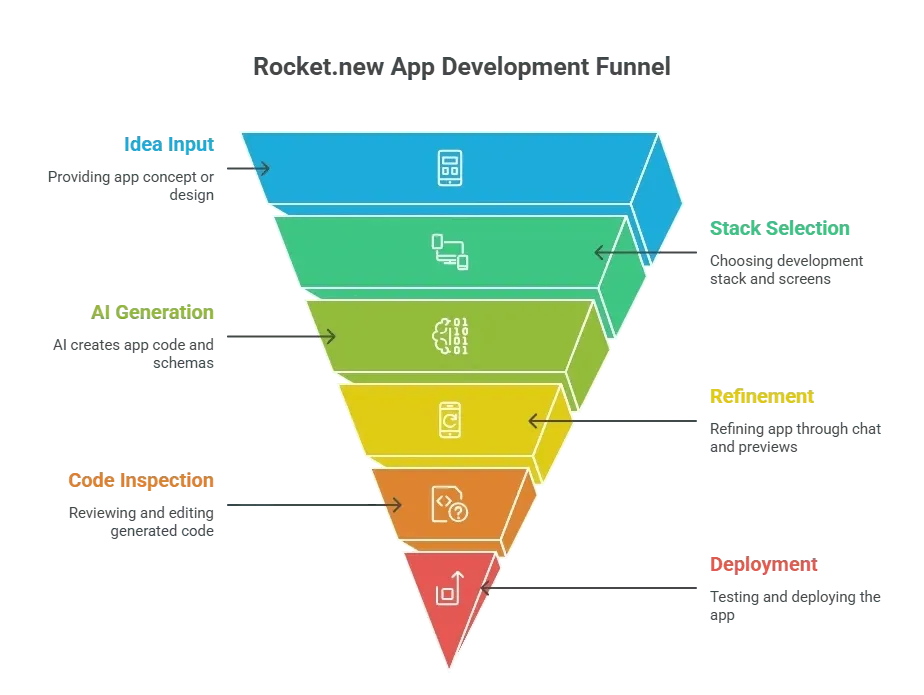 Developers love Rocket.new because it blends freedom and structure. You can start fast, experiment, and then refine the app until it’s production-ready. It’s a platform that supports both vibe coding and vibe solution workflows, making the transition from prototype to scalable application smooth and intuitive.
Changing the Developer Mindset
AI isn’t just changing the tools developers use; it’s changing how they think. Coding knowledge remains important, but the emphasis has shifted toward:
- Guiding AI with natural language prompts
- Understanding backend logic
- Refining generated code
- Balancing creativity with structure
Teams adopting both mindsets see faster iteration, fewer bugs, and more consistent performance. Traditional coding isn’t the only path anymore. Professional developers can now leverage AI to write code, build apps, and refine functionality simultaneously.
Vibe Coding vs Vibe Solution in Modern Workflows
Vibe coding vs Vibe solution represents a clear shift in developer workflows. Vibe coding encourages rapid idea growth and experimentation. Vibe solution channels those ideas into structured, scalable systems. Combining both approaches and leveraging AI tools like Rocket.new allows developers to build software that is both fast and reliable. Understanding this distinction is key to thriving in modern software development.
Table of contents