
Rocket.new’s weekly digest turns fragmented research into a structured, actionable report. It combines competitive signals, AI scoring, and pattern recognition to highlight what truly matters. Teams use it to move faster from insight to decision without switching tools or losing context.
Why Most Research Still Feels Like Busywork
How much of your organization's research time actually leads to a decision?
Most market research still depends on manual work where people collect data from scattered sources, switch between software tools, and lose context at every step. According to a 2026 AI automation report, 88% of organizations now use AI in at least one business function, yet research workflows remain some of the last to benefit.
-
Teams lose hours pulling data from separate platforms, losing context at every step
-
AI tools often only help with small pieces of the process, like summarizing an article or drafting a post
-
The middle ground between data collection, analysis, and reporting stays open
-
No single software system connects the full research journey from objective to shareable structure
The real problem is not a lack of data. The gap sits between raw information and focused action, and most software does not close it.
What a Weekly Digest Actually Covers
The Inputs: Where Research Data Comes From
A complete digest pulls data from several categories, each focused on a different layer of competitive and market analysis.
-
Real-time monitoring of competitors' landing pages and pricing shifts
-
Updates from rival social channels that indicate shifts in market sentiment
-
Recent press releases, media mentions, or industry reports with insights into trends
-
Changes in job postings that may point to shifts in strategy or technical focus
-
Global feedback and sentiment that provide insights into customers' perceptions
-
Customers' comments and reviews on G2, Glassdoor, and app stores
-
Ad activity, creative changes, and interaction signals across paid channels
The Process: How Data Becomes Reporting
The research process can be streamlined by connecting data collection, analysis, and reporting into a single AI platform. That means no switching between software tools, no lost files, and no repeated prompt work.
A complete research system should support the entire journey from defining an objective to producing a structured output. Efficiency gains compound when every stage feeds into the next, and decision-making gets faster at each step.
Inside the Digest: Structure That Leaders Can Act On
Daily Briefs vs. Weekly Rollups
Rocket.new delivers both daily briefs and weekly reporting rollups. The daily brief is a short notification that flags what moved overnight. The weekly digest goes deeper.
-
It groups signals by category: pricing, features, hiring, messaging, social activity
-
It scores each signal using a formula of Impact x Urgency x Differentiation Gap
-
High-impact items get flagged first, so teams and leaders address the most pressing market shifts immediately
-
The dashboard aggregates findings every week to reorder the product backlog for strategic planning
What the Reporting Structure Looks Like
The digest arrives as a structured document, not random alerts. Each section carries an analysis and a point of view. Here is an example of what a typical week covers:
| Section | What It Tracks | How Teams Use It |
|---|---|---|
| Product Signals | Website changes, features launched, pricing updates | Product planning, edit priorities, and roadmap adjustments |
| Social Analysis | LinkedIn, X, Instagram activity, engagement patterns | Marketing alignment, content strategy, and post planning |
| Hiring Signals | New job postings, role shifts, growth | Anticipate rival direction, plan resource decisions |
| Customer Comments | Review site comments, app store ratings, and forum posts | Support efficiency, retention strategy, and interaction data |
| Press Coverage | News mentions, articles, industry reports | Sales enablement, positioning, and innovation signals |
| Code and Ad Signals | Creative changes, spend patterns, code updates | Campaign efficiency, budget decisions, and developer focus |
Structure in reporting matters because it makes information easier to share, which speeds up decision-making. Developers and leaders both benefit from reporting that arrives pre-organized.
How AI Turns Signals into Focused Action
Pattern Recognition Across Sources
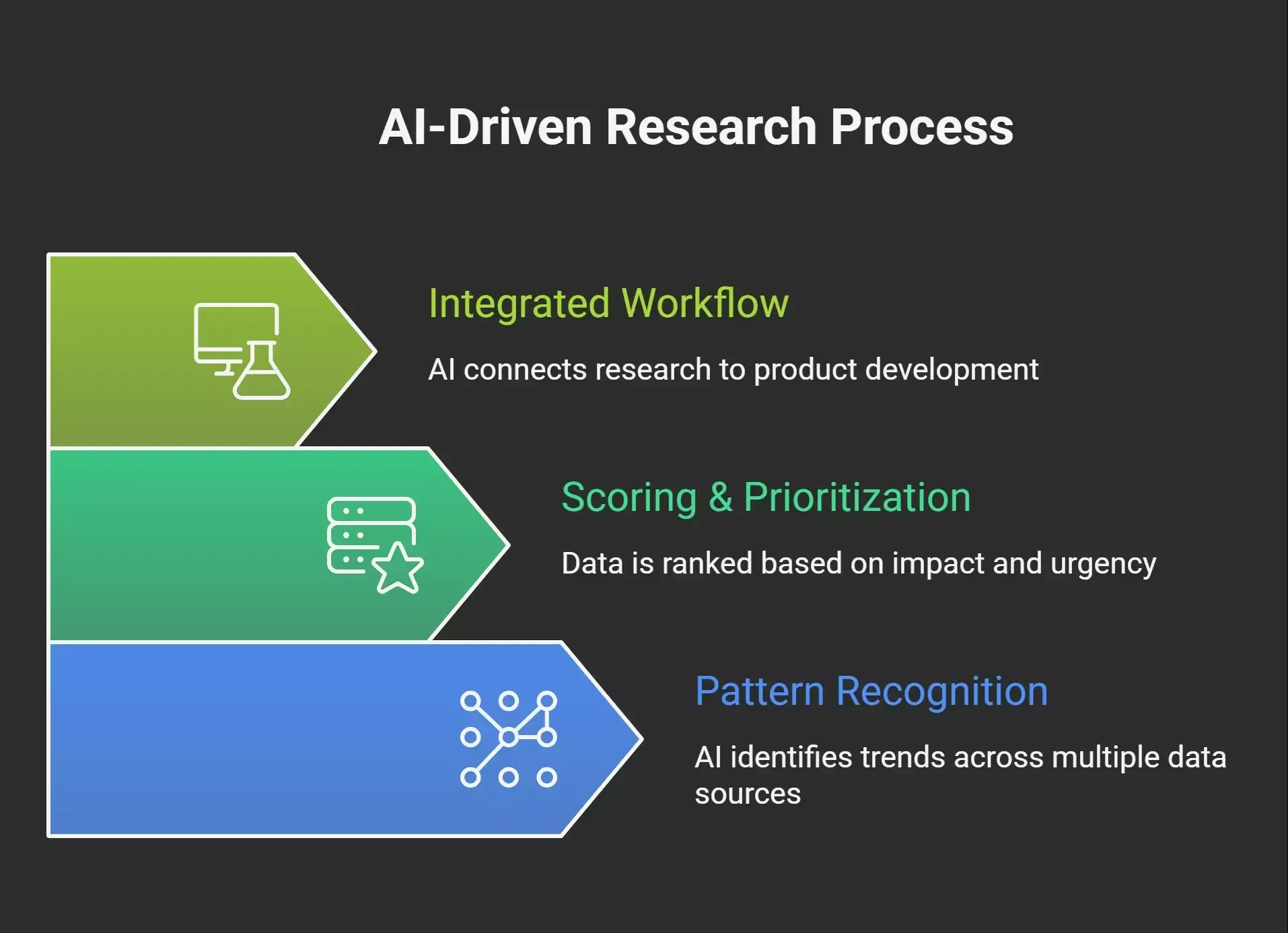
A rival CEO starts publishing articles about platform consolidation. At the same time, they open six enterprise sales roles targeting healthcare. Any one of those signals is noise. Together, they tell you a company is repositioning toward the enterprise segment, and that pattern appears weeks before anyone writes about it.
-
Rocket monitors six signal categories continuously across 30+ sources
-
AI reads patterns across signals, not individual updates in isolation
-
Research findings integrate directly into project memory for AI-powered build prompts
Scoring and Prioritization
Raw data can be scored based on Impact x Urgency x Differentiation Gap for prioritization. That scoring moves the digest from "things that happened" to "things that matter to your business."
-
Messy inputs get transformed into structured research that includes market analysis and competitive evidence
-
The AI software filters noise so users see what deserves attention
-
Teams manage fewer alerts but get better results from each one
-
Reporting efficiency improves because AI does the sorting
Where Most AI Tools Fall Short
The lack of a complete system that handles the entire research process contributes to slow workflows. Most AI tools assist with one small piece: summarize this article, generate code for a dashboard, draft a summary. The handoff between tools creates friction.
-
You prompt one AI tool for data collection, another for code work, and a third for reporting
-
Context gets lost at every switch, which is worse than doing it manually
-
Developers and leaders end up re-explaining the same project to each AI conversation
-
The disconnect between research and execution means insights rarely reach the people who create and build the product
AI tools can streamline the process by automating data collection, organization, and analysis, but only when they connect the full arc. A 2026 Liquibase survey found that 96.5% of organizations reported at least one AI interaction with their production databases. AI is already in the database layer. The point is whether your research tools connect to it.
Balancing Innovation with Operational Resilience
Enterprise organizations face a specific tension. They want the efficiency and innovation that AI code and reporting features bring, but they also need security, data reliability, and controlled power consumption from AI processing.
-
SOC 2, ISO 27001, GDPR, and CCPA compliance should come built in, not added after the fact
-
Role-based access controls matter when multiple developers and users interact with the same reporting dashboard
-
Database connections need governance, especially as AI-generated code grows common
-
Operational resilience means the system keeps running and delivering reporting even when one data source goes dark
AI gives organizations the ability to create synthetic users and digital twins to simulate real behavior, enhancing market analysis depth. But simulation only delivers value inside a governed, secure platform.
What Leaders and Developers Actually Need
The Conversation About Adopting AI Research Tools
When leaders talk about adopting a weekly digest, the conversation usually centers on two ideas: Will AI save people time, and will the insights be good enough to manage real decisions?
-
Product leaders expect the digest to inform what features to create next and which ideas to prioritize
-
Sales teams expect competitive data delivered before customers' calls
-
Developers want research context baked into the project so they can prompt AI to write code without a separate briefing
-
Enterprise customers need audit logs, access controls, and security compliance visible from day one
-
The point for teams is this: AI features should reduce risk, not add it
-
Code generation and structured reporting should reflect your thinking, not replace it
What Forward-Looking Leaders Track
The best groups do not just monitor rivals. They watch the space between what customers say and what the market delivers.
-
Revenue signals from pricing changes, which directly affect decision-making
-
Innovation patterns in hiring and R&D spending
-
Risk indicators like negative review comments or support complaints
-
Ideas and features in the market that no one has addressed yet
-
Software and code changes that point to new product direction
Community Take
"AI is a tool for decision-making. It's also a product of decisions."- Cassie Kozyrkov, Google's first Chief Decision Scientist, via Celonis
That matters because a digest is only as good as the decisions that shaped how it collects, filters, and presents data. The point of reporting is not more data. It is fewer, sharper decisions.
How Rocket.new Delivers Your Weekly Digest
Rocket.new built its platform to solve the problem most research tools ignore: connecting data collection, analysis, and reporting into one structure that feeds into product decisions.
-
A vibe-solutioning platform that covers research, building, and competitive monitoring in one shared context
-
25k+ templates library, free to use, covering SaaS dashboards, internal tools, landing pages, and mobile apps
-
Saves up to 80% tokens compared to standalone AI tools by carrying context across tasks
-
Supports Flutter for mobile and Next.js for web, so research findings can turn into shipped code in the same session
-
Collaboration features built in, with three-level access control and inline comments for developers and leaders to edit together
-
3 Products, One platform: Solve (research and strategy), Build (code tools and deployment), and Intelligence (continuous competitive monitoring with structured report features)
How These Features Work in Practice
-
A product manager sets up monitoring on Monday, reviews the digest on Friday, and opens a Solve task to analyze a pricing shift. Research findings integrate directly into the project for AI-powered build prompts.
-
A sales team pulls the daily brief to prepare for enterprise customers calls. The digest provides competitive data, reduces risk, and helps deliver answers with confidence.
-
A startup founder uses the digest to monitor four rivals each week, then takes the strongest insight directly into Build to generate code for a feature update. Efficiency gains come from staying in one software platform.
-
An enterprise research group connects Notion, Google Docs, and database files to Rocket. The structure compounds: every digest builds on prior analysis. Comments and edits from developers and leaders stay visible. Ideas from earlier reporting can be revisited at any stage.
Rocket draws on more than 1,000 data sources, including Meta ad libraries, Similarweb data, and its own crawlers. The features monitor websites, LinkedIn, X, Instagram, G2, Glassdoor, job postings, ad activity, press coverage, pricing pages, and product changelogs. AI creates a structure where competitive data flows into research, and research flows into code.
From Digest to Decision: Closing the AI Research Gap
What does a weekly intelligence digest from Rocket.new actually look like? It looks like a structured brief that arrives before the workday starts, tells leaders what moved, and recommends what to do about it.
Features, reporting structure, the ability to generate structured output, and competitive monitoring sit in one platform. Organizations that connect research, software development, and monitoring into one system stop reacting and start anticipating.
Start using Rocket.new to turn weekly market signals into decisions your team can act on instantly.
Table of contents
- -Why Most Research Still Feels Like Busywork
- -What a Weekly Digest Actually Covers
- -The Inputs: Where Research Data Comes From
- -The Process: How Data Becomes Reporting
- -Inside the Digest: Structure That Leaders Can Act On
- -Daily Briefs vs. Weekly Rollups
- -What the Reporting Structure Looks Like
- -How AI Turns Signals into Focused Action
- -Pattern Recognition Across Sources
- -Scoring and Prioritization
- -Where Most AI Tools Fall Short
- -Balancing Innovation with Operational Resilience
- -What Leaders and Developers Actually Need
- -The Conversation About Adopting AI Research Tools
- -What Forward-Looking Leaders Track
- -Community Take
- -How Rocket.new Delivers Your Weekly Digest
- -How These Features Work in Practice
- -From Digest to Decision: Closing the AI Research Gap