Hobby & Passion Content Portfolio & Case Study Website Template
Atelier is a hub-and-spoke landing page template built for miniature painting blogs and communities. It combines architectural serif typography, a Japanese Zen color palette, and anchor navigation to guide visitors through your story, techniques, showcase, and resources. A built-in email signup with a conversational prompt turns engaged readers into community members.
by Rocket studio
Quick summary
Atelier is a single-page hub-and-spoke template for display-level miniature painting communities. It uses a restrained Japanese Zen palette, a giant centered headline as the hero, and sticky anchor navigation to connect five focused content spokes. The "Join the Workbench" email form is embedded at the hub and repeated as a gentle sticky bar, converting curious visitors into subscribers.
Who this template is for
This template speaks directly to painters who have moved past basic tabletop standards and now care deeply about craft. It suits anyone building a content-led community around miniature painting at a serious level.
- Experienced hobbyists pursuing display-level or competition-quality painting
- Intermediate painters ready to step up their technique and connect with a focused community
- Bloggers and creators launching a miniature painting hub with a blog, showcase, and resources section
What problem this template solves
Most hobby websites feel cluttered, generic, or built for beginners. Atelier solves the presentation problem for painters whose work deserves a space that reflects its seriousness.
- Scattered blog layouts dilute the sense of a curated craft community
- Generic templates fail to communicate the focused, meditative identity of display-level painting
- Lack of a clear lead-generation path means visitors browse and leave without ever connecting
What you get with this template
You get a fully structured, single-page landing template ready to represent a miniature painting community. Every section is purposefully placed to tell a story, demonstrate value, and invite participation.
- A hub-and-spoke anchor navigation layout with five distinct content spokes
- A conversational email signup form asking "What are you painting right now?" plus a secondary community showcase submission path
- Pre-built sections for origin story, technique breakdowns, community display pieces, and a resources guide
Feature list
This template ships with a cohesive set of purpose-built components. Each one serves the flow from first impression to signup.
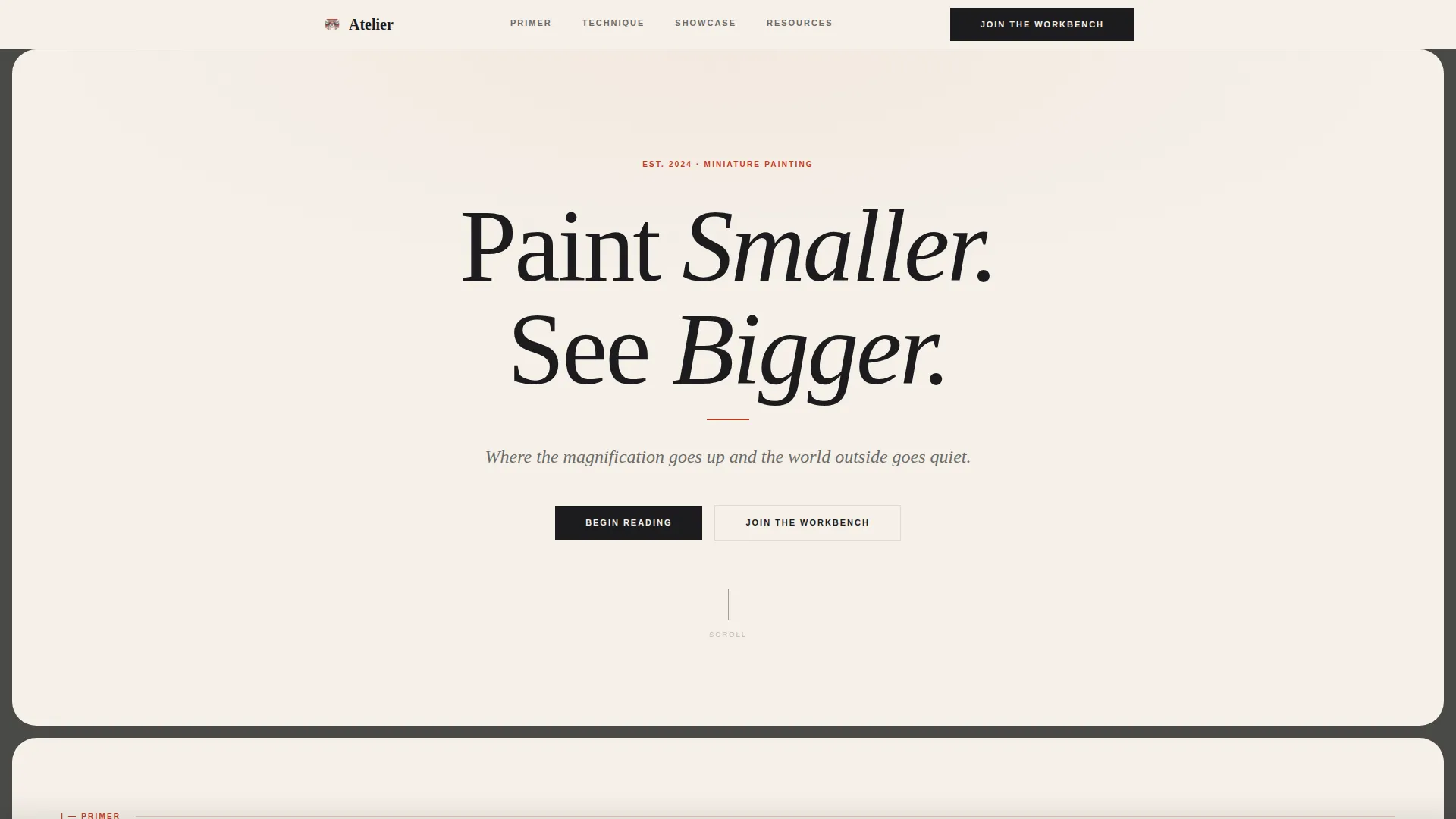
Architectural Serif Hero Section
The hero centers a single massive headline in a refined display serif on a shoji cream background. A thin vermillion rule sits beneath the headline and a charcoal italic manifesto line completes the opening statement. Typography alone carries the visual weight here.
Sticky Hub Anchor Navigation
A horizontal anchor navigation bar locks into place after the hero and stays visible as visitors scroll. Active states are highlighted in torii vermillion so readers always know which spoke they are in.
Spoke-Based Content Sections
Five dedicated spokes cover Primer, Technique, Showcase, Resources, and the Join call to action. Each spoke is self-contained and flows like a page in a personal sketchbook, unhurried and rewarding close reading.
Conversational Email Signup Form
The "Join the Workbench" form asks for only an email address and one low-friction question. A sticky bar version appears gently after the second spoke, offering a second opportunity to convert without interrupting the reading experience.
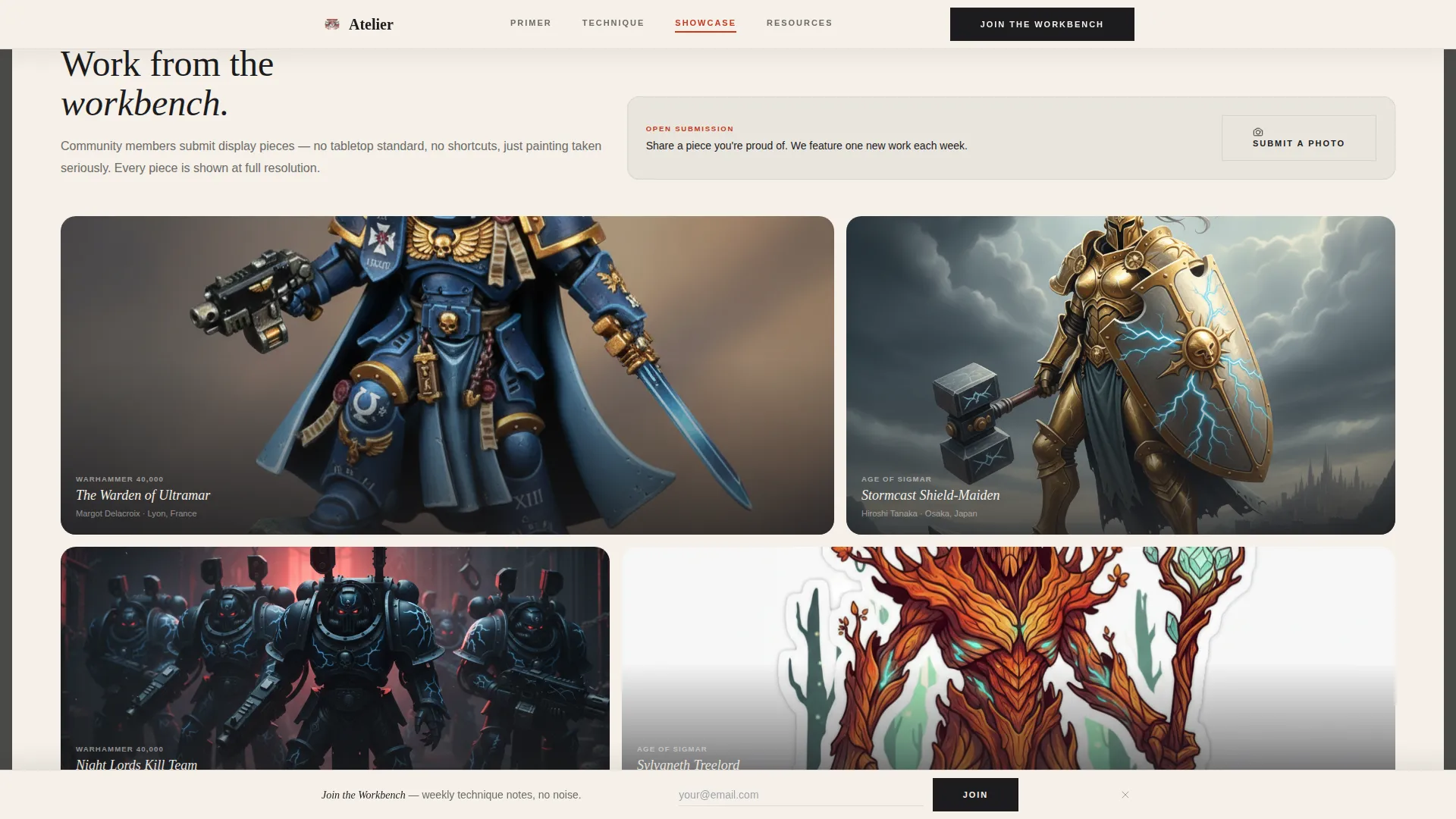
Community Showcase Bento Grid
The Showcase spoke presents member-submitted display pieces in a bento-style layout. A submission call to action invites visitors to contribute before the main signup ask, creating a sense of reciprocity.
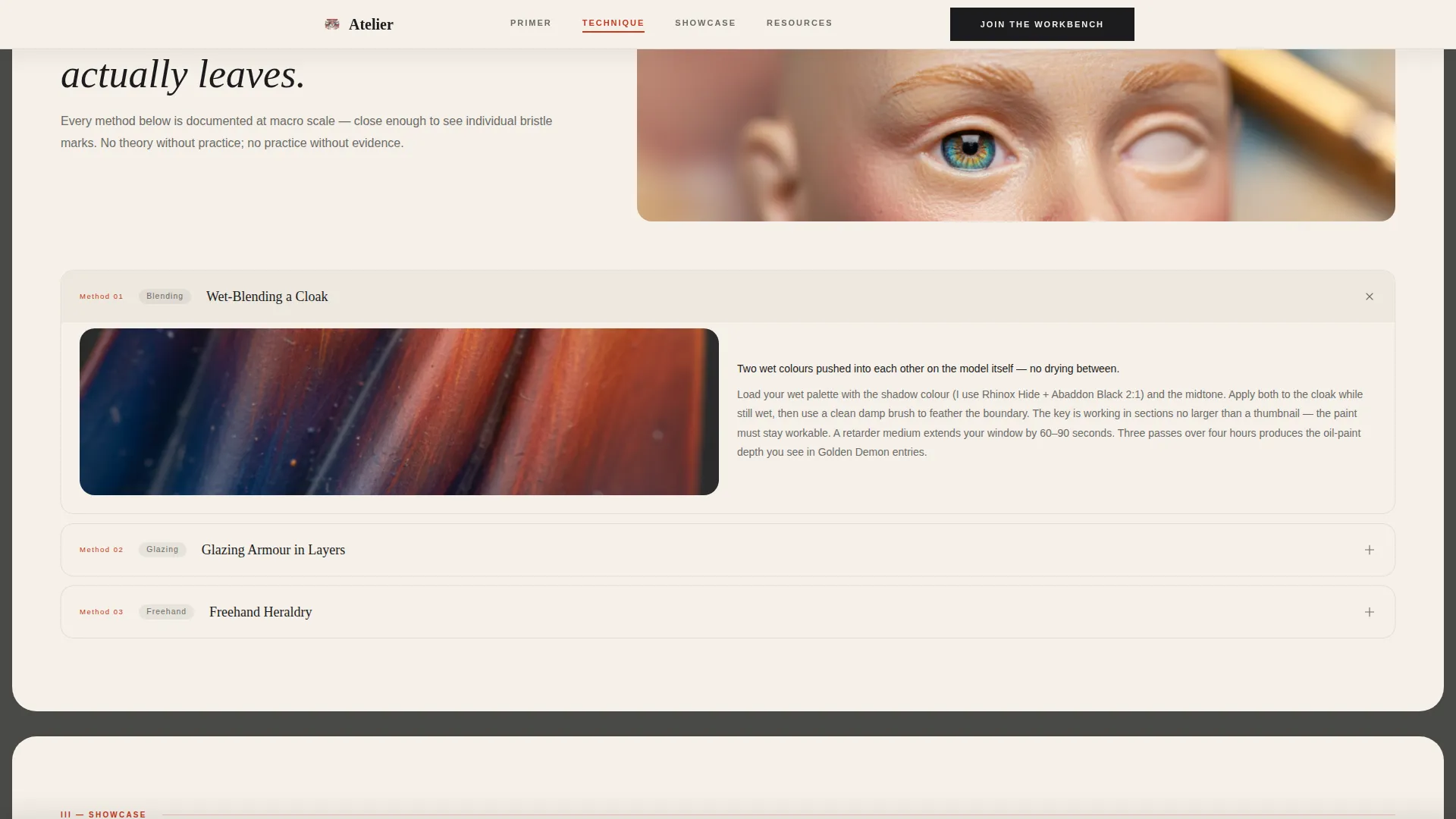
FAQ-Style Technique Expandables
The Technique spoke uses expandable cards to present glazing, wet-blending, and freehand breakdowns. Macro photography cards accompany each technique entry, letting the detail of the work speak for itself.
Page sections overview
| Section | Purpose |
|---|---|
| Hero Typography | Establish identity and tone with a large centered headline and vermillion rule |
| Sticky Anchor Nav | Let visitors jump between spokes; vermillion highlights active section |
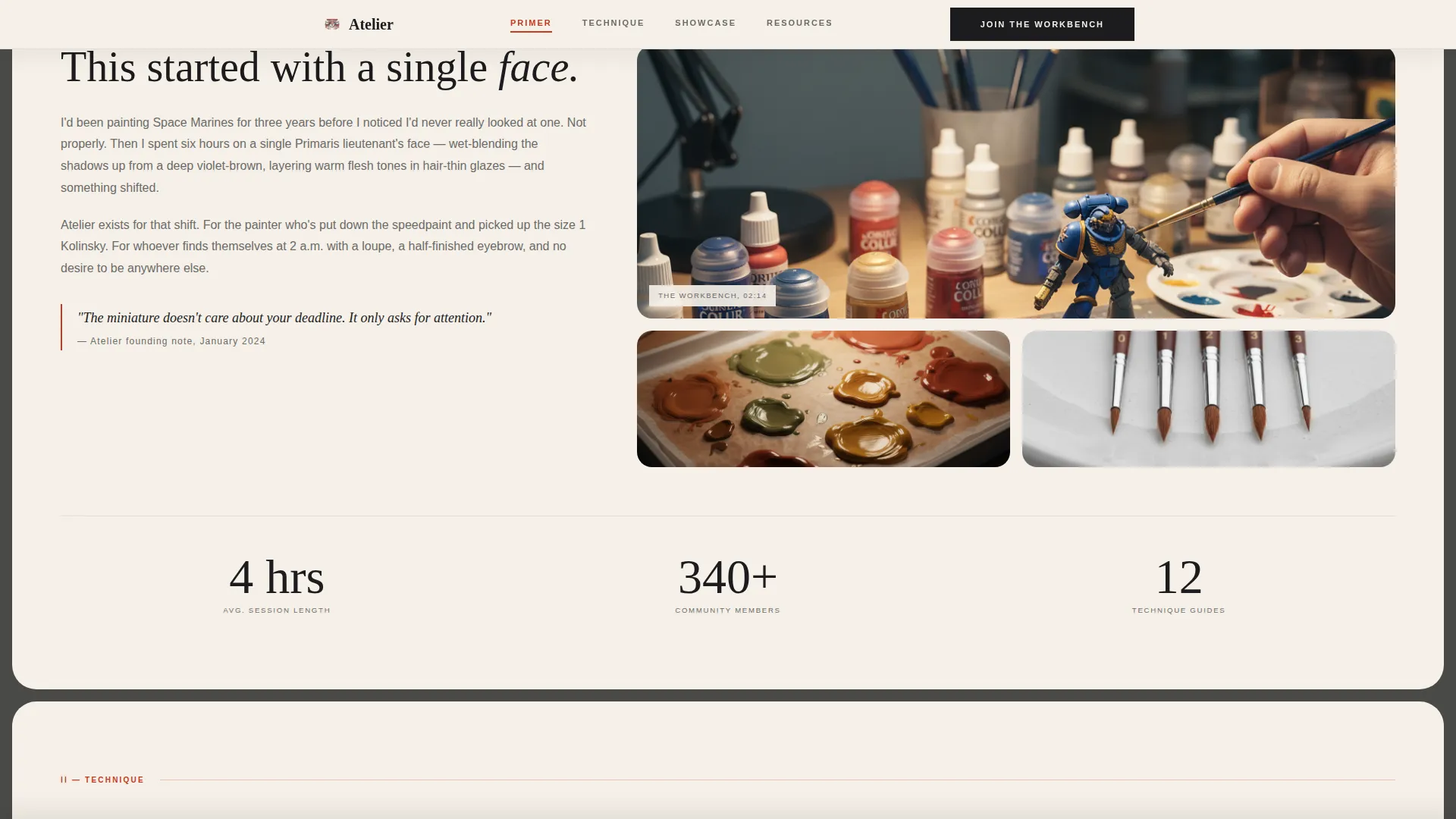
| Primer Spoke | Share the blog's founding story through workbench photography and confessional paragraphs |
| Technique Spoke | Break down craft methods with macro photography cards and expandable content |
| Showcase Spoke | Display community pieces in a bento grid and invite photo submissions |
| Resources Spoke | Catalogue brush and paint recommendations in structured guide cards |
| Join Call to Action | Embed the email signup form and reinforce membership value |
| Sticky Signup Bar | Reintroduce the email prompt gently after the second spoke |
| Footer | Close the page with a horizontal flow pattern and essential links |
Design & branding system
The visual identity is built around deliberate restraint. Every color choice and spacing decision reflects the meditative quality of the hobby itself.
- Four-color palette: stone garden gray (#4A4A48) for the primary background, shoji screen cream (#F5F0E8) for content panels, ink-wash charcoal (#1C1C1E) for body typography, and torii vermillion (#C23B22) used only for active navigation states and a single accent stroke per section
- Typography pairing: Fraunces as the display serif for headlines and DM Sans for body text, creating a strong visual contrast between expressive and functional type
- Generous whitespace structures the layout so content floats in islands rather than filling every available space
Mobile & speed optimization
The template is designed desktop-first to match how display-level painters actually work, with graceful adaptation for smaller screens built in.
- Desktop-first layout prioritizes the wide-canvas experience of a long painting session at a desk
- Image-heavy sections use Next.js Image optimization to keep load times reasonable without sacrificing visual quality
- Scroll-linked animations, gentle fade reveals, and sticky bar entrance are kept at a medium intensity to avoid distraction
How this template helps you convert
The conversion path is woven into the page structure itself. Value is given freely before anything is asked in return.
- Technique content in each spoke proves the community's depth before any signup prompt appears, so the email request feels earned rather than premature.
- The community showcase submission path creates reciprocity by inviting visitors to contribute first, lowering resistance to the main "Join the Workbench" call to action.
- The sticky signup bar reappears gently after the second spoke, offering a second conversion moment without disrupting the reading experience.
Other information about this template
This template is built for the Atelier Studio theme with a Japanese Zen color system and an Origin Story creative direction. It fits neatly within the Blog and Editorial category for Hobby and Passion Content.
- The template style is Hub and Spoke with Anchor Navigation, placing the visitor at a central hub before guiding them outward through focused spokes
- The header concept is Giant Headline Centered, where the typography itself functions as the primary visual element
- Animation is set to medium intensity: scroll-linked active nav states, gentle fade reveals on section entry, and a smooth sticky bar entrance
- The footer uses a horizontal flow pattern consistent with the overall restrained layout language
- This template is localized for English-language audiences, United States date format, and USD currency context
Theme
Atelier Studio
Creative direction
Origin Story
Color system
Japanese Zen
Style
Hub & Spoke (Anchor Nav)
Direction
Lead Generation
Page Sections
Architectural Serif Hero
Sticky Anchor Navigation Hub
Spoke-based Section Layout
Conversational Email Signup
Community Showcase Grid
Expandable Technique Cards
Related questions
Who is this landing page template designed for?
Can I adapt the spoke sections to fit my own content topics?
How does the email signup work in this template?
Does this template support community-submitted content?
Is this template suitable for a beginner painter's blog?