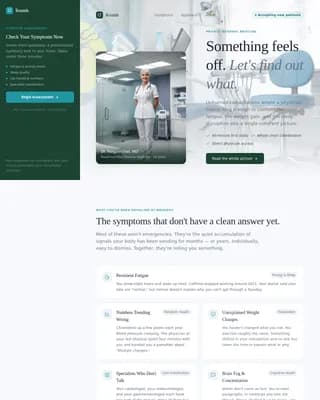
The Catalyst transparent allergy testing comparison landing page template is built for food allergy clinics that lead with clinical honesty. It features a side-by-side comparison table, a step-by-step diagnostic process walkthrough, a gated guide download, and a symptom-check secondary path. The Medical Clarity design system uses teal, sterile white, deep charcoal, and warning amber to build immediate trust.
by Rocket studio
Loading preview…
Quick Summary
The Catalyst landing page is a single-page template designed specifically for food allergy clinics. It presents complex diagnostic information in a clear, scannable format so visitors can compare testing methods, understand the full reaction spectrum, and take a confident next step. Every section is structured to give away genuine clinical knowledge before asking for anything in return.
Who This Template Is For
This template is built for clinics and practitioners who want their landing page to function as an honest, educational resource rather than a promotional brochure. It suits practices where the patient arrives already anxious, already skeptical, and already carrying years of unanswered questions.
Food allergy clinics and allergy and immunology practices seeking to educate patients before their first call
Gastroenterologists and referring physicians who need a credible, well-structured resource page to send patients toward
Healthcare marketers building a content-first landing page for a diagnostic clinic that competes on transparency and clinical depth
What Problem This Template Solves
Many allergy clinic pages describe services in vague terms. They list test names without explaining differences, hide methodology behind medical shorthand, and bury the call to action before the visitor has had a reason to trust the page. Patients arrive with real questions: Which test applies to me? What will the process feel like? How long will I be waiting for results? This template is designed to answer those questions before they are even asked.
Visitors leave competitor pages confused about which testing method fits their situation, because no clear side-by-side comparison is displayed
Patients with chronic symptoms such as fatigue, joint pain, and gastrointestinal issues struggle to evaluate whether allergy testing is relevant to their case
Clinics lose potential patients not because the service is wrong, but because the page fails to build the confidence needed to book
What You Get With This Template
This template delivers a complete, section-led landing page with a defined visual identity, a structured content flow, and two distinct conversion paths. Every layout decision is based on the goal of making diagnostic information feel accessible, not intimidating. The approach prioritizes data transparency and specificity of the diagnostic journey, so visitors can make informed decisions with confidence.
Theme
Medical Clarity
Creative direction
Transparent Process
Color system
Teal Catalyst
Direction
Content/Resource
Page Sections
Side-by-side Testing Comparison Table
Reaction Spectrum Visual Scale
Gated Guide Download with Lead Form
Step-by-step Diagnostic Process Walkthrough
Portrait-centered Hero with Panel Overlay
Secondary Symptom-check Conversion Path
Related questions
What kind of clinic is this landing page template built for?
Can I adapt the comparison table to reflect my clinic's specific testing methods?
What is the primary conversion goal of this landing page?
Does the template include the actual allergy testing guide content?
Is this template suitable for both patient-facing and referral partner audiences?
A fully designed landing page with five core sections: hero, reaction spectrum scale, comparison table, guide download form, and diagnostic process walkthrough
A two-path conversion model with a primary gated call to action (first name and email to download the allergy testing guide) and a secondary symptom-check questionnaire link
A Medical Clarity design system with a defined color palette, typography pairing, and layout logic ready to be adapted to your clinic's brand
Feature List
This template is built around a specific set of structural and design capabilities described in the source brief. Each feature below is prompt-backed and delivered as part of the layout.
Side-by-Side Diagnostic Comparison Table
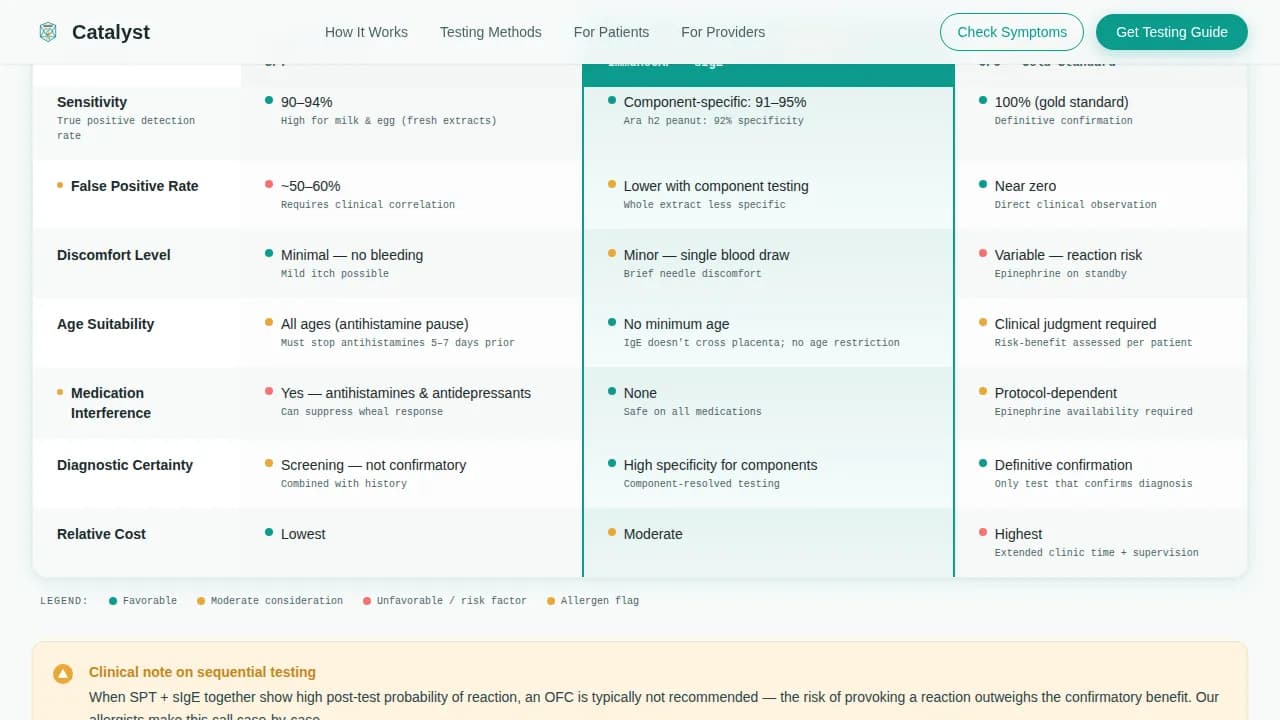
The comparison table is the strategic centerpiece of this page. It places three testing methods side by side: skin prick test, blood panel, and oral food challenge. Each column is labeled with four evaluation criteria: accuracy, turnaround time, discomfort level, and age suitability. Visitors can quickly compare differences and identify which method applies to their situation before making contact. This kind of transparent data presentation supports more confident decisions and reduces friction at the inquiry stage.
Reaction Spectrum Visual Scale
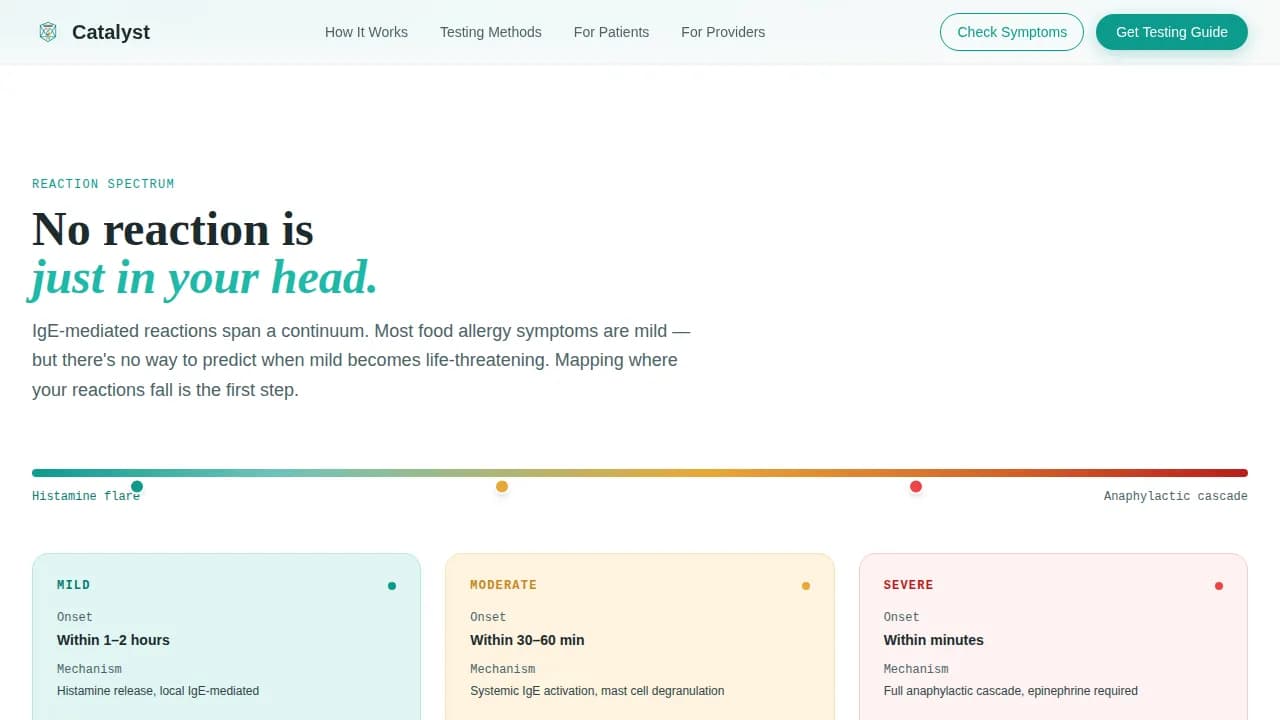
The page includes a visual severity scale that maps the full range of allergic responses, from mild histamine flares through to full anaphylactic cascades. This section answers the critical pre-qualification question: "Is this for me?" It helps parents, adults with chronic symptoms, and referred patients understand where their experience sits on the spectrum, building the case for clinical assessment without requiring a phone call first.
Gated Guide Download with Lead Capture Form
Positioned immediately after the comparison table, the primary call to action offers the visitor a downloadable allergy testing guide gated behind a first-name and email field. The placement is deliberate: the visitor has just studied the comparison data and their curiosity is at its peak. The form is minimal and designed to feel like a natural next step, not a transaction. This model reflects research-backed understanding that transparent content shared upfront leads to higher trust and stronger follow-through from health-conscious users.
Step-by-Step Diagnostic Process Section
The template includes a full methodology walkthrough covering four stages: intake, sample processing, results delivery, and follow-up elimination planning. Each step is described in plain language, with nothing obscured behind clinical shorthand. This section functions like the consultation itself starting on the page. It demonstrates that the clinic employs a structured, multidisciplinary process and helps visitors understand exactly what they are agreeing to before they submit any details.
Secondary Symptom-Check Path
A secondary conversion path offers a "Check Your Symptoms" link that directs visitors to an interactive questionnaire. The questionnaire scores reaction severity and recommends a test type. This path serves visitors who are not yet ready to download the guide but want a lower-commitment first interaction. It broadens the conversion funnel without diluting the primary call to action.
Portrait-Centered Hero with Allergy Panel Overlay
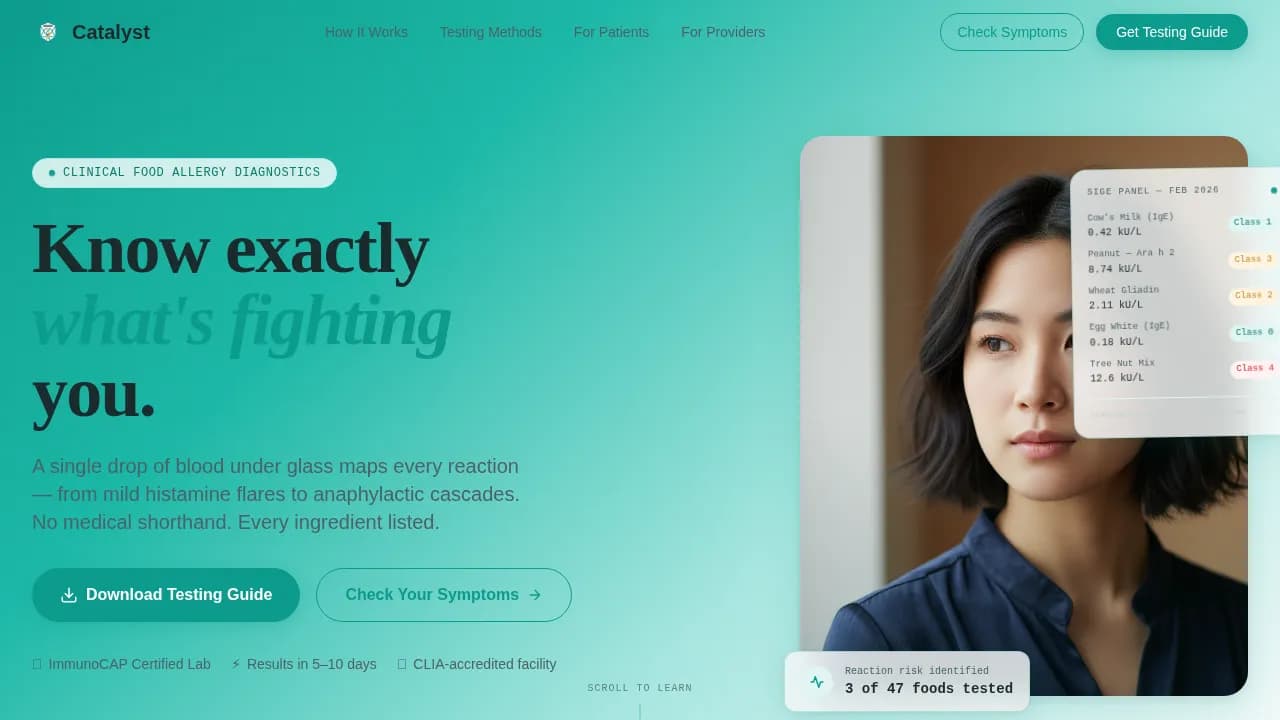
The hero section features a single patient portrait shot from the collarbone up against a teal-to-white gradient, with no lab coat or stethoscope imagery. A translucent allergy panel overlay, displaying immunoglobulin E (IgE) levels, food categories, and green and amber markers, drifts beside the portrait. The headline "Know exactly what's fighting you." fades in beneath. This layout communicates credibility and calm simultaneously, setting the tone for everything that follows on the page.
Page Sections Overview
Section
Purpose
Hero Portrait
Opens the page with a calm, direct patient image and headline to establish clinical trust immediately
Reaction Spectrum
Maps allergic severity from histamine flare to anaphylaxis so visitors can self-identify before reading further
Comparison Table
Displays three testing methods side by side with labeled criteria columns for confident pre-visit decisions
Download Form
Presents the primary gated call to action at the moment of peak curiosity after the comparison table
Diagnostic Process
Walks through each clinical step in plain language to build transparency and reduce pre-visit anxiety
Page Footer
Closes with a clean, single-row linear footer for navigation and contact links
Design & Branding System
The Medical Clarity design system used in this template treats every visual decision as a diagnostic signal. Colors are not decorative; they are functional. Typography is chosen for legibility under clinical reading conditions. The result is a page that feels like a freshly unwrapped test kit: cool, antiseptic, and trustworthy.
Color palette: clinical teal (#0D9B8C) as the primary action color, sterile white (#F7FAFA) for open backgrounds, deep charcoal (#1C2B2D) for body text, and soft warning amber (#E8A838) reserved for allergen flags and urgency indicators
Typography: DM Sans for body text, Fraunces as the headline serif for warmth and authority, and JetBrains Mono for data values and lab-style numerical displays
Visual identity follows the Transparent Process creative direction, where every layout layer is adapted to reveal rather than conceal clinical information
Mobile & Speed Optimization
The template is designed desktop-first, with the comparison table as the primary experience driver. Strong mobile adaptation is built into the layout so the table and hero sections remain readable and functional on smaller screens.
The comparison table is structured to reflow cleanly on mobile, preserving the labeled columns and row descriptions without horizontal scrolling
The portrait hero and allergy panel overlay are adapted for vertical screen proportions, keeping the headline and call to action visible above the fold
The gated download form and secondary symptom-check path are both optimized for touch interaction, with clear tap targets and minimal field entry on mobile
How This Template Helps You Convert
The conversion model is built on a simple principle: give away genuine clinical knowledge first, then make the next step feel like a natural continuation of what the visitor just learned. Research into health-conscious consumer behavior consistently demonstrates that transparent self-disclosure strategies lead to stronger trust and higher follow-through than self-promotional approaches.
The comparison table does the heavy educational work early, so by the time the visitor reaches the download call to action, the value of the guide feels obvious rather than transactional. Visitors who have already studied the differences between testing methods are far more prepared to submit their details.
The symptom-check secondary path captures visitors who are still in the evaluation stage, giving them a lower-commitment way to engage. This approach widens the funnel and ensures that no visitor leaves the page without a clear, accessible next step that matches where they are in their decision process.
Other Information About This Template
This section covers additional context that helps clinics, designers, and healthcare marketers get the most from this template. It also addresses the broader landscape of food allergy awareness and digital trust-building that this template is designed to fit within.
Food allergy is a growing public health concern. In recent years, consumer health-consciousness has risen sharply, with more patients actively searching for transparent clinical information before booking any appointment.
The page model reflects evidence from marketing literature and clinical communication research: proactive self-disclosure of methodology, including labeling what a test can and cannot detect, builds stronger patient trust than promotional messaging. Brands and clinics that transparently disclose procedures, including their gaps and limitations, are consistently perceived as more authentic.
The template supports a content and resource hub model. The page earns the click by giving away structured knowledge: the comparison table, the process descriptions, and the reaction spectrum analysis. The download is presented as a natural next chapter, not a barrier.
Allergen science is supported by publicly accessible databases and systematic literature reviews. Well-curated allergen databases serve a range of public health roles, including informing research programs, clinicians, and allergists. The template's process section is structured to reflect this evidence-based approach.
The COMPARE database represents an example of the kind of rigorous, annually updated resource that informs modern allergen assessment. It implements a consistent and transparent mechanism to identify protein allergens through systematic collection of scientific literature and high-throughput sequence analysis. The COMPARE process is validated against the AllergenOnline database and is publicly available for research and clinical use.
Modern allergy testing methods, including those that analyze white blood cell reactions to a broad range of substances, can identify non-IgE mediated reactions that standard tests often miss. Results are typically presented in color-coded, numerical formats that quantify reaction severity and support clear patient understanding.
Regulatory frameworks in food marketing and health communication influence how clinical content must be presented. Transparent communication strategies that accurately describe testing procedures and their limitations have demonstrated stronger patient confidence than vague or promotional copy.
This template is built for the Health and Medical category, Allergy and Immunology subcategory, and the Food Allergy Clinic niche. It is available as a single landing page layout, desktop-first with mobile adaptation, and is localized for English-language audiences in the United States market.
The Catalyst transparent allergy testing comparison landing page template is classified under the Comparison Table template style and the Medical Clarity theme. It is designed to be adapted for individual clinic branding while maintaining the core Teal Catalyst color system and Transparent Process creative direction.
Security considerations for this landing page include the standard protections any clinical website should employ. When this page is deployed on a live website, clinic operators should ensure that the site is protected against malicious bots and unauthorized access. A reliable security service verifies that each visitor interaction is legitimate. Security verification processes, including checks that confirm a verification successful status before displaying sensitive clinical content, are standard practice for health-related websites. These bot protection measures protect both the clinic and its patients. A security service that responds to threats in real time, including a respond ray ID system for tracking security events, keeps the site secure and trustworthy. Waiting periods during security checks are minimal when a proper security service is in place. Displayed content remains accessible to legitimate users while malicious bots are filtered out. A well-configured bot detection system verifies human traffic, protects form submissions, and ensures that the gated download form is not exploited. When security verification is active, verification successful signals are logged and the page continues to load normally for real visitors. The security service employed should be capable of distinguishing between legitimate health-seeking users and automated malicious bots. Every bot attempt that is blocked and every respond ray ID logged is a data point that helps protect the integrity of the page. Security remains a core operational concern for any health website that collects first names and emails through a gated form.