Hobby & Passion Content Professional Website Template
Cypher is a masonry-style heritage beatboxing community landing page template built for practitioners, historians, and hip hop culture enthusiasts. It combines a cinematic dark visual identity with a chronological story-driven layout, an era-matching quiz modal, and a newsletter signup. Every element is designed to honor the art form and convert curious visitors into engaged community members.
by Rocket studio
Quick summary
Cypher is a heritage-themed, masonry-layout beatboxing community landing page template. It leads visitors through beatboxing history from the earliest human-drum traditions to today's loop-station battles. The page combines cinematic dark visuals, scroll-triggered animations, an interactive quiz, and a newsletter embed to create a single continuous story that moves people from curiosity to commitment.
Who this template is for
This template is built for anyone who wants to create a serious, story-first digital home for beatboxing culture. It suits practitioners, educators, event organizers, and community builders who believe the art form deserves a proper archive and a living stage.
- Bedroom beatboxers who want to share their journey, support fellow artists, and connect with a global community
- Battle judges, hip hop culture professionals, and event organizers who need a credible, visually strong platform for showcasing the craft
- Hip hop historians, educators, and students who want to document, celebrate, and help others participate in beatboxing's full canon
What problem this template solves
Beatboxing has a deep history rooted in jazz, blues, African ritual music, and hip hop culture. Yet most digital spaces treat it as a novelty rather than a serious art form with its own canon, pioneers, and evolving techniques. The result is a fragmented community where the story is never told in full, and newcomers have no clear path to engage, learn, or find their place.
- There is no easy way to present beatboxing history visually in a way that feels as alive and textured as the culture itself
- Communities struggle to convert curious visitors into active members without a clear, compelling call to action and a sense of belonging
- Practitioners and educators lack a ready-made space that supports both community storytelling and structured conversion goals
What you get with this template
You get a fully designed, single-page masonry landing page that doubles as a living archive. Every section is purposeful, every visual choice is grounded in the heritage and story theme, and the layout guides visitors chronologically through beatboxing's lineage while moving them toward meaningful engagement.
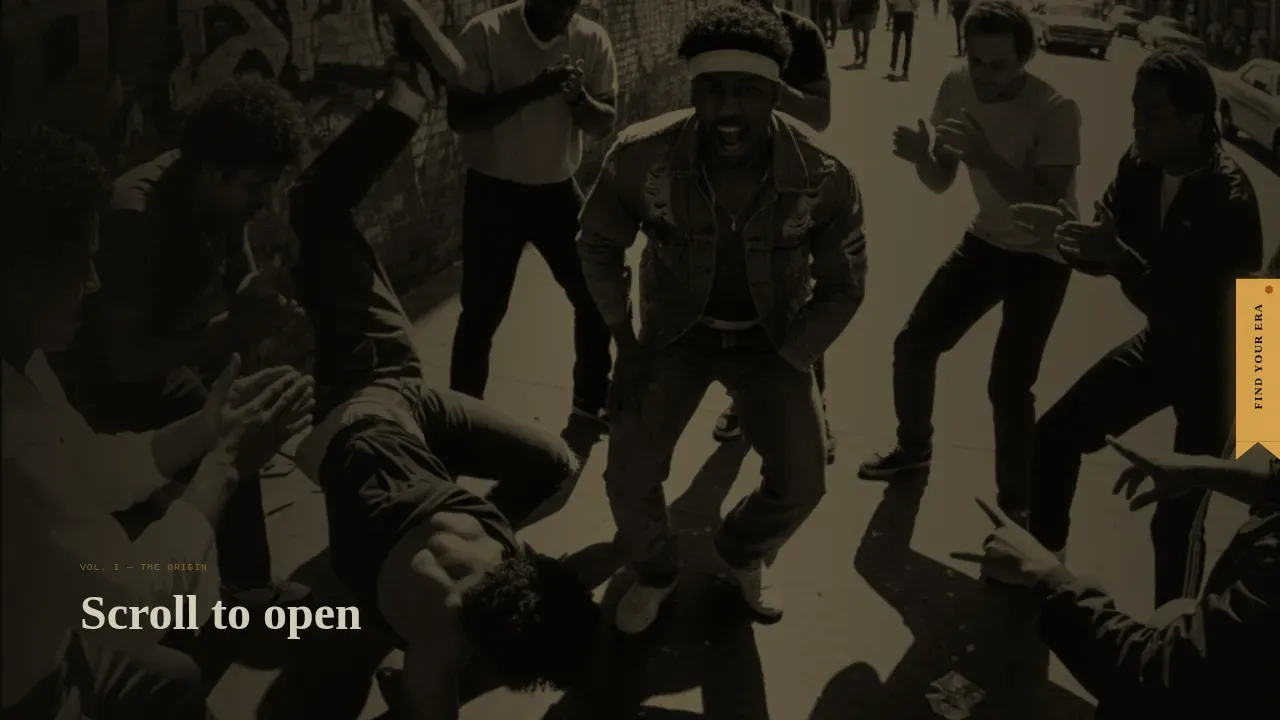
- A leather-textured hero section with an embossed gold typographic headline and a scroll-triggered page-turn animation that reveals a sepia street cypher photograph
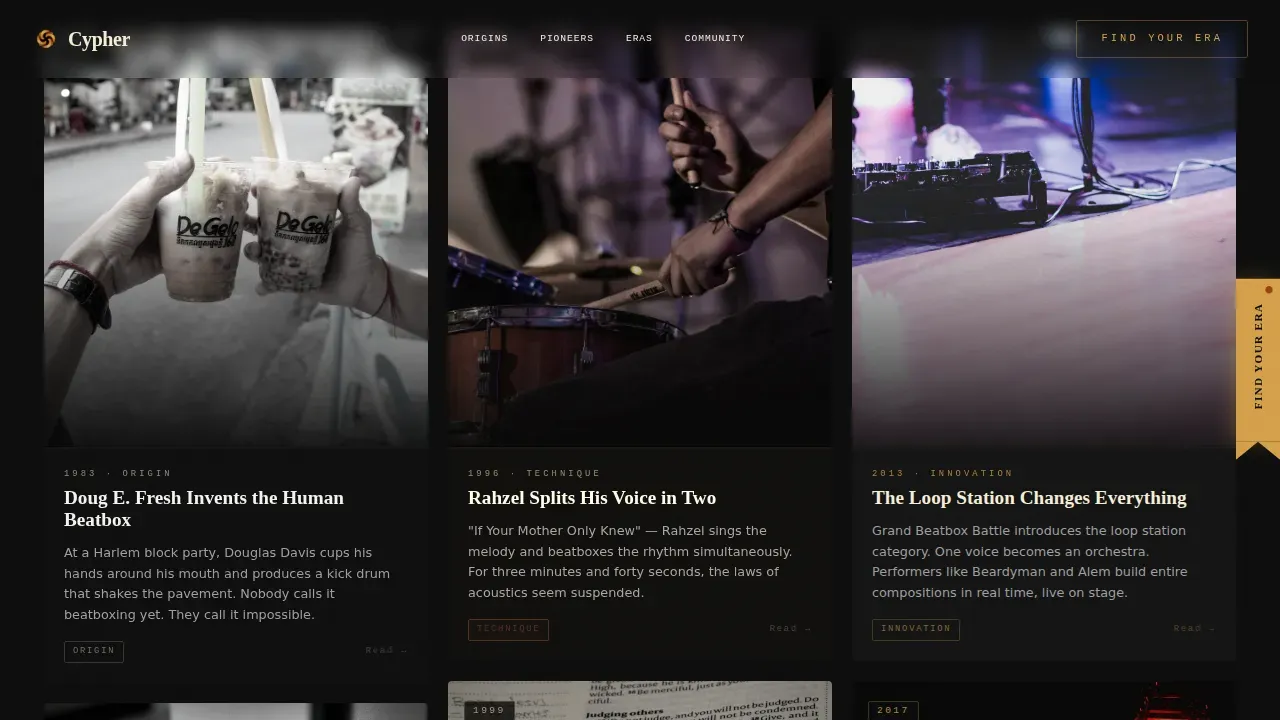
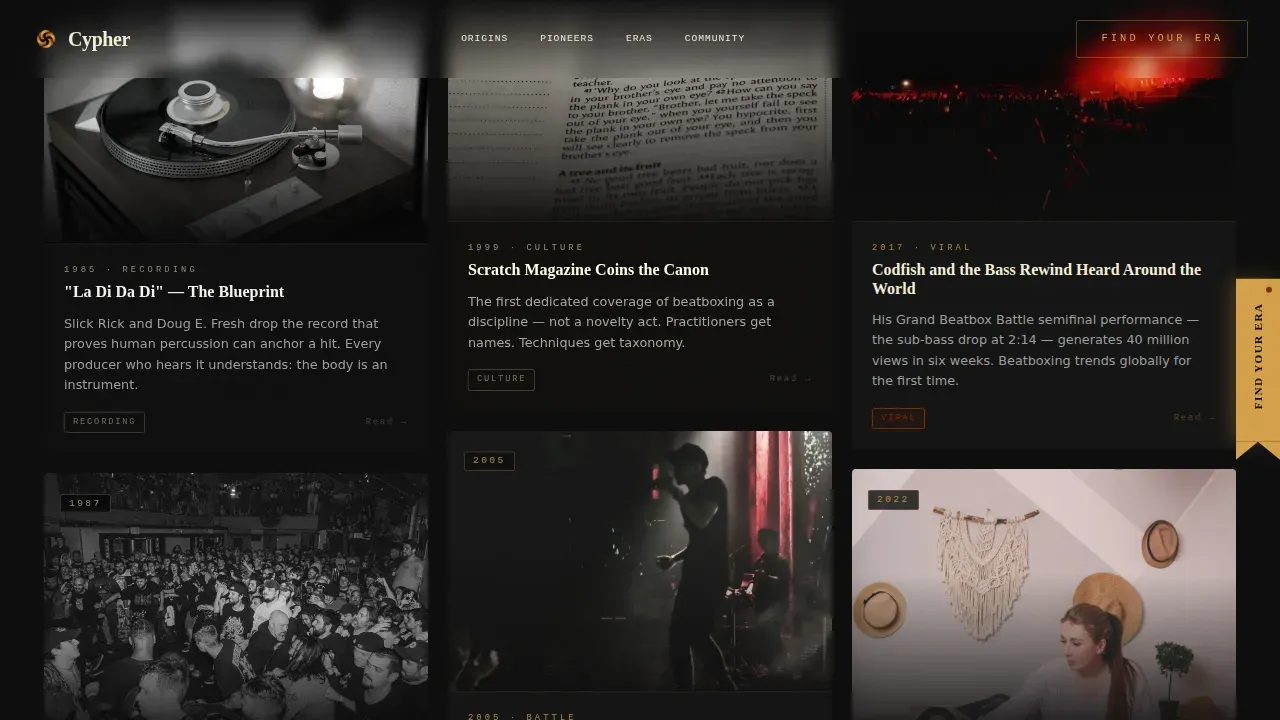
- A chronological era timeline masonry grid where early tiles carry desaturated newsprint textures and later tiles warm into color with auto-playing silent video loops
- An interactive "Find Your Beatbox Era" quiz modal, a fixed gilt bookmark ribbon call to action, pioneer profile cards in an asymmetric bento layout, community proof statistics and testimonials, and a "Subscribe to the Chronicle" newsletter embed
Feature list
The following built-in features make this template a complete, conversion-ready community hub for the beatboxing world.
Leather-Textured Hero with Page-Turn Reveal
The hero section opens like a book cover. A leather-textured viewport carries the headline "THE MOUTH THAT BUILT MUSIC" in a hand-stamped serif typeface, with a vertical spine crease down the left edge of the screen. On scroll, a CSS page-turn animation peels the cover back to reveal a sepia-toned street cypher photograph from circa 1985. Navigation stays hidden until the cover fully opens, keeping the visitor's full attention on the story from the very first moment they arrive.
Chronological Era Timeline Masonry Grid
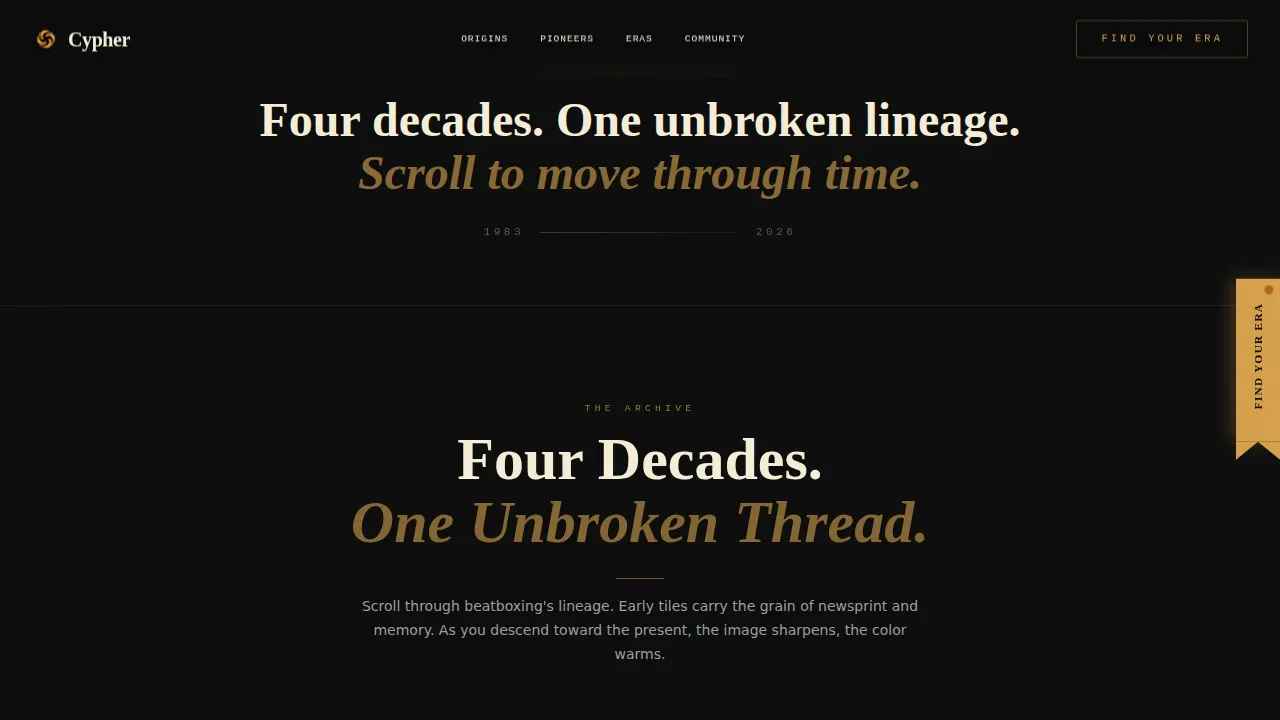
The masonry grid is the narrative backbone of the page. Each tile is a chapter card representing an era, a pioneer, or a technique that transformed beatboxing. Early-era tiles are desaturated and textured like aged newsprint, anchoring the art form's roots in jazz, blues, and the earliest forms of vocal percussion. As visitors scroll forward through history, tiles sharpen and warm visually. Later tiles include auto-playing silent video loops of routines, bringing the modern stage to life right inside the grid. GSAP ScrollTrigger drives staggered reveal animations so every row feels like turning a page, not just loading content.
"Find Your Beatbox Era" Quiz Modal
The primary conversion element is a gilt bookmark ribbon fixed to the right edge of the viewport. Clicking it opens a quiz modal styled as a chapter page. The quiz asks five questions: which sound pattern feels natural (with audio samples), which battle clip gives the visitor chills (with embedded clips), preferred practice setting, years of experience, and whether they perform solo or in crews. Results map each visitor to a specific era and archetype, for example "You're a 2010s Loop Architect." Each result includes a shareable card and an email gate that unlocks a personalized practice roadmap, creating a meaningful reason to join the community.
Pioneer Profiles in Asymmetric Bento Layout
The pioneers section presents featured beatboxer profiles in an asymmetric bento grid. Each card brings a specific artist, their signature technique, and their place in the broader hip hop culture timeline into sharp visual focus. The bento layout gives different profiles different visual weight, reflecting how some voices lead a movement while others quietly shape the craft from behind the scenes. This section helps visitors build a sense of the community's depth before they ever hit the newsletter form.
Community Proof Section with Stats and Testimonials
A dedicated dark atmospheric section presents community statistics and testimonial quotes. Participation numbers, member counts, and battle clip testimonials work together to reassure newcomers that this is an active, credible space. Social proof of this kind is important for any community platform because it signals that real people are here, that the story is being heard, and that joining means entering something already alive.
Chronicle Newsletter Embed
The final masonry row holds the "Subscribe to the Chronicle" newsletter signup. It asks for a name and an email only, keeping the barrier low and the ask clear. The embed sits inside the masonry grid rather than interrupting it, so the page feels continuous rather than transactional. Visitors who have scrolled through the full history of beatboxing arrive here already invested, making this the natural place to seal the relationship.
Page sections overview
| Section | Purpose |
|---|---|
| Leather Hero Cover | Opens the page as a book cover with animated scroll reveal |
| Era Timeline Masonry | Guides visitors chronologically through beatboxing history |
| Pioneers Bento Grid | Profiles key artists and their techniques era by era |
| Community Proof Block | Displays statistics and testimonials to build trust |
| Chronicle Newsletter Row | Captures name and email via a low-friction signup embed |
| Footer Horizontal Flow | Closes the page with structured navigation and branding |
Design & branding system
The visual identity follows a Heritage and Story theme using a Cinematic Dark color system. Every color decision is grounded in the metaphor of a dimly lit venue where a single overhead light throws gold across an artist's cupped hands.
- Core palette: deep auditorium black (#0D0D0D) as the base, worn spotlight amber (#D4A04A) for headings and accents, breath-fog gray (#9E9E9E) for body text, and vocal-cord red (#8B2500) reserved for active states and hover pulses
- Typography: Fraunces serif for display headings to carry the hand-stamped heritage feel, JetBrains Mono for label elements and era markers, and DM Sans for readable body copy across the masonry tiles and quiz modal
- Texture and motion: leather grain on the hero, newsprint texture on early-era masonry tiles, and GSAP ScrollTrigger animations including staggered tile reveals, the page-turn CSS effect, and auto-playing video loops on modern-era cards
Mobile & speed optimization
The template is designed desktop-first to preserve the full zine aesthetic, with masonry proportions, spine creases, and multi-column tile arrangements optimized for wide screens. At the same time, the layout is mobile-responsive so visitors on smaller devices can still experience the full story and engage with the quiz and newsletter. This matters because over 50 percent of users who visit a beatboxing community website are likely to arrive on a mobile device.
- The masonry grid reflows into a single-column or two-column layout on smaller screens, keeping chapter cards readable and tap-friendly
- The quiz modal and newsletter embed are both structured to work cleanly on touch screens, with appropriately sized input fields and readable question text
- Server Components handle static sections like the hero, masonry grid structure, and pioneer profiles, while Client Components manage animations, the quiz modal, and video tile interactions, keeping the experience smooth without overloading the browser
How this template helps you convert
Every design and layout decision in Cypher points toward one of two conversion goals: getting visitors to complete the quiz and join the community, or getting them to subscribe to the Chronicle newsletter. The two goals are carefully sequenced so they feel complementary rather than competing.
- The fixed gilt bookmark ribbon keeps the "Find Your Beatbox Era" quiz visible at all times without interrupting the reading experience. Visitors who engage with the quiz receive a personalized era archetype result, a shareable card, and a prompt to enter their email for a practice roadmap, turning a fun interactive moment into a meaningful community signup.
- Visitors who scroll past the quiz and through the full history arrive at the Chronicle newsletter embed already immersed in the story. Asking only for a name and email at this point meets minimal resistance because the page has already done the work of building trust, showcasing the community, and celebrating the art form across every masonry row above.
Other information about this template
This template sits at the intersection of editorial blog design, community platform structure, and heritage storytelling. It is purpose-built for the beatboxing community but the layout and conversion system can support any hip hop culture project that needs to combine a rich content archive with clear community growth goals.
Beatboxing is a vocal percussion art form that imitates drum machines and beat patterns using the mouth, lips, tongue, voice, and throat. The form has roots in jazz, blues, and African ritual music, and its cultural significance extends well beyond music into questions of race, gender, identity, and community empowerment. Hip hop culture has been shown to provide therapeutic benefits and improve mental health, and the establishment of dedicated hip hop venues and community centers can foster creativity and collaboration among participants of all skill levels.
The hip hop community has long needed dedicated physical and digital infrastructure. The Hip Hop Foundation, for example, aims to provide dedicated spaces for hip hop culture in Philadelphia, recognizing that the lack of such infrastructure stifles the potential benefits hip hop can offer to youth and the wider community. Community centers dedicated to hip hop would offer safe spaces for students, young artists, and professionals to practice and perform, challenge stereotypes, and build a lasting sense of identity and purpose. This template offers a digital equivalent of that vision.
- The quiz-driven conversion system maps each visitor to an era archetype such as "You're a 2010s Loop Architect," giving them a story to carry and a reason to share the page with friends
- The newsletter embed asks only for a name and email, creating a low-friction path for members to stay connected to the community's ongoing projects and education initiatives
- The template supports member-generated story participation through its design structure, encouraging the community to contribute ideas, recordings, and oral histories over time
- The masonry format makes it straightforward to celebrate new artists, add era cards for emerging techniques, and grow the archive as the global beatboxing scene continues to expand
- Hosting online events, such as community jams or competitions, can be promoted through the page's visual stage and call-to-action structure, helping organizers attract participants and build audience attendance
- This is a cypher heritage beatboxing community landing page template that honors the full arc of hip hop's most intimate art form, from the earliest breath snap to the latest loop-station battle, and gives the community a stage worthy of its history
The Biz Markie connection runs deep in this template's spirit. Biz Markie was one of the most celebrated beatbox artists in hip hop, and his work helped bring beatboxing from the street cypher stage into living rooms, record stores, and eventually the world stage. The aesthetic of Cypher pays tribute to that era: the amber spotlight, the dark auditorium, the ink-smudged zine texture. Biz Markie's playful confidence, his rapping intertwined with beatboxing, and his unique voice helped define what it meant to perform and be heard as a hip hop artist. Honoring Biz Markie and artists like him is part of the template's deeper mission: to make sure the community never forgets where the sound came from.
Theme
Heritage & Story
Creative direction
Origin Story
Color system
Cinematic Dark
Style
Masonry/Pinterest
Direction
Quiz/Assessment
Page Sections
Page-turn Hero with Leather Cover Animation
Chronological Masonry Era Grid
Interactive Era-matching Quiz Modal
Pioneer Profiles in Bento Layout
Community Proof and Testimonial Section
Chronicle Newsletter Embed
Related questions
Who is this template designed for?
Can I customize the quiz questions and era archetypes?
Does the masonry grid support video content?
Is the newsletter embed separate from the quiz?
What makes this different from a standard blog layout?