Philosophy & Spirituality Blog Blog Website Template
Dharma is a hub and spoke landing page template built for Buddhism and Eastern philosophy study platforms. It pairs a manifesto-driven editorial layout with an inline five-question path-finder quiz, guiding serious seekers toward a personalized study path. The design draws from a wabi-sabi Atelier Studio aesthetic using warm natural tones, tall serif type, and scroll-linked text reveals.
by Rocket studio
Quick summary
Dharma is a single-page, hub and spoke landing page template designed for Eastern philosophy and Buddhism study platforms. It opens with a half-page photo and manifesto headline, flows through declarative spoke sections addressing core misconceptions, and ends with an inline five-question path-finder quiz that recommends a personalized study path and a seven-day free guided module.
Who this template is for
This template is built for founders and creators running structured Buddhism or Eastern philosophy education platforms. It speaks directly to an audience of intellectually serious seekers who want depth, not just daily affirmations.
- Digital educators offering guided study paths through primary Buddhist texts
- Platform builders targeting burned-out professionals, curious technologists, and retired academics
- Creators moving beyond meditation apps into doctrinal, teacher-guided learning
What problem this template solves
Most spiritual education pages either feel too casual or too academic. Neither earns trust from a reader who has already tried apps, skimmed popular books, and still feels like something is missing.
- Generic wellness pages fail to distinguish structured study from passive content consumption
- No clear path forward leaves serious seekers confused about where to begin
- Lack of personalization makes every visitor feel like just another user, not a student
What you get with this template
You get a fully structured, section-led landing page that moves a visitor from quiet curiosity to enrolled commitment. Every design choice serves the editorial tone and the quiz-driven conversion goal.
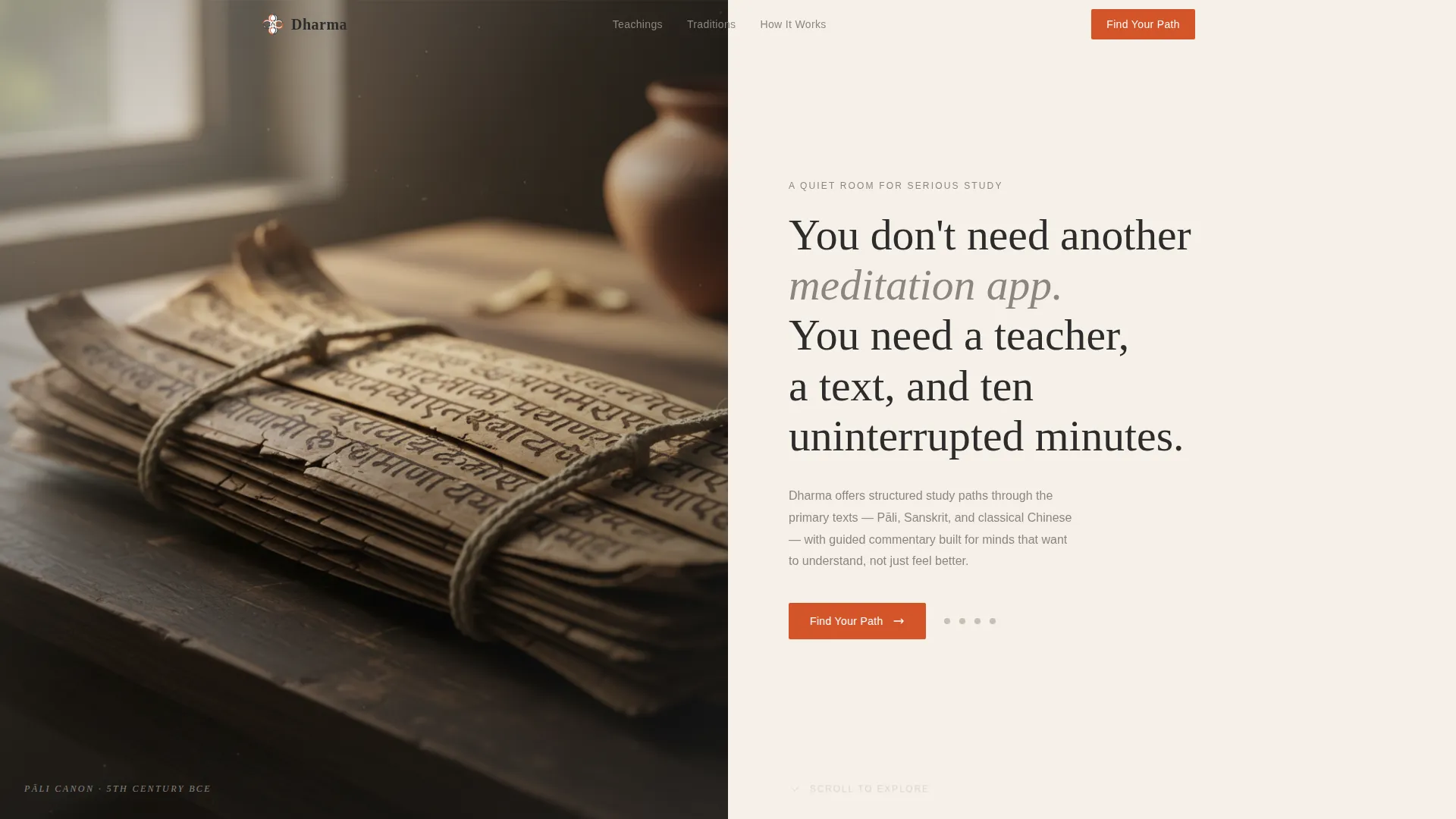
- A half-page hero with a manifesto headline, anchor navigation dots, and a primary "Find Your Path" call to action
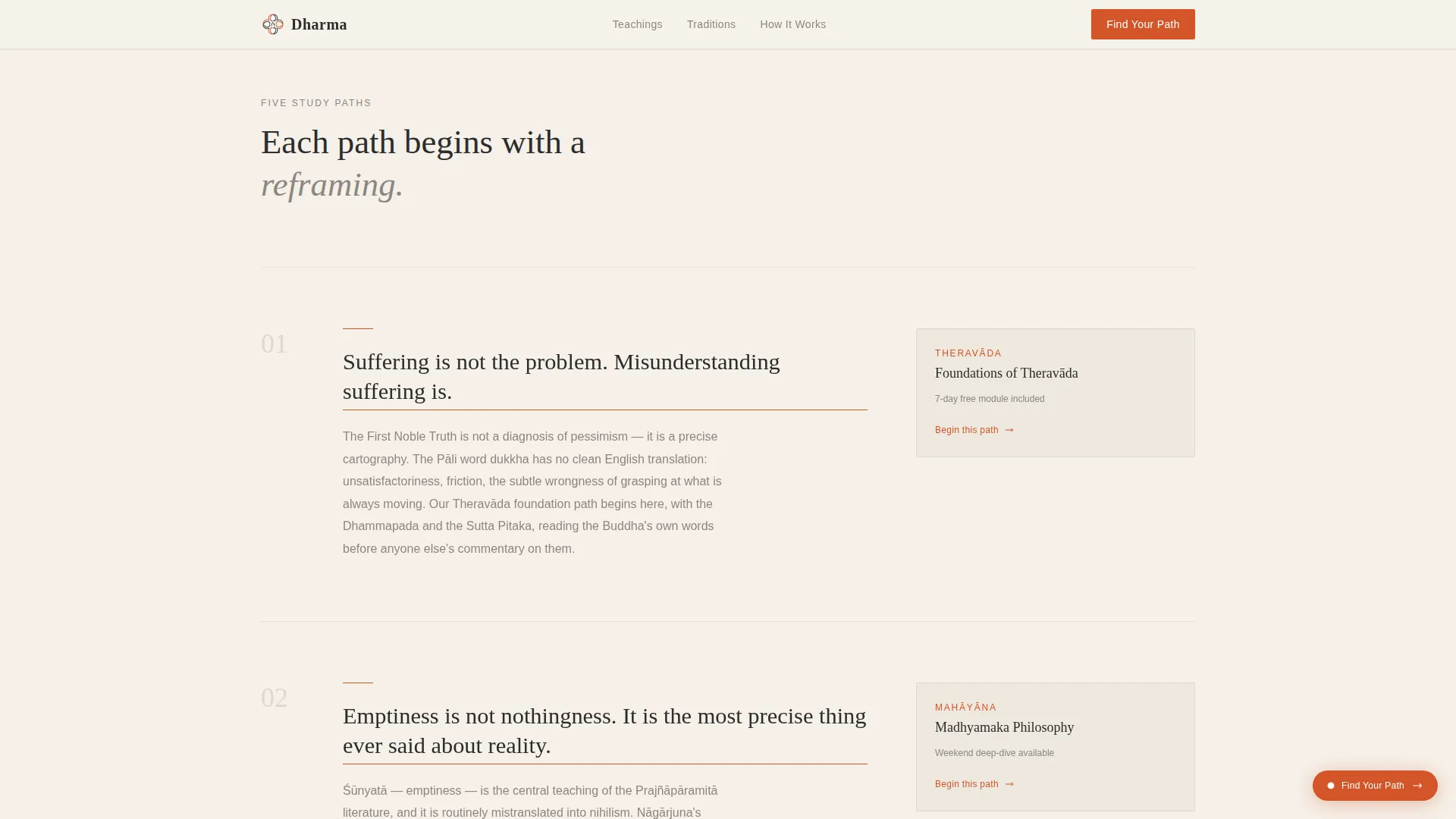
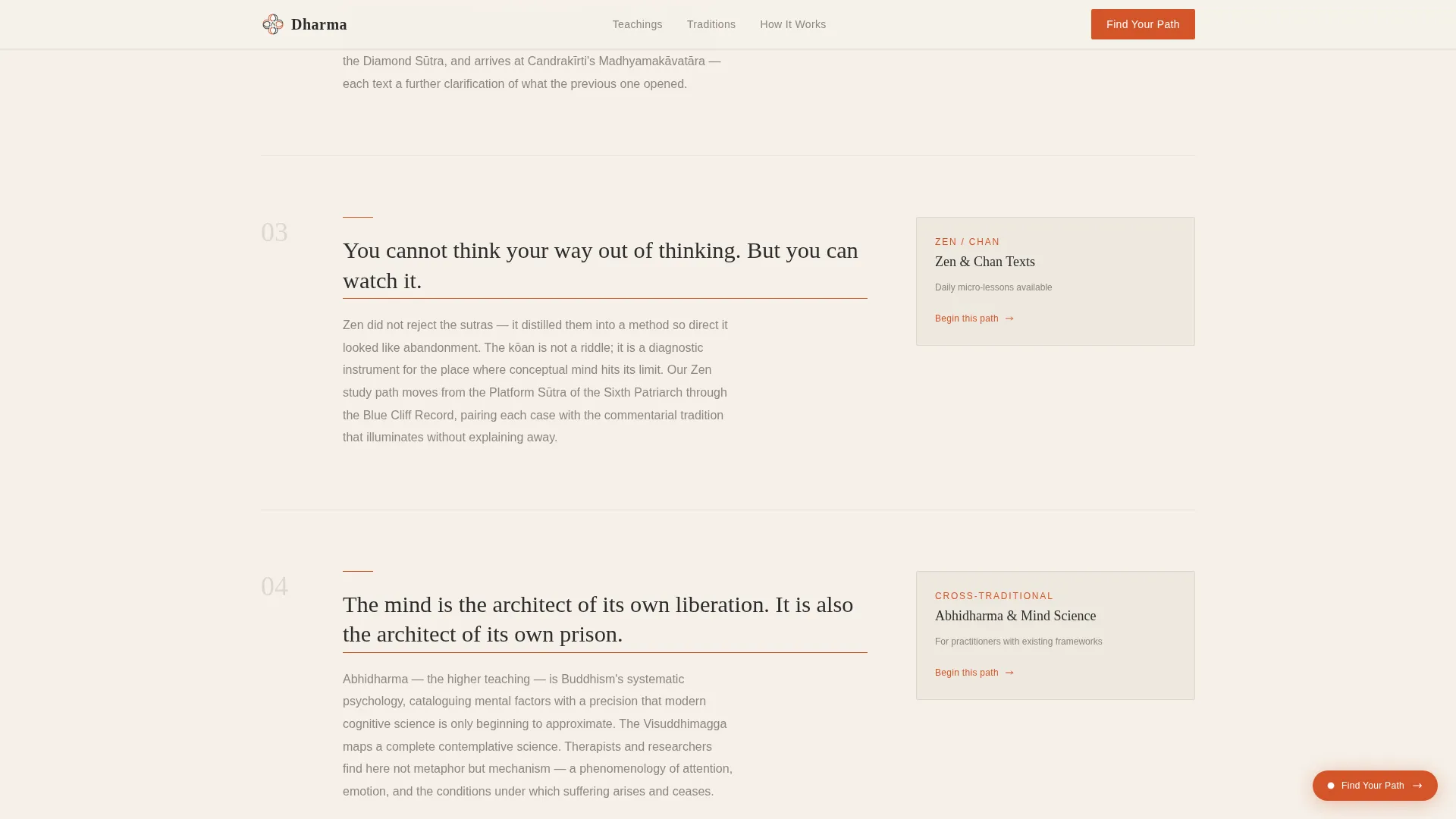
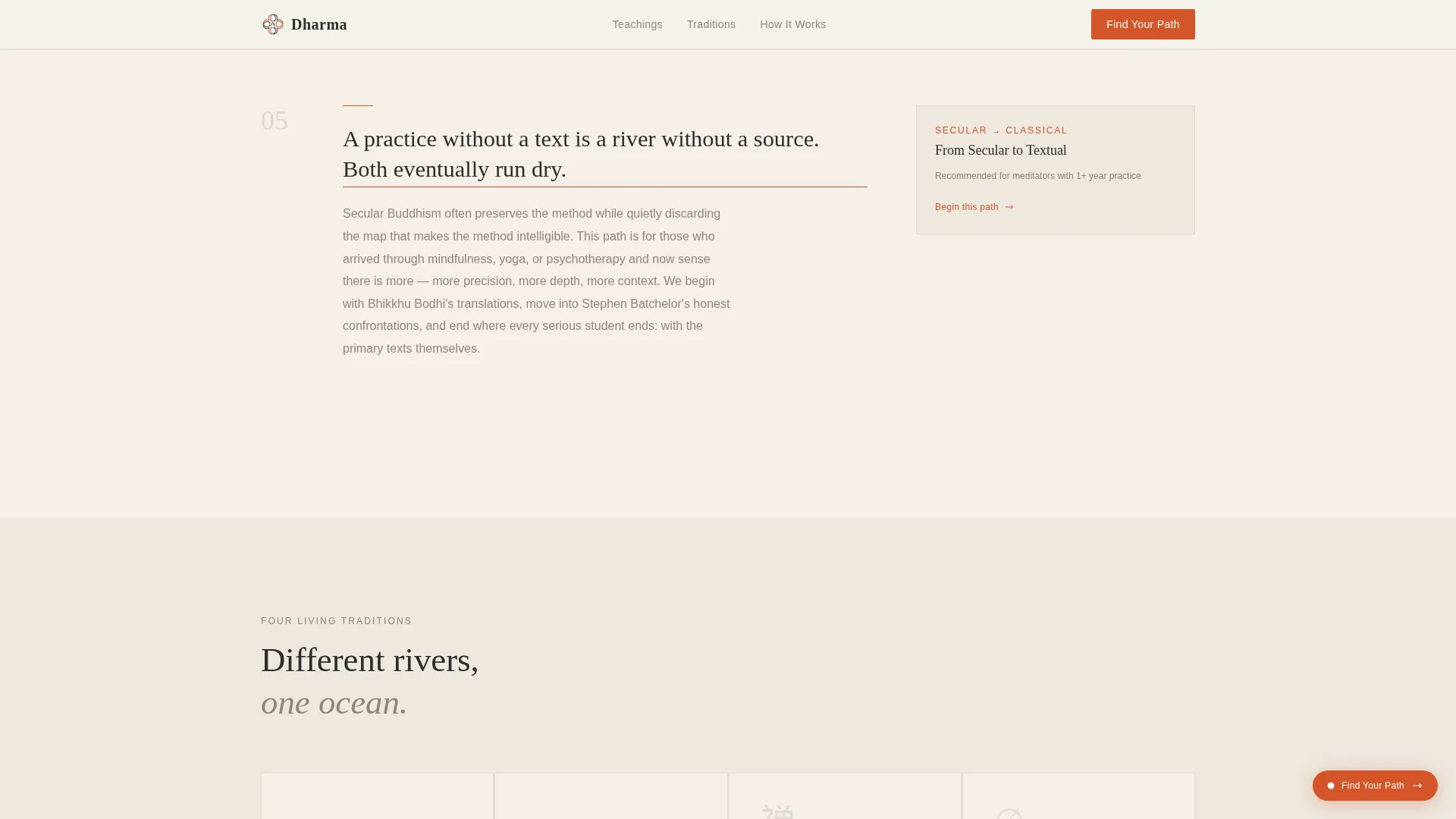
- Five manifesto-style spoke sections, each opening with a declarative reframe and unfolding into a study path description
- An inline five-question path-finder assessment that delivers a personalized text recommendation and a seven-day free guided module
Feature list
This template delivers a tightly coordinated set of built-in features, each serving the platform's core promise of structured, teacher-guided study.
Half-Page Hero with Manifesto Headline
The hero splits into two halves. The left holds a closely cropped, high-grain photograph of a weathered palm-leaf manuscript. The right carries a tall serif headline and a single body sentence, with a pulsing vermillion anchor-nav dot signaling the scroll path ahead.
Hub and Spoke Anchor Navigation
A set of anchor-nav dots runs through the page, letting visitors jump directly to any spoke section. Each dot corresponds to a thematic study section, keeping orientation clear without cluttering the editorial feel.
Scroll-Linked Manifesto Reveals
Each spoke section opens with a bold declarative statement that appears on scroll. The reveals accumulate gradually, building conviction line by line so the visitor arrives at the quiz already persuaded.
Inline Five-Question Path-Finder Quiz
The quiz opens inline without redirecting the visitor. Five questions cover entry motivation, tradition familiarity, and preferred study rhythm. A final open field asks the question that keeps returning to them, making it feel like a first conversation with a teacher rather than a funnel step.
Sticky "Find Your Path" Quiz Pill
After the first scroll, a fixed vermillion pill appears in the bottom-right corner. It persists through the entire page scroll, keeping the primary call to action accessible without interrupting reading.
Traditions Section with Four Study Paths
A dedicated section presents Theravāda, Mahāyāna, Zen, and secular study paths with brief, honest descriptions. Visitors can orient themselves within the landscape of traditions before taking the quiz.
Page sections overview
| Section | Purpose |
|---|---|
| Hero Header | Manifesto headline, photo split, anchor nav, primary call to action |
| Sutras Spokes | Scroll-revealed declarative statements unfolding into study paths |
| Traditions Overview | Four tradition paths described briefly for orientation |
| Path-Finder Quiz | Inline five-question assessment delivering personalized study recommendation |
| Study Rhythm | Platform format explained via daily micro-lesson and weekend deep-dive options |
| Minimal Footer | Horizontal minimal footer closing the page cleanly |
Design & branding system
The visual identity follows an Atelier Studio theme rooted in wabi-sabi editorial principles. Every color and type choice is drawn from the natural world, not from trend-driven screen palettes.
- Color system uses unbleached cotton white (#F5F0E8), ink-stone charcoal (#2C2C2C), mist gray (#C4BFB6), and persimmon vermillion (#D4552A) reserved for active navigation markers and call-to-action elements
- Typography pairs Fraunces, a tall unhurried serif, for headlines with DM Sans for body copy, creating a clear editorial hierarchy
- Visual texture references handmade paper and cloth-bound texts, keeping warmth and restraint in balance throughout every section
Mobile & speed optimization
The template is built desktop-first to honor the mountain library aesthetic, with a responsive mobile layout that preserves readability and quiz usability on smaller screens.
- Static-first build with minimal JavaScript keeps the page lightweight and fast to load
- Scroll-linked animations use medium-weight reveals that degrade gracefully on lower-powered devices
- The sticky quiz pill and inline assessment are fully functional on mobile without layout breakage
How this template helps you convert
Dharma is designed to move a reflective, research-oriented visitor toward enrollment through accumulation of conviction rather than pressure tactics.
- The manifesto scroll structure builds trust section by section, so by the time the visitor reaches the quiz they already feel understood and ready to begin
- The inline path-finder quiz lowers the commitment barrier by feeling like a conversation rather than a sign-up form, and delivers immediate value through a personalized text recommendation and free seven-day module
Other information about this template
This template fits naturally within the Blog and Editorial category, specifically the Philosophy and Spirituality subcategory. It is purpose-built for the Buddhism and Eastern philosophy niche, with Sanskrit and Pali terms used authentically throughout the copy scaffolding.
- The Atelier Studio theme and Cloud Canvas color system give the page a distinctive handcrafted editorial quality that separates it from generic wellness templates
- Student archetypes are implied through copy and section structure rather than fabricated testimonials, keeping social proof honest
- The hub and spoke anchor navigation pattern supports a longer scroll without losing visitor orientation, which suits the depth this niche demands
Theme
Atelier Studio
Creative direction
Manifesto
Color system
Cloud Canvas
Style
Hub & Spoke (Anchor Nav)
Direction
Quiz/Assessment
Page Sections
Half-page Hero with Manifesto Headline
Hub and Spoke Anchor Navigation
Scroll-linked Manifesto Reveals
Inline Five-question Path-finder Quiz
Sticky Quiz Call-to-action Pill
Four-tradition Study Path Section
Related questions
What type of platform is this template designed for?
Can I customize the quiz questions for my own platform?
Does the template include the manifesto copy or just the layout?
Is this template suitable if I cover only one Buddhist tradition?
What does the quiz deliver to the visitor?