Conspiracy Theory Analysis Content Pre-Launch & Coming Soon Website Template
Dossier is a coming-soon landing page template for a conspiracy theory analysis blog. It pairs a classified-briefing visual identity with a structured, evidence-first editorial layout. The page captures waitlist signups through two clear calls to action, while numbered exhibit sections build credibility through document aesthetics, an interactive redaction reveal, an editorial methodology flowchart, and an upcoming dossiers timeline.
by Rocket studio
Quick summary
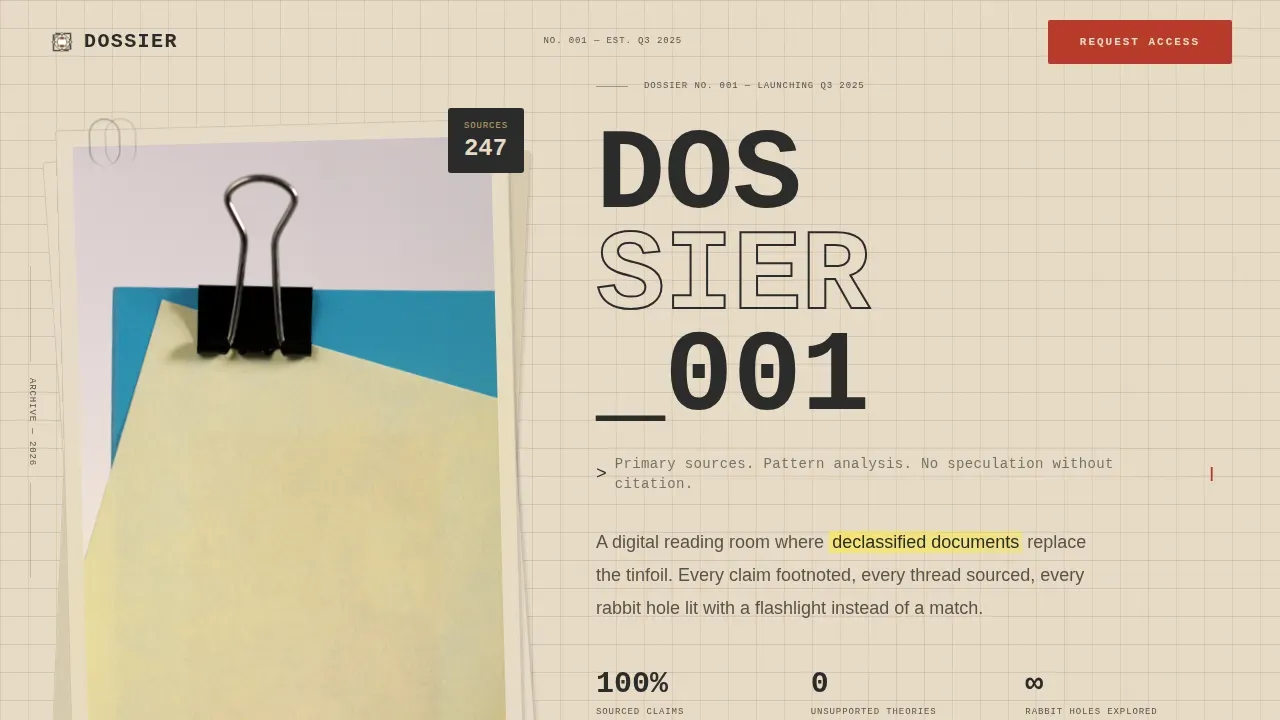
Dossier is a single-page waitlist template built for a primary-source research blog. It earns trust before launch by showing methodology, not promises. The Ink and Paper visual design feels like a real archive. Every section is a numbered exhibit that adds evidence weight as the visitor scrolls deeper into the page.
Who this template is for
This template is built for people who take research seriously and want their platform to reflect that standard.
- Late-night open-source investigators and skeptical truth-seekers who need a credible home for cited analysis
- History teachers and journalists who want sourced, document-backed deep-dives into government records
- Podcast hosts building a pre-launch audience around cold war events, surveillance, and declassified documents
What problem this template solves
Most coming-soon pages make promises. This one presents evidence. Readers who deal in government files and intelligence records will not sign up for vague teasers.
- It replaces hype with a structured methodology exhibit that shows exactly how the research process works
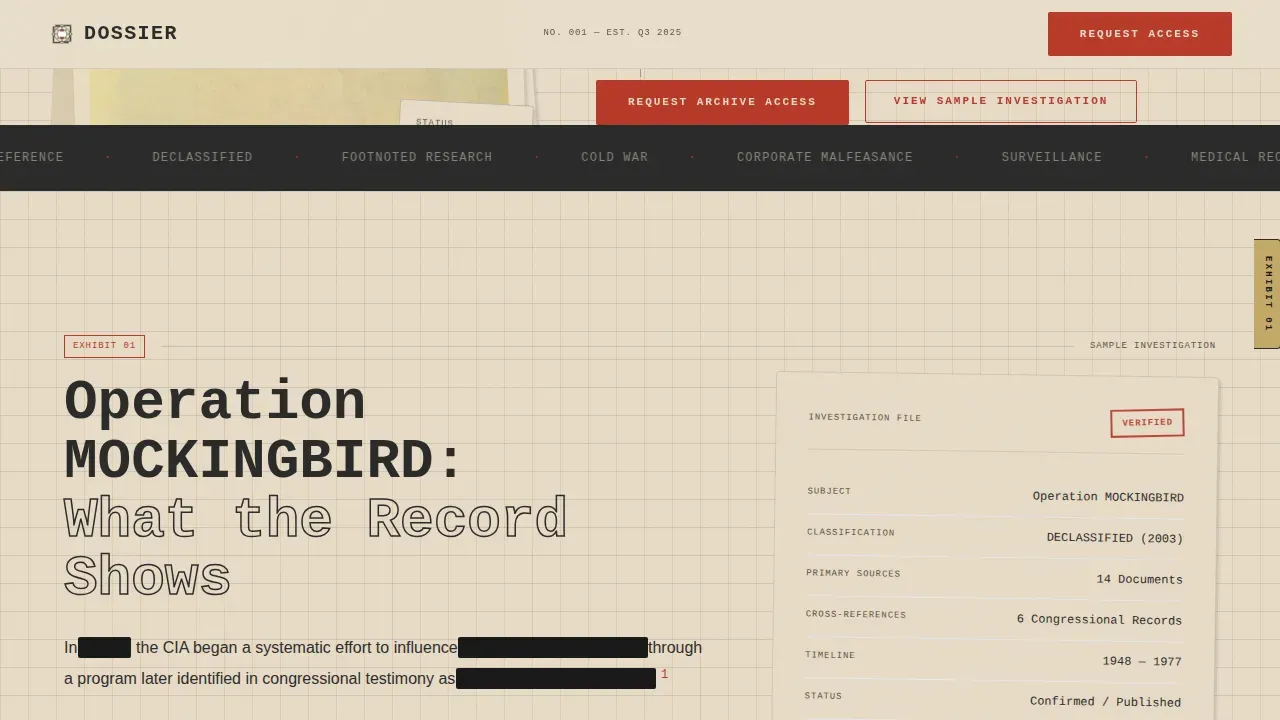
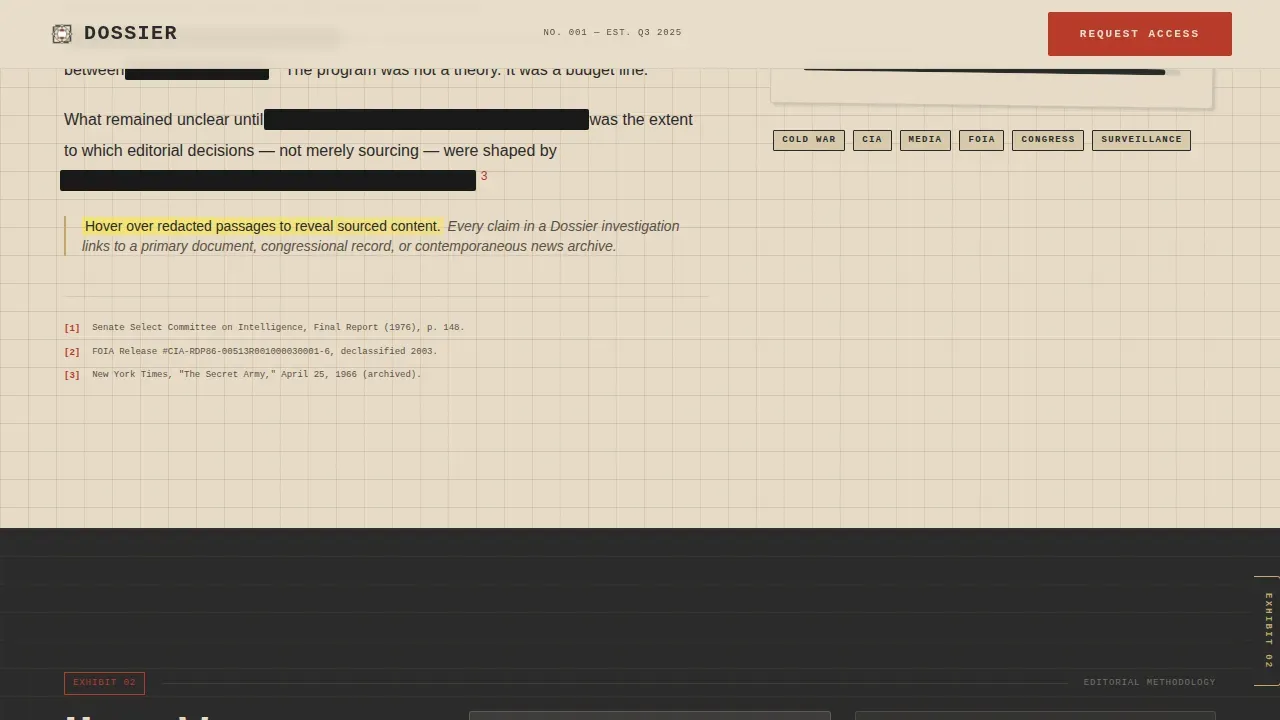
- It gives visitors something to evaluate before committing, including a sample investigation with redacted lines they can reveal on hover
What you get with this template
You get a fully designed, section-led landing page ready to capture early-access emails before your blog goes live.
- A five-section layout: hero, Exhibit 01 sample investigation, Exhibit 02 methodology flowchart, Exhibit 03 dossiers timeline with waitlist form, and a footer with a secondary download offer
- Two conversion touchpoints: a primary "Request Archive Access" form and a footer "Download Exhibit Zero" call to action
- A warm, analog visual system with parchment, charcoal, and vermillion, built in JetBrains Mono and DM Sans
Feature list
This section covers the core built-in capabilities confirmed by the template brief.
Hover-Reveal Redaction Effect
Exhibit 01 presents a sample investigation with blacked-out lines. Visitors hover to reveal the hidden text. The interaction demonstrates the nature of the archive's work without giving everything away before launch.
Editorial Methodology Flowchart
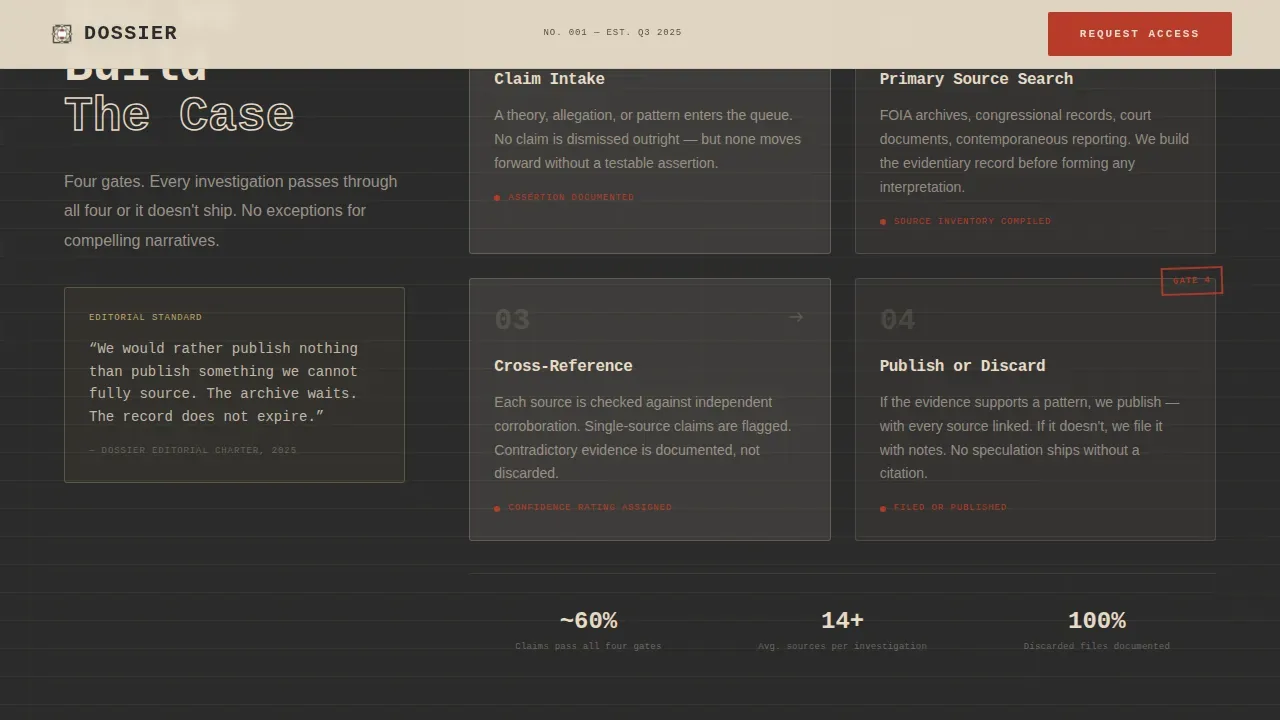
Exhibit 02 maps the full editorial process as a visual flowchart: claim, source verification, cross-reference, then publish or discard. It shows readers the methods behind every investigation and builds trust in the organization's standards.
Upcoming Dossiers Timeline
Exhibit 03 displays a timeline of prepared research topics with subject tags including Cold War, Corporate, Medical, and Surveillance. Visitors see the scope of planned work, giving them a reason to join the waitlist now.
Dual Conversion calls to action
The primary call to action, "Request Archive Access," sits after the methodology exhibit. The secondary call to action at the footer, "Download Exhibit Zero," offers a free sample PDF analysis. Both forms are minimal, asking only for an email and one optional open-text field.
Classified Briefing Scroll Experience
GSAP ScrollTrigger drives section reveals as the visitor scrolls. Each numbered exhibit tab appears on the right margin, reinforcing the industry report cadence. Parallax and marquee animations add texture without distracting from the content.
Ink and Paper Visual Identity
The design uses aged parchment, typewriter charcoal, redaction-black, manila folder tan, and a single vermillion accent. Backgrounds alternate between parchment and charcoal. Vermillion appears sparingly so each instance commands attention like a stamped date on a declassified file.
Page sections overview
| Section | Purpose |
|---|---|
| Hero Header | Introduce blog identity and case file framing with ruled-paper grid |
| Exhibit 01 Sample | Show a teaser investigation with interactive hover-reveal redactions |
| Exhibit 02 Methodology | Present the editorial flowchart to establish research credibility |
| Exhibit 03 Timeline | Display upcoming dossier topics and capture waitlist email signups |
| Footer Download | Offer free sample PDF and secondary email capture touchpoint |
Design & branding system
The visual language is deliberately analog. Every design choice references the physical texture of a real government archive, from the ruled-paper hero grid to the tabbed exhibit margins.
- Color palette: aged parchment (#E8DCC8), typewriter charcoal (#2B2B2B), redaction-black (#1A1A1A), manila folder tan (#C4A96A), and declassified-stamp vermillion (#B83A2A) used only for accent links and alert badges
- Typography: JetBrains Mono for headings and accents to reinforce the typewriter format; DM Sans for body text with generous leading like a broadsheet
Mobile & speed optimization
The template is desktop-first, built for the late-night researcher archetype who typically works on a large screen with many browser windows open at once.
- Fully responsive layout scales to mobile and tablet so the page remains usable across all devices
- Static sections use server components while interactive animations use client components, keeping the initial page load clean
How this template helps you convert
The page is structured so trust builds with every scroll, and the call to action arrives precisely when credibility peaks.
- The methodology flowchart in Exhibit 02 demonstrates rigorous editorial standards before asking for any email address, so the request feels earned rather than presumptuous
- The secondary "Download Exhibit Zero" offer at the footer gives visitors immediate value, a free PDF analysis sample, reducing friction for anyone who scrolled past the primary form
Other information about this template
This template is designed for context-rich research blogs where the audience understands primary sources and expects citations. Several reference databases support the kind of work this blog format promotes.
- The Declassified Documents Reference System provides online access to over 500,000 pages of previously classified government documents, making it a key database for sourced investigation work
- The Digital National Security Archive contains over 103,000 declassified documents obtained through the Freedom of Information Act (FOIA), organized into individual collections by theme
- Resources such as the CIA Electronic Reading Room, national archives portals, and FOIA requests give researchers access to full texts of memoranda, reports, and intelligence records released by the federal government
- Documents in these collections include special reports on political and military affairs, studies on socioeconomic matters, and assessments prepared for the president and national security council
- Topics such as the cold war, social protest, social injustice, native american radicalism, and the american indian movement appear across declassified government files, making them strong candidates for the upcoming dossiers timeline
- The central intelligence agency, the federal bureau of investigation (FBI), and other department-level bodies have all released files in response to Freedom of Information Act requests, giving researchers detailed information on events once hidden from general public interest
- A new version of this template can be adapted for any research-driven editorial format where an executive order, a political agenda, or a surveillance program needs rigorous, footnoted treatment
- The dossier declassified research archive landing page template is the right starting point for any blog that wants to comply with the standard that real intelligence research demands
Theme
Ink & Paper
Creative direction
Industry Report
Color system
Warm Stone
Style
Editorial/Magazine
Direction
Waitlist/Coming Soon
Page Sections
Hover-reveal Redaction Interaction
Editorial Methodology Flowchart
Upcoming Dossiers Timeline
Dual Email Capture Forms
GSAP Scroll-driven Exhibit Reveals
Ink and Paper Visual System
Related questions
Who is this landing page template designed for?
What conversion tools does this template include?
Can I customize the exhibit topics and timeline entries?
How does the hover-reveal redaction effect work?
Is this template suitable for a blog that cites FBI files and FOIA records?