Web3 & Crypto Editorial Landing Page Template
Ledger is a masonry-layout landing page built for a Web3 and crypto monthly publication. It opens with a full-viewport manifesto in oversized serif type, then unfolds a Pinterest-style mosaic of contributor spotlights, pull quotes, and thematic editorial clusters. The design channels broadsheet print culture to earn trust from DeFi builders, fund analysts, and crypto-curious developers.
by Rocket studio
Quick summary
Ledger is a single-page editorial landing page for a monthly Web3 and crypto deep-dive publication. The layout pairs a bold manifesto header with a scrollable masonry grid of contributor cards, thematic clusters, and a context-sensitive call to action bar. Every design choice references printed journalism, not digital hype.
Who this template is for
This template was built for editorial teams and independent publishers running long-form crypto and blockchain publications. It serves audiences who want credibility signals, not conversion funnels.
- DeFi protocol builders and developers who publish original research or contributor-driven dispatches
- Fund analysts and independent researchers who need a landing page that communicates thesis-grade editorial standards
- Crypto-curious writers and editors launching a structured monthly publication with a distinctive print-inspired brand
What problem this template solves
Most newsletter and publication landing pages default to generic email-capture layouts. That approach undercuts trust for audiences who expect depth. Ledger solves the mismatch between editorial ambition and the templates available to express it.
- Crypto and Web3 readers distrust marketing funnels; this template uses editorial design to signal seriousness
- Contributors and past issues need visible, structured presentation; the masonry grid gives each voice room to land
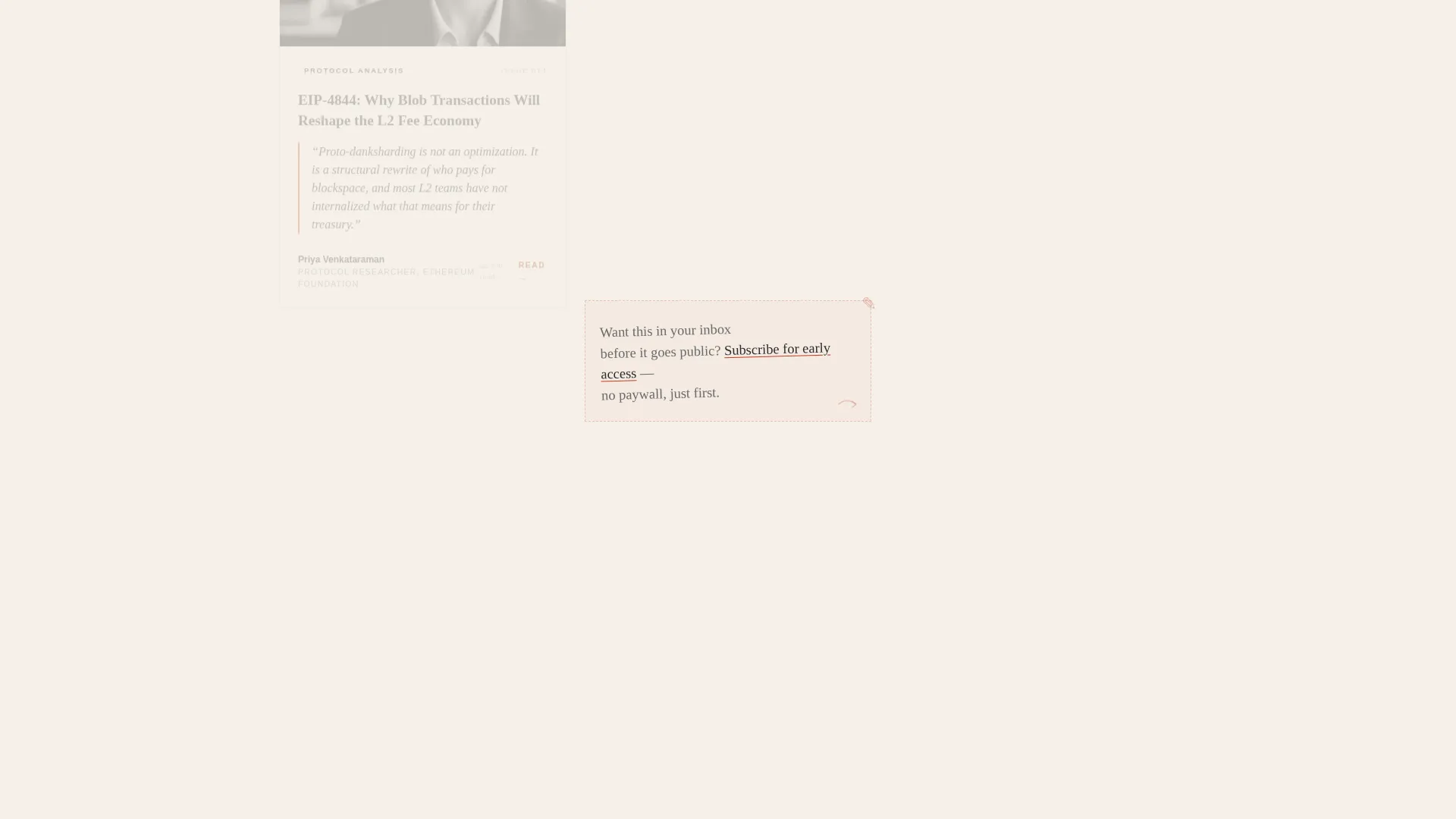
- A single subscription nudge styled as a handwritten margin note reduces friction without mimicking a popup or a banner
What you get with this template
The template delivers a complete, single-page editorial landing page with every section and interaction state already composed and ready to customize.
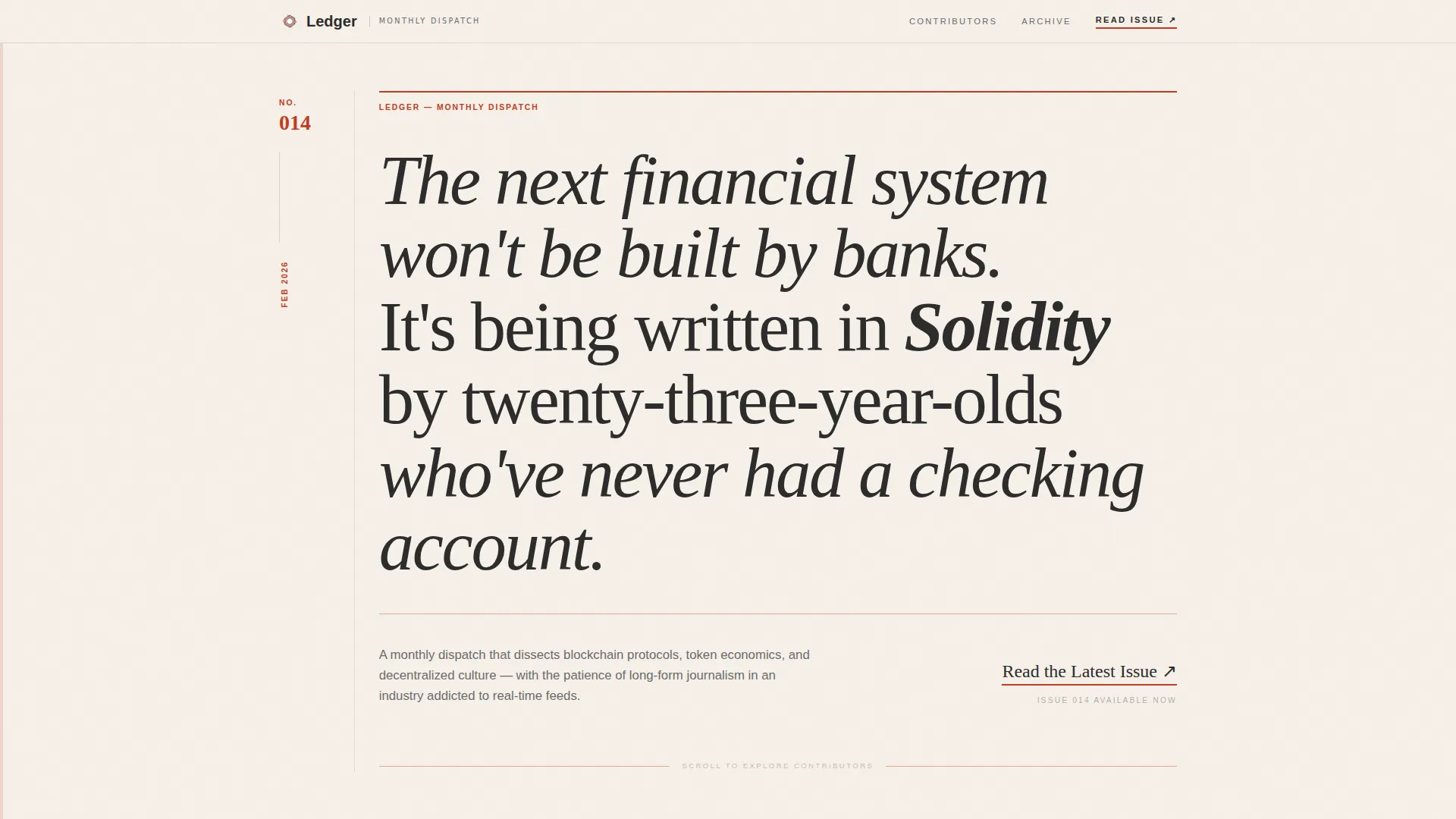
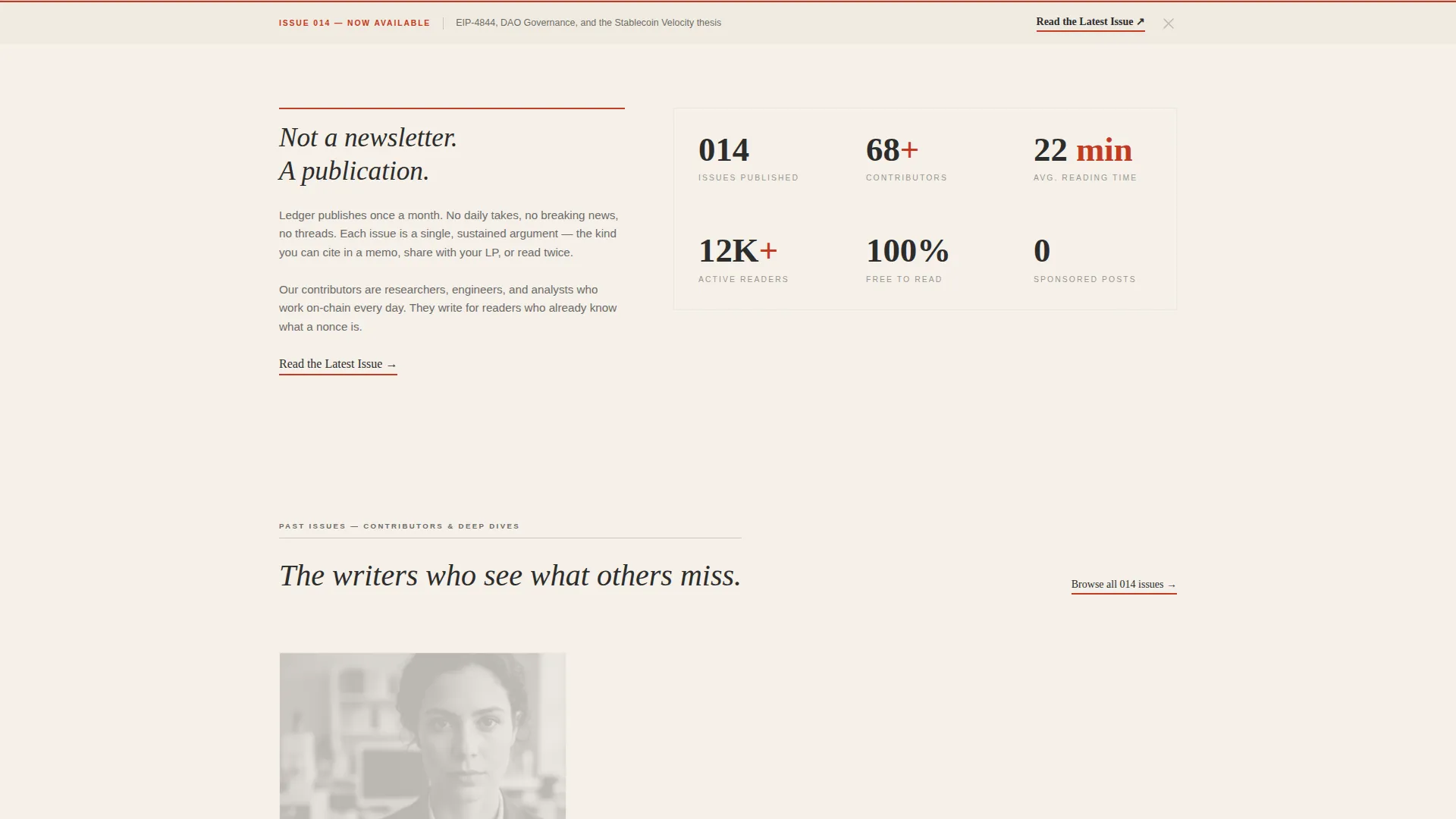
- A full-viewport manifesto hero with oversized Fraunces serif type, a thin archival-red rule, and an issue-number margin label
- A scrollable masonry grid of contributor cards featuring duotone portrait treatment, deep-dive titles, and pull quotes in varying card heights
- A fixed bottom call to action bar that slides into view after the visitor scrolls past the third card row, plus a mid-grid subscription margin note
Feature list
This section describes the distinct built-in capabilities that define the Ledger template.
Full-Viewport Manifesto Header
The hero occupies the entire browser viewport with a single provocative thesis statement set in large Fraunces serif type on unbleached parchment. A thin archival-red rule sits above the text. The issue number appears in the margin like a printed journal reference. The primary call to action appears as a red-underlined text link directly beneath the statement.
Masonry Contributor Mosaic
Contributor cards are arranged in a Pinterest-style masonry grid. Each card pairs a high-contrast duotone portrait with the contributor's deep-dive title and a sharp pull quote. Cards vary in height to mimic torn-out pages pinned to a reading wall, creating a browsing rhythm that builds engagement as the visitor scrolls deeper.
Thematic Editorial Clusters
As the grid progresses, cards group into visible thematic clusters covering protocol analyses, culture essays, and on-chain data stories. The clustering shifts the visitor's experience from casual browsing to active reading, reinforcing that the publication covers distinct areas with consistent editorial depth.
Handwritten Margin Note Subscription Prompt
A secondary call to action for early-access subscriptions appears once, midway through the grid. It is styled as a handwritten margin annotation rather than a banner or modal. The intent is to feel like a suggestion from a trusted reader, not a marketing interruption.
Sliding Fixed Bottom Call to Action Bar
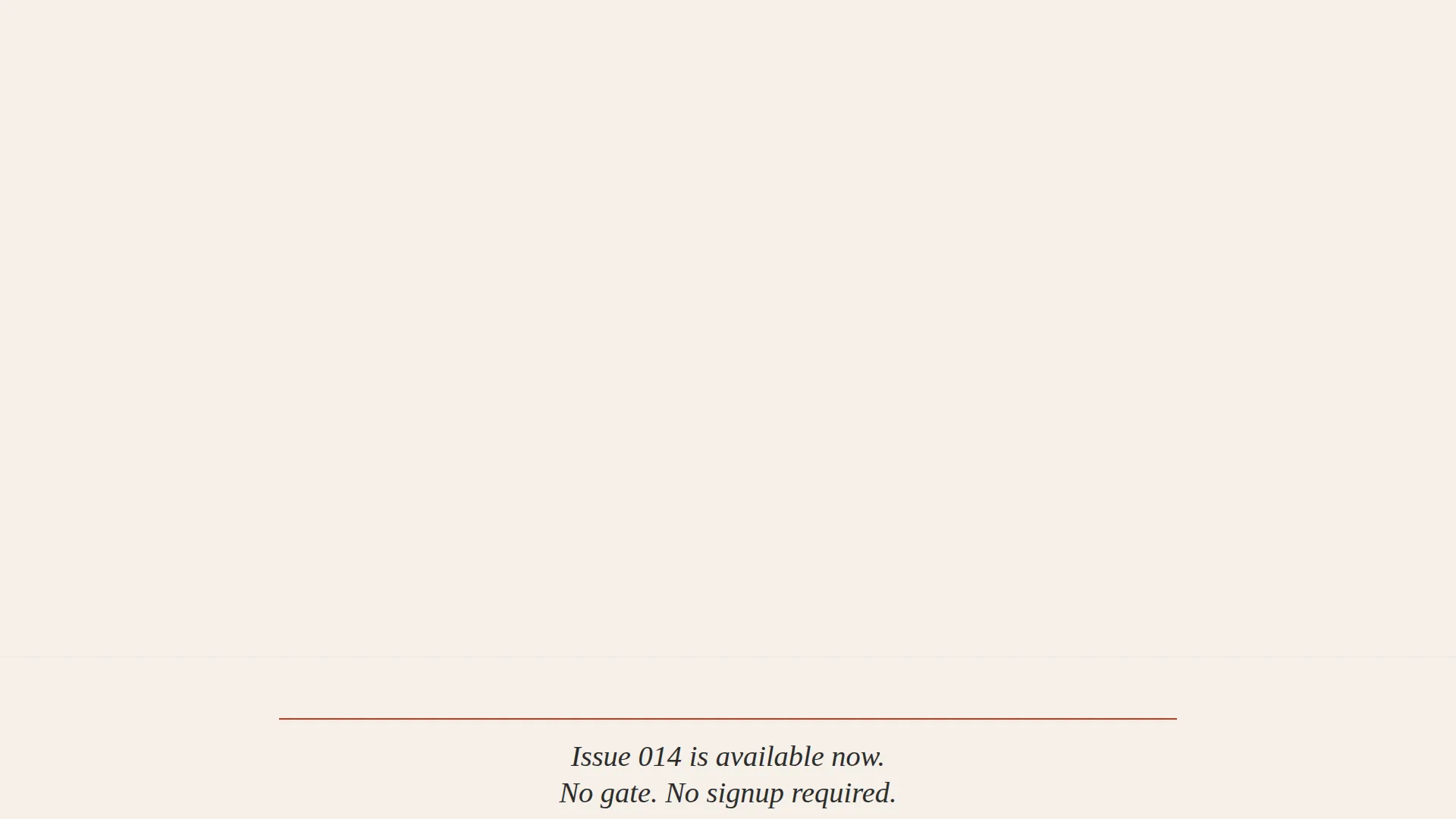
After the visitor scrolls past the third row of contributor cards, a fixed bar slides up from the bottom of the screen. It carries the primary "Read the Latest Issue" call to action. The bar persists without blocking content, keeping the conversion path visible without disrupting reading flow.
Minimal Editorial Footer
The footer follows a horizontal flow pattern that stays visually quiet. It completes the broadsheet aesthetic without competing with the editorial content above it.
Page sections overview
| Section | Purpose |
|---|---|
| Manifesto Hero | Sets editorial tone and primary call to action |
| Creator Spotlight Mosaic | Showcases contributors and past deep dives |
| Thematic Cluster Grid | Groups content by protocol, culture, and data |
| Subscription Margin Note | Surfaces early-access prompt without friction |
| Fixed Bottom Bar | Persists primary call to action after scroll depth |
| Minimal Footer | Closes the page with horizontal editorial layout |
Design & branding system
The visual identity follows an Ink and Paper theme built on the Cloud Canvas color system. Every color decision references physical print materials rather than digital interfaces.
- Color palette: unbleached parchment (#F5F0E8) as background, typewriter charcoal (#2C2C2C) for primary text, soft graphite (#6B6B6B) for secondary text, and archival red (#C23B22) reserved for pull quotes, issue numbers, and hover states
- Typography: Fraunces display serif drives all headings and the manifesto; DM Sans handles body copy and interface labels for clean contrast
- Visual style: duotone portrait treatment on contributor images, no decorative animation on the hero, subtle scroll reveals on card rows, and a broadsheet grid rhythm throughout
Mobile & speed optimization
The template is desktop-first by design, reflecting the broadsheet reading experience its audience expects. Graceful degradation ensures the layout remains fully functional and readable on smaller screens.
- The masonry grid reflows into a single-column stacked layout on mobile, preserving card content and pull quote readability
- The fixed bottom call to action bar and the margin note subscription prompt both adapt to narrower viewports without overlapping content
- The template is built on a static-first architecture using Server Components, keeping JavaScript minimal and page weight low
How this template helps you convert
The Ledger template converts by earning trust before asking for a click. Every layout decision is designed to make the publication feel authoritative and worth the reader's time.
- The manifesto hero frames the publication's point of view immediately, so readers who share that perspective self-select before scrolling further
- The masonry contributor mosaic builds social proof through visible names, credentials, and specific pull quotes, giving readers concrete reasons to trust the editorial standard
- The fixed bottom call to action bar keeps the primary path to the latest issue visible across the entire scroll journey without interrupting the reading experience
Other information about this template
The Ledger template sits at the intersection of editorial design and Web3 publishing. It is built specifically for the Blog and Editorial category, within the Web3 and Crypto Newsletter subcategory, targeting the monthly deep-dive niche.
- The template uses a Click-Through landing page direction, meaning no form or gate appears on this page; both calls to action lead outward to the current issue or an early-access path
- The Creator Spotlight creative direction and the Quote and Manifesto header concept are matched intersection signals, meaning the layout was composed to serve this exact editorial use case
- The Cloud Canvas color system and Ink and Paper theme are purpose-built pairings; the parchment, charcoal, graphite, and red combination is unique to this template family
- The Masonry and Pinterest layout style is the structural core; the varying card heights and thematic clustering are not decorative choices but functional editorial tools
Theme
Ink & Paper
Creative direction
Creator Spotlight
Color system
Cloud Canvas
Style
Masonry/Pinterest
Direction
Click-Through
Page Sections
Full-viewport Manifesto Hero
Masonry Contributor Card Grid
Thematic Editorial Clusters
Handwritten Margin Note Prompt
Sliding Fixed Bottom Bar
Related questions
Does this template include an email subscription form?
Can I edit the manifesto text and issue number?
How many contributor cards can the masonry grid hold?
Is this template suitable for editorial niches outside of crypto?
What happens to the masonry grid on mobile screens?