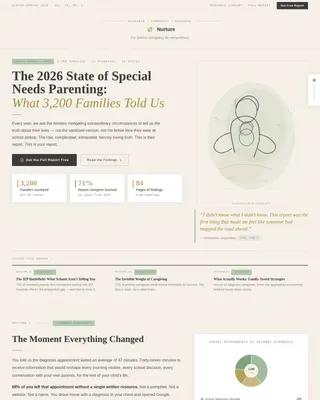
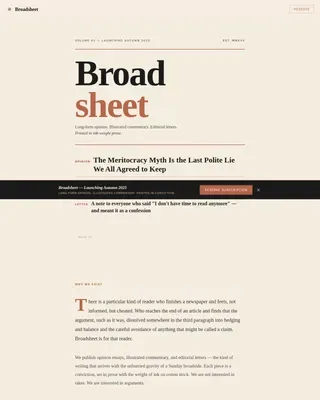
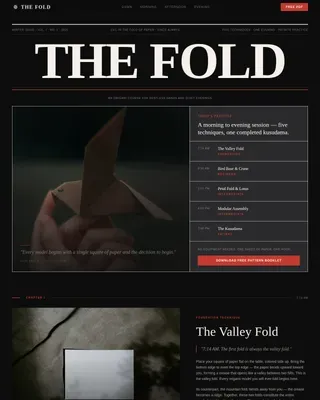
Hobby & Passion Content Pre-Launch Website Template
Lifer is a hub-and-spoke landing page template built for birding communities and blogs launching with a waitlist. It pairs a cinematic full-bleed header with a sticky anchor navigation, three manifesto-driven content spokes, and a waitlist form. The aged-parchment visual system and field-guide typography make it feel handcrafted, not generic.
by Rocket studio
Quick summary
Lifer is a pre-launch landing page template for birding blogs and communities. It uses a manifesto-led creative direction, a sticky hub-and-spoke navigation structure, and a Parchment and Rust color palette to build atmosphere and trust before a single post goes live. The primary goal is capturing waitlist emails from serious, passionate birders.
Who this template is for
This template is built for birders who want to launch a community or blog with intention, not just a holding page. It speaks directly to people with a deep, lived connection to the craft.
- Patch birders, eBird listers, and naturalist sketch artists launching a community space
- Birding bloggers and content creators building an audience before going live
- Hobby project founders who want a pre-launch page that already feels like a destination
What problem this template solves
Most coming-soon pages feel anonymous. They give visitors no reason to wait. Lifer solves this by leading with identity and belonging rather than product features.
- Generic waitlist pages fail to signal that a niche community truly understands its audience
- Blank holding pages waste pre-launch traffic by offering nothing to read or feel
- Bland forms collect emails without filtering for the people who will actually show up
What you get with this template
You get a complete, single-page layout with six structured content areas, a fully designed visual identity, and interactive components ready to deploy. Every section is built to deepen the reader's sense of belonging as they scroll.
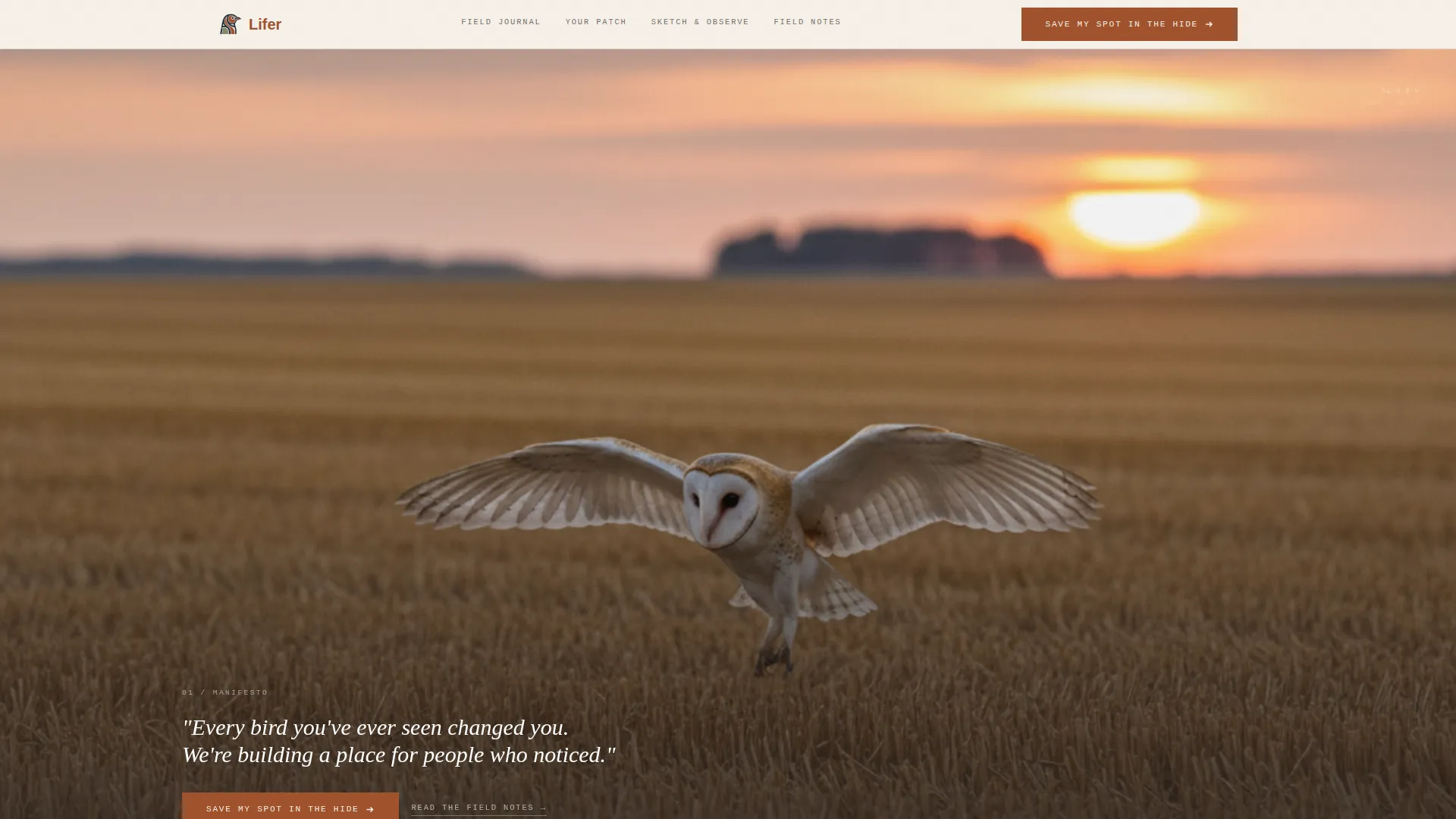
- A full-bleed cinematic hero with manifesto text and a primary waitlist call-to-action
- A sticky side anchor navigation linking to three thematic spoke sections
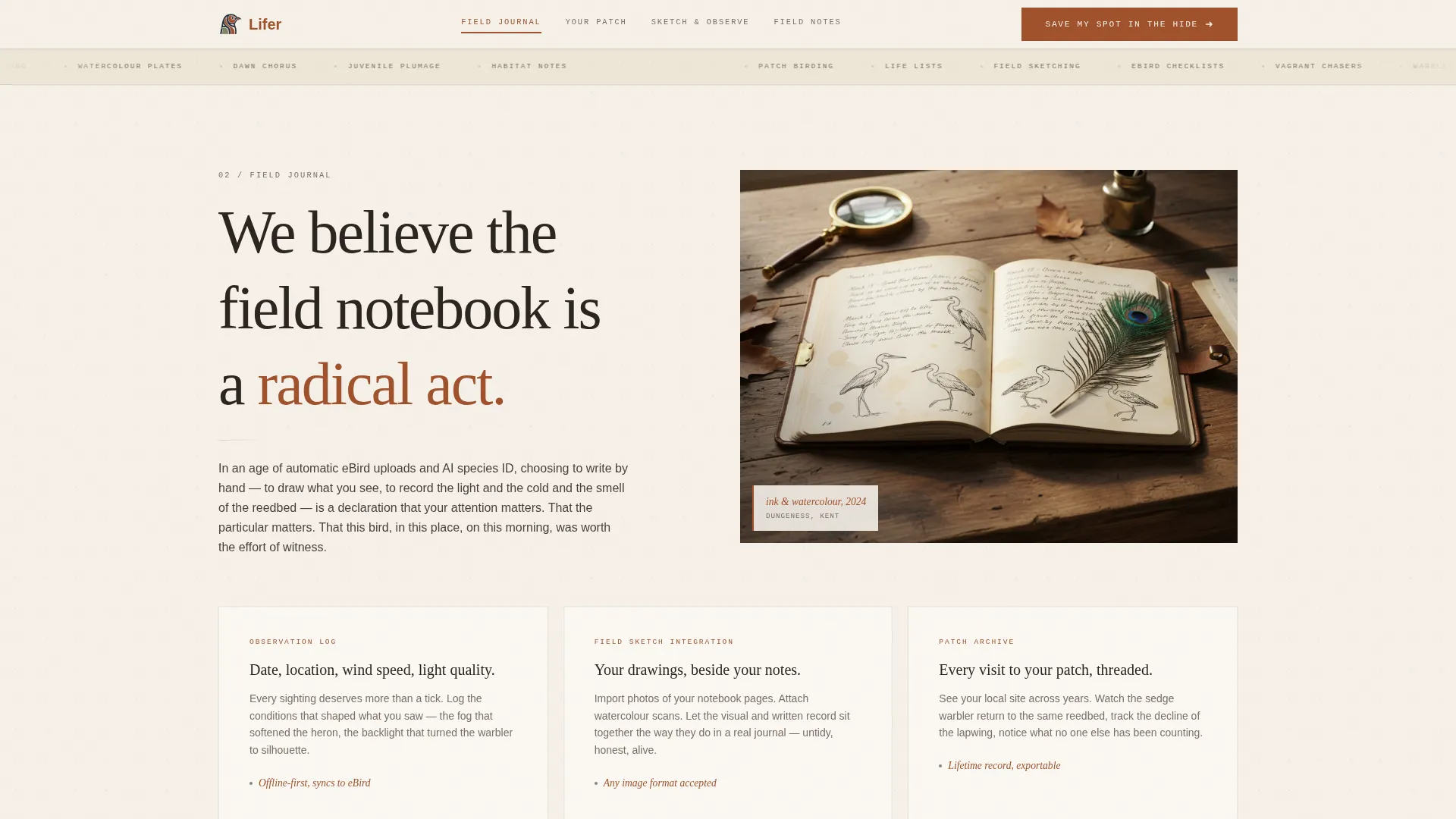
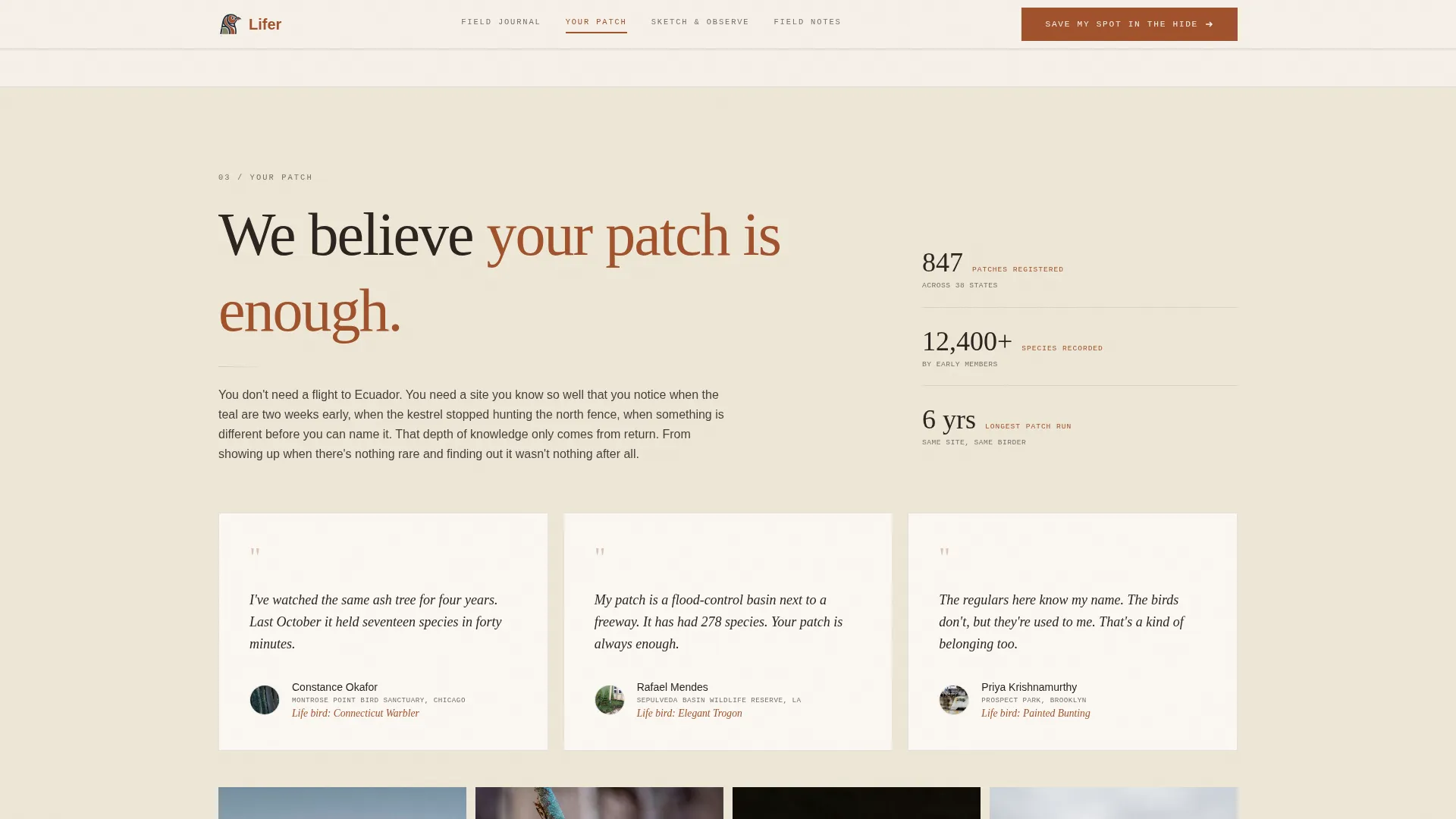
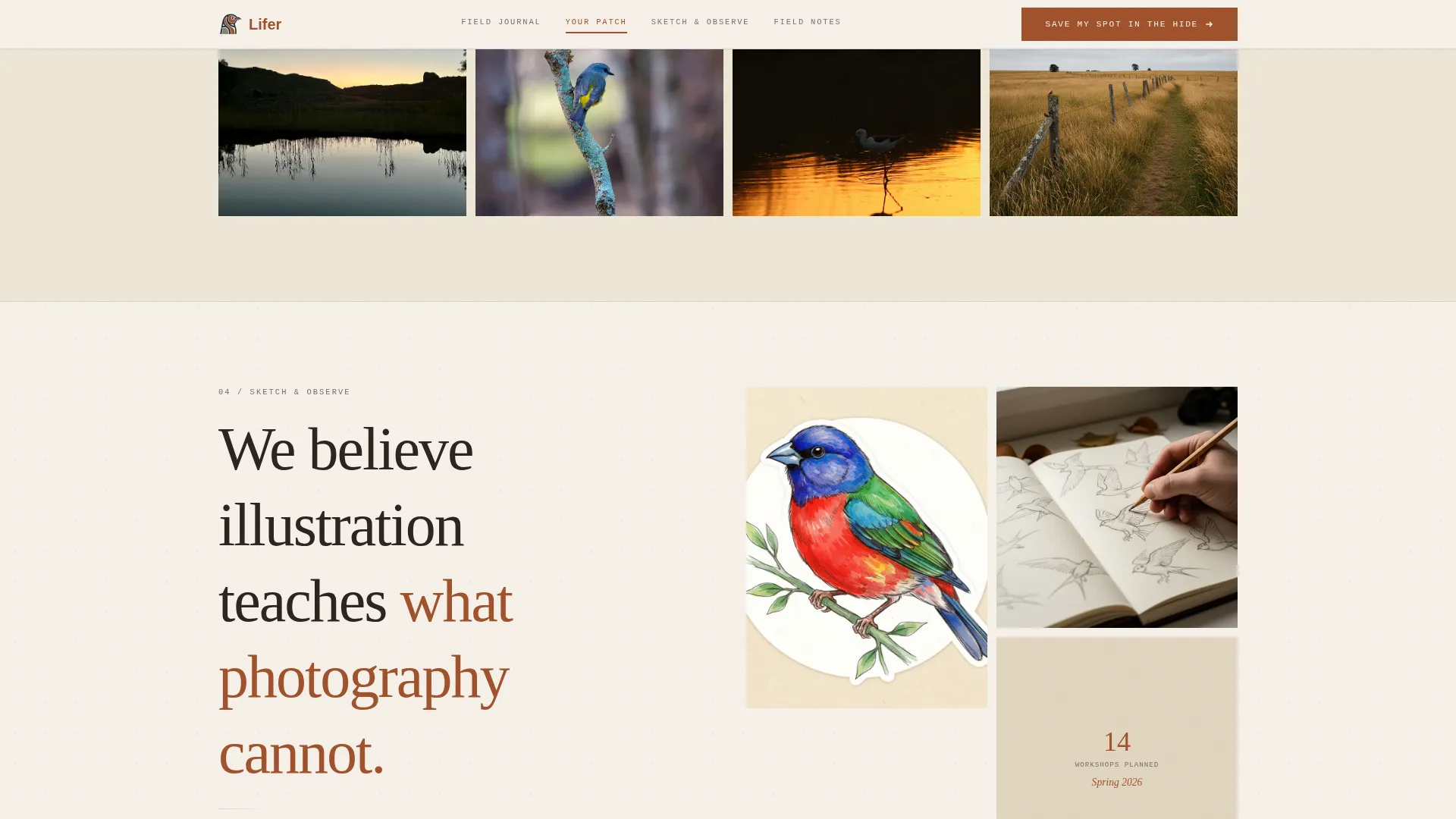
- Three manifesto-driven spoke sections covering field journaling, patch community, and sketch workshops
- A repeated waitlist form at the bottom with an optional "What's your life bird?" question field
- A secondary call-to-action linking to a preview blog post titled "Read the Field Notes"
- A footer using a horizontal flow layout
Feature list
A paragraph introduces the core build. Below are the specific capabilities this template delivers.
Full-Bleed Cinematic Hero
The header stretches edge to edge with no border or gradient overlay. A single line of manifesto text sits at the lower third of the image, set in a serifed typeface in white against natural shadow. The primary "Save My Spot in the Hide" call-to-action button appears directly beneath it.
Hub-and-Spoke Anchor Navigation
A sticky side navigation bar links to each of the three spoke sections. The same waitlist button is persistently visible in the navigation, so visitors can join at any point in their scroll without hunting for the form.
Three Manifesto Spoke Sections
Each spoke opens with a declaration rather than a feature description. The field journal spoke, the local patch community spoke, and the sketch and watercolor workshop spoke each carry their own tone and escalate from personal ritual to collective movement.
Waitlist Form with Belonging Signal
The email capture form includes one optional field asking "What's your life bird?" This question filters for genuine birders and creates an immediate sense of shared identity between the community and the visitor filling out the form.
Scroll-Driven Animation System
The template uses scroll reveal, spotlight card effects, parallax background motion, and text scrub animations at a medium intensity. These transitions give the page a layered, immersive feel without overwhelming the content.
Secondary Content Path
Below the final manifesto section, a secondary call-to-action invites visitors to "Read the Field Notes." This links to a preview blog post, giving undecided visitors something of value before the community launches.
Page sections overview
| Section | Purpose |
|---|---|
| Hero with manifesto | Sets visual tone and captures first waitlist signups |
| Sticky anchor nav | Keeps hub navigation and waitlist button always visible |
| Field Journal spoke | Introduces journaling tools with a radical-act declaration |
| Patch Community spoke | Celebrates local birding with a belonging-first message |
| Sketch Workshop spoke | Previews watercolor workshops with an illustration philosophy |
| Final call-to-action | Repeats the waitlist form and offers the Field Notes link |
| Horizontal footer | Closes the page with a clean, structured information row |
Design & branding system
The visual identity draws from a naturalist's working desk in late autumn. Every color, typeface, and texture choice reinforces the feeling of a well-used field guide rather than a polished digital product.
- Color palette: aged cotton parchment (#F5F0E8), iron-gall ink (#2C2420), oxidized rust (#A0522D) for accent links and navigation markers, and muted lichen green (#7A8B6F) for secondary highlights
- Typography: Fraunces as the display serif for headings, DM Sans for body text, and IBM Plex Mono for labels and small metadata details
- Visual texture and art direction follow an Atelier Studio theme, with every surface designed to feel warm, weathered, and handmade
Mobile & speed optimization
The template is built desktop-first to serve readers who want an immersive, long-form browsing experience. Mobile layouts are fully considered so the page holds its character on smaller screens.
- Desktop-first layout prioritizes the full hub-and-spoke reading experience with side navigation intact
- Static-first rendering with Server Components handling the core layout for fast initial loads
- Hover states, anchor scrolling, and animation triggers are all optimized to work cleanly on touch devices
How this template helps you convert
The conversion strategy is built into every layer of the page, from the first headline to the final form. Visitors are not nudged toward signup; they are drawn toward it by feeling understood.
- The manifesto text and cinematic hero create an immediate sense of identity, so visitors know within seconds whether this community is for them.
- The optional "What's your life bird?" field lowers the barrier to form completion while simultaneously filtering for the most engaged audience.
- The "Read the Field Notes" secondary path gives undecided visitors a reason to stay, read, and return when the community launches.
Other information about this template
This template is part of a broader set of niche community and blog templates built on an Atelier Studio theme. It is a strong fit for anyone building a passion-driven content space in the hobby and editorial category.
- The template style is Hub and Spoke with Anchor Navigation, making it practical for content-heavy landing pages with multiple thematic areas
- Creative direction follows a Manifesto approach, where declarations replace feature lists to build emotional resonance
- The Parchment and Rust color system is fully defined with specific hex values, making brand customization straightforward
- This template is categorized under Blog and Editorial, Hobby and Passion Content, and is purpose-built for the bird watching blog and community niche
- The footer uses a Vercel Horizontal Flow pattern for a clean, structured close to the page
Theme
Atelier Studio
Creative direction
Manifesto
Color system
Parchment & Rust
Style
Hub & Spoke (Anchor Nav)
Direction
Waitlist/Coming Soon
Page Sections
Full-bleed Cinematic Hero Section
Sticky Hub-and-spoke Navigation
Three Manifesto-driven Spoke Sections
Waitlist Form with Belonging Signal
Scroll-driven Animation System
Secondary Field Notes Content Path
Related questions
Can I use this template for a birding blog that is already live?
Does the waitlist form connect to an email platform automatically?
Can I change the spoke sections to cover different birding topics?
Is this template suitable for mobile visitors?
What makes the waitlist form different from a standard email capture?