Quick summary
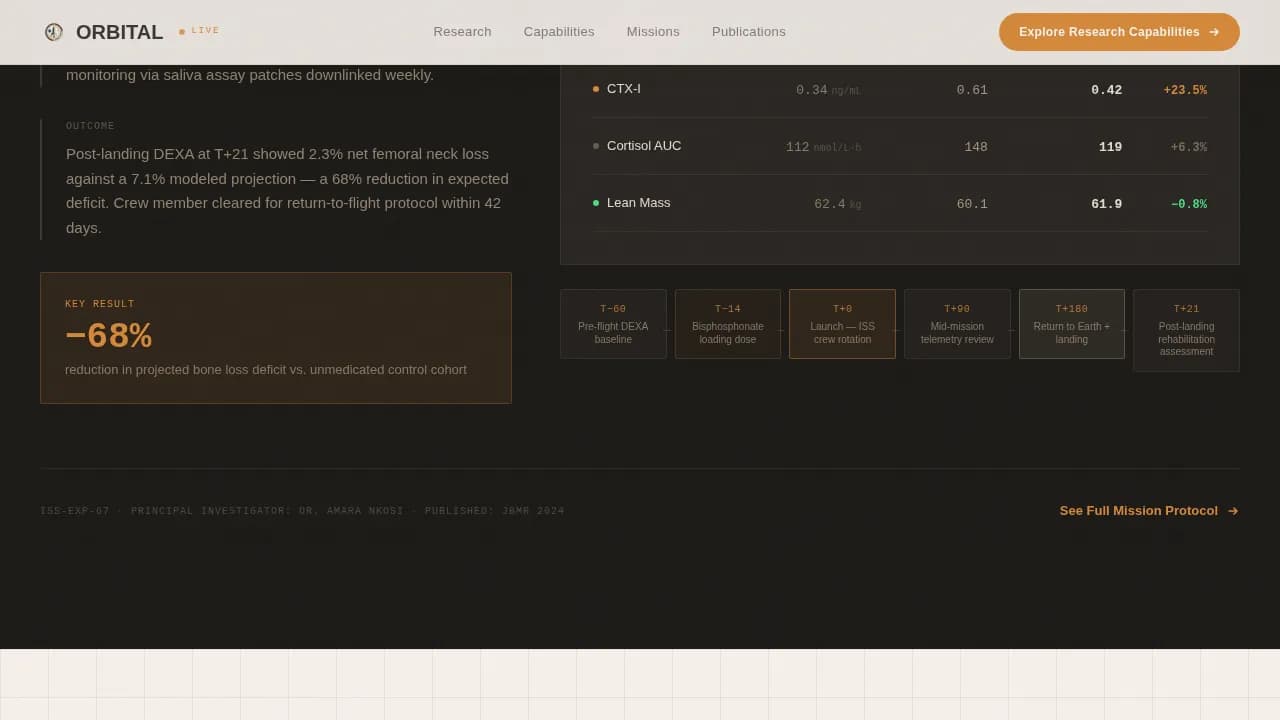
Orbital is a single-page, data-forward template for space medicine research organizations. It opens with a 3×2 metrics grid, moves through two scrolling case study narratives, and closes with a capabilities and partners section. Every layout choice is designed to build scientific credibility and guide qualified visitors toward the research portal.
Who this template is for
This template serves organizations where research rigor and mission authority must be visible at first glance.
- Mission directors and procurement officers at space agencies
- Clinical trial sponsors running microgravity pharmaceutical studies
- Research partners, investors, and independent laboratory teams
What problem this template solves
Space medicine research is defined as the study of adapting human physiology to space to ensure safety for orbital missions. Communicating that work to agency partners requires balancing scientific depth with clear design. Generic portfolio layouts fail here.
- Visitors cannot quickly assess operational credibility from raw publication lists
- No structured narrative connects pre-flight protocols to post-landing outcomes
What you get with this template
You get a mission control aesthetic built around data, narrative, and a single conversion goal.
- A 3×2 hero metrics wall with six live-data tiles and amber spark-lines
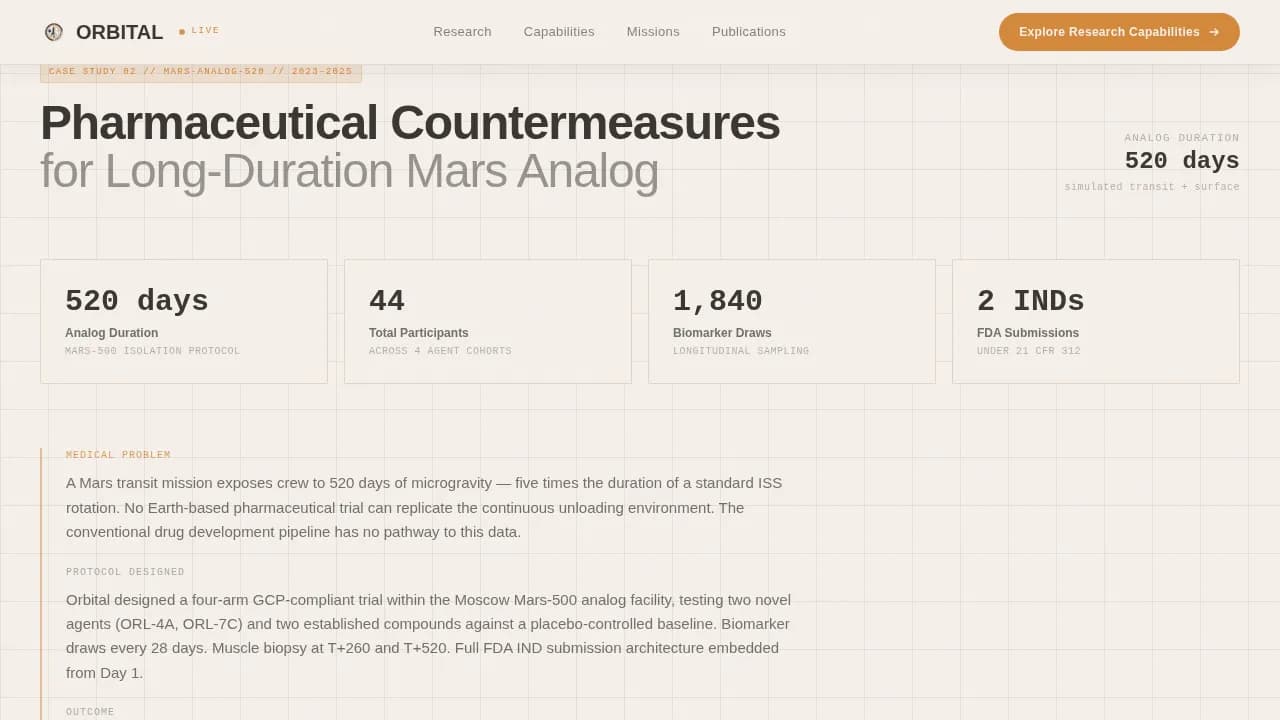
- Two case study sections alternating biomarker data grids with principal investigator narrative passages
- A capabilities bento grid, a credibility wall for agency partners and publications, and a linear footer
Feature list
Live Metrics Hero Wall
Six oversized data tiles display missions supported, crew-hours monitored, bone-loss interventions tested, publications cited, agency partners, and microgravity trial completions. Amber spark-lines trace upward trends across each tile.


Theme
Service Utility
Creative direction
Case Study Narrative
Color system
Warm Stone
Style
Dashboard/Data Grid
Direction
Click-Through
Page Sections
Live Six-tile Metrics Hero Wall
Escalating Case Study Narratives
Persistent Click-through Call to Action
Asymmetric Capabilities Bento Grid
Agency Credibility Wall
GSAP Scrolltrigger Animation System