Certified Sports Blog Blog & Content Website Template
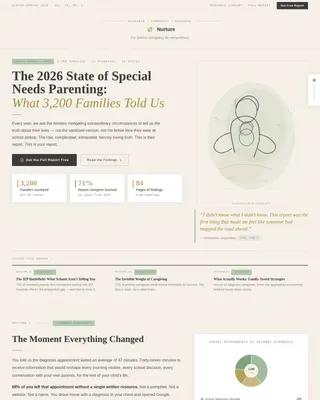
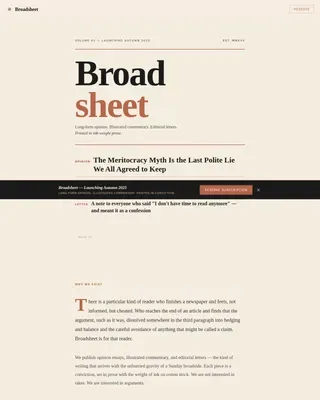
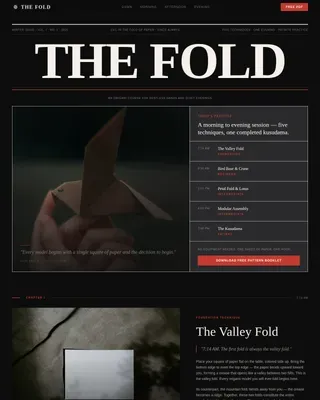
Paddock is a masonry-layout landing page built for F1 and motorsport editorial blogs. It combines a full-bleed photographic hero, torn notebook article cards, era and content-type filters, and a fixed newsletter bar into one cohesive design. The Parchment and Rust colour system and Ink and Paper style give every section the feel of a weathered racing autobiography.
by Rocket studio
Quick summary
Paddock is a single-page content destination for hardcore motorsport writers and publishers. It opens with a grainy, high-contrast grid photo and scrolls through a masonry article grid that feels like flipping through a pit-wall notebook. Three free features greet every visitor before the newsletter gate appears.
Who this template is for
This template suits founders, editors, and independent writers who treat formula racing as literature. It works equally well for a solo enthusiast running a deep-archive blog and for a small editorial team producing long-form culture pieces.
- Hardcore formula one fans who publish race reports and driver profiles
- Motorsport historians and vintage racing writers seeking a culture-first home
- Editorial teams covering style, fashion, and off-track stories from the paddock
What problem this template solves
Most blog layouts force motorsport writing into generic grid formats. Paddock solves the problem of presenting dense, technical content in a way that feels immediate, lived-in, and worth the reader's time.
- Generic templates strip the atmosphere from specialist formula coverage
- Readers checking in during a race weekend need fast, focused layouts
- Newsletter sign conversions suffer when readers have no proof the writing is good
What you get with this template
You get a fully structured landing page designed around the content-first reading life of a motorsport enthusiast. Every section has a clear purpose and a clear path toward newsletter subscription.
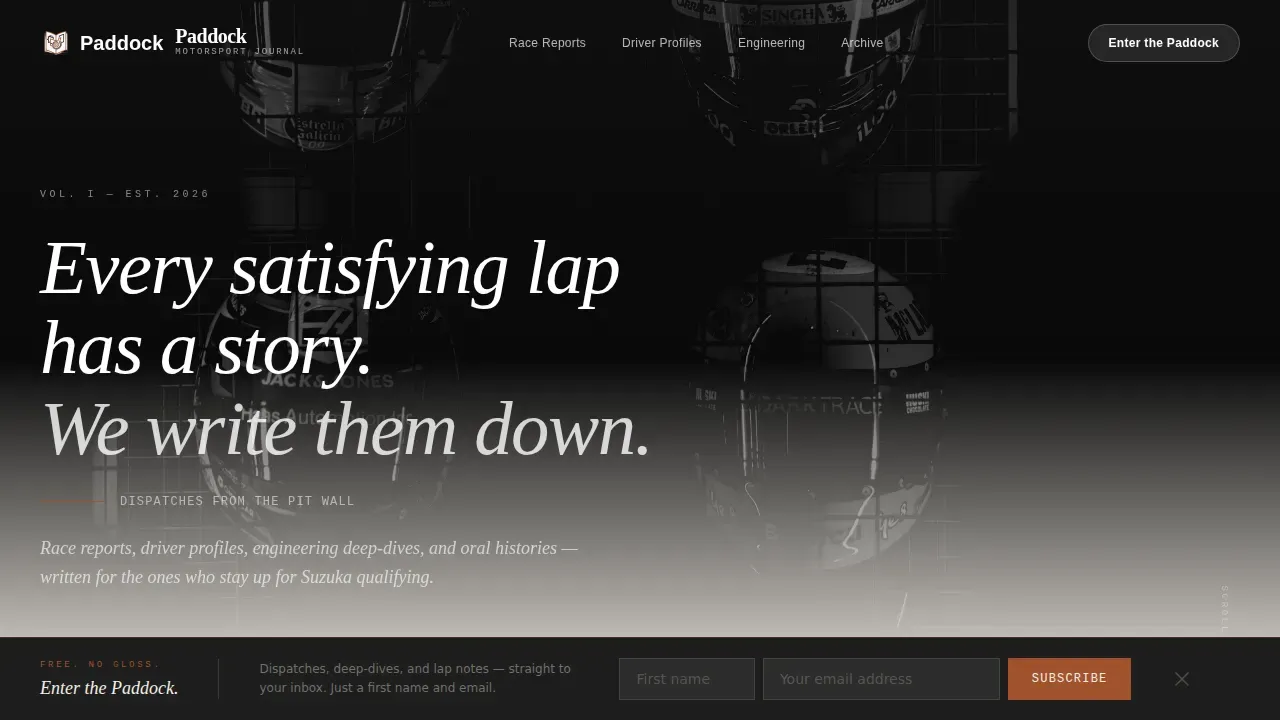
- A full-bleed hero with a serif headline fade-in and a rust-coloured rule
- A masonry article grid with era and content-type filter controls
- A fixed bottom bar with a newsletter sign-up that appears after two scroll depths
Feature list
A paragraph introduces each built-in capability below.
Full-Bleed Hero Section
A grainy black-and-white starting grid photograph fills the viewport. A large italic serif headline fades in over it, followed by a byline and a thin rust-coloured rule. The effect is photojournalistic and immediate.
Masonry Article Grid with Filters
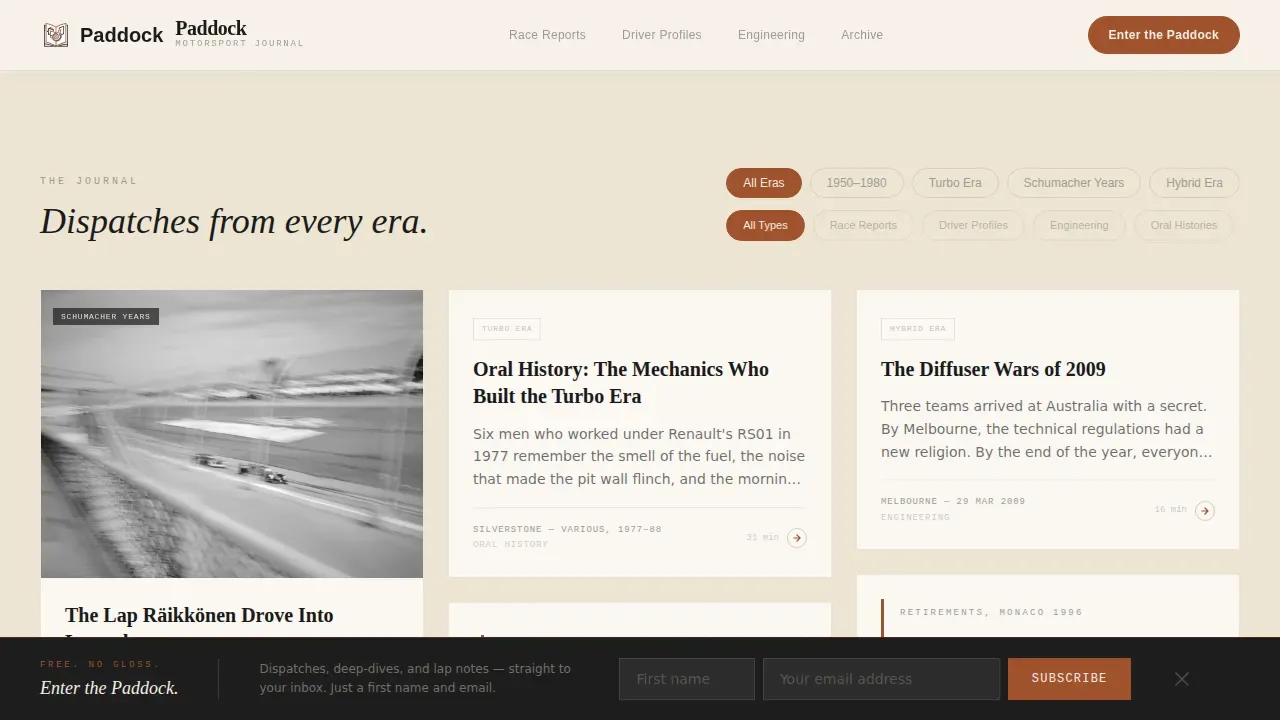
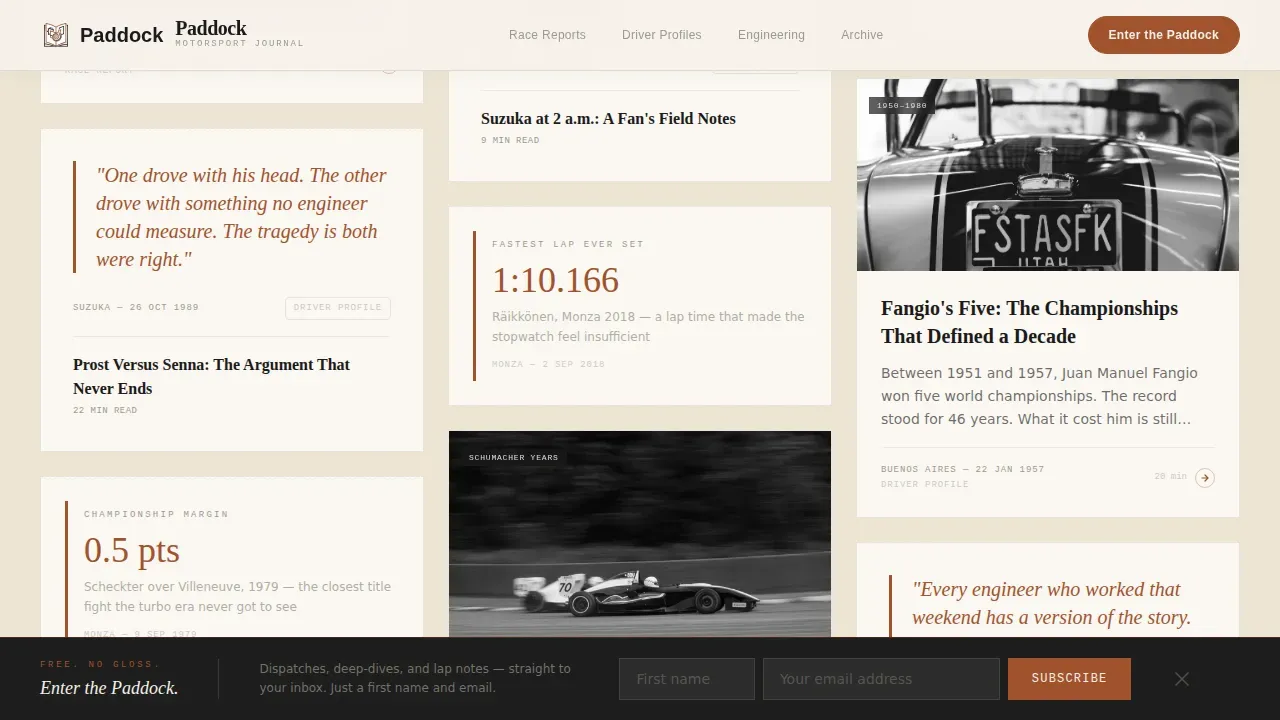
Article cards render as torn notebook pages at varying heights. Cards hold full circuit photography, headline-only entries, and wide pull quotes in large italic serif. Era filters (1950 to 1980, turbo era, Schumacher years, hybrid era) and content-type filters (race reports, driver profiles, engineering deep-dives, oral histories) let readers navigate the archive without leaving the page.
Stat Marginalia Blocks
Single-stat blocks appear between article cards. Each block presents one lap time, championship margin, or retirement count in monospace type, styled like a margin note scrawled beside a journal entry.
Origin Dateline Section
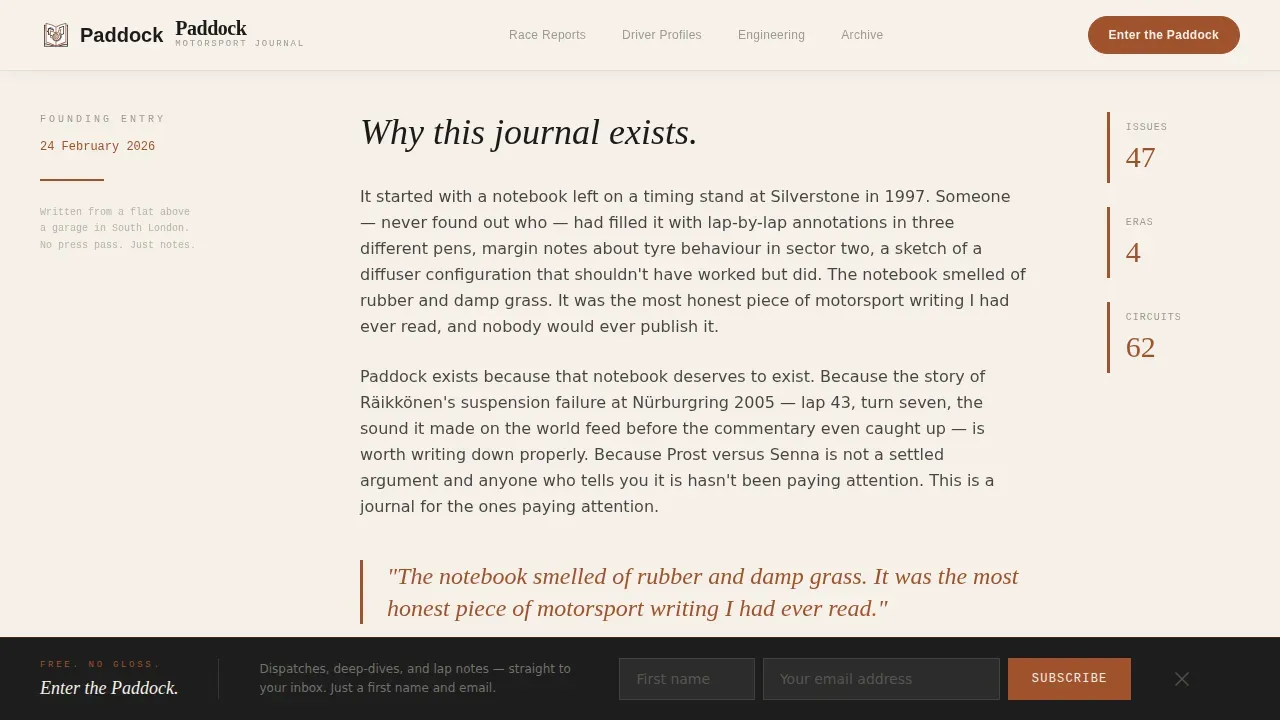
Two short memoir-style paragraphs sit beneath the hero with a handwritten-style dateline. They explain why this publication exists, giving every new visitor context before they reach the grid.
Fixed Newsletter Bottom Bar
The bar slides in after two scroll depths. It asks only for a first name and email address, keeping the conversion friction low. Three full-length features remain openly readable before the bar appears.
Deep Archive Call to Action
A dedicated archive section uses an era timeline visual to invite readers deeper into historical coverage, reinforcing the publication's breadth and editorial life.
Page sections overview
| Section | Purpose |
|---|---|
| Hero full-bleed | Establish atmosphere and headline |
| Origin dateline | Explain the publication's founding story |
| Masonry article grid | Display articles with era and type filters |
| Stat marginalia blocks | Add data texture between article cards |
| Deep archive call to action | Drive readers into historical coverage |
| Fixed newsletter bar | Capture email subscriptions after scroll |
| Footer single-row | Provide minimal navigation links |
Design & branding system
The visual style follows an Ink and Paper theme. The palette feels like a motorsport autobiography printed on matte stock by a small London press, with no gloss and no filler.
- Aged vellum (#F5F0E8) background, typewriter black (#1A1A1A) body text, pit-lane rust (#A0522D) on headlines and hover states
- Fraunces serif for headings, DM Sans for body and interface, IBM Plex Mono for datelines and stats
- Grain texture overlay and scroll-linked card fade-ins reinforce the photojournalistic style
Mobile & speed optimization
The template is designed desktop-first for long-form reading, and it scales responsively for mobile readers checking in on race weekends. Lazy image loading keeps the masonry grid fast across devices.
- Scroll-linked CSS reveals and card fade-ins add motion without heavy scripts
- Minimalist navigation keeps focus on the article grid and the newsletter call to action
- Lazy loading handles the high image count the masonry layout requires
How this template helps you convert
The layout earns the subscription before it asks for one. Every structural decision reduces friction on the path to the newsletter sign-up.
- Three full-length features are freely accessible, proving the writing quality before any gate appears
- The fixed bottom bar presents a single focused action with minimal fields, reducing abandonment
- Era and content-type filters let each visitor find the formula coverage they care about most, increasing time on page
Other information about this template
This template draws inspiration from the editorial world where fashion, culture, and formula racing overlap. Publications like The Paddock Journal, founded by fashion photographer and Formula One enthusiast Esme Buxton, demonstrate that one enthusiast with a culture-first vision can build an audience that values style, profile interviews, and off-track fashion stories alongside technical analysis. Thanks to that editorial model, this template supports coverage of women in motorsport, team and driver fashion, and exclusive illustrations or photoshoots.
- The layout is editable and customisable, similar in flexibility to motorsport magazine templates available in formats like Word, Apple Pages, Publisher, and InDesign
- Thanks to the action-oriented call-to-action wording built into the bar, phrases like "Enter the Paddock" follow best practice for focused conversion
- The Paddock Journal model shows that founder-led, culture-first publications can attract both knowledgeable fans and fashion-forward readers checking for behind-the-scenes access
Theme
Ink & Paper
Creative direction
Origin Story
Color system
Parchment & Rust
Style
Masonry/Pinterest
Direction
Content/Resource
Page Sections
Full-bleed Photographic Hero
Masonry Grid with Era Filters
Stat Marginalia Blocks
Origin Dateline Section
Fixed Newsletter Bottom Bar
Deep Archive Call to Action
Related questions
Can I use this template for a fashion and culture motorsport blog, not just race reports?
How does the newsletter gate work?
Is this template suitable for a solo founder or enthusiast publisher?
Can readers filter content by formula era?