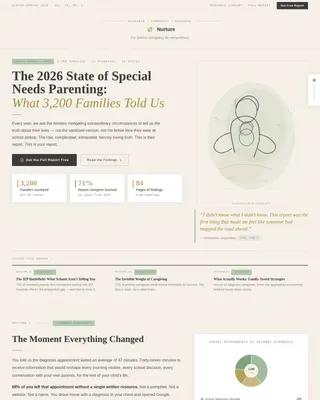
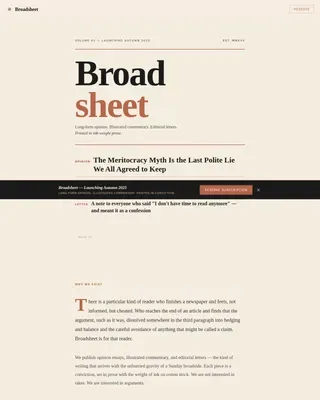
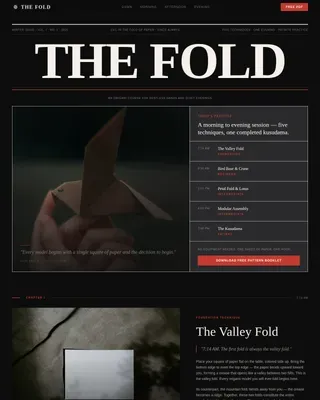
Habit Building Podcast Landing Page Template
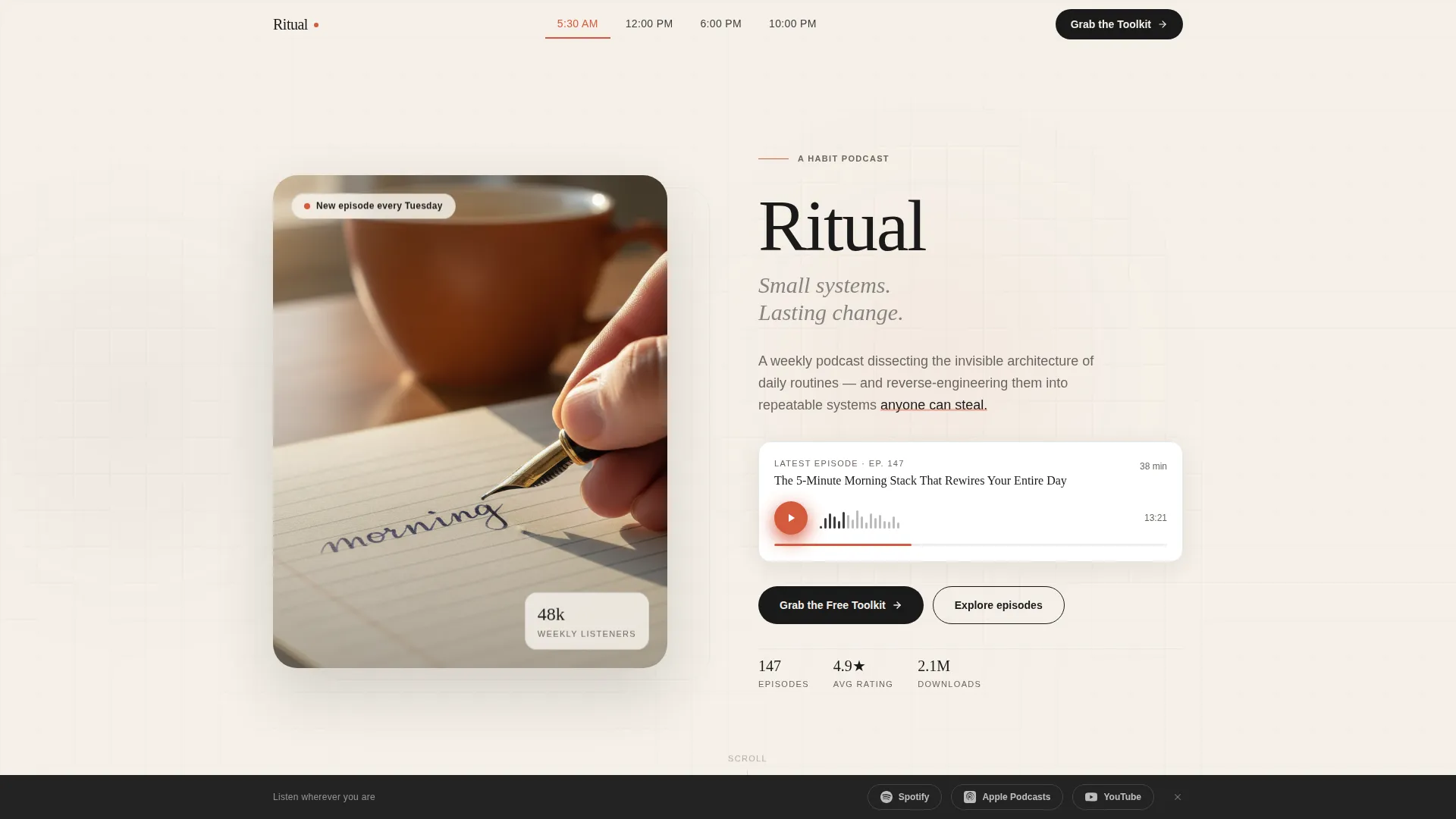
Ritual is a hub-and-spoke landing page template built for habit-building and self-improvement podcasts. It guides visitors through a day-in-the-life scroll from 5:30 AM to late evening, pairing episode cards with downloadable resources at every stop. The primary goal is a free toolkit download gated behind an email, earned piece by piece as the visitor scrolls.
by Rocket studio
Quick summary
Ritual is a single-page, anchor-navigated landing page template designed for habit-building and self-improvement podcasts. It structures content around a twenty-four-hour cycle, pairs each time-of-day section with a listenable episode card and a downloadable resource, and converts visitors into subscribers through a gated free toolkit offer.
Who this template is for
This template is built for podcast creators in the self-improvement and habit-building space who want a content destination that does more than list episodes. It works best when your show already has a clear structure and you want visitors to feel that structure the moment they land.
- Podcast hosts covering daily routines, productivity, or personal development
- Content creators who want to grow an email list through free resource downloads
- Independent podcasters building a home base that reflects a deliberate, editorial visual identity
What problem this template solves
Most podcast landing pages feel like a streaming app shelf: episodes stacked in a feed, nothing guiding the visitor toward a next step. Ritual solves the problem of passive browsing by giving every section a purpose, a resource, and a clear reason to stay.
- Visitors land and leave without subscribing because there is no compelling offer at the right moment
- A generic episode list does not communicate the show's value or its audience's daily life
- Free resources scattered across social media are hard to collect and harder to act on
What you get with this template
You get a fully structured, single-page layout with anchor navigation, a hero split section, four time-of-day content sections, a gated toolkit call-to-action, and a persistent listening bar. Every section is built and ready to customize with your own episode content and downloadable files.
- Hero section with a half-page photo and text split, inline audio player, and podcast tagline
- Time-of-day anchor navigation linking to four scroll sections: 5:30 AM, 12:00 PM, 6:00 PM, and a closing evening section
- Gated toolkit call-to-action with an email and first-name capture form for a free starter kit download
Feature list
This template ships with a focused set of interactive and editorial components, each chosen to serve the habit-building podcast format specifically.
Time-of-Day Anchor Navigation
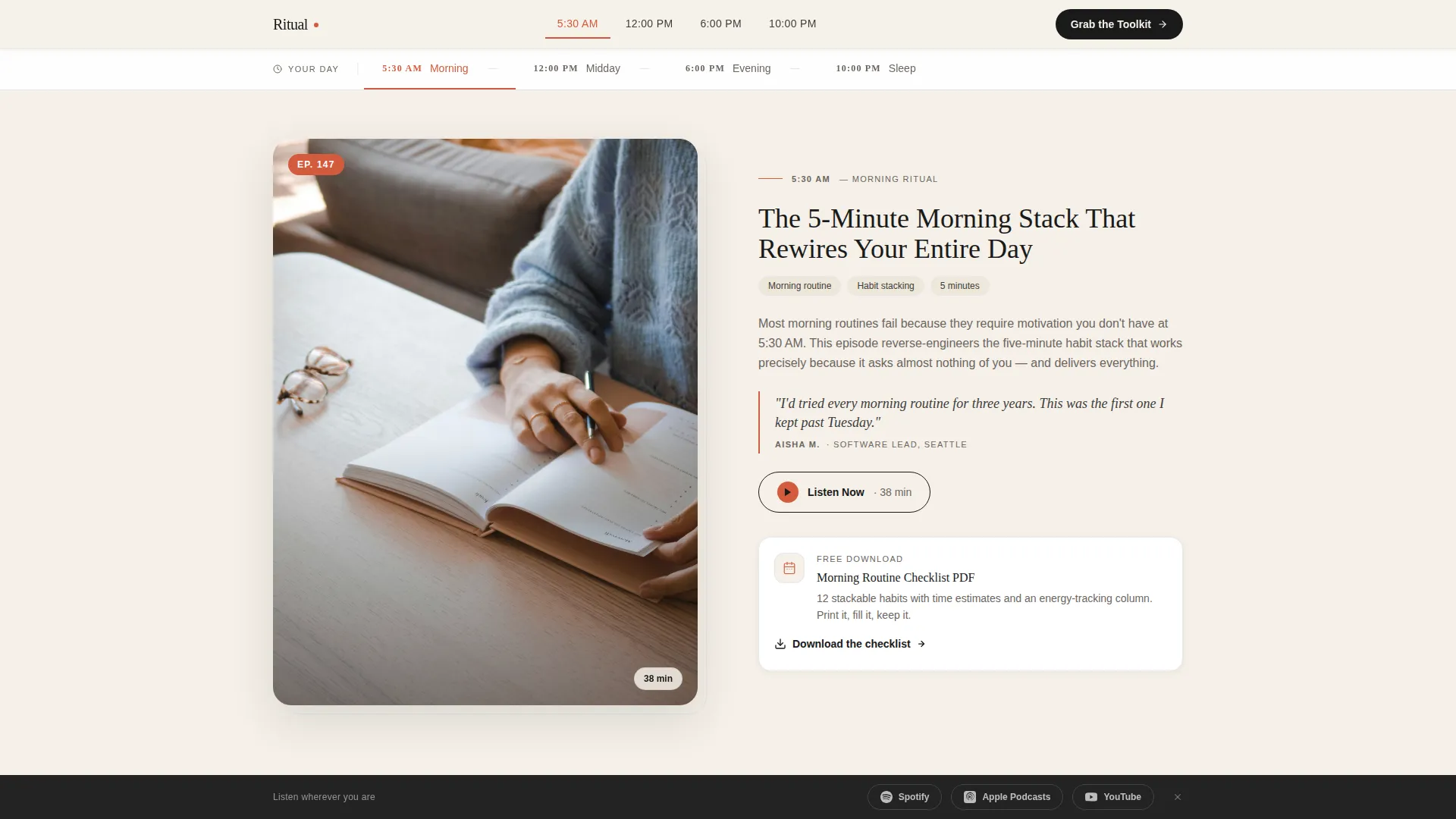
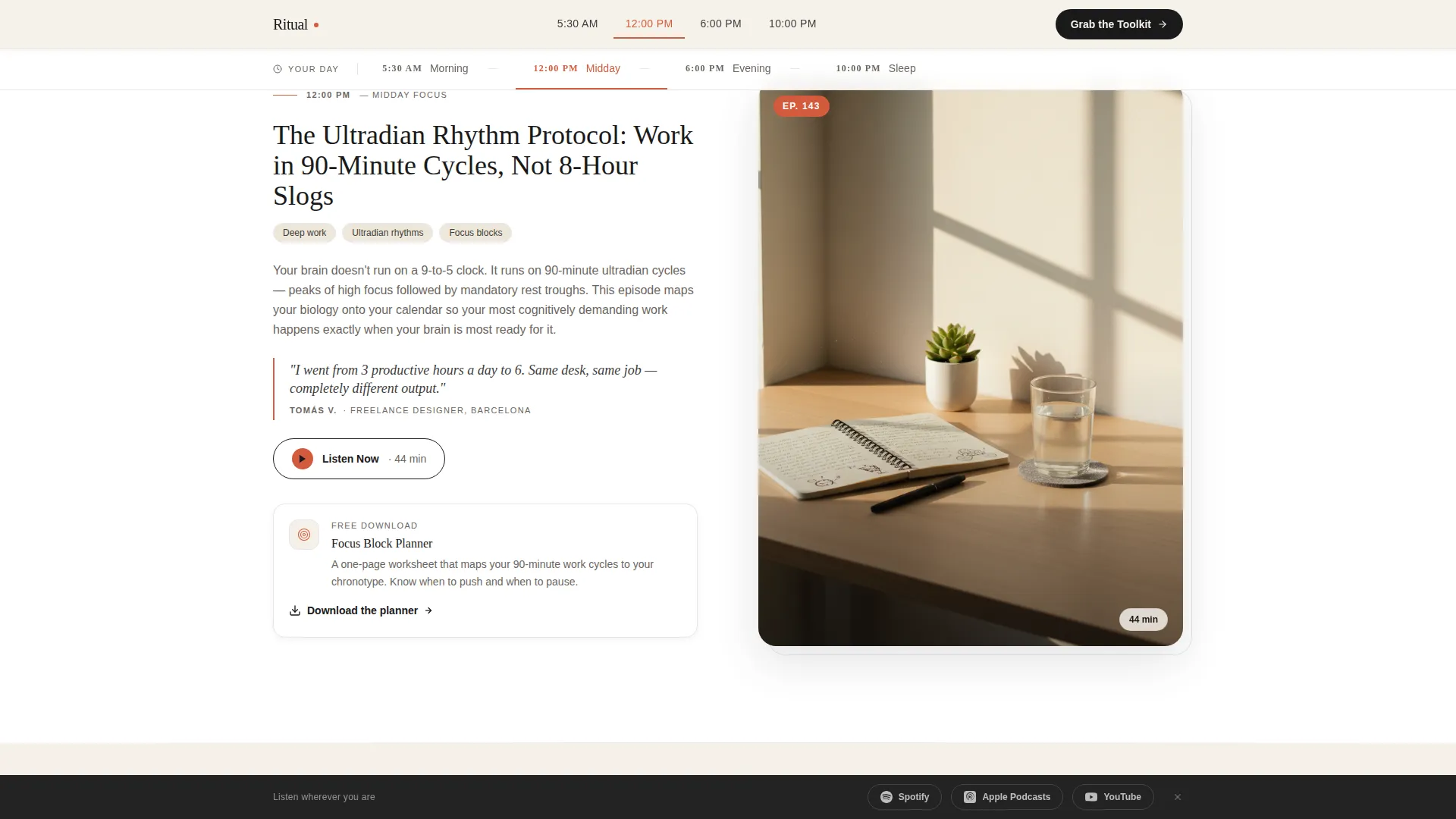
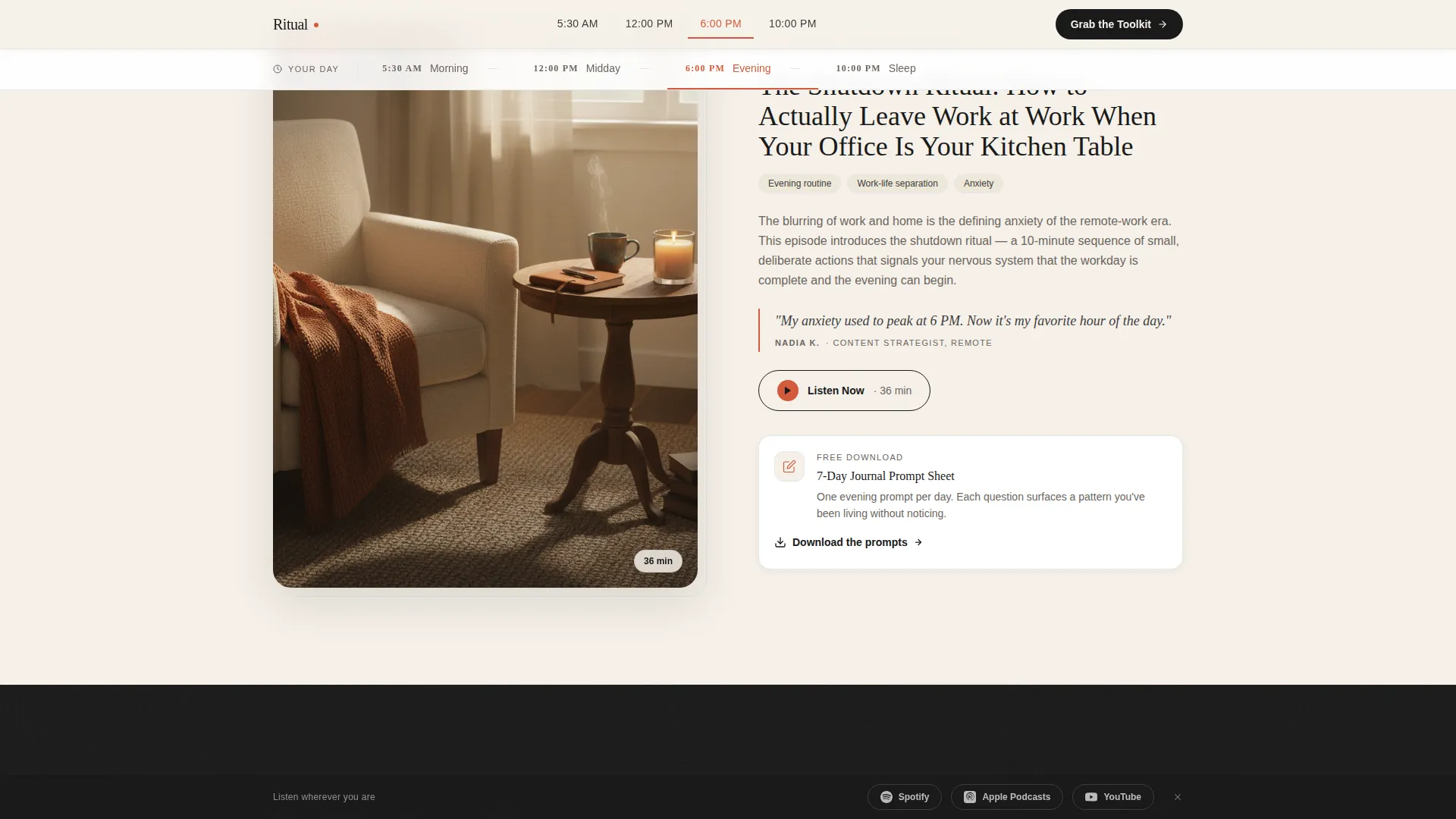
A sticky navigation bar labels each spoke by time of day rather than topic. Clicking a time jumps the visitor directly to that section, making the scroll feel like moving through a clock rather than a content index.
Inline Audio Player Simulation
The hero section includes a waveform audio player with a persimmon play button. Visitors can interact with the latest episode before scrolling a single pixel, lowering the barrier to first engagement.
Episode Card and Resource Pairing
Each time-of-day section pairs one episode card with a downloadable resource. The 5:30 AM section offers a habit tracker, the midday section a focus worksheet, and the evening section a journaling prompt sheet.
Gated Toolkit Call-to-Action
The page closes with an email gate for a free starter kit that includes a morning routine checklist, a habit stacking worksheet, and seven-day journal prompts. Individual resources delivered earlier in the scroll build the case for grabbing the full kit.
Persistent Bottom Listening Bar
A fixed bottom bar keeps platform links visible throughout the scroll. Charcoal outline buttons for audio streaming platforms ensure secondary conversion is always one tap away without interrupting the reading experience.
Scroll Reveal Animations
Sections animate into view as the visitor scrolls using native CSS transitions and intersection-based triggers. Float animations and subtle blob atmospherics add depth without distracting from the editorial content.
Page sections overview
| Section | Purpose |
|---|---|
| Hero Split | Introduce podcast, display inline audio player |
| Anchor Navigation | Time-of-day links to each content section |
| 5:30 AM Morning | Episode card paired with habit tracker download |
| 12:00 PM Midday | Episode card paired with focus worksheet download |
| 6:00 PM Evening | Episode card paired with journaling prompts download |
| Toolkit Call-to-Action | Email gate for free starter kit |
| Footer | Linear single-row with platform and page links |
Design & branding system
The visual identity follows an Ink and Paper editorial style built on a Japanese Zen color palette. Every design decision strips away the unnecessary and lets whitespace carry the structure, much like a well-kept journal page.
- Color palette: washi cream (#F5F0E8) and pure white for backgrounds, sumi ink black (#1A1A1A) for body text, bamboo charcoal (#3D3D3D) for secondary elements, and persimmon vermillion (#D45B3E) reserved for active navigation states, play buttons, and call-to-action hover states only
- Typography: Fraunces tall editorial serif for headlines, DM Sans for body copy and interface labels
- Generous whitespace throughout, with backgrounds alternating between washi cream and white to create soft section separation without hard borders
Mobile & speed optimization
The template is built desktop-first with a thoughtful mobile adaptation so the day-in-the-life structure translates cleanly to smaller screens. Animations and interactive elements are implemented using lightweight native browser APIs.
- Scroll reveal effects use native CSS and IntersectionObserver, avoiding heavy JavaScript libraries
- Anchor navigation collapses cleanly for mobile viewports so time-of-day links remain usable on any screen
- The persistent bottom bar and episode cards reflow to single-column layouts on smaller screens without losing hierarchy
How this template helps you convert
The page earns the email before it asks for it. By the time a visitor reaches the toolkit call-to-action, they have already used or downloaded individual resources from earlier sections, making the final offer feel like a natural next step rather than a cold ask.
- Ungated resources delivered throughout the scroll (habit tracker, focus worksheet, journaling prompts) demonstrate the toolkit's quality before the gate appears
- The inline audio player in the hero lets visitors sample the podcast immediately, building trust in the show's depth and tone before any form is shown
Other information about this template
This template is categorized under Blog and Editorial with a specific focus on habit-building and self-improvement podcast content. It is designed as a content and resource destination rather than a promotional page, which suits creators who prefer to grow an audience through genuine value delivery.
- The day-in-the-life creative direction makes the template distinctive in a space where most podcast pages use standard feed layouts
- Social proof elements including episode play counts, listener testimonials, and download metrics are built into the layout to reinforce credibility
- The page uses a hub-and-spoke structure, meaning the anchor navigation acts as the hub and each time-of-day section acts as a spoke, keeping the single-page format organized and easy to navigate
- The template is localized for English (United States) audiences and uses standard date formatting
Theme
Ink & Paper
Creative direction
Day-in-the-Life
Color system
Japanese Zen
Style
Hub & Spoke (Anchor Nav)
Direction
Content/Resource
Page Sections
Time-of-day Anchor Navigation
Inline Hero Audio Player
Episode and Resource Pairing
Gated Toolkit Call-to-action
Persistent Platform Listening Bar
Scroll Reveal and Float Animations
Related questions
Can I swap the episode cards with my own podcast content?
How does the resource download work in this template?
Do I need design experience to use this template?
Can the anchor navigation time labels be changed?
Is this template suitable for a podcast with fewer than four content sections?