Cinematic Permaculture Blog Landing Page Template
Rootwork is a cinematic dark landing page template for permaculture and regenerative agriculture journals. It pairs a monumental editorial serif hero with a masonry dispatch grid, a founding narrative section, and two email capture points. Built for writers who document real soil-level practice, it converts readers into seasonal newsletter subscribers through honest, field-grounded storytelling.
by Rocket studio
Quick summary
Rootwork is a single-page template for permaculture and regenerative agriculture blogs. It opens with a headline-as-landscape hero, moves through a personal origin story, and unfolds into a masonry grid of mixed-format dispatch cards. Two email capture points convert readers into seasonal subscribers, and a free downloadable offer gives them immediate value on arrival.
Who this template is for
This template is built for writers and practitioners who document real land work rather than publish polished theory. It suits people who have something honest and earned to say about soil, season, and slow ecological return.
- Backyard growers scaling toward half-acre food forests who want a journal that matches the depth of their practice
- Burned-out organic farmers looking for a publishing format that feels as deliberate and unhurried as regenerative agriculture itself
- Permaculture design certificate (PDC) students who want a platform for field reports, guild diagrams, and documented seasonal observations
What problem this template solves
Most blog templates are built for speed and volume. They push toward high post frequency, algorithmic feeds, and endless scroll patterns that feel at odds with slow, seasonal practice. A permaculture or regenerative agriculture journal needs a format that communicates patience, depth, and earned knowledge.
- Generic editorial templates flatten all content into the same card size and strip out the visual hierarchy that signals some dispatches matter more than others
- Standard newsletter signup forms create frequency anxiety rather than communicating the seasonal, unhurried cadence that makes a land journal worth following
- Light, minimal blog aesthetics clash with the material weight of soil-level documentation and make the content feel thinner than it actually is
What you get with this template
The template delivers a complete, single-page layout designed around content depth and reader trust. Every section serves either the narrative or the conversion goal, and nothing is decorative without purpose.
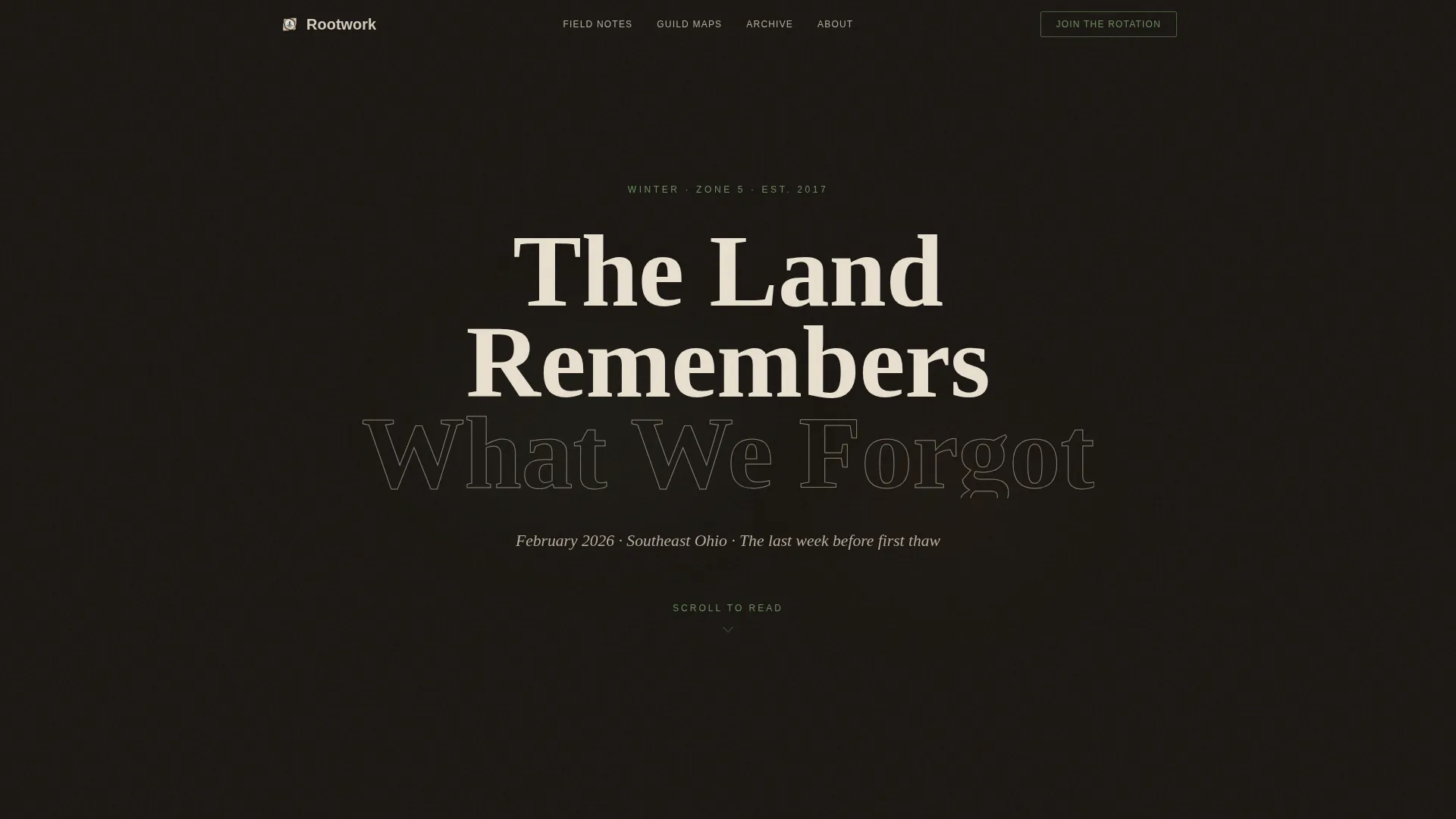
- A monumental hero section with a single editorial serif headline, a parchment cream italic subline, and a lichen green scroll cue
- A founding origin story section that transitions into the masonry grid, giving the archive emotional context before the reader even reaches the first card
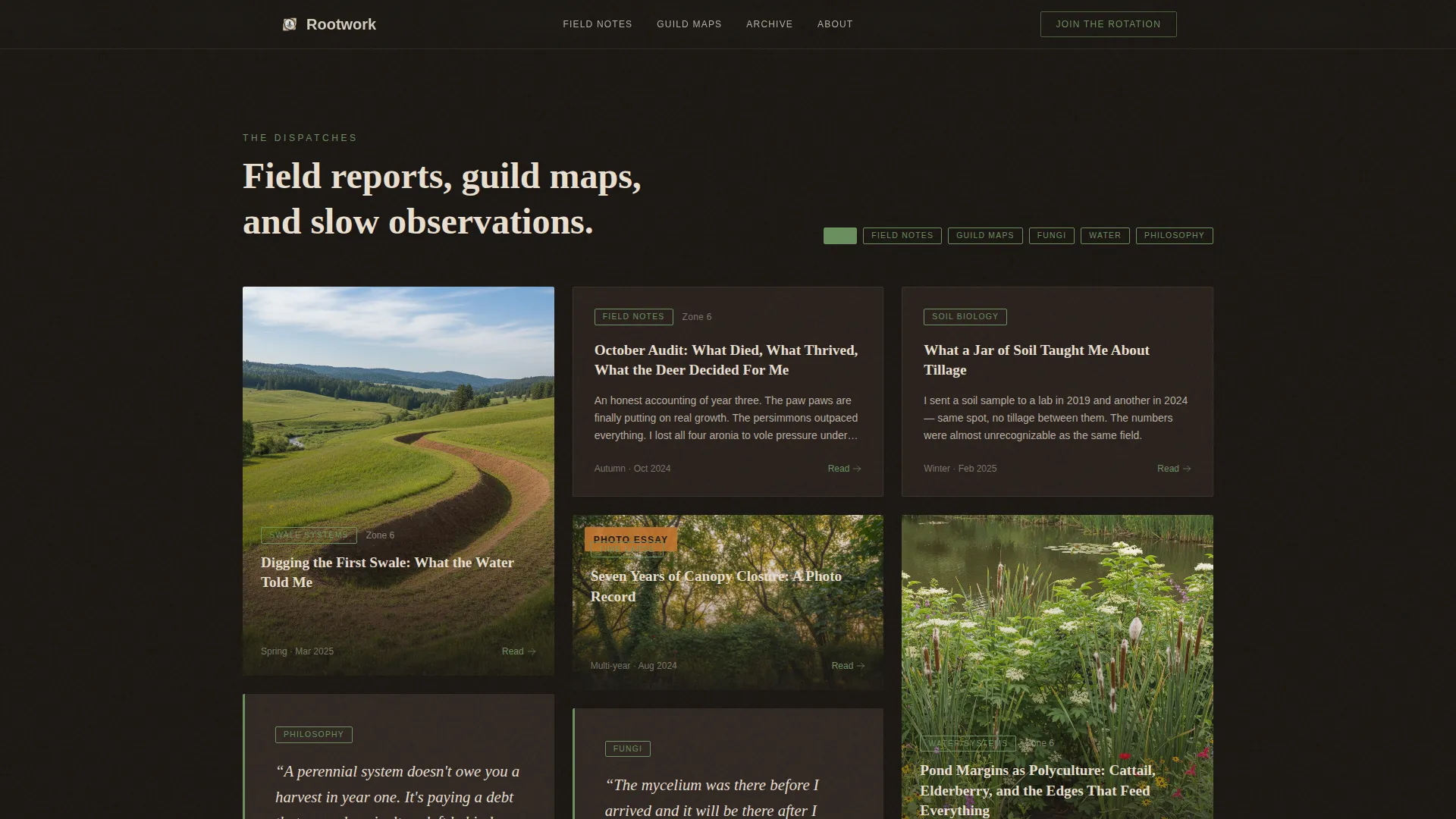
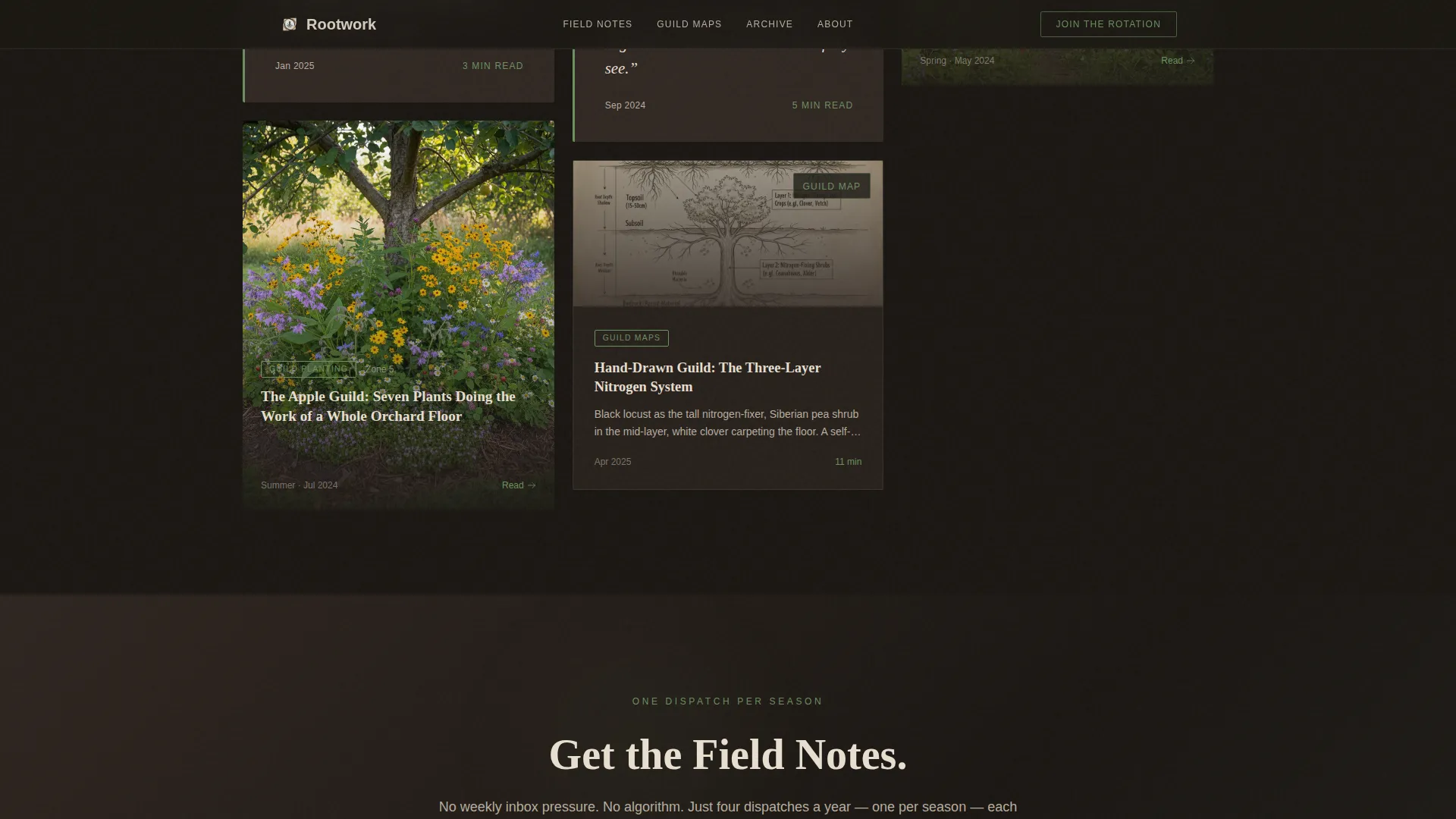
- A masonry dispatch grid with mixed-format cards covering photo essays, pull quotes, illustrated guild diagrams, and long-form field notes tagged by season and climate zone
- Two email capture sections, one mid-scroll and one at the bottom, both offering the free "Guild Planting Cheat Sheet: 12 Polyculture Combinations for Zone 5 through 8" PDF as a signup incentive
- An archive call to action reading "Dig Into the Archive" that links readers toward the full tagged content library
Feature list
This section covers the core built-in capabilities of the template as specified in the source brief.
Monumental Hero Typography
The hero section centers a single heavy editorial serif headline against a loam-black void. No competing image is present. Typography carries the full visual weight of the opening moment, making the first impression slow, deliberate, and memorable.
Origin Story Narrative Section
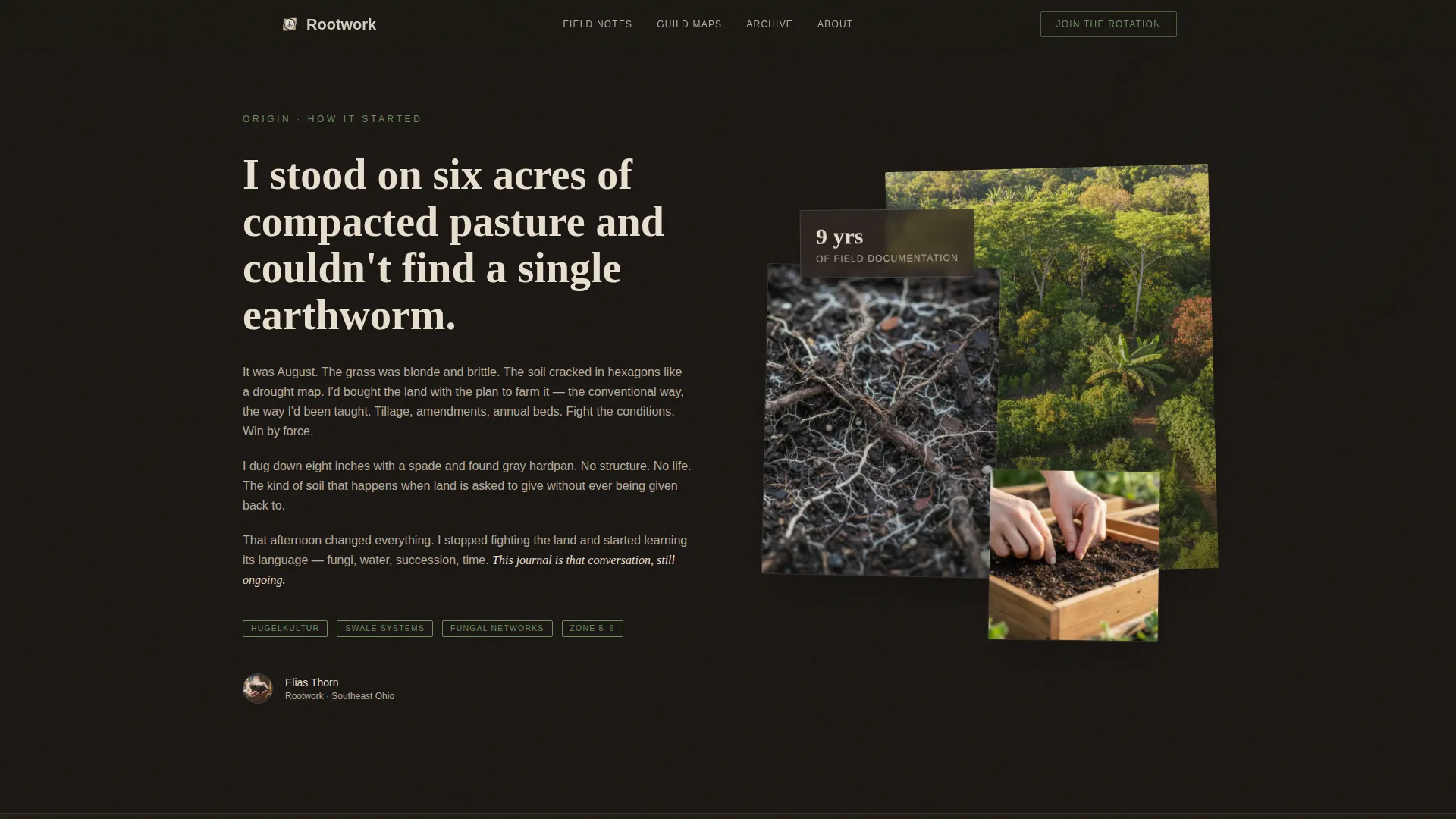
A dedicated founding narrative section precedes the masonry grid. It gives readers the personal confession that anchors the entire journal, creating emotional investment before the archive is revealed.
Mixed-Format Masonry Grid
The dispatch grid uses variable card sizes and formats including image-dominant cards, text-heavy pull quote cards on dark backgrounds, and illustrated guild planting diagrams. The grid deepens as the user scrolls, rewarding patient reading the way a perennial system rewards years.
Dual Email Capture with Free PDF Offer
Two email capture points appear mid-scroll and at the bottom of the page. Both offer the free downloadable PDF cheat sheet as an immediate tangible reward. The seasonal cadence pitch ("One Dispatch per Season") removes frequency anxiety and positions the newsletter as a deliberate, low-volume commitment.
Tag Filtering and Archive Navigation
Cards in the masonry grid are tagged by season and climate zone, supporting tag-based filtering so readers can navigate toward content relevant to their growing context. A primary call-to-action button sends readers to the full tagged archive.
Cinematic Reveal Animations
The template includes high-animation scroll reveals for text sections, a noise overlay on the hero, masonry card entrance animations, and a pulsing lichen green scroll cue. These effects reinforce the documentary film aesthetic without distracting from the content.
Page sections overview
| Section | Purpose |
|---|---|
| Hero headline | Opens with monumental serif headline on loam-black void and a pulsing scroll cue |
| Origin story | Personal founding narrative with overlapping image collage before the grid begins |
| Masonry dispatch grid | Mixed-format cards displaying field notes, photo essays, pull quotes, and illustrations |
| Mid-scroll email capture | Seasonal newsletter pitch with free PDF offer and single email input |
| Archive call to action | "Dig Into the Archive" button linking to the full tagged content library |
| Bottom email capture | Repeat newsletter signup reinforcing the seasonal cadence and PDF incentive |
| Footer | Horizontal flow footer pattern with navigation and journal context |
Design & branding system
The visual identity follows a Heritage and Story theme expressed through a Cinematic Dark color system. The palette evokes a documentary shot at golden hour on 16mm film, warm shadows at the frame edges and highlights that glow like lantern light.
- Four-color system: loam black (#1A1612) as the base, charred timber (#2E2520) as the card background tone, parchment cream (#E8DFD0) for body text, and lichen green (#6B8F5E) reserved strictly for links, tags, and hover states
- Typography pairing: Fraunces as the display serif for headlines and pull quotes; DM Sans as the body typeface for field notes, captions, and email capture copy
- Tactile visual references throughout including dirt-margin textures, hand-drawn cross-section illustrations, and a noise overlay on the hero that reads like grain on developed film
Mobile & speed optimization
The template is specified as desktop-first, prioritizing the content density and masonry layout complexity that rewards larger screens. Responsive behavior ensures the layout remains functional and readable at smaller viewports.
- Masonry grid adapts responsively so card content remains accessible on tablet and mobile screen sizes
- Server Components handle the static masonry grid for performance, while Client Components manage interactive elements such as hover states, tag filtering, and email capture inputs
- Animation intensity is designed for the desktop-first experience, with scroll reveal sequences and the noise overlay delivering the full cinematic effect on wider displays
How this template helps you convert
The conversion architecture is built around trust rather than urgency. Instead of pop-ups or pressure tactics, Rootwork earns the email address by giving readers something worth returning for.
- The free downloadable PDF, "Guild Planting Cheat Sheet: 12 Polyculture Combinations for Zone 5 through 8," is gated behind the email field and provides immediate tangible value before the first seasonal dispatch ever arrives.
- The seasonal cadence pitch ("One Dispatch per Season") removes the fear of inbox overload, making the signup feel like a low-commitment choice aligned with the reader's own unhurried practice.
- The "Dig Into the Archive" call to action gives engaged readers a clear second path deeper into the content, extending time on site and reinforcing the sense that this journal has years of earned documentation behind it.
Other information about this template
This template is purpose-built for the permaculture and regenerative agriculture niche, and its design decisions reflect that specificity. The layout, copy structure, and conversion flow all assume a reader who is skeptical of algorithmic publishing and drawn to authentic, slow-media documentation.
- The template uses United States English throughout, with imperial measurements and United States Department of Agriculture (USDA) hardiness zone references built into the free PDF offer copy
- Social proof elements include hooks for seasonal dispatch subscriber count, total years of active documentation, and the number of climate zones covered
- The footer follows a horizontal flow pattern suited to journals with a small but deliberate set of navigation links
- This is a single landing page structure, not a multi-page site, so all content and conversion paths live within one scrolling experience
- The template is well suited to publishing contexts that emphasize long-form environmental writing, food forest documentation, regenerative land stewardship narratives, and illustrated ecological field guides
Theme
Heritage & Story
Creative direction
Origin Story
Color system
Cinematic Dark
Style
Masonry/Pinterest
Direction
Content/Resource
Page Sections
Monumental Hero Typography
Origin Story Narrative Section
Mixed-format Masonry Grid
Dual Email Capture with Free PDF
Tag Filtering and Archive Navigation
Cinematic Reveal Animations
Related questions
Is this template designed for a multi-page blog or a single landing page?
Can I use this template if I am just starting my permaculture journal?
What makes the masonry grid different from a standard blog feed?
How does the email capture work in this template?
What is the free PDF included in the email capture copy?