Artisan Handmade Soap Landing Page Template
Lather is a cinematic dark landing page template built for cold-process soap-making courses. It uses a manifesto-style scroll, a masonry photo grid, and two low-friction email capture forms to convert craft-curious visitors into subscribers. The design pairs deep charcoal with warm ivory and terracotta accents for a moody, tactile artisan feel that earns trust before asking for anything.
by Rocket studio
Quick summary
Lather is a single-page lead generation template for artisan soap-making educators. It opens with a bold serif manifesto headline, then guides visitors through a story of lye safety, formulation freedom, and student results. Two email capture forms collect a first name and email address, offering a free cold-process formulation guide and a lye safety masterclass video as entry points.
Who this template is for
This template is built for instructors and course creators in the handmade craft space. It suits anyone teaching cold-process soap making to beginners or to sellers ready to upgrade their skills.
- Soap-making educators launching or promoting an online course
- Craft course creators who need a lead generation landing page with a free resource offer
- Artisan instructors targeting women who want to move beyond beginner soap kits into original formulations
What problem this template solves
Many course creators lose potential students because their landing pages look generic. A visitor who fears working with sodium hydroxide needs reassurance, not just a features list. This template addresses that directly through its content architecture.
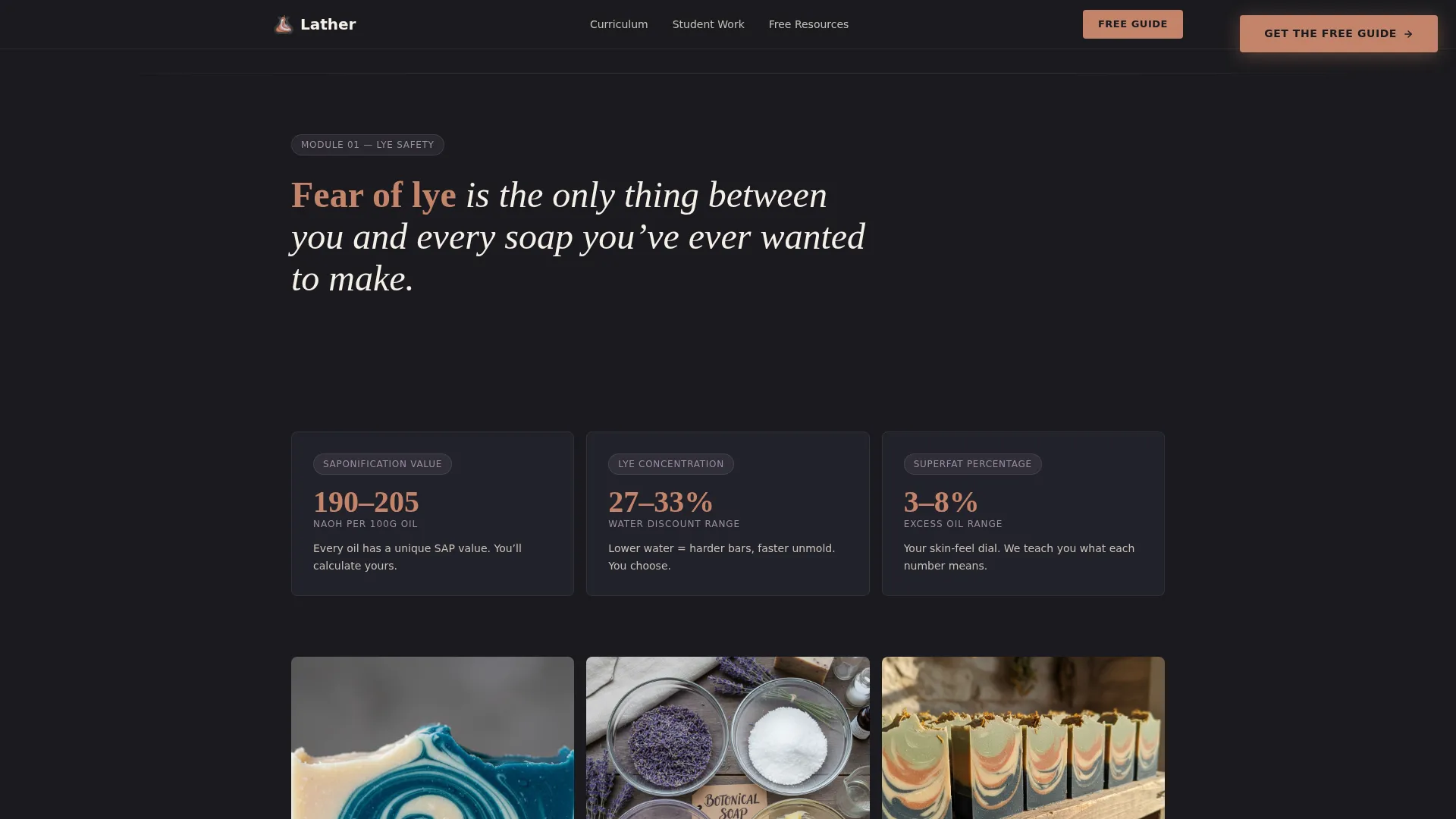
- It confronts lye anxiety early with an opinion-driven section that builds confidence before the ask
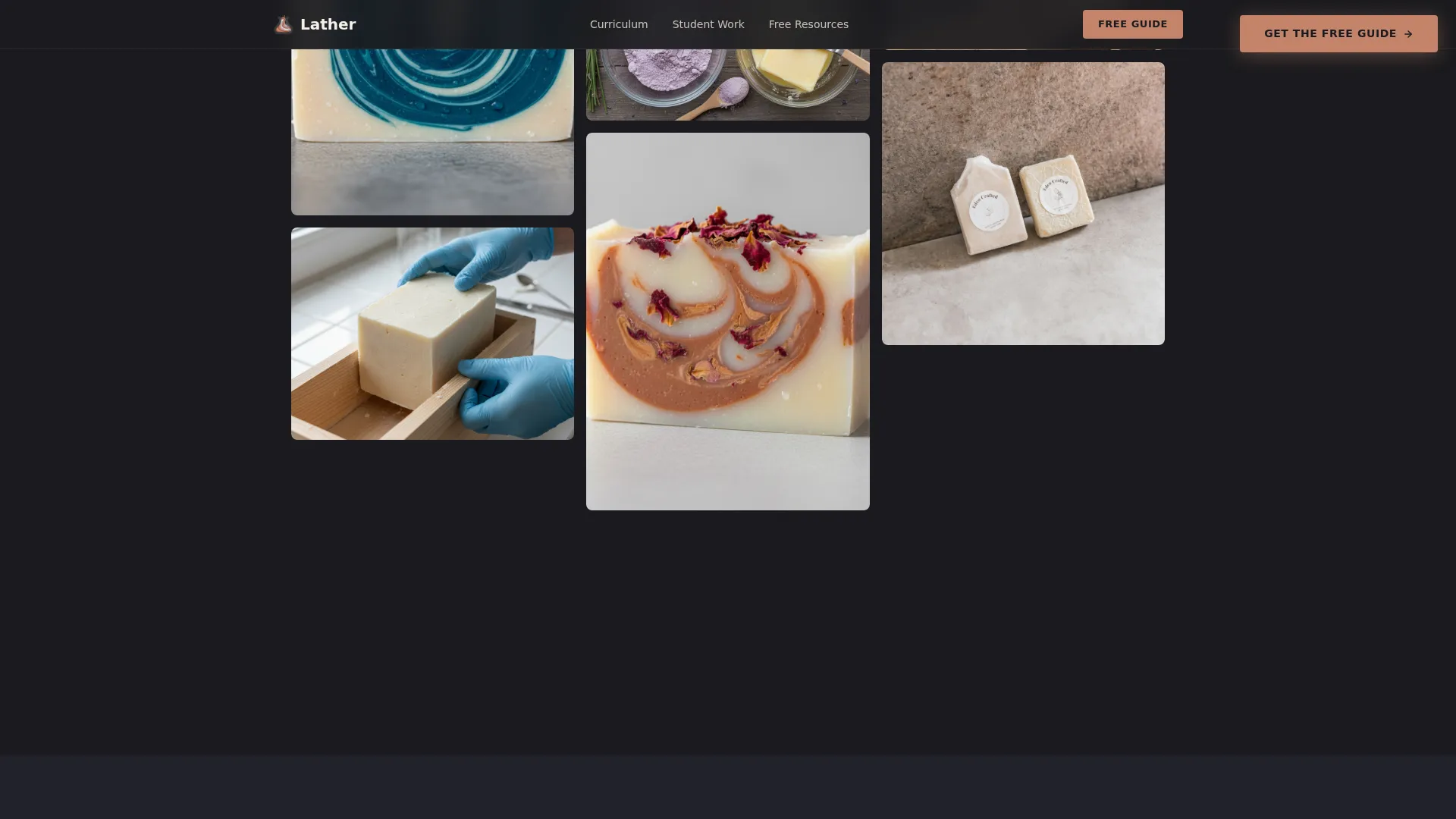
- It shows student work through a masonry photo grid, replacing abstract promises with visible proof
- It removes sign-up friction by asking for only two fields: a first name and an email address
What you get with this template
You get a complete, structured landing page ready to showcase your cold-process soap course. Every section is purposefully sequenced to move a skeptical visitor toward an email opt-in.
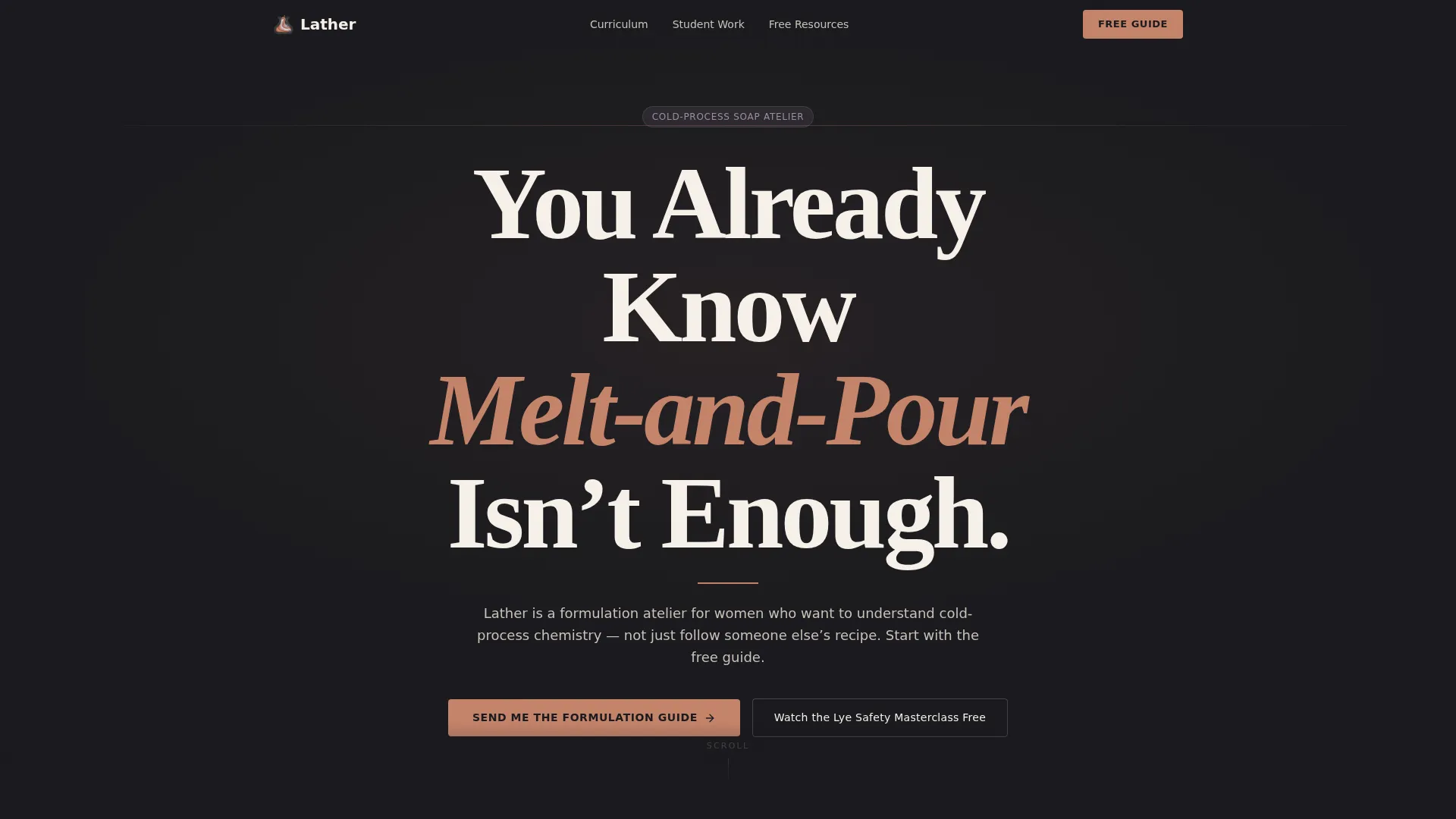
- A manifesto-style hero with a giant centered serif headline and a sticky terracotta call-to-action button
- Two inline email capture forms, one offering a free PDF guide and one gating a fifteen-minute video masterclass
- A Pinterest-style masonry grid for student soap photography, testimonial pull-quotes, and market-selling proof
Feature list
This template includes purpose-built components designed for artisan course marketing. Each feature below comes directly from the template's structure and visual system.
Giant Centered Manifesto Headline
The hero opens with a single oversized serif statement on a deep charcoal field. A thin terracotta rule sits beneath it. The layout commands attention without competing imagery, making the instructor's point of view the first thing a visitor absorbs.
Masonry Photo Grid with Staggered Tile-ins
Student soap photography loads in a Pinterest-style mosaic with staggered reveal animations. Cross-section swirls, beveled edge close-ups, and gloved hands pulling molds create a tactile, trust-building scroll experience.
Dual Email Capture Forms
Two separate opt-in instances appear at different scroll depths. The first is a sticky terracotta button that follows the visitor after the hero. The second is an inline charcoal card offering the cold-process starter PDF. Both forms ask for a first name and email only.
Opinion-Driven Masonry Sections
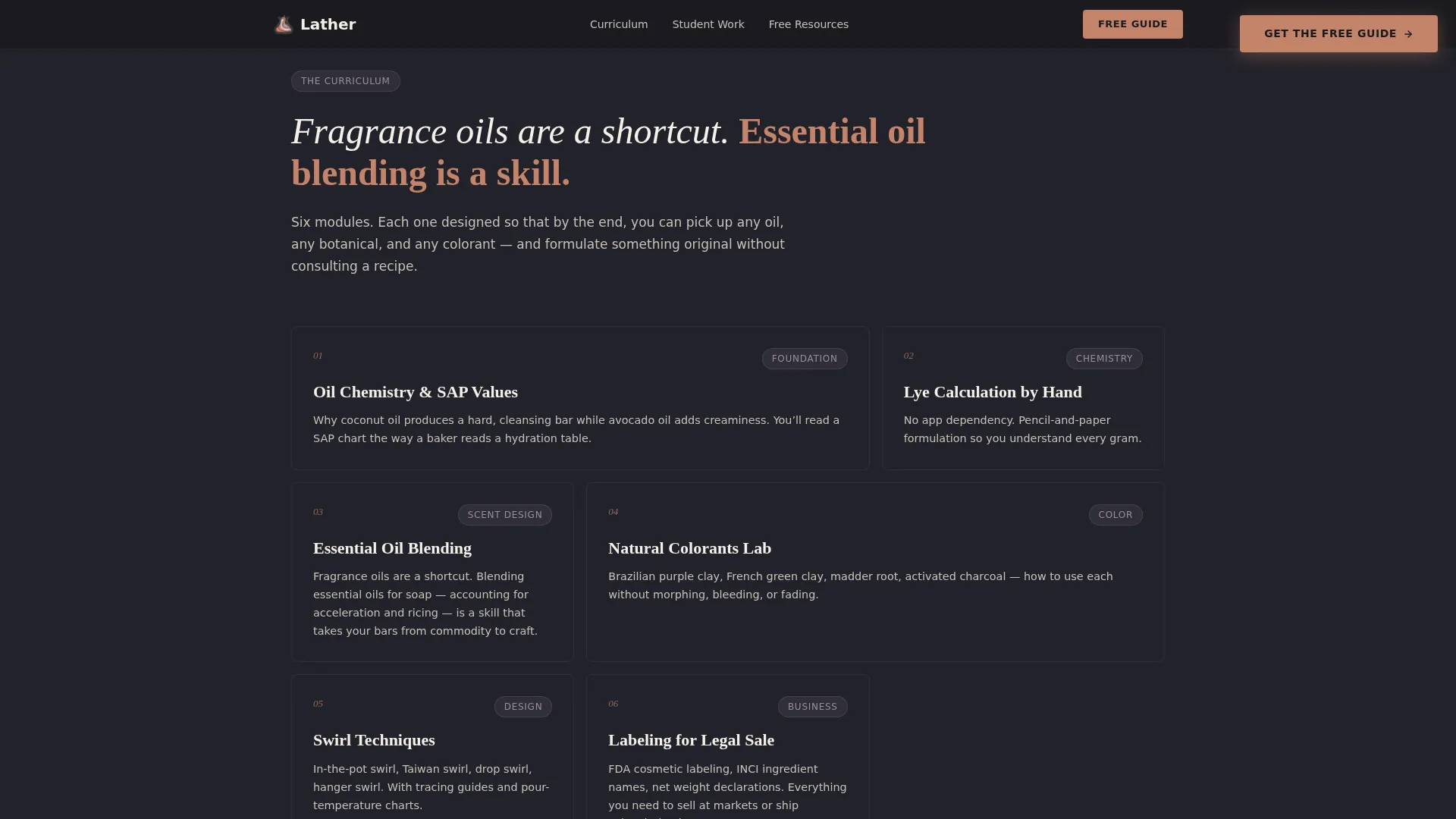
Each content section opens with a bold proclamation followed by module cards, student photography, and short testimonial pull-quotes. The rhythm alternates between single-column statements and dense grid clusters, building intensity as the page progresses.
Sticky Call-to-Action Button
After the hero scroll, a terracotta button remains fixed on screen. It persists through lye safety content, formulation module cards, and student results, keeping the primary conversion action always within reach.
Marquee Testimonial Quote Strip
A horizontally scrolling quote strip surfaces student voices between content sections. It adds social proof at a glance without interrupting the masonry grid rhythm below.
Page sections overview
| Section | Purpose |
|---|---|
| Hero Manifesto Headline | Opens with bold serif statement and sticky call-to-action button |
| Lye Fear Section | Addresses sodium hydroxide anxiety with proclamation and student work grid |
| Formulation Freedom Modules | Showcases course content through asymmetric module cards |
| Free Guide Capture Card | Inline charcoal card with email form offering cold-process PDF |
| Student Results Masonry | Pinterest grid of student photos, testimonials, and market-selling evidence |
| Footer | Single-row linear footer closing the page |
Design & branding system
The visual identity follows an Atelier Studio theme with a Cinematic Dark color palette. The result feels like a moody still-life photograph of handmade soap shot on black linen.
- Deep charcoal (#1A1A1E) covers roughly eighty percent of the canvas; warm ivory (#F5F0E8) carries all primary text; terracotta (#C4836A) marks every call-to-action and accent element; lavender mauve (#9B8EA2) softens secondary tags and hover states
- Fraunces, a refined serif typeface, handles all display headlines at large scale; DM Sans handles body copy and interface labels for clean readability
- Botanical still-life photography, nitrile glove close-ups, and soap cross-section imagery reinforce the tactile, chemistry-literate brand voice throughout
Mobile & speed optimization
The template is built desktop-first with a clean mobile fallback. The masonry grid collapses gracefully on smaller screens so student photography and testimonials remain readable without horizontal scrolling.
- CSS scroll animations and Intersection Observer handle tile reveals, keeping transitions smooth without heavy JavaScript dependencies
- Server Components power the static content sections, separating them from interactive form elements for a lighter initial load
- The sticky call-to-action button and both email capture forms remain fully functional on mobile viewports
How this template helps you convert
The conversion strategy is built into the page's pacing. Visitors receive real chemistry knowledge before they see any opt-in ask, so the sign-up moment feels like joining a mentorship rather than entering a mailing list.
- The manifesto sections demonstrate instructor credibility by sharing formulation and lye safety knowledge openly, earning trust before any form appears
- The free cold-process starter PDF and the gated lye safety masterclass video give visitors two tangible reasons to submit their email, each matched to a different level of readiness
Other information about this template
Lather is designed specifically for the soap-making online course niche and the broader artisan craft education market. A few additional details worth knowing before you build with it.
- The template is localized for English (United States) audiences, with date formatting set to MM/DD/YYYY and pricing references in USD
- Animation intensity is set to medium: staggered tile-ins and blur-reveal scroll effects are included but do not overwhelm the content
- The page targets craft-curious women in their thirties and forties as the primary audience, alongside Etsy sellers moving from melt-and-pour to original cold-process formulations
- The color system, typography pairing, and masonry layout make this template equally adaptable for other artisan craft course niches with minimal restyling
Theme
Atelier Studio
Creative direction
Manifesto
Color system
Cinematic Dark
Style
Masonry/Pinterest
Direction
Lead Generation
Page Sections
Giant Centered Manifesto Headline
Pinterest-style Masonry Photo Grid
Dual Low-friction Email Capture Forms
Opinion-driven Proclamation Sections
Sticky Call-to-action Button
Marquee Testimonial Quote Strip
Related questions
How many email capture forms does this template include?
Can I use this template for a different craft course topic?
Does the masonry grid work on mobile screens?
What typefaces does this template use?
What is the primary call-to-action on this landing page?