Specialist Travel Blog & Media Pre-Launch & Coming Soon Website Template
Wander is a single-column editorial travel landing page built for writers who report from the road, not the desk. The template uses a warm stone color palette, full-viewport serif typography, and a Creator Spotlight layout to earn subscriber trust before the waitlist ask. It is designed to help you start a travel blog with a strong first impression and a clear conversion goal.
by Rocket studio
Quick summary
Wander is a waitlist landing page template for a travel blog with an editorial magazine feel. It blends a cinematic hero section, rotating writer spotlights, and typographic article vignettes into a single-column scroll that builds reader trust step by step. By the time a visitor reaches the email capture, they have met the writers and read real dispatches from real places.
Who this template is for
This template speaks directly to travel bloggers and editorial teams who want to launch with credibility before their first issue goes live. It works equally well for solo creators building an own travel blog and for small collectives with multiple writers contributing dispatches from different continents.
- First-time solo travel bloggers who want to start a travel blog the right way, with a polished first impression that reflects a genuine voice.
- Digital nomads and remote workers building a self hosted travel publication and looking for a design that feels earned rather than generic.
- Couples or small editorial teams documenting sabbaticals, female travel routes, or regional how-to guides who need a waitlist page before launch day.
What problem this template solves
Most travel bloggers launch too early, with a half-built site and no sense of identity. Visitors arrive, find nothing worth reading, and leave. The result is weak blog traffic from day one and a subscriber list that never gets started. This template flips that sequence by giving readers a reason to sign up before a single full blog post is published.
- It removes the blank-page problem by giving your travel blog a complete editorial identity, vivid design, and real sample content structure before your first blog post goes live.
- It solves the trust gap: visitors meet the writers, read excerpts that feel like dispatches, and decide this is a real person worth following, not another anonymous site.
- It handles the conversion timing problem by placing the email capture after the third creator spotlight, once the visitor has enough context to say yes.
What you get with this template
You get a complete, single-column landing page designed to capture waitlist subscribers for a travel blog launch. Every section serves a specific editorial purpose, from the full-bleed hero to the sticky bottom bar that follows readers as they scroll. The layout is built around authentic travel storytelling, warm stone visual identity, and a focused conversion path.
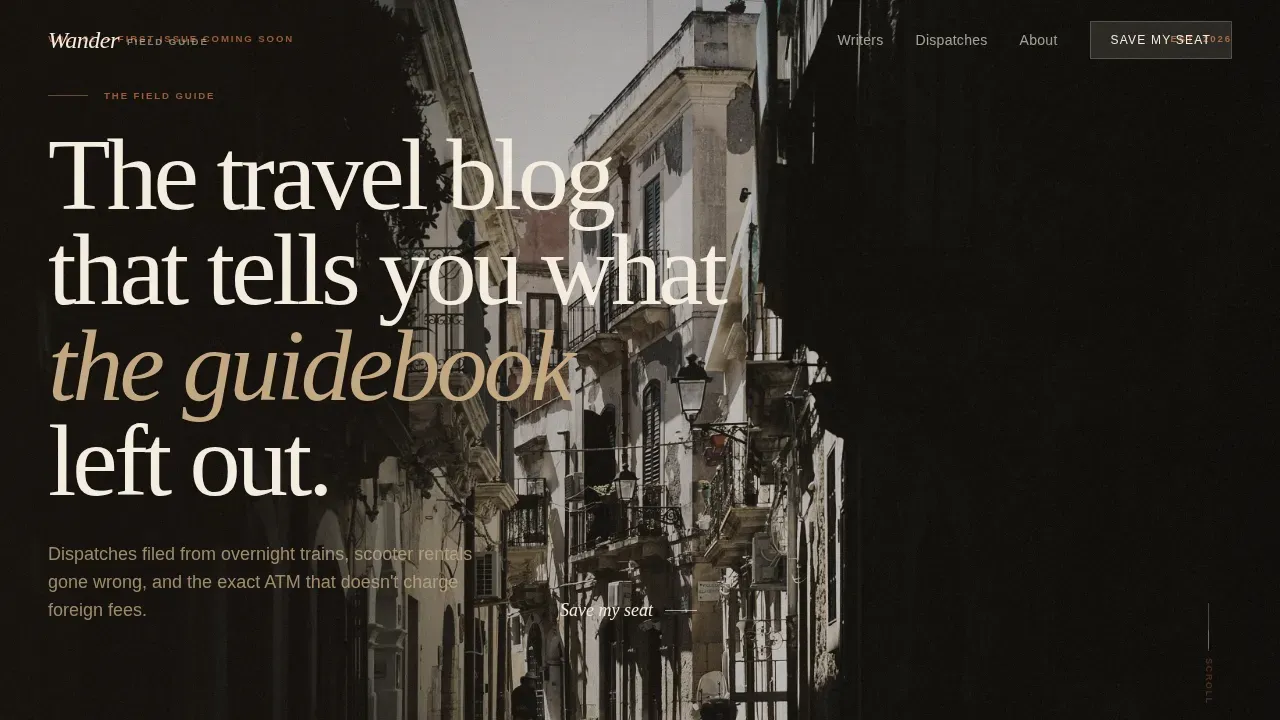
- A full-viewport hero section with enormous serif typography over a grain-heavy desaturated photograph, setting the editorial tone immediately.
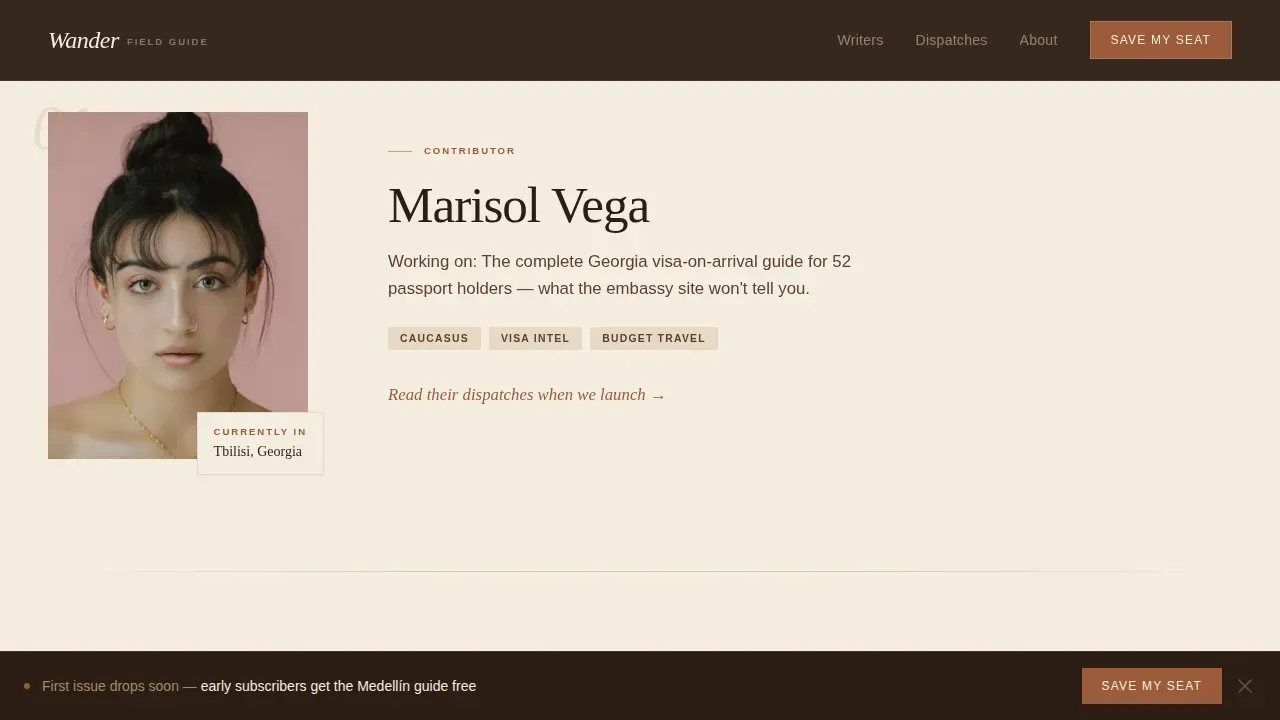
- Three creator spotlight cards, each with a portrait, current city stamp, and one-line teaser, arranged in a rhythm that alternates with typographic article vignettes including pull quotes, a handwritten-style packing list, and a budget breakdown.
- A waitlist capture block with a single email field, a destination dropdown to segment subscribers by interest, and a sticky bottom bar that reinforces the call to action throughout the scroll.
Feature list
This template delivers a focused set of editorial and conversion features. Each one is grounded in the source brief and designed to work together inside a single-column flow.
Full-Viewport Editorial Hero
The hero section occupies the entire screen on load. A desaturated, grain-textured photograph of a narrow Mediterranean street sits behind enormous parchment-colored serif type. The headline reads like a magazine cover and tells a story rather than just naming a destination. A full-width, high-quality image at this scale creates an emotional connection before a single word of body copy is read.
Creator Spotlight Cards
Three writer cards appear in sequence down the page, each showing a passport-sized portrait, the writer's current city, and a single sentence about their next piece. This alternating rhythm between faces and words builds the feeling of a live masthead. Readers meet a real person behind every blog post, which reduces hesitation and raises the perceived value of the subscription.
Typographic Article Vignettes
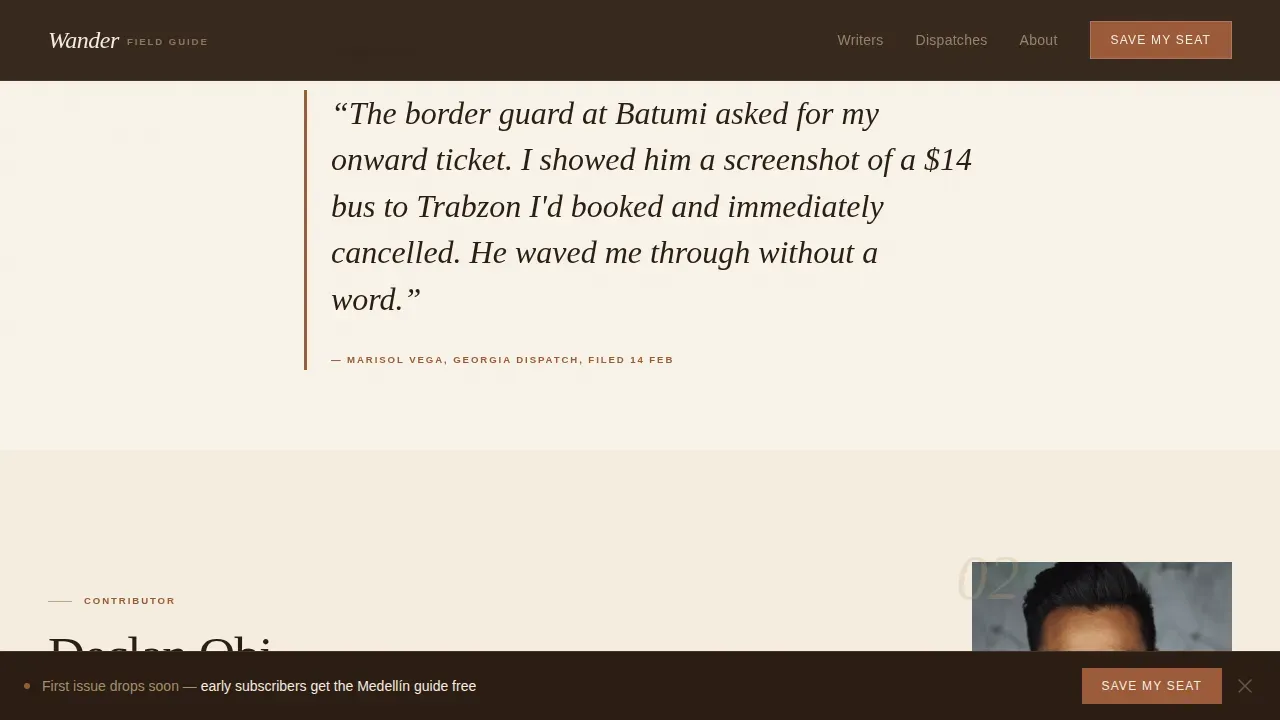
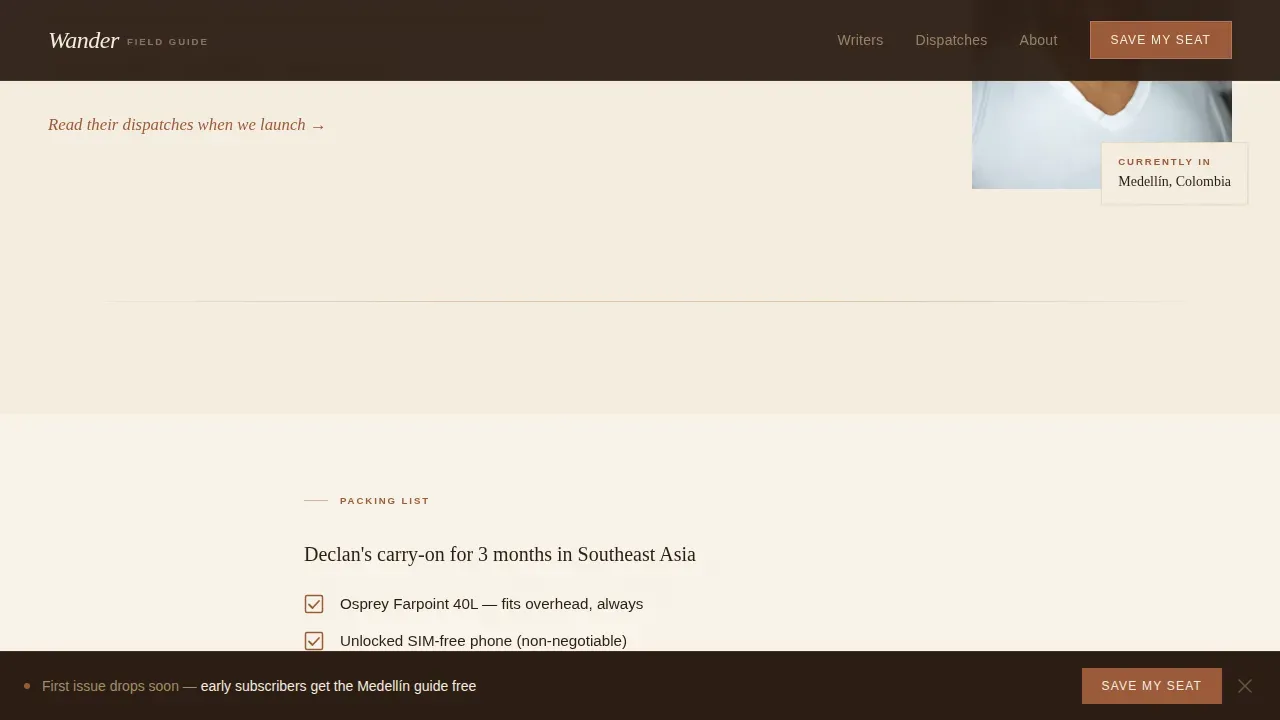
Between the creator cards, sample content appears as designed typographic moments. These include a pull quote about a border crossing, a packing list rendered in a handwritten checklist style, and a budget breakdown for 30 days on the road. Each vignette proves that the travel stories this blog tells are specific, useful, and grounded in first-hand experience.
Waitlist Capture Block
The email capture sits after the third creator card, timed for maximum trust. It uses a single email field paired with a destination dropdown asking "Where are you headed next?" This segments early subscribers by travel interest without adding friction. The block converts the attention built by three rounds of creator and content exposure into a committed sign-up.
Sticky Bottom Conversion Bar
A persistent bar remains anchored at the bottom of the viewport as the reader scrolls. It carries the line "First issue drops soon, early subscribers get the Medellín guide free." This keeps the conversion goal visible without interrupting the editorial reading experience.
Warm Stone Visual Identity System
The entire template is built around four colors: aged parchment for backgrounds, deep espresso for body type, sun-baked sandstone for section dividers, and terracotta for links, pull quotes, and interactive elements. The palette is applied with editorial discipline, giving the page the visual weight of a printed travel magazine.
Page sections overview
| Section | Purpose |
|---|---|
| Full-Viewport Hero | Sets editorial tone with cinematic photo and oversized serif headline |
| Creator Spotlight One | Introduces first writer with portrait, city, and current project |
| Article Vignette One | Delivers pull quote from a real border-crossing dispatch |
| Creator Spotlight Two | Introduces second writer with passport portrait and city stamp |
| Article Vignette Two | Shows handwritten-style packing checklist as designed content block |
| Creator Spotlight Three | Introduces third writer, completing the masthead sequence |
| Article Vignette Three | Presents budget breakdown for 30-day trip as typographic content |
| Waitlist Capture Block | Email field plus destination dropdown for subscriber segmentation |
| Sticky Bottom Bar | Persistent scroll bar repeating the early-access offer |
| Footer Section | Horizontal flow footer closing the single-column page |
Design & branding system
The design language for this template draws from editorial print magazines and the tactile warmth of a well-used travel journal. Every color, typeface, and spacing decision reinforces the feeling of sun-warmed pages and honest reporting. The brand identity is built into the layout itself, not bolted on as a secondary layer.
- Color system: aged parchment (#F5EDE0) dominates the background; deep espresso (#2C1E14) anchors all body text; sun-baked sandstone (#C4A882) separates sections like horizontal rules made of light; and terracotta (#9C5B3A) marks every link, pull quote, and interactive element.
- Typography: Fraunces is used for display and headline type, bringing the editorial serif weight of a newspaper front page; DM Sans handles body copy with clean, readable neutrality that keeps long-form blog content easy to follow.
- Texture and atmosphere: a grain overlay sits across the full-bleed hero photograph, a hand-drawn map aesthetic runs through the vignette sections, and the overall visual rhythm alternates between photographic weight and white space to let the editorial content breathe.
Mobile & speed optimization
Over 60 percent of travel searches happen on mobile devices, and the readers this template targets are often searching on their phones mid-trip or between trains. The layout is built mobile-first, with the single-column flow translating cleanly to small screens without requiring layout changes.
- Image optimization is a stated priority for this template: the hero photograph and creator portrait images are structured for efficient loading, so the page opens quickly even on mobile connections.
- The interaction layer is intentionally minimal, using lightweight scroll reveals and a grain texture overlay rather than heavy JavaScript-driven animations, which supports faster site speed on lower-bandwidth connections.
- The sticky bottom bar is designed to work on mobile viewports without obscuring key reading content, keeping the conversion path visible without degrading the scroll experience.
How this template helps you convert
This template is engineered around a specific conversion sequence. It does not ask for the email address immediately. It earns the click by building genuine editorial credibility first, then presenting the waitlist offer at the moment of maximum trust.
- The hero section and creator spotlight rhythm build voice and authority before any ask is made, so visitors understand what kind of travel blog they are committing to and why it is different from other blogs in the blogging world.
- The destination dropdown in the waitlist block adds a personalization layer that makes the sign-up feel like the beginning of a real conversation, not a generic form submission, which raises completion rates for new bloggers and established travel bloggers alike.
- The sticky bottom bar ensures the "Save My Seat" call to action is never more than a glance away, so readers who are convinced partway through the scroll do not have to hunt for the conversion point.
Other information about this template
This template is designed for the specific intersection of editorial magazine design and waitlist-focused travel blog launches. It is relevant to anyone entering the blogging world with a content-first strategy and a desire to build an audience before publishing day one.
Understanding the wider context of starting and growing a travel blog helps clarify why this template's structure works the way it does. Here is additional information that supports that context:
- Starting a travel blog opens opportunities for passive income through affiliate marketing, display ads, and sponsored content once blog traffic reaches a meaningful level.
- A self hosted WordPress blog using a reliable hosting provider gives you full control over your own domain, your own blog design, and your own monetization choices. A good hosting plan typically includes a free domain name for the first year, and adding domain privacy protection keeps your personal email address out of public registration records. Many new bloggers start on a basic plan and upgrade as their blog grows.
- To install WordPress, you log into your hosting account, use the one-click installer provided by your hosting provider, and then access the wordpress dashboard to choose your theme and configure your settings. A wordpress user with no technical background can complete this process in under an hour.
- Choosing a blog name that is memorable and easy to spell matters for both your site title and your social media accounts. Check whether your blog name is available as a new domain and across social media platforms before committing. This is especially important for building a consistent brand identity from day one.
- A premium theme offers more design control and better long-term functionality than a free theme. While a free theme can work for a beginner blogger testing ideas, serious travel bloggers typically move to a paid theme or a purpose-built template as soon as their audience starts to grow.
- The wordpress dashboard is where you will write posts, manage blog articles, configure plugins to block spam comments, connect google analytics for tracking blog traffic, and monitor organic search performance over time. Google analytics in the wordpress dashboard gives you visibility into which blog post is resonating and which recent post needs updating.
- Connecting google analytics early, even before your first blog post is published, means you have baseline data from the moment your first page goes live. You can then use search engine optimization practices to improve how your blog content appears in google search results over time.
- The blogging industry supports multiple monetization approaches. Affiliate marketing earns a commission when readers click a referral link and make a purchase. Display ads generate passive income based on views. Sponsored blog content pays directly for coverage. Selling digital products like e-books or blogging courses adds a product layer. Successful travel bloggers typically combine a few of these streams once their audience is large enough.
- Building a simple contact form on your blog page lets readers, brands, and other bloggers reach you without exposing your personal email address publicly. This becomes more important as your blog grows and collaboration requests increase.
- Engaging consistently on social media drives readers back to your site and helps new blog content reach audiences beyond organic search. Pinterest in particular can send sustained blog traffic to how-to travel content. Posting your new blog post to social media accounts the same day it goes live is one of the most consistent habits among successful travel bloggers.
- Resources like the superstar blogging course and other blogging courses are popular among travel bloggers who want to compress their learning curve. Superstar blogging and similar programs cover topics from technical setup to content strategy, which can be super helpful for anyone starting fresh without a background in publishing.
- A self hosted setup also gives you full control over how the left column or sidebar of your blog page is structured, where social proof elements appear, and how the overall reading experience is shaped for your target audience.
- This template is built specifically as a single-page waitlist experience. It is not a multi-page wordpress blog setup. It is a launch vehicle designed to collect subscribers and build anticipation before the blogging journey really begins.
- The wander editorial travel how to blog landing page template is the right starting point if you want your travel blog to feel like a publication from day one, with a masthead, editorial voice, and a waitlist that proves demand before the first issue drops. If you want to start a travel blog that stands out in a few places from the very beginning, this template gives you exactly that.
- Female travel bloggers, solo adventure writers, and digital nomads building around a specific regional niche will find that this template's creator spotlight structure scales well for a range of blog name identities and editorial voices.
- Using this template as a blogging platform entry point means you can start writing, grow an email list, and demonstrate a clear brand identity before you install wordpress and build out the full site. The landing page acts as proof of concept and creative outlet while the full blog is in development.
- The bluehost seo tools start package is one of the hosting options that new bloggers consider when setting up a self hosted travel blog, as it bundles web hosting, a free domain, and introductory search engine optimization tools into one starting account. There are a few options at different price points, and it is worth reviewing what each hosting account includes in terms of web hosting resources, domain privacy protection, and support before committing to a hosting plan.
- About a year into a blogging journey, many travel bloggers revisit their site title, niche focus, and blog content strategy. Starting with a template like this one means your brand identity is already defined, which makes that revisit easier and faster.
- A wordpress blog that targets a specific niche tends to reach the first page of google search results faster than a general travel site, because focused blog articles signal topical authority to the search engine. Building that authority starts with a clear niche, a consistent blog name, and high quality content published on a reliable schedule.
- This template is designed to help you create high quality content that feels editorial from the very first scroll, giving both readers and search engines a strong signal about what your travel blog stands for.
Theme
Editorial Magazine
Creative direction
Creator Spotlight
Color system
Warm Stone
Style
Single Column Flow
Direction
Waitlist/Coming Soon
Page Sections
Full-viewport Editorial Hero Section
Creator Spotlight Cards
Typographic Article Vignettes
Segmented Waitlist Capture Block
Sticky Bottom Conversion Bar
Warm Stone Color and Type System
Related questions
Is this template suitable for a solo travel blogger or does it require multiple writers?
Can I use this template to launch a self hosted travel blog before I have published any content?
What kind of travel blog niche does this template work best for?
Does the template include the sticky bottom bar and destination dropdown out of the box?
How does the email capture support subscriber segmentation?