
Yes, both Rocket.new and Emergent.sh handle real backend logic and databases for SaaS products. These are AI-native, full-stack platforms that generate API routes, authentication, data models, and deployment from natural language prompts. If you want to go from idea to working SaaS fast, start at Rocket.new, describe what you want to build, and watch it generate the full stack for you.
What Does "Real Backend" Actually Mean for a SaaS Product?
A lot of people hear "AI app builder" and assume it only makes pretty frontends. That assumption is wrong, and it is holding people back.
Real backend logic means your app can do things. Store user data. Authenticate logins. Process payments. Talk to third-party APIs. Run business rules that are specific to your product. A SaaS product without this is just a mockup.
So the real question is: when an AI app builder like Rocket.new or Emergent.sh says it builds full-stack apps, does it mean the whole thing, or just the parts that look good in a demo?
Let's get into it.
What are Rocket.new and Emergent?
Rocket.new and Emergent are AI-native, full-stack platforms designed to build SaaS products rapidly from natural language prompts. They are not generic AI tools or simple drag-and-drop builders. They generate production-ready web apps, mobile apps, and internal tools from descriptions written in plain language.
Here is what each platform covers:
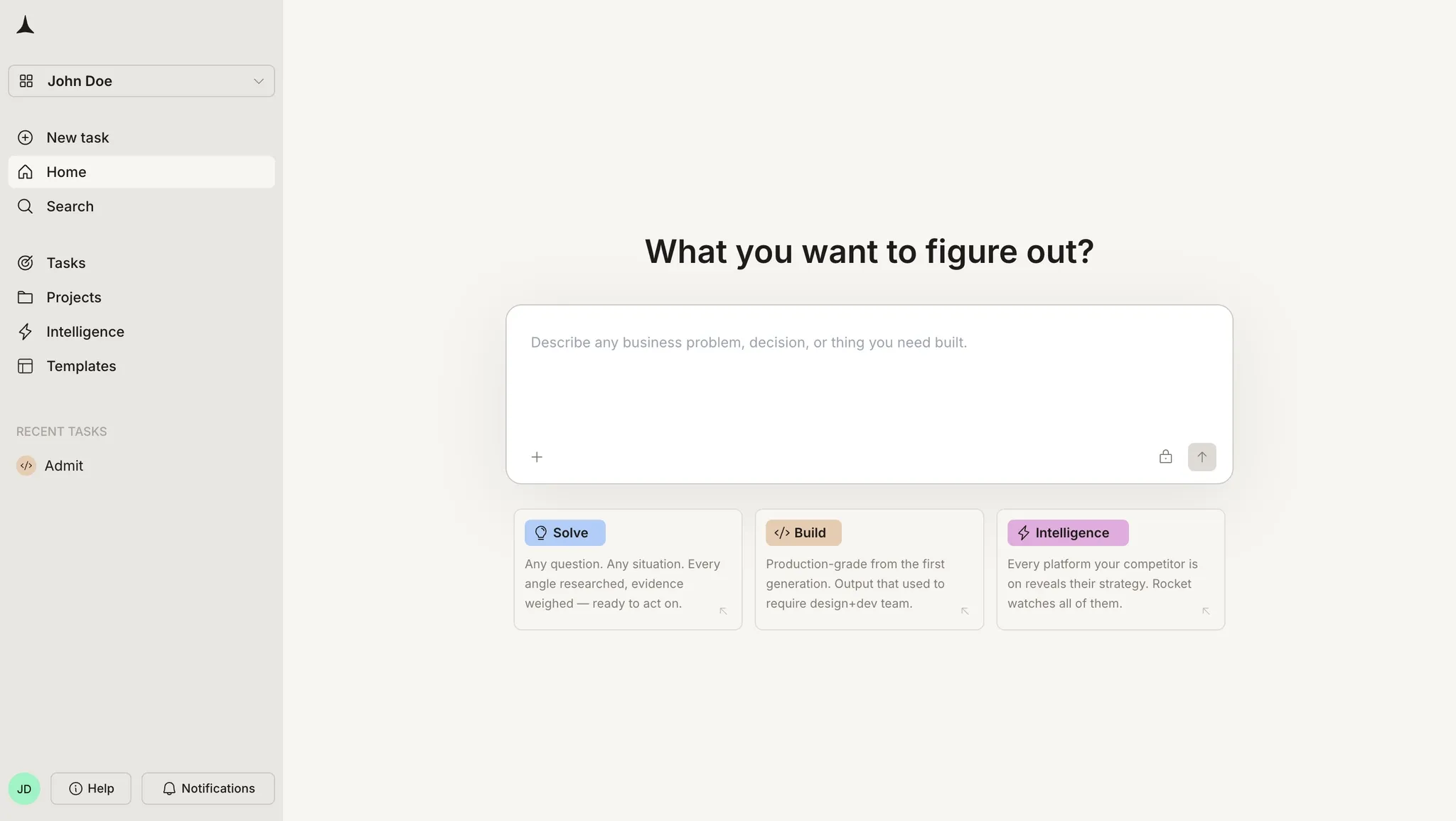
Rocket.new:
-
Optimized for speed, often generating a working MVP in minutes
-
Strong focus on rapid prototyping and mobile-first apps
-
Handles backend automation, including authentication, data persistence, and API endpoints, automatically
-
Token-based pricing model with rollover tokens each month
-
Free plan available to get started without an upfront cost
-
Supports custom domains and GitHub integration out of the box
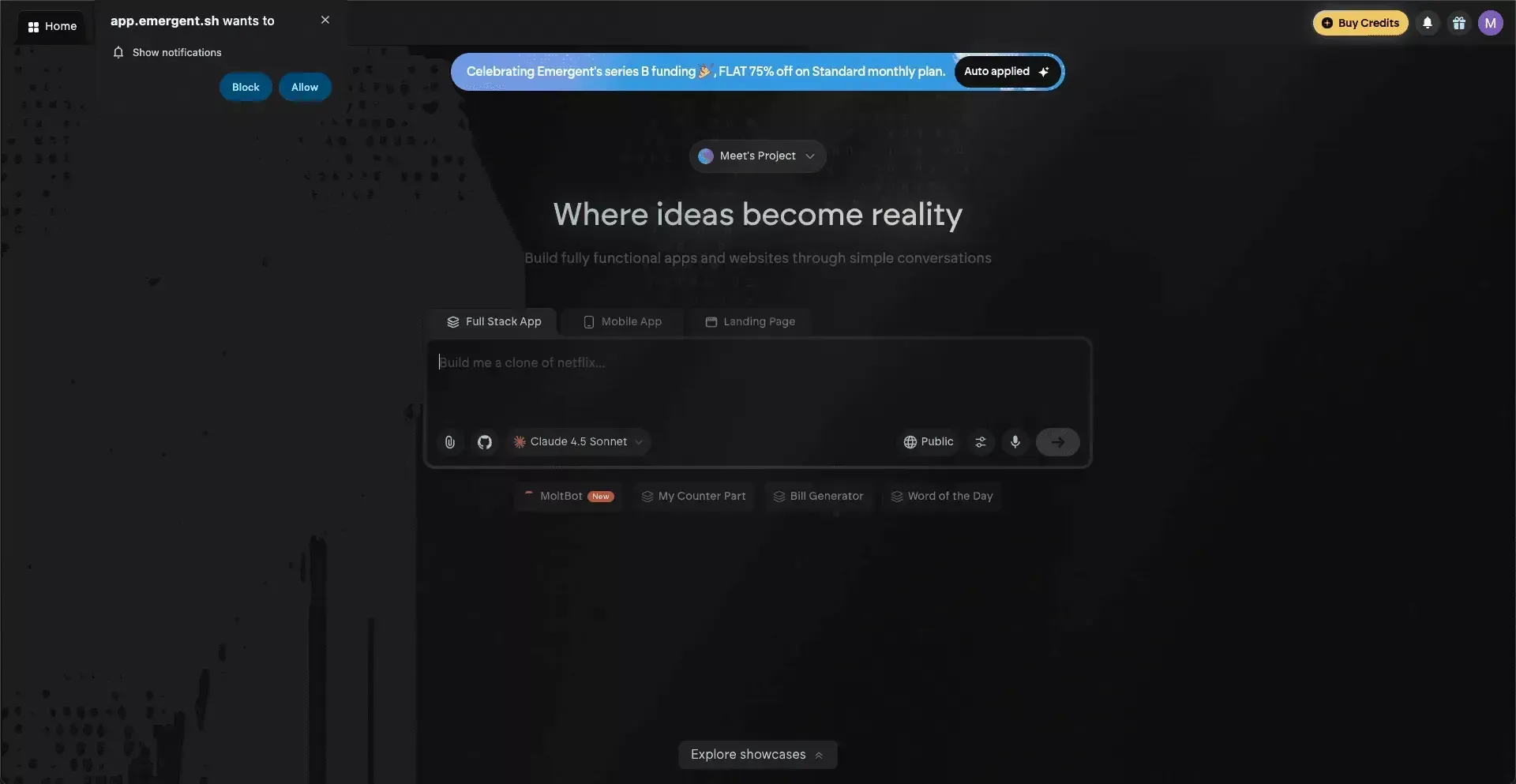
Emergent.sh:
-
Uses multiple AI agents working in parallel on planning, coding, and testing
-
Generates full SaaS functionality, including scraping logic, API integrations, and user history
-
Focused on providing deep control over data models and complex backend workflows
-
Credit-based pricing model where credits are consumed per action
-
Free plan available with limitations on usage
-
Better suited for founders who need deeper control as their app scales
Both platforms are built around the idea that non-technical users and developers alike should be able to go from an app idea to a working product without spending weeks on backend setup.
How Does Backend Logic Actually Work in These Platforms?
When you describe your SaaS product in natural language prompts, these platforms do not just build a screen. They generate the full application structure, which includes:
What gets generated automatically:
-
User authentication (sign up, login, password reset, session management)
-
Database structure with relationships between data models
-
API routes that connect your frontend to your backend
-
Role-based permissions so different users see different things
-
Backend logic for your specific business rules
-
Deployment configuration so the app actually runs
Rocket.new handles backend automation, including authentication, data persistence, and API endpoints, without you writing a line of code. You describe what your app needs to do. Rocket generates the code that makes it happen.
Emergent.sh goes deep on data models and complex business logic. It uses specialized AI agents that each handle a specific part of the build, so planning, writing code, and testing happen at the same time rather than in sequence. This parallel processing speeds up app generation significantly and leads to better code quality overall.
The result is not throwaway generated code. Both platforms target production-ready output that can handle real users from day one.
Platforms that prioritize thorough planning and architecture tend to generate higher-quality code, reducing the need for extensive debugging and iterations later in the development process.
What Makes These Platforms Different from Generic AI Tools?
Most vibe coding tools give you a starting point. You get some frontend components, maybe a basic structure, and then you are on your own to wire up the backend. That works if you know what you are doing. It falls apart fast if you do not.
Rocket.new and Emergent take a different approach. They automate the full application lifecycle, from frontend design to backend logic, so non-developers can ship something that actually works. No manual coding required to get a functioning SaaS product off the ground.
Here is the key difference:
| Feature | Generic AI Tools | Rocket.new and Emergent |
|---|---|---|
| Frontend generation | Yes | Yes |
| Backend logic | Partial or manual | Full, automated |
| Database setup | Manual | Automatic |
| User authentication | Manual | Built-in |
| API routes | Manual | Auto-generated |
| Deployment | Manual | Built-in |
| Code export | Sometimes | Yes |
| Custom domains | Rarely | Yes |
| Free plan | Varies | Both offer one |
The gap between "generates some code" and "generates a full stack app" is exactly where these platforms earn their place.
How Does Vibe Coding Enable Real Backend Development?
Vibe coding allows users to describe their app ideas in natural language, enabling AI to handle the technical implementation, including code generation and deployment.
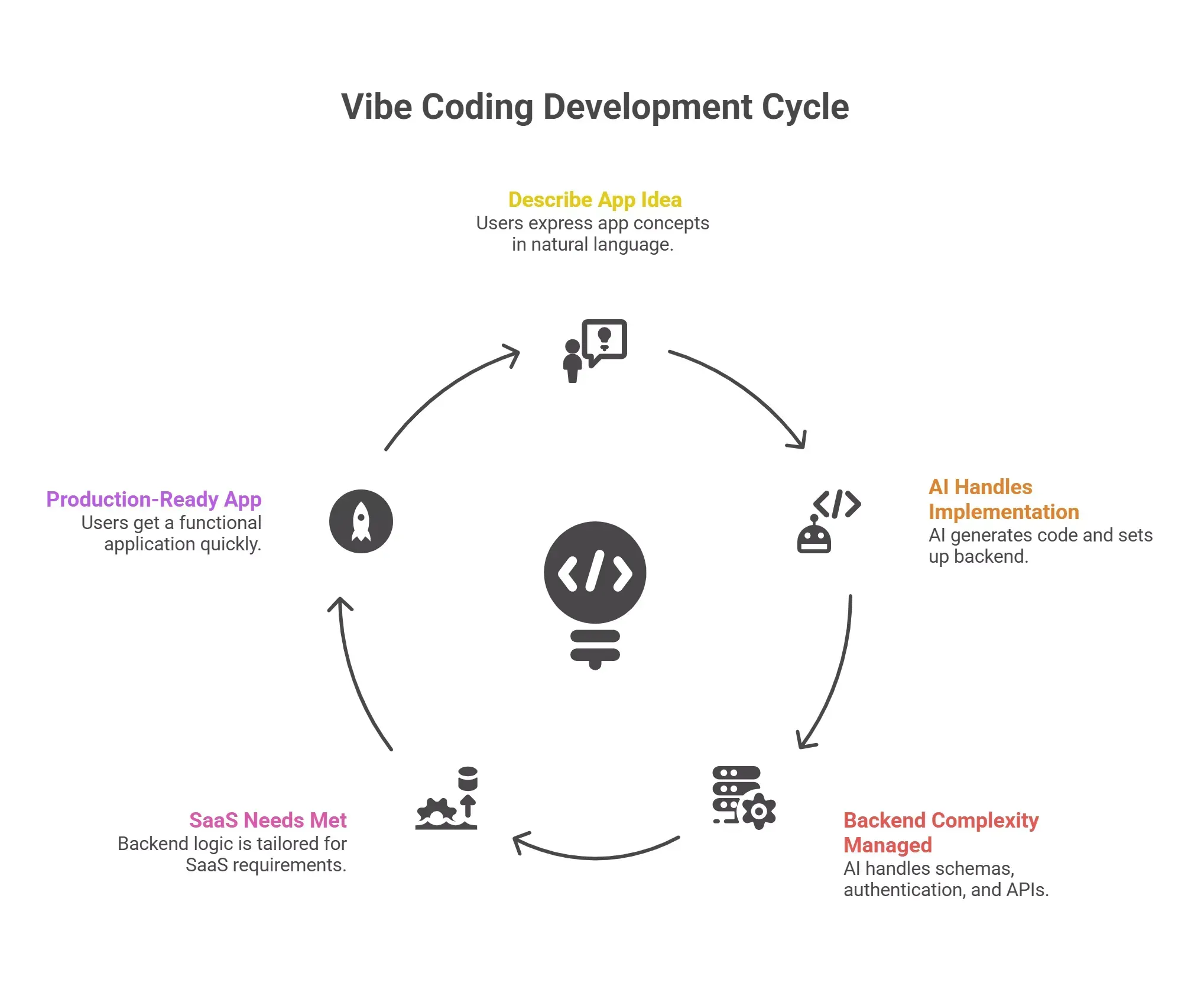 What you skip when vibe coding handles the backend:
-
Writing SQL schemas from scratch
-
Setting up authentication flows manually
-
Configuring database tables and relationships
-
Building API connections line by line
-
Managing deployment pipelines separately
Instead, you describe what your product does for its users, and the platform handles the technical complexity underneath.
Why this matters for SaaS specifically:
-
SaaS products depend on backend logic more than almost any other app type
-
Your data needs to be structured correctly from the start
-
Your permissions need to work right across different user roles
-
Your API integrations need to be reliable under real usage
-
Vibe coding through a platform like Rocket.new means all of that gets handled during the generation phase, not patched in later
How the vibe coding space has matured:
-
It started as "generate a frontend" and has become full-stack generation
-
AI app builders now handle complex backend logic, not just visual layers
-
That shift is what makes questions like "can these platforms handle real databases?" worth asking now
-
A year ago, the answer would have been clearly no. Today, platforms like Rocket.new make it the default.
AI app builders like Rocket.new and Emergent.sh automate the full application lifecycle, from frontend design to backend logic, allowing non-technical users to create production-ready applications quickly.
Can These Platforms Handle Real Databases for SaaS?
Yes. Both platforms support complex data modeling with relationships and permissions that are critical for SaaS applications. Rocket.new and Emergent.sh are AI-native, full-stack platforms designed to build SaaS products rapidly from natural language prompts.
What that looks like in practice:
Rocket.new database capabilities:
Rocket.new handles backend automation, including authentication, data persistence, and API endpoints automatically.
-
Automatic database setup as part of the build process
-
Structured data models generated from your app description
-
Data persistence so user data survives between sessions
-
Relationships between data types are handled automatically
Emergent.sh database capabilities:
Emergent.sh uses multiple AI agents to collaborate on building, testing, and shipping systems
-
Deep control over data models and complex backend workflows
-
Scraping logic and user history managed directly from natural language commands
-
Support for complex data relationships needed at scale
-
Positioned as the stronger choice for founders who need backend depth as the product grows
Both platforms treat database structure as part of the full stack generation, not as a separate step you configure after the fact. For a SaaS product, that means your data layer is coherent with your application logic from the start.
How Do These Platforms Handle Scalability?
Scalability is where SaaS products either survive or get rebuilt from scratch. Building something that works for 50 users is very different from building something that works for 50,000.
What a strong app development platform should do for scalability:
-
Support evolving product needs without forcing teams into rigid templates
-
Handle real users and real data without requiring a complete rebuild later
-
Generate production-ready code that holds up as complexity grows
-
Let you keep your generated code when your SaaS starts growing
How Emergent approaches scalability:
-
Positioned specifically for founders who need deeper control over backend structure
-
Gives more control over data relationships and complex workflows as the app scales
-
Better suited for SaaS products with complex permissions and serious integration requirements
-
Designed for teams that know upfront their app will have layered backend logic
How Rocket.new approaches to scalability:
-
Prioritizes speed and rapid iteration from the start
-
Built for teams that want to get to market fast and validate quickly
-
Designed to iterate based on what real users tell you
-
Strong choice when your primary goal is launching and learning before scaling deep
What both platforms share:
-
Both are built with production-ready scalability in mind
-
Neither forces you to throw away your code when user numbers grow
-
Both treat scalability as a starting assumption, not an afterthought
How to Choose Between Rocket.new and Emergent for Your SaaS
Here is a direct comparison to help you decide.
Goal-to-Platform Mapping:
| Your Goal | Best Platform | Why It Works |
|---|---|---|
| Ship an MVP fast | Rocket.new | Optimized for speed, generates working apps in minutes |
| Deep backend control | Emergent | Stronger data modeling, complex workflow support |
| Mobile-first SaaS | Rocket.new | Strong capabilities for mobile apps and web apps |
| Complex API integrations | Emergent | Full API integration for generating from natural language |
| Predictable costs | Rocket.new | Token-based pricing with monthly rollover |
| Parallel build processes | Emergent | Multiple AI agents working simultaneously |
| Non-technical founder | Either | Both are designed for non-technical users |
| A developer who wants control | Emergent | More granular backend access |
Platform Breakdown:
| Platform | Best For | Pricing Model | Free Plan |
|---|---|---|---|
| Rocket.new | Speed, mobile apps, rapid prototyping | Token-based with rollover | Yes |
| Emergent | Complex backend, deep data control | Credit-based per action | Yes |
Steps to pick the right one:
-
Write down your top three SaaS backend requirements
-
Check whether speed to MVP or backend depth is your bigger priority
-
Try both free plans before committing to paid tiers
-
Build a small test feature to see how each handles your specific use case
-
Choose based on how much control you need over backend behavior long-term
Step-by-Step: How to Build a SaaS Backend with Rocket.new
Let's walk through a real example. Say you want to build a subscription-based project management tool with user authentication, project data, and team permissions.
Step 1: Describe your app in plain language
Open Rocket.new and type out what your SaaS does. Something like: "A project management app where teams can create projects, assign tasks, and track progress. Users sign up and log in. Admins can manage team members." That is your starting input.
Step 2: Let the AI generate the full stack
Rocket.new processes your description and generates the frontend, backend logic, database structure, and API routes. Authentication is built in automatically. You do not configure it manually.
Step 3: Review the generated code
The AI-generated code includes your data models, API endpoints, and authentication flow. You can review it, and because Rocket supports code export, you own what gets built.
Step 4: Customize the backend logic
If your SaaS needs specific business rules, you can extend backend behavior through natural language instructions or by editing the generated code directly. The platform gives you access to the code, not just the visual layer.
Step 5: Connect integrations
Modern products depend on third-party services, APIs, and internal tools. Rocket.new supports connecting to external services, so your SaaS can integrate with payment processors, email platforms, and other tools your product needs.
Step 6: Deploy With Custom Domains
Once your app is ready, deploy directly from the platform.
What deployment includes:
-
Custom domains supported so your SaaS goes live at your own URL, not a generic subdomain
-
Built-in hosting, so you do not need a separate infrastructure setup
-
SSL management is handled automatically on the platform side
-
Automated testing is built into the deployment process to keep your app stable before going live
-
Continuous integration support so updates ship smoothly without breaking what already works
-
Cloud-based deployment that scales with your user load without manual configuration
The bigger picture:
-
From description to deployed SaaS, the entire process happens inside one platform
-
No switching between tools
-
No writing code from scratch
-
No patching deployment together from separate services
Who Uses These Platforms? Real Examples by User Type
| User Type | What They Want to Build | How These Platforms Help |
|---|---|---|
| Startup Founder | A B2B SaaS with user accounts, billing, and dashboards | Full-stack generation handles authentication, database setup, and API routes automatically |
| Freelance Developer | Client portals and internal tools without manual coding | AI assistance speeds up build time, and code export lets them deliver clean work |
| Non-Technical Founder | A subscription app with zero coding background | Natural language prompts replace writing code, production-ready output handles real users |
| Product Manager | Rapid prototyping for stakeholder demos | Working prototypes generated in minutes, not weeks |
| Solo Developer | Full-stack apps across web apps and mobile apps | Code generation handles the repetitive parts, leaving more time for product decisions |
The common outcome across all these user types: a working, backend-ready product without the traditional backend setup time.
What Real Users Say About AI App Builders for SaaS
Builders who have shipped with these platforms report a consistent pattern. The backend surprises them most.
"I start with the frontend… only to realize halfway through what I actually need to make the UI work. And suddenly, I’m building backend endpoints in between, juggling database schemas, API routes, and UI tweaks—basically a full-stack chaos sandwich 🥪." - LinkedIn "Tried out Emergent.sh this week. I have noticed a small-ish pattern. AI Vibe coding solutions fall into two camps. • Hide the code - Pretend it's not there until asked. Loveable, bolt, etc. • Show the code - Make sure the user knows there is code." - LinkedIn
For community discussion and real user feedback on AI coding tools and vibe coding platforms, the Rocket.new community and builder forums are worth checking directly at Rocket.new.
How Rocket.new Takes SaaS Building Further
Rocket.new is not just an AI app builder. It is the system for the full arc of building a product: from the thinking before the build to the deployed app to the intelligence that keeps it sharp over time.
Top Rocket.new features for SaaS builders:
-
Full-stack generation from a single natural language description
-
Built-in user authentication and database setup
-
API endpoint generation and backend logic are handled automatically
-
Mobile app and web app output from the same build
-
Custom domains and deployment included
-
Code export so you own the generated code
-
GitHub integration for version control and team workflows
-
Token-based pricing with a free plan to get started
-
Context that compounds, so every build gets smarter with your project history
How Rocket.new applies specifically to SaaS:
-
Generates subscription-ready app structures with user management built in
-
Handles the backend logic for SaaS-specific patterns like teams, roles, and billing integrations
-
Rapid prototyping means you validate your SaaS idea before committing to a full build
-
Production-ready output means that what you build in Rocket can handle real users, not just demos
-
Internal tools can be built alongside your customer-facing product on the same platform
-
1.5 million people across 180 countries have tried Rocket, many building SaaS products just like the one you are thinking about
The Answer to the Real Question
Can Rocket.new or Emergent handle real backend logic and databases for saas products? Yes. Both platforms generate full-stack applications with real database structures, user authentication, API routes, and backend logic from natural language prompts. They are not just frontend generators. They are production-ready platforms designed for exactly this use case.
Pick Rocket.new if speed and rapid iteration matter most. Pick Emergent if you need deeper backend control and complex workflow support.
Table of contents
- -What are Rocket.new and Emergent?
- -Rocket.new:
- -Emergent.sh:
- -How Does Backend Logic Actually Work in These Platforms?
- -What Makes These Platforms Different from Generic AI Tools?
- -How Does Vibe Coding Enable Real Backend Development?
- -Can These Platforms Handle Real Databases for SaaS?
- -Rocket.new database capabilities:
- -Emergent.sh database capabilities:
- -How Do These Platforms Handle Scalability?
- -How to Choose Between Rocket.new and Emergent for Your SaaS
- -Step-by-Step: How to Build a SaaS Backend with Rocket.new
- -Step 1: Describe your app in plain language
- -Step 2: Let the AI generate the full stack
- -Step 3: Review the generated code
- -Step 4: Customize the backend logic
- -Step 5: Connect integrations
- -Step 6: Deploy With Custom Domains
- -Who Uses These Platforms? Real Examples by User Type
- -What Real Users Say About AI App Builders for SaaS
- -How Rocket.new Takes SaaS Building Further
- -The Answer to the Real Question