
On Rocket.new, competitive intelligence from the build phase doesn't expire at launch. It stays live as shared project context, feeds into Rocket Intelligence for real-time monitoring, and powers every post-ship decision from pricing to roadmap to sales.
Most product teams lose their competitive research the moment they ship.
On Rocket, the competitive intelligence accumulated during the build phase stays live, connected, and updated automatically after the product launches.
So every post-ship decision starts from the same foundation that shaped v1.0.
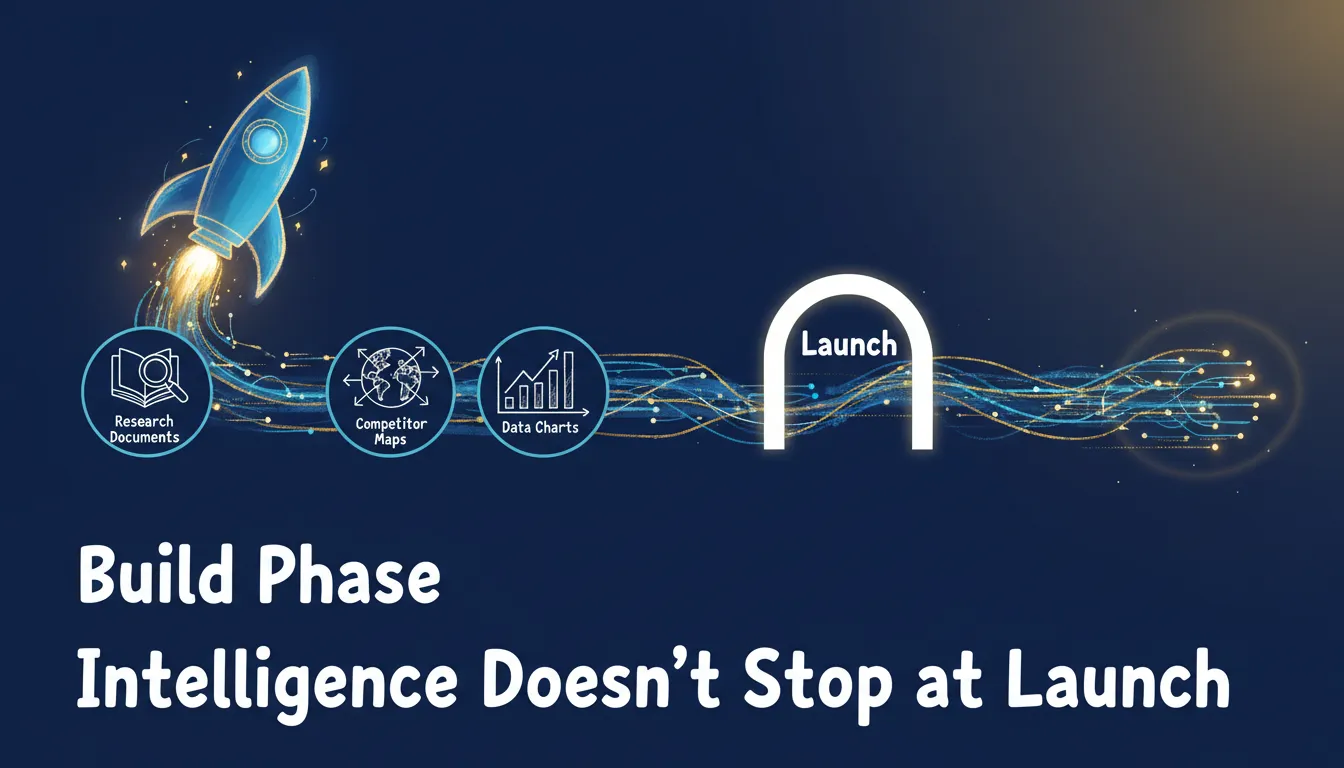 Build-phase competitive intelligence flows forward into every post-launch decision on Rocket.new, not into a forgotten folder.
The Moment Most Teams Lose Their Research
Let's consider a team that spends six weeks in Solve running competitive teardowns, mapping pricing gaps, and identifying the three features that no rival has shipped yet in the industry. That research shapes every decision in Build. Then the product ships, the Slack channel moves on, and the slide deck lands in a shared folder no one opens again.
Six months later, the team is scoping v1.1. Someone asks what the competitive landscape looks like. The person who ran the original analysis has moved on. The pricing benchmarks are stale. The feature gaps that were documented pre-launch have to be re-researched from scratch.
This is not a workflow problem. It is an architectural one. When research and building happen in separate tools, the intelligence that justifies every decision gets severed from the product the moment it ships. Rocket is built on a different architecture entirely.
2 What Actually Happens to the Competitive Intelligence After Launch
When a team runs a Solve task on Rocket, the output does not stay in a document. It becomes the live context for every Build task in the same project, even if the original competitive teardown happened in a live room setting. That context does not expire when the product ships.
Solve Research Stays Embedded in the Project
Every market finding, competitive signal, and recommendation from the pre-launch Solve task is present inside Build without re-explaining. A PM opening a build task six months post-launch sees the same competitive reasoning that shaped v1.0, with the original conversation preserved instead of lost in chat.
Rocket Intelligence Begins Monitoring from Day One Post-Ship
Once a product ships, Rocket Intelligence starts tracking every public platform a competitor operates on as the product meets the real world: website changes, pricing updates, social media activity, news coverage, hiring signals, and customer reviews. It interprets signal clusters rather than surfacing individual alerts, so the team is ready to act.
A pricing page change in isolation is noise. That same change, alongside new enterprise-focused job postings and a defensive G2 response pattern, is a strategic signal. The daily brief connects these dots before the first meeting of the day.
v1.1 scoping starts from accumulated intelligence, not a blank prompt. Feature gaps identified pre-launch that were descoped for v1.0 are still in the project. When the team scopes the next version, the prior research is already there.
The First 90 Days: Where Accumulated Intelligence Has the Most Impact
The period immediately after launch is where competitive intelligence has the most direct impact on traction. Every decision made in the first 90 days benefits from having the pre-launch research still active and connected to real-time market signals.
Teams that validate their ideas before building enter the post-launch window with a significant structural advantage: their competitive context is already documented, referenced, and alive in the project, which makes it more useful for ongoing product building.
Messaging Refinement
The competitive weaknesses identified during the build phase become the basis for comparison pages and positioning copy. Instead of re-researching what competitors lack, the team already has that data, and Intelligence surfaces whether those gaps have closed since launch. Teams that validate their ideas before product building enter the post-launch window with messaging that can reshape quickly as competitor gaps shift.
That matters because companies that actively use data-driven insights are 23 times more likely to acquire customers and 19 times more likely to be profitable, which is a strong case for keeping competitive intelligence active after launch.
Pricing Validation
Introductory pricing tiers validated against pre-launch benchmarks can be tested against real-time competitor pricing signals. If a rival changes its pricing structure in week three post-launch, the team sees it in the daily brief, not in a delayed Slack thread. Research shows that companies acting on real-time competitive signals adapt faster than those relying on quarterly reports.
Sales Enablement
Intelligence generates daily briefs on competitor moves that sales teams can use in active deals. The competitive context that shaped the product is the same context that powers the battlecard. Teams using Rocket's sales intelligence workflow can generate deal-specific competitive briefs directly from the Intelligence dashboard.
Roadmap Prioritization
Feature gaps identified during the build phase that were descoped for v1.0 are still present in the project. When v1.1 scoping begins, those gaps are already documented alongside the competitive evidence that justified them.
Churn Prevention
Competitive signals that indicate a rival is improving in an area where the product is weaker surface before users encounter the gap, not after.
4 What Rocket Intelligence Tracks for Competitive Intelligence After You Ship
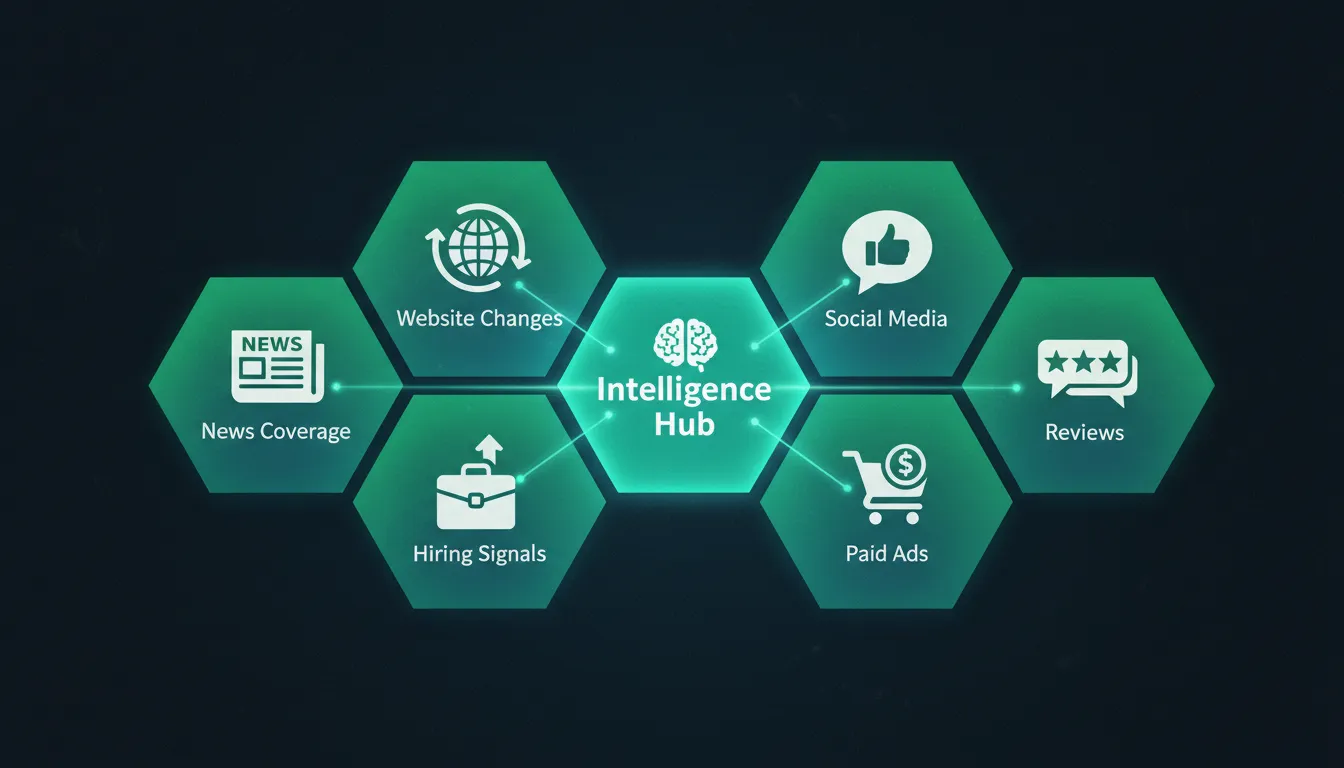 Rocket Intelligence monitors six signal categories across every public platform a competitor operates on, continuously.
Rocket Intelligence monitors six signal categories continuously. The table below shows what each captures and why it matters specifically in the post-launch window.
| Signal Category | What It Captures | Why It Matters Post-Launch |
|---|---|---|
| Website | Page changes, pricing updates, messaging shifts, new feature announcements | Competitor repositioning often shows here first, before any press release |
| Social Media | Posts, campaigns, engagement patterns across LinkedIn, X, Instagram, Reddit, TikTok | Reveals GTM pivots and audience targeting shifts in real time |
| News and Web Presence | Press coverage, partnership announcements, executive interviews, media mentions | Tracks narrative shifts and funding signals before they affect your market |
| Reviews and Reputation | G2, Glassdoor, Capterra sentiment trends, individual review patterns | Surfaces competitor weaknesses your sales team can address in battlecards |
| People and Hiring | Headcount changes, open positions by department, executive exits and joins | Hiring concentration reveals where competitors are investing before any product announcement confirms it |
| Performance Marketing | Ad activity across LinkedIn, Meta, and TikTok | Shows budget shifts and new audience targeting before campaigns scale |
This is not a monitoring dashboard. It is an interpretation layer. The competitive intelligence that shaped the product pre-launch becomes the baseline against which every post-launch signal is measured. For teams who want to understand how Intelligence is set up and configured, the Intelligence overview in Rocket's docs covers the full setup process.
5 The Data Case for Keeping Competitive Intelligence Active
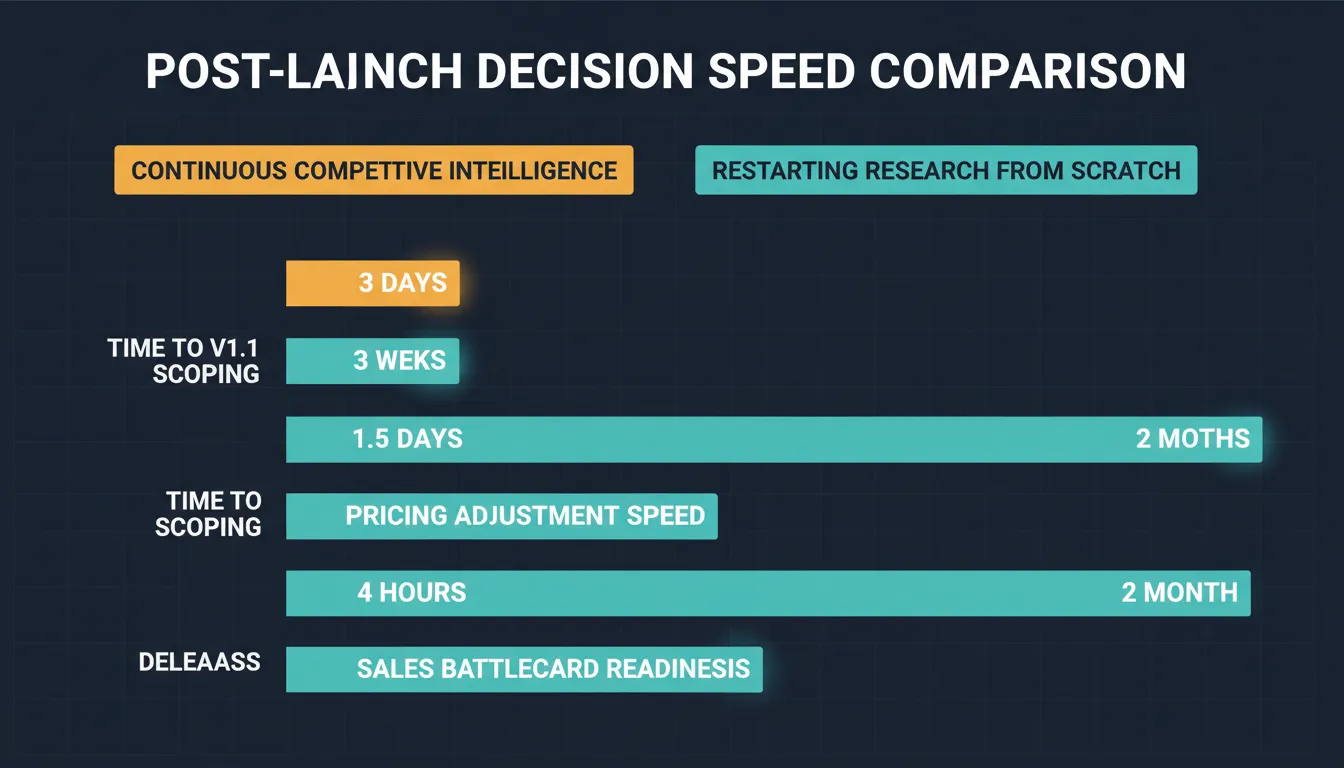
Teams with continuous competitive intelligence move faster on v1.1 scoping, pricing adjustments, and sales battlecard readiness than teams restarting research from scratch.
The pattern is consistent across product teams: intelligence that stays active post-launch compresses the time between market signal and team response.
The gap between teams that maintain live intelligence and those that restart research each cycle widens with every version shipped. Teams that use predictive competitive intelligence to anticipate competitor moves before they are announced gain positioning advantages that compound over time.
What a New Hire Sees When They Open the Project
This is the part that most teams do not think about until it becomes a problem. Six months after launch, a new product manager joins the team. On every other platform, they would start from scratch: reading old documents, asking colleagues for context, trying to reconstruct the reasoning behind decisions that were made before they arrived.
On Rocket, they open the project and the entire competitive history is there, giving the team a deep, more actionable view of market changes. The Solve output that validated the direction. The feature gaps that shaped the roadmap. The pricing analysis that set the initial tier. The competitor signals that have accumulated since launch. Even the rationale behind what the team decided to build, not just the shipped code.
The handoff is not improved. It is eliminated.
![Traditional approach vs Rocket approach: broken research chain vs continuous connected intelligence loop]
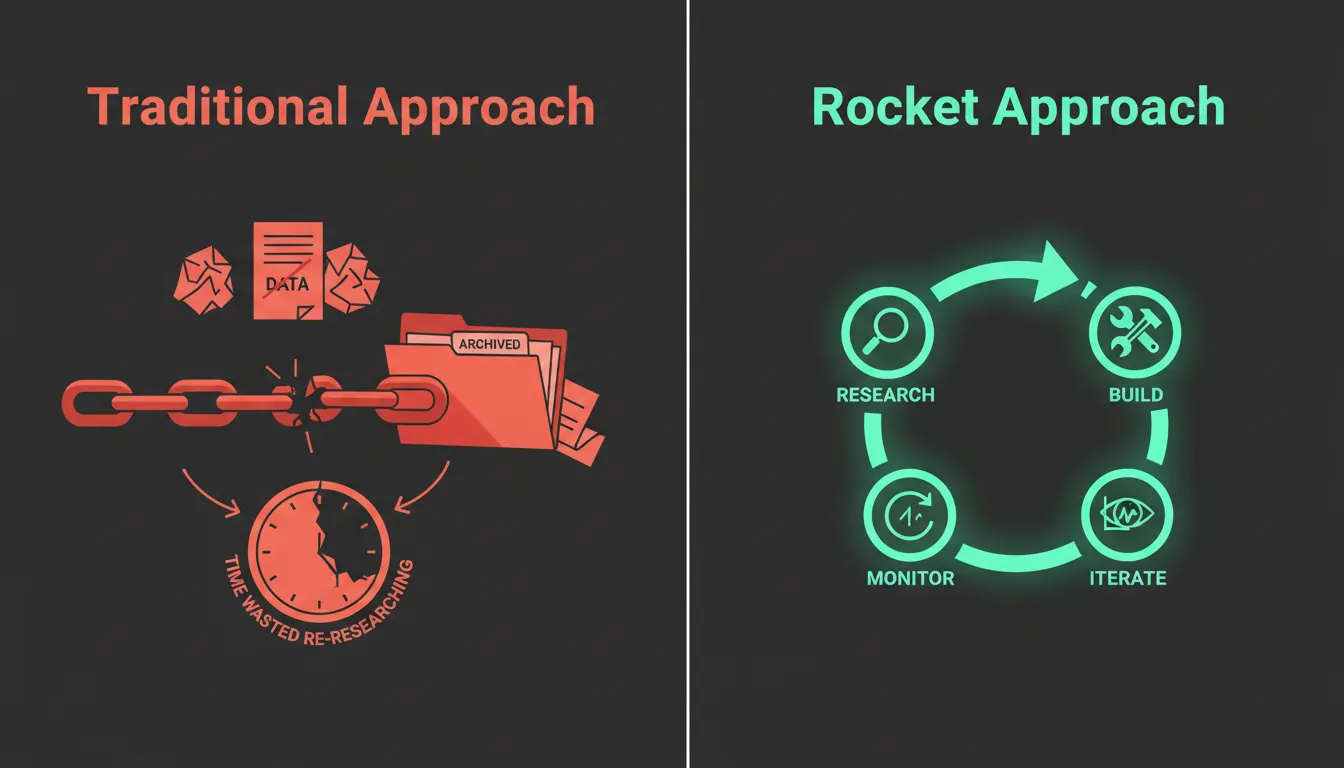
Traditional tools break the research chain at launch. Rocket keeps it connected across every version, team change, and strategic decision.
How the Intelligence Compounds Across Versions
Competitive intelligence does not reset between v1.0 and v1.1 on Rocket. The market research that shaped the first version is present when the team scopes the second. The competitor signal from last month is present when marketing writes the next landing page.
This is the architectural moat. Competitors can match individual features. They cannot replicate accumulated context. Teams building on Rocket's shared context architecture compound their strategic advantage with every task completed in the project.
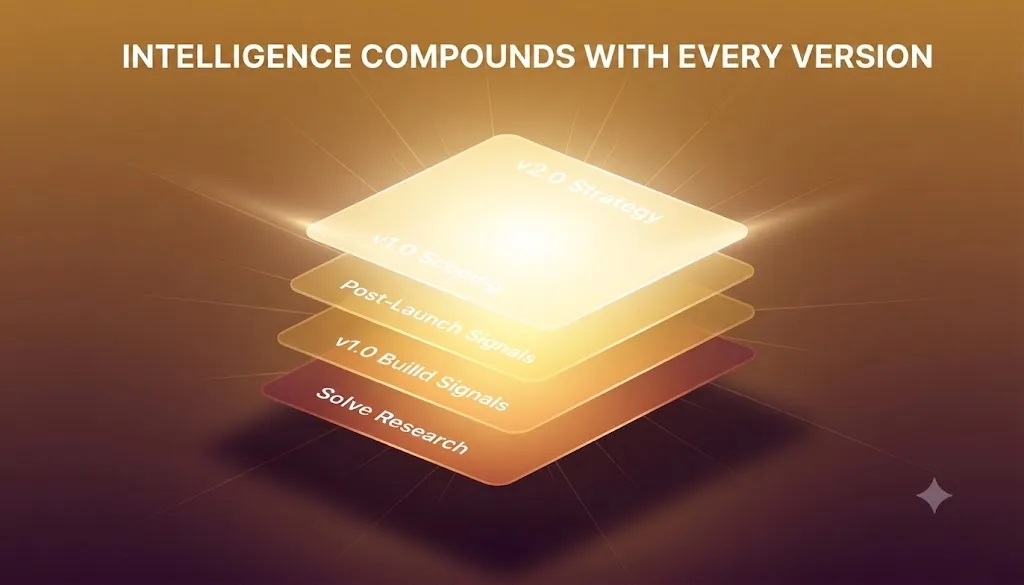
Every version shipped on Rocket adds a new layer to the competitive intelligence foundation, making each subsequent decision faster and better-calibrated.
For a deeper look at how competitive intelligence software connects to product strategy decisions, the pattern holds consistently: teams that keep intelligence active post-launch make faster, better-calibrated decisions than teams that restart research from scratch each cycle.
Shipping a product is not the finish line for competitive intelligence.
On Rocket, the research your team accumulated during the build phase becomes the foundation for every strategic move post-launch, and Rocket Intelligence keeps that foundation current as the market evolves.
Start building on a platform where the intelligence that shapes your product never goes stale.
Table of contents
- -The Moment Most Teams Lose Their Research
- -2 What Actually Happens to the Competitive Intelligence After Launch
- -Solve Research Stays Embedded in the Project
- -Rocket Intelligence Begins Monitoring from Day One Post-Ship
- -The First 90 Days: Where Accumulated Intelligence Has the Most Impact
- -Messaging Refinement
- -Pricing Validation
- -Sales Enablement
- -Roadmap Prioritization
- -Churn Prevention
- -4 What Rocket Intelligence Tracks for Competitive Intelligence After You Ship
- -5 The Data Case for Keeping Competitive Intelligence Active
- -What a New Hire Sees When They Open the Project
- -How the Intelligence Compounds Across Versions