
How can the vibe solutioning platform help teams start projects faster? The Vibe solution platform accelerates early ideas, tests them quickly, and provides teams with clear direction to move forward confidently.
Speed shapes every project now, and teams feel the pressure to start strong.
A recent study finds that AI-driven prototyping can reduce early development time by a large margin. That alone gets people curious about what really makes a vibe solutioning platform for rapid prototyping so helpful.
Let's see what is happening behind the scenes that keeps teams coming back.
What Makes Vibe Solutioning Feel Different?
Vibe solutioning feels different because it lets teams turn ideas into working prototypes through short prompts. Business teams, developers, customers, and anyone involved can react early. That early visibility shapes direction without long waits.
The approach blends vibe coding, AI tools, internal tools, and AI-generated code inside a flexible flow. Everything revolves around natural language and steady iteration. People speak in clear, plain language instead of drowning in setup steps. That makes the process approachable and keeps the mood lighter.
Since a vibe coding tool maps natural-language prompts to structures across multiple programming languages, teams can skip lengthy scaffolding phases. They get database layouts, logic paths, UI components, and page flows that align with the initial request. And because the approach adheres to software engineering practices, it feels familiar while remaining fast.
How does the Vibe Solution Platform work?
Setting Context With Natural Language
To start, teams provide the system with a brief description of the app.
This could be one sentence or a handful of lines. The platform reads the context, interprets the goals, and begins to shape the plan. The AI then generates a structured layout that closely resembles a real project.
So instead of wrestling with empty files and folder setups, teams see an early working shape. This eliminates slow prep work and keeps everyone focused on the idea rather than on technical chores.
Moving From Thought to Code
Next, the system shifts into vibe coding mode.
The AI models generate code that forms logic layers, pages, routing, and early UI design. Database relationships appear quickly. The build feels sufficiently grounded for developers to jump right in.
Since the AI handles common wiring tasks found in traditional programming, the team avoids repetitive steps. The result is a working prototype that typically appears far faster than expected. And because the generated code follows recognizable patterns, there’s no confusion about what the system produced.
Expanding Features With Simple Prompts
Once the first version is available, teams can add features via short prompts.
Maybe they want user auth, advanced filters, dashboards, or role-based pages. The platform accepts natural-language prompts and updates the project accordingly.
Because the updates slot in smoothly, developers don’t lose momentum. They can refine direction, maintain code quality, and keep development cycles short. AI-assisted coding and AI-assisted reviews help keep everything aligned.
Running Tests and Keeping Stability
Next comes testing.
The platform supports unit tests and validation flows. These checks help confirm that functional code behaves as expected. Testing no longer feels like a late-stage chore. Instead, it becomes part of the normal rhythm.
Teams then show early work to business teams, customers, or internal stakeholders. Since feedback arrives early, nothing drifts out of alignment. The loop stays tight, and everyone stays informed.
Deploying With a Single Action
Finally, deployment becomes simple.
A single action deploys the final code to a staging environment or a production environment. Routing and database links get published without fuss.
Because full-stack projects go live quickly, teams can share results, revise them, and post updates again. This pace keeps rapid prototyping alive throughout the entire journey.
Why Vibe Coding Helps Teams Work Faster?
Vibe coding lightens the load.
Many early projects collapse under long configuration steps. Repetitive boilerplate work slows teams down. The process becomes time-consuming and frustrating.
With vibe coding, teams skip large portions of that grind. AI assistance steps in early, leaving people more room to direct the idea. The platform helps create web and mobile apps, test flows, or dashboards with fewer sticking points.
Personal projects benefit, too. Many developers like using vibe tools to test ideas, build samples, or try new approaches. The short cycles and clear results keep the energy up.
Quick Snapshot
| Stage | Description | Output |
|---|---|---|
| Input | Team gives a plain language prompt | Project understanding |
| Build | System forms logic and code | Early working version |
| Test | System completes testing | Verified behavior |
| Deploy | One action to publish | Live prototype |
How Vibe Systems Supports Real Teams
Now let’s talk about real team flow.
Vibe systems remove friction. They simplify early steps, reduce confusion, and help everyone talk about the same thing.
Here are some common benefits:
- Early clarity for teams
- Faster development loops
- Clear direction for users
- Real app output without large delays
- More time to focus on creative choices
- Less context switching for developers
Since the system reacts to natural language, more team members can contribute. Many developers report enjoying how lightweight the process feels.
Building From a Single Prompt
A single prompt can shape the entire direction of an app.
Something like:
“Create a task-tracking app with roles and a shared database.”
The system interprets the request and forms routes, pages, and tables. It generates the initial version of functional code. After that, the team builds on top of it. They change the prompt, adjust flows, or add features as new needs appear.
Because the first version shows up quickly, teams stay engaged. There’s no long pause while waiting for groundwork.
Why Rapid Prototyping Thrives Here?
Rapid prototyping thrives when ideas change shape naturally. Each new thought becomes part of the project without drama. The vibe platform keeps momentum high.
Teams use Vibe Systems for:
- Testing new features
- Early demonstrations
- Sharing a prototype with business teams
- Running internal trials
- Experiments with strategic direction
Since development stays light, people feel comfortable adjusting direction. That flexibility helps teams find what works before making big commitments.
How AI Models Shape the Output?
AI models read prompt content and match it with familiar software patterns. They form UI outlines, data structures, routes, and logic flows. Everything becomes standardized, readable, and testable.
Rocket.new: The Complete Vibe Solution Platform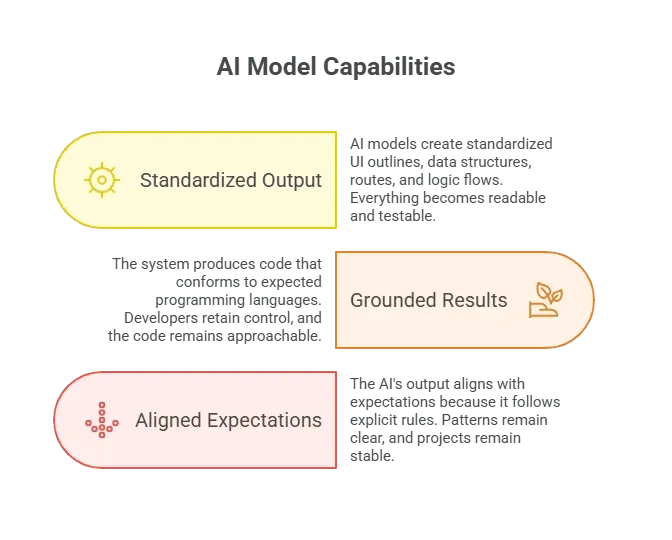
Rocket.new integrates well with teams that value rapid movement. It offers a simple path for early prototypes, quick checks, and small-scale builds. The platform aligns with the vibe-flow mindset.
Key Features
Prompt-based full-stack app creation: Describe the idea in plain English and Rocket.new builds frontend, backend, and integrations automatically.
Figma-to-code conversion: Turn Figma designs into responsive web or mobile code ready for use.
Built-in backend and authentication: Database schemas, user auth, API endpoints, and basic security set up for you.
Cross-platform output: Produce web apps and mobile apps for iOS and Android from one project.
One-click deployment with hosting: Deploy instantly and connect a custom domain in a few steps.
Full code export and ownership: Download and edit the generated source code locally whenever needed.
Fast command actions: Use slash commands to run tasks and @ to scope edits from chat.
Starter templates: Choose ready-made templates to begin prototypes without manual setup.
Project collaboration: Share projects with teammates and iterate on design and code together.
👉Build Your App on Rocket.new
Why Short Feedback Loops Matter?
Short loops keep teams sharp.
A developer updates the prototype. The team reviews. Adjustments happen quickly. This cycle repeats naturally.
These loops help maintain production-ready applications later. Nothing piles up. Bugs appear early. Fixes stay small and manageable. The process supports everyday teamwork rather than feeling like a last-minute scramble.
Testing joins the loop smoothly. Developers adjust code, run checks, and see results almost instantly. Creative problem-solving becomes easier when friction stays low.
When Developers Want More Control
Some developers like deeper control. They want to edit database relationships, adjust UI details, or rewrite logic themselves. The platform supports that.
It behaves almost like a pair programmer, offering guidance while respecting personal style. Developers can shape the project however they want. Nothing stops them from customizing the structure.
This balance helps larger or more experienced developer groups feel comfortable. They get speed without losing control.
Common Real-World Use Cases
Teams often turn to vibe platforms for:
- Working prototype demos
- Internal tools and dashboards
- Quick rebuilds for testing
- Cross-team idea checks
- Feedback from users
- Feature extensions for existing apps
These situations show how often teams need quick cycles rather than full, heavy builds.
Why Teams Choose the Vibe Solution Platform?
Teams want clean starts, flexible direction, and a steady pace. Vibe systems make that possible. Clear prompts lead to working output. Rapid cycles bring confidence. People stay engaged, and the momentum never drops
Table of contents
- -What Makes Vibe Solutioning Feel Different?
- -How does the Vibe Solution Platform work?
- -Setting Context With Natural Language
- -Moving From Thought to Code
- -Expanding Features With Simple Prompts
- -Running Tests and Keeping Stability
- -Deploying With a Single Action
- -Why Vibe Coding Helps Teams Work Faster?
- -Quick Snapshot
- -How Vibe Systems Supports Real Teams
- -Building From a Single Prompt
- -Why Rapid Prototyping Thrives Here?
- -How AI Models Shape the Output?
- -Rocket.new: The Complete Vibe Solution Platformimage (96).png
- -Key Features
- -Why Short Feedback Loops Matter?
- -When Developers Want More Control
- -Common Real-World Use Cases
- -Why Teams Choose the Vibe Solution Platform?