

Want to launch your own digital wallet? Learn key steps, security essentials, compliance needs, core features, tech stack choices, and testing strategies for building a reliable payment app from scratch.
Thinking about building a digital wallet app with an integrated payment system?
More people now prefer digital payments over cash. They expect speed. They want simplicity. They care about phone security.
According to Statista, the global value of digital payment transactions continues to grow, reaching trillions of dollars.
The demand is clear. The opportunity is real.
But where do you begin, and what does it actually take to get it right?
If you are searching for practical guidance on how to create digital wallet solutions that users trust and businesses profit from, you are in the right place. This blog breaks the process into clear steps.
Why the Financial World is Moving to Digital Wallets?
Let’s be honest. Nobody enjoys carrying bulky physical wallets anymore. Users want everything on their phones.
They want to transfer money instantly. They want contactless payments at stores. They want to handle bill payments while relaxing at home. They want to check the transaction history in seconds.
That shift is why digital wallets are becoming the default choice.
Apps like Google Pay, Apple Pay, Samsung Pay, and Google Wallet have shaped user expectations. These platforms allow online purchases, in-store transactions, peer-to-peer payments, and secure transactions in just a few taps.
So, if you want your wallet app to compete, it must feel smooth. Clean user interface. Strong fraud detection. Simple wallet functionality.
Start With Clear Market Research
Now, before jumping into wallet app development, slow down for a moment.
Market research might sound boring, but it saves serious money. It helps you understand user behavior and define your target audience clearly.
Ask simple questions:
- Are you targeting students or small business owners?
- Do you want to support international users?
- Will you offer multi-currency support?
- Do you plan to add a crypto wallet for digital currencies?
Review modern digital wallets on the market. Read reviews on app stores. Notice complaints about slow payment gateways or complicated user authentication.
Your development process should begin with clarity. The better your research, the smoother your digital wallet app development will be.
Define Your Digital Wallet System?
Next, decide what kind of digital wallet system you want to build.
You can create:
- A closed wallet for a specific platform
- A semi-closed wallet connected to selected merchants
- An open wallet linked directly to bank accounts
If your goal is to create a digital wallet that connects directly with banks, you will need partnerships with a wallet provider and payment processors.
Also, think about scale. Will your mobile wallet support multiple currencies from the start? If yes, you need proper multi-currency support and backend logic. Keep your first version simple. You can always expand later.
Building Your Digital Wallet App with Rocket.new
Alright, now let’s get practical. Here’s how to build your mobile wallet app using Rocket.new.
Rocket uses AI to transform simple ideas into fully functional, ready-to-use apps. Just describe what you need, and it handles research, design, and deployment with no coding required, making app creation fast, simple, and accessible to everyone.
Step 1: Sign Up and Set Up Your Workspace
First, create your account. This is your setup process.
You will:
- Sign up with email

- Create a new project
- Select cross platform deployment for android and ios platforms
- Name your project clearly
This step lays the foundation for your mobile wallet app development. A clean setup makes everything easier later.
Step 2: Choose a Template or Give a Prompt
Now comes the interesting part. Rocket.new lets you describe your wallet app idea with a prompt.
For example:
“Build a digital wallet app with secure payments, bank accounts linking, QR code payments, and bill payments.”

Option B) You can choose a fintech template and customize it.
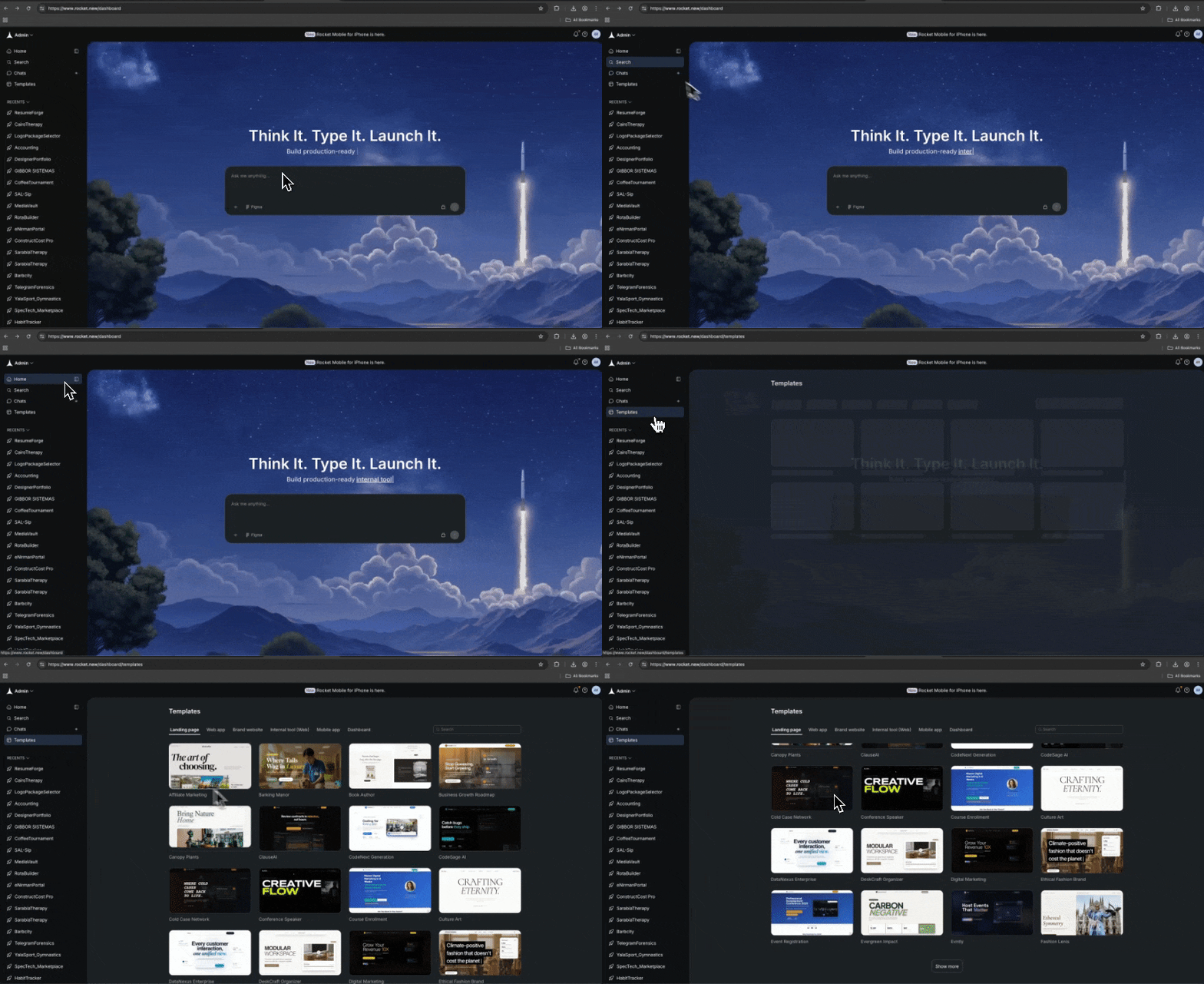
This approach speeds up wallet app development because it avoids starting from scratch. You already have structure. You refine it based on your target audience and business model.
Quick tip. Be specific in your prompt. Clear direction leads to better results.
Step 3: Select Core Screens and Features
After that, choose your app features carefully. Think like a user. What would you expect in a mobile wallet?
Common screens include:
- User registration and login
- Dashboard with balance view
- Add debit card and bank accounts
- Transfer money screen
- Transaction history page
- Bill payments section
- QR code payments scanner
- Settings with two factor authentication
Start with essential features. Advanced features can wait.
Here is a simple comparison:
| Feature | Basic Wallet App | Advanced Wallet App |
|---|---|---|
| User registration | Yes | Yes |
| Bank accounts linking | Yes | Yes |
| Secure payments | Single gateway | Multiple gateways |
| Multi factor authentication | Basic | Advanced |
| Fraud detection | Basic alerts | Advanced monitoring |
| Multi currency support | No | Yes |
| Crypto wallet | No | Yes |
| Loyalty programs | No | Yes |
This keeps your development process realistic. Build what matters first.
Step 4: Let Rocket.new Generate the Structure
Then comes the exciting part. Once your selections are done, Rocket.new generates the structure of your digital wallet app.
It sets up:
- User authentication flow
- Payment gateways connection
- Fraud detection structure
- Transaction history system
- Mobile payment solution logic
- Cloud ready setup, often compatible with services like Google Cloud
This cuts down weeks of manual backend work. Still, test everything. Run small digital transactions. Check how your mobile device handles secure transactions.
Step 5: Focus on Security and Compliance
Now let’s talk about trust. Digital wallets deal with financial transactions and sensitive data. So security cannot be casual.
Your wallet app should include:
- Two factor authentication
- Multi factor authentication
- Biometric authentication
- Fraud detection tools
- Encrypted storage for sensitive data
Regulatory compliance also matters. Each country has rules for digital payment apps. Work closely with your wallet provider to stay aligned.
Watch user behavior. If someone tries unusual transfer money activity, your fraud detection system should flag it.
Strong security improves customer retention. People stay where they feel safe.
Step 6: Add Revenue Logic
Now think about money from your side. Your digital wallet app can earn through:
- Transaction fees
- Merchant commissions
- Premium features
- Currency conversion charges
Keep charges transparent. Users appreciate honesty. Hidden costs push them away.
Step 7: Launch Your Digital Wallet App
After reviewing everything, testing digital payments, checking payment gateways, refining fraud detection, and making sure multi factor authentication works properly… it’s time to launch it.
Deploy your mobile wallet app to app stores for both major operating systems. Double check screenshots, app description, and security highlights like biometric authentication and secure transactions.
Then hit publish.

And that’s it.
Your digital wallet app is now moving from development mode into the real world. Watch user behavior. Collect user feedback. Improve steadily.
Real Developer Perspective
Here’s a sharp takeaway from a Reddit discussion about building digital wallets:
“A wallet that holds actual card details and processes real transactions is significantly more complex than a typical dev project… build on top of existing payment infrastructure instead of handling raw card data yourself.”
The message is simple. Digital wallet app development is not just about coding screens.
Digital Wallet App Development: Clear Plan, Better Results
Many founders rush to create a digital wallet and try to match Google Pay or Apple Pay right away. They overload the first version with too many features. That usually leads to delays, weak fraud detection, unstable payment gateways, and security gaps that damage user trust.
The smarter move is simple. Follow a structured development process. Start with a focused mobile wallet and clean wallet functionality. Add multi-currency support, crypto wallet features, and loyalty programs gradually. Use Rocket.new to move faster and stay organized. Build steadily, improve based on user behavior, and grow your e-wallet platform into a strong digital payment platform over time.
Table of contents
- -Why the Financial World is Moving to Digital Wallets?
- -Start With Clear Market Research
- -Define Your Digital Wallet System?
- -Building Your Digital Wallet App with Rocket.new
- -Step 1: Sign Up and Set Up Your Workspace
- -Step 2: Choose a Template or Give a Prompt
- -Step 3: Select Core Screens and Features
- -Step 4: Let Rocket.new Generate the Structure
- -Step 5: Focus on Security and Compliance
- -Step 6: Add Revenue Logic
- -Step 7: Launch Your Digital Wallet App
- -Real Developer Perspective
- -Digital Wallet App Development: Clear Plan, Better Results

