
How AI can build authentication systems without coding? Modern platforms enable secure user access, behavior tracking, and identity management, reflecting developer adoption and software creation toward automated, intelligent solutions.
How to generate an authentication system using AI without writing code?
With modern AI-powered platforms, you can now create solid user authentication systems without typing a single line of manual code.
In fact, according to Stack Overflow’s 2023 Developer Survey, 44% of developers already use AI tools in development, and 26% plan to soon make this approach mainstream.
Let’s talk about what this means for identity and access management, user behaviour tracking, and security.
Why authentication matters
A few years ago, building authentication systems meant learning tons of frameworks, wiring up multi-factor authentication, writing complex access-control logic, and worrying about passwords and sessions. Now AI helps with that heavy lifting.
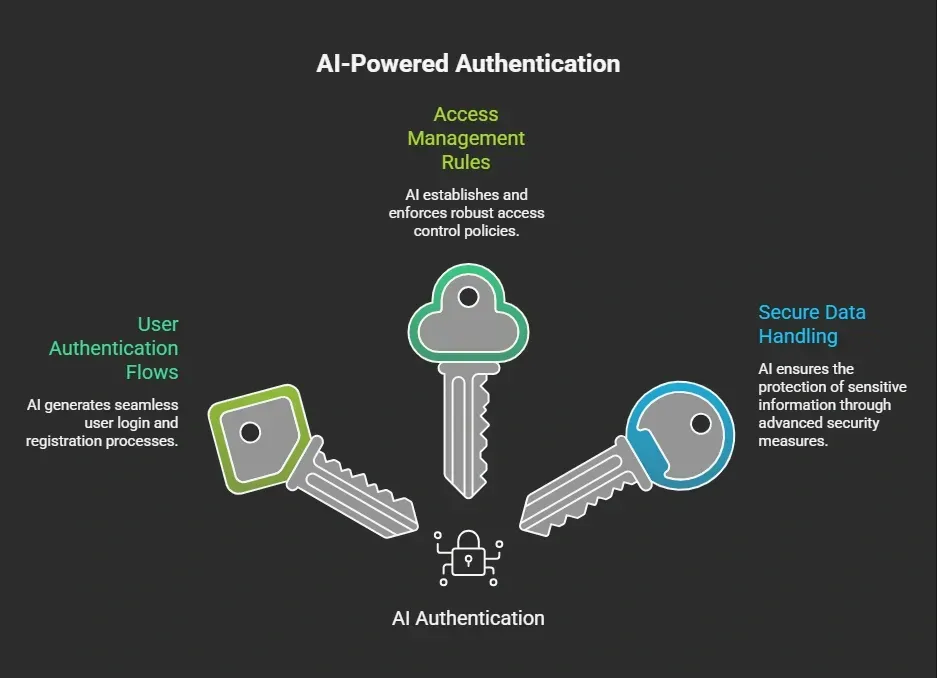 This saves time and lets non‑coders build important security features fast.
And the best part? You don’t have to be a coding wizard to make it happen — AI lets you focus on users and experience while it handles the tricky security stuff.
What is Authentication
Authentication is how a system verifies a user’s identity. It checks whether someone is truly who they say they are. If you’ve ever logged into an app or website with a username and password, you’ve already used authentication.
Modern AI-powered authentication systems go beyond just passwords.
They can include:
-
Multi factor authentication (MFA): Adds extra layers like a one‑time code or push notification.
-
Biometric authentication: Uses facial recognition or fingerprints to confirm a user’s identity.
-
Behavioural biometrics: Observes user behaviour, like typing patterns or mouse movements, to detect suspicious activity.
-
AI powered automation: Lets you implement these features without needing deep tech knowledge or coding skills.
These tools make authentication safer, smarter, and easier to set up, so you can protect sensitive data without getting lost in complicated technical details.
The AI Advantage in Authentication
Here’s what newer systems can do when you generate an authentication system using AI:
-
They can analyze natural-language requests to determine that you want login and signup flows.
-
They can add multi factor authentication like codes or push notifications.
-
They handle access control behind the scenes, so you don’t spend hours wiring roles and permissions.
-
They integrate with sensitive data storage securely without manual setup.
-
They can add behavioural biometrics if you want to go beyond passwords.
That means you get strong identity and access management without needing to hire a team or learn hard tech.
Traditional vs AI‑Driven Authentication
Let’s take a quick look at how classic authentication stacks up against modern AI powered systems. This comparison shows why AI can save time and reduce headaches while keeping access control and user authentication secure.
| Feature | Traditional Methods | AI Powered Systems |
|---|---|---|
| Need to write code | Yes | No |
| Setup multi factor authentication | Hard | Often built‑in |
| Handle access control | Manual | Automatic |
| Add biometric authentication | Complicated | Easier |
| Fix bugs in login logic | Manual effort | AI can help spot issues |
AI driven systems make building authentication systems faster, simpler, and smarter. You spend less time wrestling with technical details and more time focusing on user behaviour, security, and a smooth experience.
How It Works Without Code
Okay, so you’re excited. How does this actually happen?
-
Describe what you need: You type something like “I need a login system with password and one‑time code, role‑based access, and analytics.”
-
AI tools parse your text: The AI understands that you want user authentication, access control, and some optional biometric authentication steps.
-
The platform builds the flows: It generates signup forms, session handling, resets, and so on all without you writing code.
-
You test it: A friendly UI lets you see login screens, error messages, and how users sign in.
-
Deploy live: With a click, your system goes online and can be connected to real users.
You don’t need manual processes or late nights wrestling with security APIs.
Community Insight
Here’s something actual developers and builders have been talking about online:
“AI agents can now manage entire backend infrastructures without human intervention. Prompting something like ‘Build a todo app with user authentication’ lets AI handle database schema, user management, and storage configuration automatically.” Linkedin
This shows how AI can handle not just frontend UI, but tough backend logic like user authentication and identity verification.
Security Considerations
Okay, so this sounds fun, but is it secure?
AI systems can help build the logic for user login, sessions, and role checks. Many platforms include features like continuous authentication and adaptive access controls based on user behaviour. But remember:
-
Never rely on AI alone for critical security audits.
-
Monitor for suspicious activity yourself.
-
Regularly check your system’s data security and compliance with privacy regulations.
-
Think about sensitive information stored and how it’s protected.
AI can assist with building processes, but you still want humans watching the doors.
Why This Matters for You?
Here’s the big deal: building authentication used to mean learning frameworks, spinning up servers, writing backend code, and debugging endless edge cases.
Now, with AI-powered platforms and AI agents, you can generate most of this automatically. That means you get:
-
A usable authentication system without coding
-
Faster project timelines
-
Less headache around access management rules
-
More focus on user experience
-
Easier scaling as your needs grow
And that’s a huge step forward.
Rocket.new and Authentication
Rocket.new is a vibe solutioning platform that turns plain‑language prompts into fully functional apps. From backend logic to database schemas, it even handles login and authentication systems automatically. You don’t need coding skills to set up user authentication, access control, or multi factor authentication flows.
It’s designed for anyone who wants secure apps fast. By leveraging AI systems and machine learning models, Rocket.new builds authentication systems that can track user behaviour, manage sensitive data, and enforce access control all without writing a single line of code.
Top Features
-
Prompt-to-app generation in one step
-
Backend configured automatically
-
Authentication flows built-in
-
Database setup included
-
Custom domain deployment
-
Live preview for design and logic
Build Secure Apps Easily
Anyone can create secure applications with Rocket.new by simply describing the project in plain English. The platform generates user authentication, sets up access management, and configures biometric authentication options automatically.
You can preview flows, tweak UI, and deploy live apps all while keeping sensitive information and data security in mind.
Use Cases
MVPs for startups: Quickly build a secure login system to test ideas.
Internal tools for teams: Create apps for employees with proper access control without backend coding.
Small business tools: Add role-based authentication and manage users safely without learning complex frameworks.
Rocket.new lets anyone turn an idea into a secure, AI-powered application. You get full authentication systems, access management, and a smooth user experience, all without touching code.
The Challenges
AI-powered authentication is amazing, but it’s not perfect. While these systems make prototypes and MVPs quick and easy, there are some limitations you should know:
-
Complex access control: AI may struggle with highly customized roles or fine‑tuned permissions.
-
Custom rules: Unique business rules might not be handled perfectly by automated flows.
-
Edge cases: Rare scenarios or unusual user behaviour can create messy logic.
-
Production readiness: AI outputs are best used as a starting point, not a complete enterprise solution.
Think of AI‑built authentication as a head start. It speeds up development, but for large-scale or highly secure apps, you’ll still need human oversight and careful testing.
How to Generate an Authentication System Using AI
If you’re looking for how to generate an authentication system using AI, the tools are ready to help. Modern AI-powered systems can build user authentication flows, handle multi-factor authentication, and set up access control automatically. With machine learning algorithms analyzing user behaviour, these platforms help reduce security risks and protect sensitive data without needing code.
This approach simplifies identity and access management, keeps sensitive information secure, and helps detect fraud efficiently. By leveraging AI agents and continuous authentication, you can focus on improving the user experience while maintaining strong data security.
Table of contents
- -Why authentication matters
- -What is Authentication
- -The AI Advantage in Authentication
- -Traditional vs AI‑Driven Authentication
- -How It Works Without Code
- -Community Insight
- -Security Considerations
- -Why This Matters for You?
- -Rocket.new and Authentication
- -Top Features
- -Build Secure Apps Easily
- -Use Cases
- -The Challenges
- -How to Generate an Authentication System Using AI