
Want faster product growth while refining your MVP? AI helps teams cut build time, test ideas quickly, and learn from users, enabling shorter development cycles and earlier, smarter product launches.
Can you really speed up product growth by using AI while iterating on your MVP?
Yes, you can. Startups today use AI to reduce build time, test ideas quickly, and learn from real users faster. Many teams are already using AI to shorten development cycles and launch products earlier than before.
According to McKinsey & Company, companies adopting artificial intelligence in product development report faster innovation cycles and shorter time-to-market. That’s a big advantage when speed matters.
Let’s break down how to iterate on an MVP with AI tools quickly and simply.
Start with a Clear Core Value
Before jumping into MVP development, take a moment and reset your focus. What exactly are you building, and why? Your core value proposition should be crystal clear from the start.
Your minimum viable product is not meant to do everything. It should solve one specific problem for your users. Not five. Not ten. Just one. That clarity is what makes your product easier to build, test, and improve.
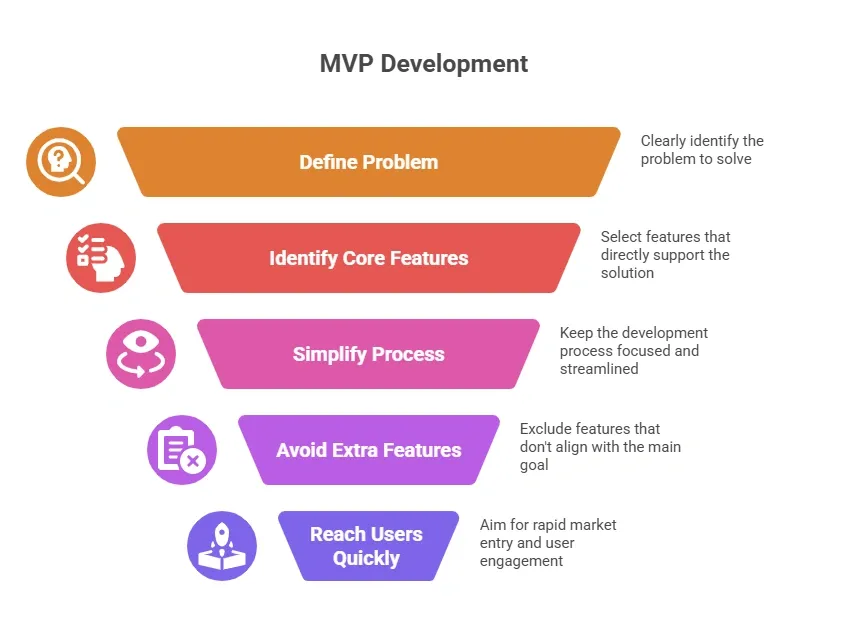
Now this is where leveraging AI tools gives you an edge. You can test ideas quickly, create mockups in minutes, and validate assumptions using no-code tools and AI platforms without heavy effort.
So, keep it simple. Focus on the core value, build only what’s needed, and let speed guide your decisions.
Use AI for Rapid Prototyping
So, what’s next? You need rapid prototyping. This is where AI tools shine.
Instead of writing everything from scratch, you can use:
- No code tools to build UI
- AI-assisted coding for generating code
- Pre-trained models for quick functionality
This makes MVP creation much faster. With AI MVP building, you can create working prototypes in hours, not weeks. That’s the power of ai powered MVP development.
Also, generative AI can help you design flows, write copy, and even simulate user journeys.
Build Smart with AI Models
Now let’s talk about the brain of your product. If you’re building an AI-powered MVP, this is where things start to feel intelligent and useful. Your product doesn’t need to be complex, but it should be smart enough to solve a real problem.
Most AI MVPs rely on an AI model to deliver that smart experience. The good news is you don’t need to build everything from scratch.
Here are a few simple ways to use an AI model:
- A chatbot using natural language processing to interact with users
- A recommendation engine powered by machine learning to suggest relevant content
- A forecasting system using predictive analytics to analyze patterns and trends
You also don’t always need to train a custom model. Many AI services offer ready-to-use AI APIs and pre-trained models that you can plug directly into your product.
- This reduces manual effort
- Speeds up AI MVP development
- Helps you focus on solving the core problem
Just make sure to track model performance. If your AI outputs are not useful, users will notice quickly. So, start simple, build smart, and improve your model as your product grows.
Launch Early with a Landing Page
Well, here’s a simple truth. You don’t need a full product to get started. A simple landing page can do a lot of heavy lifting in the early stage.
Before you invest deeply in MVP development, use a landing page to test your idea in the real world. It gives you a quick way to present your product and see if people care.
Your landing page should focus on a few key things:
- Clearly explain your core value
- Show a demo, mockup, or preview of your idea
- Collect emails from interested users
- Ask for user feedback directly
This step supports early market validation and helps you shape your MVP development process using real signals rather than guesses.
You can also try different versions of your landing page using AI tools for copy, layout, and messaging. Small tweaks can make a big difference in response.
So, start simple, test fast, and let your landing page guide your next move.
Collect and Use User Feedback
Once your MVP is live, it’s time to listen carefully. This is where real learning begins.
User feedback is one of the most valuable inputs you’ll get during MVP development. It shows you what’s working and what needs to change.
Spend time with real users. Observe their user behavior and how they interact with your product. Also, look at usage data to spot patterns.
You can collect insights in a few simple ways:
- Run short surveys
- Conduct user interviews
- Review support tickets
These methods help you understand user needs and identify gaps in your product.
Also, don’t wait too long. Focus on early user feedback so you can adjust quickly and improve your product step by step.
Keep listening, keep learning, and keep improving.
Keep the MVP Development Process Lean
Let’s keep things simple. Here’s a quick comparison:
| Stage | Traditional Approach | AI-Driven Approach |
|---|---|---|
| Design | Manual mockups | AI-generated designs |
| Development | Full coding | AI-assisted coding + no code tools |
| Testing | Long cycles | Fast testing with real users |
| Feedback | Slow | Instant user feedback |
| Iteration | Weeks | Days |
With AI-powered workflows, your development process becomes faster and lighter.
Use Generative AI for Content and UX
Now let’s talk about user experience. A smooth experience keeps people coming back, and this is where generative AI can really help.
Instead of spending hours writing and designing everything manually, you can use AI tools to speed things up and improve quality at the same time.
Here’s how generative AI can support your product:
- Write clear and engaging product copy
- Create simple onboarding flows for new users
- Personalize content based on user preferences
These improvements make your product feel more human and responsive. Over time, this builds stronger user trust and keeps users engaged.
You can also introduce AI-driven personalization into your product. This allows your AI-powered MVP to adapt to user behavior, making the experience more relevant to each user.
So, focus on making your product easy to use and helpful. Small changes in content and UX can create a big impact.
Balance Tech Stack and Cost
Don’t overcomplicate your tech stack. Keep things simple so you can move fast without unnecessary expenses.
Stick to the basics:
- Use Google Cloud or similar AI platforms
- Build light-weight web apps
- Keep your backend logic simple
Also, focus on cost control from day one. Many startups spend too much too early. With the right AI tools, you can stay lean while still building strong AI-driven MVPs.
Community Insight
Here’s a perspective from LinkedIn:
"A founder showed 25 terminal windows running Claude Code. Caption: "we just hired our 25 founding engineers" No salaries. No equity negotiations. Just Claude writing code across 25 parallel instances."
This highlights how fast AI MVP development has become. With the right AI and no-code tools, startups can build, test, and iterate in days rather than months, especially by learning directly from real users and their behavior.
Rocket.new: Your Fast Track to AI MVP Growth
Rocket.new is built for founders who want speed without confusion. It simplifies AI-powered MVP development by bringing together AI technologies, no-code tools, and smart automation in one place. Instead of juggling multiple tools, you can manage your entire MVP development process from a single platform.
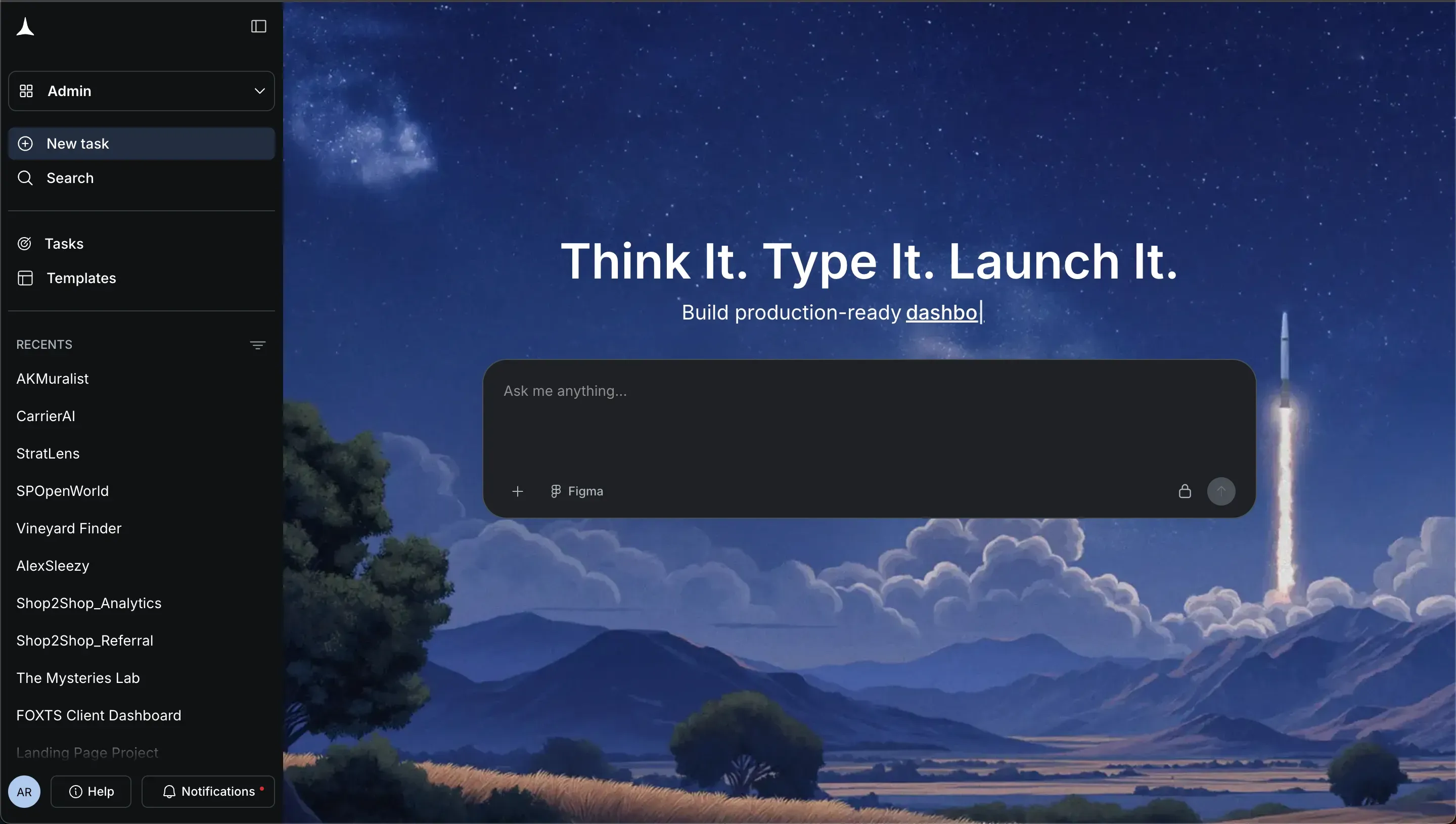
Another thing that stands out is how beginner-friendly it is. Whether you’re technical or not, Rocket.new helps you focus on your idea and core features instead of getting stuck in setup or complex workflows. That means less manual effort and faster progress in the real world.
Top Features
- Prompt to App Creation: Builds apps directly from single prompts
- Figma Import: Converts design files into live, editable layouts
- AI-Powered Backend: Automatically handles logic, data, and workflows
- Custom Domain Support: Publishes projects with a branded domain
- Code Export: Allows developers to extend or customize later
- Live Preview: Shows instant updates while editing
Rocket.new and Fast MVP Iteration
You can launch an AI-powered MVP with a simple landing page, start collecting user feedback, and observe user behavior from day one. Instead of waiting weeks for updates, you can tweak features, adjust flows, and improve your product in real time using built-in no-code tools and AI technologies.
It also supports quick changes in your AI model, letting you improve AI outputs and overall experience based on real-world usage. This means your AI MVPs keep getting better with every iteration.
So, instead of a slow cycle, Rocket.new helps you build, test, learn, and improve continuously, which is exactly how fast-growing startups win.
Keep Iterating with Real Data
After that, don’t stop. Keep improving your product using real data from actual users.
Watch how your AI system performs in the real world. This helps you understand what’s working and what needs fixing.
Focus on tracking:
- Engagement
- Retention
- User feedback
These signals give you a clear direction. They show how people interact with your product and where you can improve.
Then refine your AI capabilities step by step. Small improvements based on real insights can make a big difference over time.
Build with the Right AI Tools
Choosing the right AI tools can save you time and effort. Pick tools that align with your product and goals:
- Fit your target users and their needs
- Support your AI model
- Scale as your product grows
Also, don’t forget your AI assistant. It can help with coding, writing, and planning, making your workflow smoother.
Keep your setup simple, and choose tools that help you move faster without adding complexity.
Building and Growing Your MVP with AI
Startups often struggle with slow progress. A lengthy development process, excessive manual effort, and delayed user testing can slow everything down. The smarter approach is to use AI-powered workflows, build AI MVPs, and learn from real users early. Focus on MVP with AI, collect user feedback, and improve based on user behavior so you keep moving in the right direction.
How to iterate on an MVP with AI tools quickly comes down to speed, learning, and using the right tools. Keep your minimum viable product simple, test it in the real world, and refine it using data. Move fast, learn faster, and let your product grow step by step.
Table of contents
- -Start with a Clear Core Value
- -Use AI for Rapid Prototyping
- -Build Smart with AI Models
- -Launch Early with a Landing Page
- -Collect and Use User Feedback
- -Keep the MVP Development Process Lean
- -Use Generative AI for Content and UX
- -Balance Tech Stack and Cost
- -Community Insight
- -Rocket.new: Your Fast Track to AI MVP Growth
- -Top Features
- -Rocket.new and Fast MVP Iteration
- -Keep Iterating with Real Data
- -Build with the Right AI Tools
- -Building and Growing Your MVP with AI