
Rocket.new is the better choice for non-developers who want fast, full-stack apps with zero setup and no debugging credit costs. Base44 offers structured workflows but introduces friction with credit-based debugging and vendor lock-in. If speed, simplicity, and ownership matter, Rocket.new clearly wins in 2026.
Which AI app builder actually works for someone without a technical background?
Yes, Rocket.new is better than Base44 for most non-developers. It generates a full app and doesn't charge credits just to fix bugs.
According to Gartner, more than 70% of new applications will be built on low-code or no-code tools by 2025, up from less than 25% in 2020. This feature comparison covers both tools, so you can decide which fits your workflow.
What Non-Developers Need from an AI App Builder
Teams without coding experience need minimal configuration before real output, a no-code workflow that handles data and backend logic automatically, and natural language as the primary interface. Solo founders don't want to manage infrastructure or burn credits debugging AI-generated errors. Both tools attempt this, but Rocket.new gets closer.
What is Rocket.new?
Rocket.new is an AI-powered full-stack vibe solutioning platform built for speed and rapid prototyping. One natural language prompt generates a production-ready result: UI screens, code structure, and integrations. Builders never start by manually coding. The platform handles AI generation automatically from a single prompt, whether for quick projects or complex builds.
Rocket.new has over 1 million creators and developers across 180+ countries using the tool for everything from side projects to enterprise-scale builds. In September 2025, Rocket secured a $15 million seed round led by Salesforce Ventures and Accel.
Rocket.new is optimized for rapid app generation, making it ideal for users who prioritize speed and quick iterations. That focus on velocity and zero configuration makes Rocket.new a strong choice for non-developers who want to begin immediately.
How Rocket.new Generates Apps
The workflow is direct: one prompt in, a working app out
- Describe your idea in natural language, including the app type and core features you want to generate
- Rocket.new's AI generates a working project structure: UI, database schema, and integrations
- A built-in preview lets users test the live result before publishing
- The generated project can be exported or deployed to a custom URL instantly
Rocket.new's Vibe Solutioning Workflow
Rocket.new is a vibe solutioning tool in the fullest sense. Vibe solutioning means builders describe what they want in natural language, and the AI generates all the code and other things, such as SEO, integrations, analytics, performance optimizations, and much more built in. The tool's users never configure a database schema or server integrations manually.
The vibe coding market is valued at $4.7 billion in 2026, projected to reach $12.3 billion by 2027. The approach coined by Andrej Karpathy in 2025 is now standard in modern AI app development.
Rocket.new applies vibe solutioning at full-stack generation level. Its AI engine builds the entire app structure so non-developers get production-ready projects from a single prompt.
What is Base44?
Base44 is an AI app builder platform built around structured, guided app creation. Natural language prompts drive the build, with a built-in integrated database, user authentication, and managed hosting all in one platform.
Wix acquired Base44 for a reported $80 million in mid-2025. Base44 is built on the principle that first-time builders benefit from thinking through product architecture before the platform generates any code.
How Base44 Structures the Build Process
Base44's approach is deliberate by design.
- Users start with a natural language prompt or pick from an Idea Library
- "Discuss Mode" lets teams shape app architecture and workflow structure before generating any code
- The tool builds UI layouts, database schema, user authentication, and backend logic automatically
- Version control lets teams roll back to previous app states safely inside the tool
- Deployment follows structural design, not a race to get output live first
The workflow produces organized code at the cost of initial speed.
Where Base44 Creates Friction for Non-Developers
Base44's all-in-one design creates real barriers that non-developers hit quickly. These are sourced from community feedback and platform reviews documented in 2025 and 2026.
Credit burn on debugging. Multiple users on Trustpilot report that Base44's AI introduces bugs and then charges credits to fix them. Non-developers with no way to manually fix code are forced to keep prompting, paying credits for errors the AI created.
Backend instability after platform updates. Community analysis from vitara.ai documented reports of live apps breaking after Base44 pushed changes behind the scenes, including Stripe integrations failing and sign-up flows going silent with no warning to users.
Vendor lock-in by design. Base44's all-in-one structure means the database, hosting, and app logic all live on Base44's servers. The GitHub export is still in beta. Reviewers note that migrating data to another platform requires significant redevelopment, something non-developers cannot do without help.
For non-developers who cannot debug generated code, these barriers are real blockers.
Rocket.new vs Base44: A Feature Comparison
Here's how both tools compare for non-developers.
| Feature | Rocket.new | Base44 |
|---|---|---|
| Natural Language | Full app from one prompt | Guided prompt with Discuss Mode |
| Database | Auto-generated schema | Integrated built-in database |
| Login System | Built-in | Built-in |
| Mobile Apps | Flutter (iOS and Android) | Web and mobile app output |
| Web App Framework | Next.js | Full web app output |
| Code Access | Export clean code | Beta GitHub export only |
| Custom Domains | Free, Paid plans and above | Builder plan and above |
| Free Plan | 1M tokens free | Free exploration tier |
| Integrations | Stripe, Firebase, APIs | Stripe, OAuth, APIs |
| Debugging Cost | No extra credit charge | Credits consumed per failed prompt |
| Vendor Lock-in | Exportable, self-hostable | Backend locked to Base44 servers |
| Best Fit | MVP builders, indie teams | Structured product teams |
Vibe Coding and Why Builders Focus on it in AI Today
Vibe solutioning is the defining shift behind Rocket.new while Base44 is limited to vibe coding only. Before this tool categories existed, building an app meant hiring engineers and waiting weeks for output. Now, natural language is the entire interface.
Why Vibe Coding Changes What Teams Ship
21% of Y Combinator's Winter 2025 batch had codebases that were over 90% AI-generated. The approach coined by Andrej Karpathy in 2025 is now standard in how teams build AI today. Vibe coding is becoming a standard part of modern development workflows, especially for rapid prototyping and internal tooling.
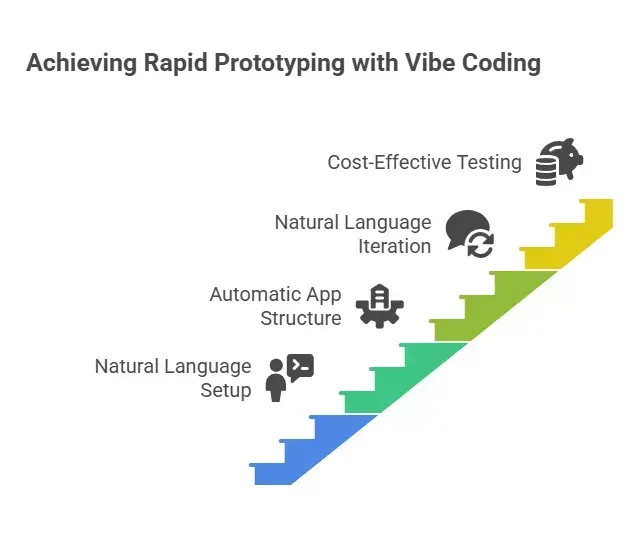
Vibe coding does not replace skilled engineers but acts as a force multiplier for experienced developers and a gateway for non-technical users. For non-developers, the tool category delivers four concrete changes:
- Setup time drops from weeks to minutes, replacing hand-written code with natural language no-code workflows
- Users describe what they want, and the tool generates the app structure automatically
- Iteration happens through natural language prompt adjustments, not code changes
- Testing app ideas costs far less before teams commit engineering resources
The key question is which tool executes this better for your build.
The Real Limits of Vibe Coding Tools
Complex apps or enterprise-scale saas platforms will need engineering review. Lightweight apps, MVPs, and internal tools are the sweet spot. Neither tool replaces a full engineering workflow for projects that need to scale to large codebases.
Onboarding and Setup Time
Rocket.new: From Idea to Preview Fast
Rocket.new opens with a prompt field. Users type an idea in natural language, choose a project type such as a web app, mobile apps, internal tools, landing pages, or a company website, and the tool generates a working structure with a live preview.
Setup time is near zero. The tool has over 1 million builders across 180 countries because beginners can generate a working app so quickly after the first prompt. Rocket.new's Discord community provides active peer support for users at every experience level.
Base44: Guided Onboarding Before Code
Base44 opens with an Idea Library. Users pick a category or write their own natural language prompt.
Before code is generated, Base44 surfaces "Discuss Mode," letting users shape the app's structure and architecture with the AI before anything is built. If the goal is already clear, Rocket.new is the best tool. If the direction is still forming, Base44's guided workflow saves backtracking.
Speed vs. Structure: Choosing the Right Tool
When Rocket.new is the Right Tool
Choose Rocket.new if these match your situation:
- You want a live app preview within one session
- You're validating a startup concept before committing time or budget
- You need a full-stack generation from one natural language prompt
- You want deployment flexibility with clean exportable source files
- You're preparing for a Product Hunt launch and need a production-ready result
Rocket.new generates production-ready output with no upfront architecture decisions and no credit penalties for fixing mistakes.
When Base44 Might Fit
Choose Base44 if these apply:
- You want guided product architecture before the platform generates any code
- You're building something with structured workflow logic and role-based access
- You focus on long-term growth and want the app to scale with a planned code structure
Base44 suits teams who focus on structured architecture and understand the lock-in constraints before they start.
App Types and Integrations
Rocket.new App Types and Integrations
Rocket.new supports multiple platforms and project types from one natural language workflow. Non-developers use Rocket.new to generate:
- Full-stack projects built on Next.js with production-ready UI and data schema
- Native mobile apps for iOS and Android built with Flutter, no writing code required
- Landing pages and marketing website builds for campaigns and product launches
- Internal tools and dashboard projects for teams managing data workflows
- AI-powered app builds with embedded AI agents for solo builders
Each build uses Rocket.new's built-in integrations: Stripe for payments, Firebase for real-time database needs, GitHub for code export, and API integrations. The tool handles all integration setup automatically.
Base44 App Types and Integrations
Base44 handles full-stack builds with all-in-one integrations for teams who want structure built in.
- Full-stack projects with built-in data, login, and logic layer
- AI-powered mobile applications are accessible across multiple platforms from a single prompt
- Internal tools built for teams with role-based access and audit log features
- Apps with Stripe payment integrations and OAuth login built in from the start
Base44 is built around bundled integrations, which means builders skip service-by-service configuration. The trade-off is less flexibility and full vendor dependency.
Pricing Models for Non-Developers
Rocket.new: Free Plan and Paid Plans
Rocket.new's free plan includes 1 million tokens, enough for early idea testing and initial app generation. A full app with complex integrations will need a paid plan.
Paid plans start at $25 per month (Personal, 5M tokens) and reach $50 per month (Rocket plan, 10M+ tokens with Figma-to-code). Enterprise paid plans offer custom pricing and scalable ai systems support.
The pricing models are token-based: builders pay for what the AI processes, not per seat.
- Free plan: 1M tokens
- Personal paid plan: $25/month, 5M tokens
- Rocket paid plan: $50/month, 10M+ tokens, Figma integrations
- Enterprise paid plans: Custom, priority builds
| Plan | Price | Tokens | Key Features |
|---|---|---|---|
| Free | $0 | 1M tokens | Early idea testing, initial app generation |
| Personal | $25/month | 5M tokens | Full app builds, complex integrations |
| Rocket | $50/month | 10M+ tokens | Figma-to-code, advanced builds |
| Enterprise | Custom | Scalable | Priority builds, scalable AI systems support |
Base44: Free Plan and Paid Plans
Base44's free plan allows exploration and lightweight apps. Paid plans scale from basic builder access to full production features.
- Starter tier: Limited message and integration credits for testing
- Builder paid plans: Custom URL options, more credits, advanced features
- Higher paid plans: Team tools, rollback features, full access to code export
- Credit-based pricing models: Building and debugging both consume credits
Builders report credit burn during bug-fixing cycles on Base44. The focus here falls on credits, not output and the system charges whether the AI succeeds or fails.
| Plan | Price | Credits | Key Features |
|---|---|---|---|
| Free / Starter | $0 | Limited | Exploration, lightweight apps, testing |
| Builder | Paid (Custom) | More credits | Custom URL, advanced features |
| Higher Tier | Paid (Custom) | Full access | Team tools, rollback, code export |
| Credit-Based Model | Per use | Consumed on build & debug | Charges apply whether AI succeeds or fails |
Code Access, Version Control, and Deployment Flexibility
Rocket.new lets teams export their generated code at any stage. Engineers who join later get clean output built on modern frameworks.
Base44 provides code access via a beta GitHub integration. Version control lets teams roll back app states safely. Both tools support custom domains: Rocket.new on paid plans, Base44 at the Builder tier. Neither requires server configuration to publish applications live.
The key difference: Rocket.new's generated code can be taken anywhere. Base44's backend stays on their servers, and migrating off requires a significant rebuild.
What the Builder Community is Saying
Teams using these vibe coding tools consistently debate speed versus structure. Both platforms have active Discord communities.
A Reddit user's experience captured on the Rocket.new blog reflects how most first-time builders encounter these tools:
"So I've been experimenting with Rocket.new recently, and I think it's worth sharing how it works and my experience with it." - Source
On Trustpilot, users reviewing Rocket.new consistently highlight the speed of the first build, the quality of the generated UI, and the responsive Discord support. Base44 reviews tell a different story: one Trustpilot reviewer noted that "credits are lost very easily" and that AI mistakes burn the same budget as intentional builds.
How Rocket.New is built for Non-Developer App Building
Rocket.new is built as the go-to tool for non-developers who want a real production-ready app. The platform handles full-stack generation on a no-code basis, so teams never configure servers or manage deployment pipelines manually.
Rocket.new's focus is speed from concept to a working app, and it sits at the intersection of vibe coding tools and scalable AI systems, with integrations for SEO, Performance Optimization, Analytics, and more.
Here's what Rocket.new gives non-developers out of the box:
- Vibe-solutioning platform: Describe your build in natural language, Rocket.new's AI generates a complete working app, not a wireframe
- 25k+ templates library: Free to use across mobile apps, web app layouts, and landing pages
- Saves up to 80% tokens: Template-driven generation cuts token usage dramatically, keeping paid plans cost-effective
- Flutter and Next.js support: Build mobile apps for iOS and Android, and a full web app without switching tools
- Built-in collaboration features: Teams work on the same projects in real time without a separate environment setup
Specific Use Cases for Non-Developers on Rocket.new
Teams and solo creators rely on Rocket.new across a range of real-world situations.
- Startup MVP builds: Founders generate a full-stack app from one prompt to validate a concept before committing to engineering hires
- Product Hunt launches: A product manager or indie team uses Rocket.new to generate a production-ready product for a Product Hunt launch
- Landing pages and AI app side projects: Teams generate landing pages and AI-powered website builds for campaigns, and solo creators use Rocket.new to start building AI app ideas without writing code manually
Rocket.new means builders can start building projects today.
The Right Tool for Your Next Build
Both Rocket.new and Base44 make app building genuinely accessible to non-developers. Both use natural language, generate production-ready builds, and handle data management and managed hosting in one workflow.
The difference is pace and portability. Rocket.new exports clean code, and doesn't charge to fix AI mistakes. Base44 locks your backend to their servers and charges credits whether the AI succeeds or not. For non-developers who want to ship without unexpected friction, Rocket.new is the stronger tool.
Table of contents
- -What Non-Developers Need from an AI App Builder
- -What is Rocket.new?
- -How Rocket.new Generates Apps
- -Rocket.new's Vibe Solutioning Workflow
- -What is Base44?
- -How Base44 Structures the Build Process
- -Where Base44 Creates Friction for Non-Developers
- -Rocket.new vs Base44: A Feature Comparison
- -Vibe Coding and Why Builders Focus on it in AI Today
- -Why Vibe Coding Changes What Teams Ship
- -The Real Limits of Vibe Coding Tools
- -Onboarding and Setup Time
- -Rocket.new: From Idea to Preview Fast
- -Base44: Guided Onboarding Before Code
- -Speed vs. Structure: Choosing the Right Tool
- -When Rocket.new is the Right Tool
- -When Base44 Might Fit
- -App Types and Integrations
- -Rocket.new App Types and Integrations
- -Base44 App Types and Integrations
- -Pricing Models for Non-Developers
- -Rocket.new: Free Plan and Paid Plans
- -Base44: Free Plan and Paid Plans
- -Code Access, Version Control, and Deployment Flexibility
- -What the Builder Community is Saying
- -How Rocket.New is built for Non-Developer App Building
- -Specific Use Cases for Non-Developers on Rocket.new
- -The Right Tool for Your Next Build