
A strong B2B prospecting database needs verified contacts, firmographic data, and regular hygiene cycles. Source from multiple channels, stay GDPR/CCPA compliant, and use real-time intelligence to keep records current and outreach effective.
How much revenue is your sales team losing because they are working with outdated or inaccurate prospect data?
For many sales reps, this is less hypothetical and more a daily frustration.
According to HubSpot's 2025 Sales Trends Report, sales representatives spend just two hours a day actively selling - the rest goes to admin tasks, manual research, and chasing down bad data.
A strong B2B sales contact database is the foundation of any outbound effort. It stores verified names, job titles, phone numbers, and email addresses for prospects that match your ideal customer profile. Get it right and sales teams identify the most promising prospects faster, run cleaner outreach campaigns, and actually hit quota.
This blog covers what goes into building a good one, where the data comes from, how to keep it compliant, and how modern tools help sales teams spend less time fixing records and more time selling.
What Makes a High-Quality B2B Sales Database?
Not every sales list qualifies as a strong one. Quality depends on what data gets stored, how it's verified, and whether it stays current enough to act on.
Key features that separate a useful contact list from a frustrating one:
-
Accurate contact details - verified email addresses, direct phone numbers, and current job titles. Stale or generic records waste outreach budget and damage sender reputation.
-
Firmographic data - company size, industry, revenue, and location so sales teams can filter and target prospects by fit, not just availability.
-
Enrichment signals - technology stack, intent data, recent funding activity, or hiring patterns that give reps relevant context before the first touch.
-
CRM sync - contact data should flow cleanly into your CRM systems without manual copy-paste. Disconnected data ends up in spreadsheets nobody maintains.
-
Advanced filters - the ability to slice by job title, geography, company size, or seniority so sales teams identify the right people in seconds rather than hours.
-
Compliance fields - consent status, data source flags, and opt-out history matter for GDPR and CCPA.
A database that covers all six of these areas gives sales and marketing teams something they can actually build campaigns around - and trust when they press send.
What Data Points Matter Most for B2B Prospecting?
Different sales motions need different data. An SDR running high-volume cold email needs verified email addresses and direct phone numbers. An AE doing account-based work needs lead research on multiple stakeholders and account-level company context. Here's how the key fields break down:
| Data Point | Why It Matters | Common Source |
|---|---|---|
| Job title + seniority | Confirms you're reaching decision-makers, not assistants | LinkedIn profiles, company sites |
| Direct email address | Primary outreach channel; high bounce rates damage sender reputation | Data vendors, email verification tools |
| Direct phone numbers | Needed for call-first or multi-channel outreach | Data providers, CRM enrichment |
| Company size + revenue | Filters prospects by deal size potential | Firmographic data providers |
| Account data and tech stack | Reveals tools a prospect uses; aids message personalization | Intent data platforms |
| Buying intent signals | Identifies prospects actively researching your category | B2B intent platforms |
Users report the biggest time savings when these fields arrive pre-verified, removing the need for manual cross-referencing before each outreach sequence. An extensive global database matters less than a relevant database with verified contact data you can act on immediately.
How Sales Teams Rate a Reliable Data Source
Picking a data provider is not just about record count. Sales teams identify quality sources by running a few practical tests before committing.
What to check before trusting a data source:
-
Match rates against existing CRM records - a quality source fills gaps rather than creating duplicates. Low match rates signal shallow coverage of your target market.
-
Verification freshness - when was each record last confirmed? A phone number verified 18 months ago may no longer reach the right person.
-
Segmentation depth - can you filter by industry, company size, geography, seniority, and technology stack simultaneously? Weak advanced filters produce noisy contact lists.
-
Data management tools - deduplication, bulk edit, and export capabilities separate professional sales intelligence platforms from basic spreadsheet exports.
-
Sales intelligence signals - the best sources go past contact details to surface company-level insights: who's hiring, which executives changed roles, what competitors are doing.
-
Connectivity with your CRM - does it sync with your CRM systems and marketing automation tools without needing a developer to build the bridge?
A relevant database with deep filters beats a large one with flat search every time. The fewer repetitive tasks sales reps complete before each call, the more time teams spend on conversations that generate actual revenue. Teams building CRM app development workflows find this especially true when data quality is baked in from day one.
Where Does Your Contact Data Actually Come From?
The source of your contact data shapes everything about its quality. Not all B2B contact information is collected the same way, and the collection method directly affects how long it stays accurate.
Main sourcing channels that sales teams rely on:
-
First-party data - collected through your own website forms, event registrations, or direct conversations. High intent, limited scale.
-
Third-party data providers - companies that aggregate contact records from public sources, company sites, LinkedIn profiles, and partner networks. Wide coverage; freshness varies by vendor.
-
LinkedIn Sales Navigator - the dominant B2B tool for finding decision-makers by job title, company size, and seniority. Most teams pair it with CRM sync for structured list building.
-
Intent data platforms - track buying signals from web activity, content consumption, and review site visits. Surface companies in an active buying cycle before they raise their hand.
-
Data enrichment services - add context to existing records: updating job titles, appending phone numbers, filling firmographic data gaps.
According to Gong's research on modern deal complexity, 81% of revenue leaders say their deals have grown more complex in recent years, and successful deals involve twice as many buyer contacts as unsuccessful ones. Getting the sourcing layer right before the first message goes out is where pipeline quality actually starts.
Most mature sales teams end up combining multiple tools - one for raw sourcing, one for intent signals, and one for data enrichment. The challenge is keeping that contact data consistent once it all lands in the CRM.
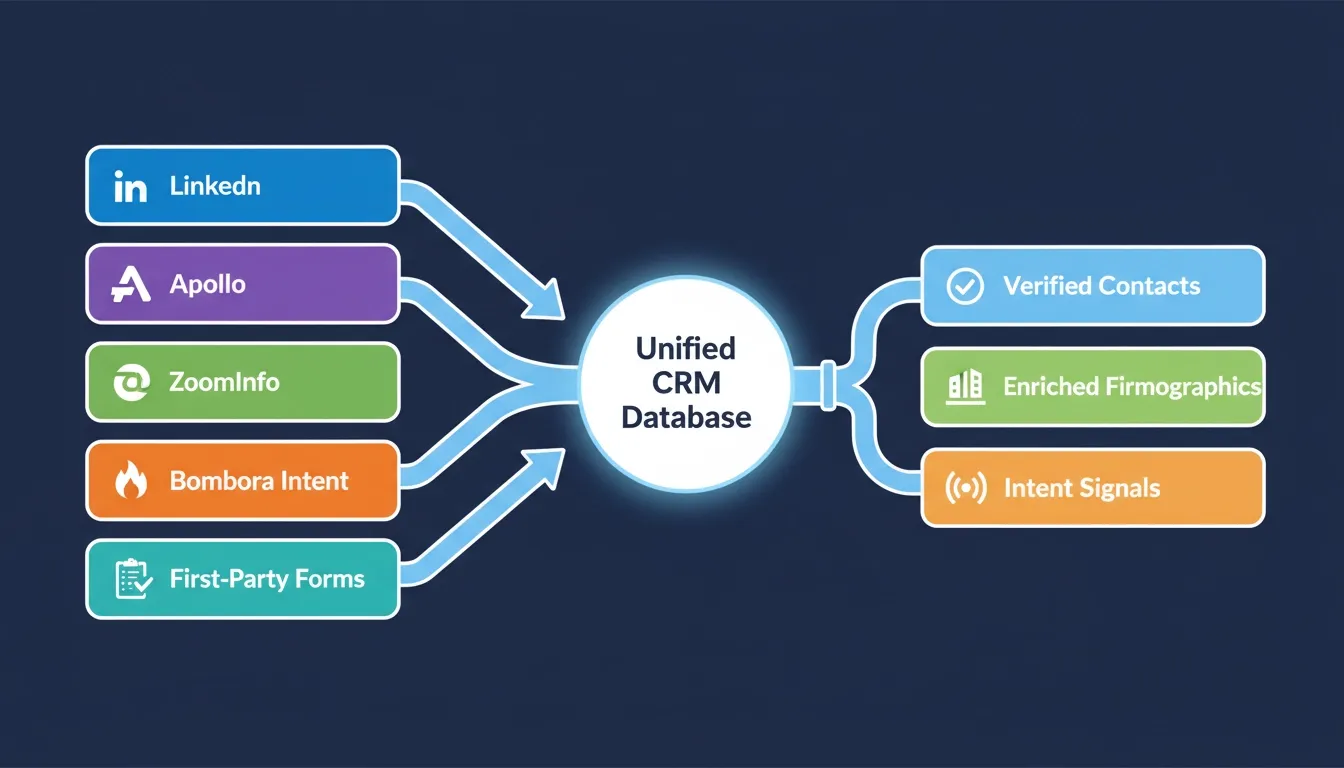
B2B Data Sourcing Workflow into Unified CRM
Combining first-party data, third-party providers, and enrichment services into one CRM keeps contact records consistent and actionable.
Data Sources Sales Teams Actually Rely On
Talk to enough outbound sales reps and the shortlist of go-to data sources stays consistently short.
The most commonly used tools for building B2B contact lists:
-
LinkedIn Sales Navigator - dominant for B2B contact discovery, with advanced search filters by seniority, company size, and recent job changes. Most enterprise teams build their segmentation workflow around it.
-
Apollo.io - a large contact database combined with built-in sequencing automation tools. Popular with smaller teams and startups that want to source and send from a single platform.
-
ZoomInfo - enterprise-grade contact and company data known for breadth. Pricing scales fast, which puts it out of reach for many mid-market sales teams.
-
Lusha and Clearbit - browser extensions that surface phone numbers and email addresses from LinkedIn profiles on the fly. Good for spot enrichment rather than bulk list building.
-
Intent data providers - platforms like Bombora surface companies actively researching a specific category based on web behavior and content consumption signals.
-
Your own CRM records - often the most underused source. Past interactions, closed-lost deals, and historical prospects often contain the cleanest data in the organization.
No single source wins on every metric. Coverage, verification cadence, and pricing all vary. The smarter move is layering two or three sources rather than depending entirely on one extensive global database for all outreach needs.
Data Hygiene: How to Clean What You Already Have
The best-sourced list in the world goes stale without a regular hygiene process. People change jobs, companies restructure, and email addresses stop working. Building the cleanup cycle into operations - not leaving it as a pre-campaign scramble - keeps contact records usable.
Key steps in a consistent hygiene cycle:
-
Email verification - run your contact list through a verification tool before each campaign. High bounce rates damage sender reputation and can get your domain flagged.
-
Job change monitoring - connect your database to enrichment services that flag contact records when someone's role or company changes. Manual research on this does not scale.
-
Duplicate detection - most CRM systems include deduplication features, but they need to run on a schedule, not just at import time.
-
Enrichment passes on gaps - missing phone numbers, incomplete account data, and blank intent data fields should trigger an enrichment pass, not a manual research task.
-
Opt-out and consent tracking - keep unsubscribe and opt-out flags current. Re-contacting opted-out contacts is a compliance risk, not just a deliverability one.
A quarterly hygiene pass catches data decay before it reaches the campaign stage. Verified contact data is what separates a list that produces pipeline from one that produces bounce notifications.
Sales teams that also invest in business workflow automation find hygiene cycles run far more consistently when they are built into automated workflows rather than manual checklists.
How Do You Keep Your Sales Database Fresh and Compliant?
Building a contact list is a one-time effort. Keeping it clean is a permanent operating task. The reason most B2B databases degrade is not a sourcing problem - it is a maintenance problem.
What drives database decay:
-
Job changes - professionals change companies frequently. Each move brings a new email address, a new direct phone number, and often a different set of buying priorities for sales teams to address.
-
Company restructuring - mergers, acquisitions, rebranding, and closures all affect the accuracy of account-level and contact-level records.
-
Data entry errors - manual input introduces typos, duplicate contact records, and mismatched fields that compound over time across CRM systems.
-
No real-time data refresh - static databases that update quarterly fall behind the pace at which contacts change roles and companies restructure.
-
Missing AI powered enrichment - without automated signals, reps spend time on manual research filling gaps that a well-configured platform catches automatically.
The gap between a stale list and a current one shows up directly in outreach performance: higher bounce rates, lower reply rates, and wasted time on calls to prospects who left their role months ago.
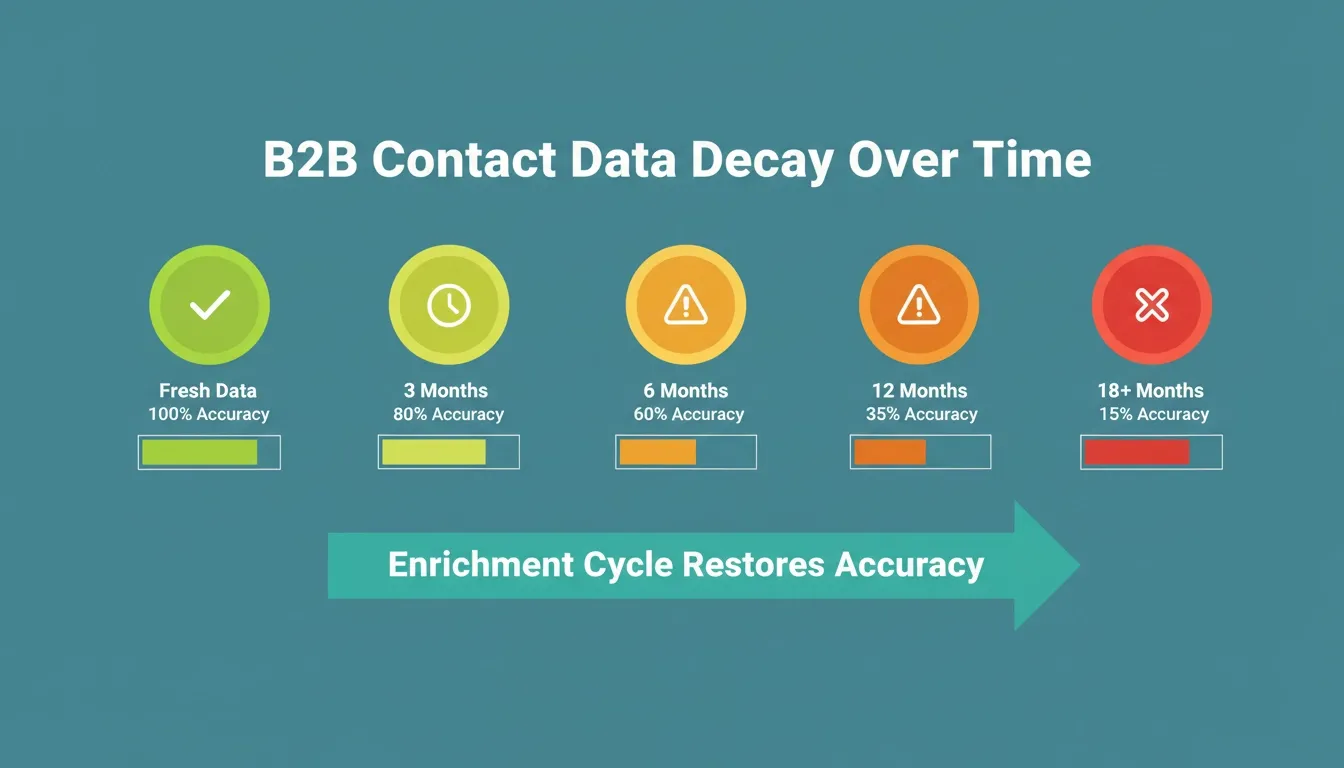 B2B Contact Data Decay Over Time
Contact records degrade predictably over time. A structured enrichment cycle prevents decay from reaching the campaign stage.
B2B Data Decay: What the Numbers Say
The decay problem is more concrete than most sales teams realize. The numbers make a strong case for treating database maintenance as a sales function, not an admin afterthought.
What the data shows:
-
According to Mailshake's State of Cold Email 2026 report, 48% of cold email senders report bounce rates between 2% and 5%, with 15% exceeding 6% - a level that puts entire sending domains at serious risk.
-
The same report found only 5% of senders personalize every email individually, while 51% rely on segment-based templates. Senders who personalize get two to three times higher reply rates - and that personalization starts with accurate, current contact data.
-
Sales reps who skip the data quality step end up burning manual research time plugging gaps that a maintained list would have caught weeks earlier.
-
Contact records unverified for over a year carry meaningfully higher risk. Roles change, companies pivot, and direct phone numbers get reassigned without any notification to the reps still dialing them.
Teams that treat data quality as a sales ops responsibility run more campaigns, reach the right prospects more often, and do not burn their sender reputation chasing bad email addresses.
GDPR, CCPA, and Consent Rules for Sales Data
Compliance shapes which contacts you can legally reach. Running outreach to contacts outside applicable consent rules creates risk on two fronts: financial penalties and domain reputation damage.
The basics every sales team should have in place:
-
GDPR (EU and UK) - requires a lawful basis for processing personal data. For B2B outreach in Europe, this typically runs under "legitimate interest," but requires documentation and an easy opt-out path in every message sent.
-
CCPA (California) - gives California residents the right to opt out of data sale. For sales teams targeting California-based companies, this means maintaining opt-out lists and honoring them consistently across all outreach sequences.
-
Consent status fields in your CRM - tracking which contacts consented, when, and under what basis makes compliance auditable. Data-driven sales and marketing teams build this into contact records from day one.
-
Data provenance tracking - knowing where a contact record originated (webinar sign-up vs. third-party purchase vs. web scrape) determines what you can legally do with it.
-
Regular purge cycles - contacts who opted out, hard bounced, or have not engaged in a defined period should be removed from active lists, not just suppressed with a flag.
The security and risk dimension is real. GDPR fines can reach 20M EUR or 4% of global annual turnover. Getting compliance right is not just ethical - it protects the business.
How Rocket Keeps Sales Intelligence Current and Actionable
Most prospecting tools share a sourcing problem and a freshness problem. They pull a snapshot of contact data at a point in time, hand it to you, and leave you to figure out when it stops being accurate. ZoomInfo refreshes records on a schedule. Apollo.io lets you enrich contacts on demand. But neither tells you - in real time - that the VP of Sales you've been targeting just left the company, or that the account you've been warming up just doubled its headcount.
Rocket Intelligence addresses a different problem entirely. Rather than sitting on a static contact database, it continuously monitors every public platform an account operates on, including the People signals that matter most to sales teams: employee count, new hires, exits, hiring velocity by department, and executive role changes across all named contacts. When a key stakeholder moves, the team knows before the next outreach attempt.
Paired with Rocket Solve, sales teams can generate deal-specific research and account-level competitive briefs from the same project context - no switching between tools, no re-briefing the AI from scratch on each account.
Here's how Rocket closes the gaps that most sales intelligence platforms leave open:
-
Real-time job change tracking - signals fire when a key contact at a target account changes roles, leaves, or gets promoted. No more sending messages to people who moved on months ago.
-
Automated workflows on account activity - configure alerts for the signals that matter to your team: new funding rounds, hiring spikes, executive activity, or competitor messaging shifts.
-
CRM sync without manual effort - contact records and intent signals push into existing CRM systems. Data stays current without a weekly re-import routine.
-
Sales intelligence from multiple sources in one view - website activity, review signals, social posts, and people data for every tracked account, all synthesized into a daily brief rather than a stack of disconnected alerts.
-
Competitive context built into the workflow - reps see not just who to contact, but what their prospects are focused on and how competitors are positioning right now, before the first call begins.
-
AI powered prioritization - surface the most promising prospects based on signal clusters, not just firmographic fit. Teams focus on accounts showing active buying signals now, not ones that looked promising three months ago.
This is one platform that serves four functions simultaneously: sales intelligence for deal preparation and help sales teams prioritize the right prospects, marketing intelligence for campaign differentiation, product intelligence for roadmap signals, and strategic market insights for pattern detection months before formal announcements.
The competitor limitation worth naming: ZoomInfo and Apollo.io both offer large contact databases, but neither provides continuous, interpreted signal monitoring across all public platforms. A contact record tells you who exists. Real-time intelligence tells you who is ready. Growing sales teams that treat these as the same thing spend budget on the right list at the wrong time. Multi channel outreach becomes far more targeted when you know which signals fired before you pick the channel.
Sales teams that want to go deeper on how competitive signals translate into better outreach timing can explore how Rocket Intelligence compounds over time to build a continuously improving picture of every target account.
Rocket gives sales and marketing teams a single source of current intelligence - not a database to maintain, but a system that maintains itself. The goal is not simply to improve outreach efficiency. It is to build a prospecting workflow where performance tracking and outreach efforts are grounded in what is actually happening at target accounts, not what a data snapshot said last quarter.
Build your pipeline on signals, not snapshots. Start with Rocket Intelligence.
From Static Lists to Live Intelligence: The Future of Prospecting Databases
A clean, current sales contact database is not a one-time project. It's an ongoing commitment to the quality of data your sales reps work with every day. The teams that treat sourcing, hygiene, and compliance as separate, ongoing functions - not a single setup task - run better outreach, reach more qualified prospects, and close more deals.
The data-driven organizations outperforming their competitors right now are doing one thing differently: they build processes around keeping contact records current, not just populating them once. That shift from snapshot to signal, from static list to live intelligence, is where real sales process improvement happens.
From lead management to workflow automation, Rocket.new gives sales and operations teams the flexibility to move faster and make smarter decisions with real-time data.
Start building with Rocket.new for free. No credit card required.
Table of contents
- -What Makes a High-Quality B2B Sales Database?
- -What Data Points Matter Most for B2B Prospecting?
- -How Sales Teams Rate a Reliable Data Source
- -Where Does Your Contact Data Actually Come From?
- -Data Sources Sales Teams Actually Rely On
- -Data Hygiene: How to Clean What You Already Have
- -How Do You Keep Your Sales Database Fresh and Compliant?
- -B2B Data Decay: What the Numbers Say
- -GDPR, CCPA, and Consent Rules for Sales Data
- -How Rocket Keeps Sales Intelligence Current and Actionable
- -From Static Lists to Live Intelligence: The Future of Prospecting Databases