
How AI can transform B2B SaaS success in 2026? AI tools and cloud platforms simplify development, reduce costs, and accelerate growth, making it an ideal moment for founders to launch innovative products.
How to build a successful B2B SaaS product with AI in 2026?
Yes, you can. The path is clearer than ever because AI SaaS products are easier to build, faster to test, and more affordable to scale than before. Tools, cloud platforms, and ready AI models have lowered the barrier for founders.
In fact, according to McKinsey, around 55% of organizations had adopted AI as of 2023, and that number has since grown to over 70% in newer surveys.
This rapid rise shows how quickly AI-driven SaaS solutions are becoming standard. So, if you're thinking about building a SaaS product, this is a very good time to start.
Understanding the Basics of B2B SaaS
Before jumping in, let’s keep things simple. A b2b saas product is just business-to-business software delivered through the internet.
Companies don’t buy it once. They subscribe and pay monthly or yearly, which makes it easier to adopt and scale.
Key Points
-
Subscription model: Businesses pay regularly instead of a one-time purchase. This creates steady recurring revenue.
-
Cloud access: The SaaS product runs online, so users can access it anytime without installing heavy software.
-
Scalable for growth: Many SaaS companies grow fast because they can serve multiple customers without rebuilding the product each time.
-
AI integration: AI SaaS products use an AI model to solve real problems like automating tasks or improving decisions.
-
Wide use cases: From customer relationship management tools to accounting software, SaaS solutions cover many business needs.
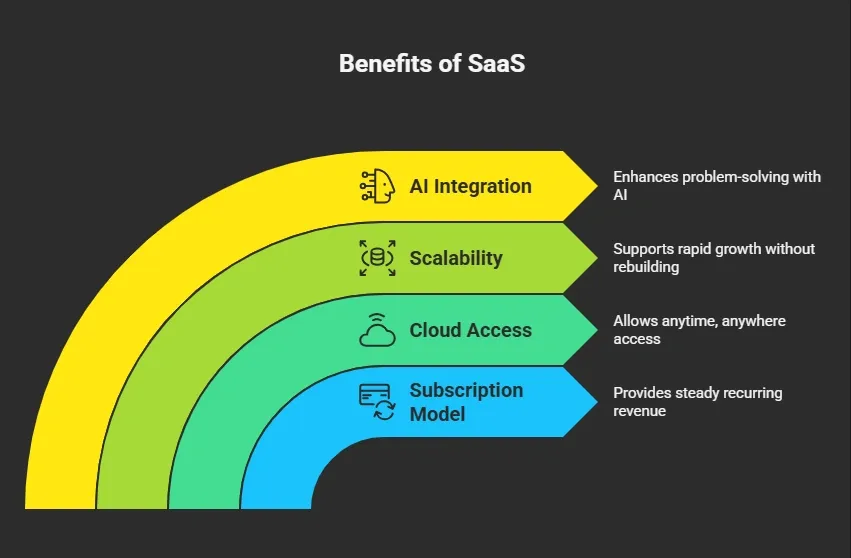 So, when you combine SaaS platforms with AI, you get powerful tools that help businesses save time, reduce costs, and improve performance. That’s why AI driven SaaS products are becoming the go-to choice for modern companies.
Before We Get Into the Steps
You don’t need a perfect SaaS product on day one. Focus on solving one real problem well.
Adding too many AI features won’t help if they don’t improve user experience. Aim for strong product market fit instead of complexity.
Step 1: Start With a Real Problem
So, where do you begin?
You don’t start with code. You start with a problem.
Talk to potential customers. Ask them what slows them down. Look at market trends. Study where companies lose time or money.
Your goal is product market fit. Without that, even the best AI powered SaaS product won’t survive.
A good idea:
-
Reduce customer acquisition costs
-
Improve customer retention
-
Save time using automation tools
If your SaaS product delivers cost savings and improves business objectives, you're on the right track.
Step 2: Validate Before You Build
Well, this is where many founders mess up.
Don’t build everything at once. Instead, create a minimum viable product. Keep it small. Focus on one core feature powered by AI tools.
Use early user feedback to refine your idea. This helps you move closer to product market fit without wasting time or money.
You can even onboard a few free users to test your idea. Once they see value, customers pay.
Step 3: Choose the Right AI Approach
Now comes the fun part. AI development can go in different directions.
You can:
-
Use pre-built AI tools
-
Train your own AI model
-
Combine both
If you're starting out, using cloud platforms like Google Cloud can save time. It provides ready-to-use AI features and reduces system performance issues.
Think about your use case:
-
Predict user behavior
-
Automate support tickets
-
Improve customer relationships
The goal is simple. Integrate AI in a way that adds real value.
Step 4: Build a Strong Product Foundation
Next, let’s talk about the tech side. Your SaaS product needs to be reliable and scalable.
That means:
-
Multi tenant architecture
-
Role based access control
-
Secure data handling
This is where proper software development matters.
Also, include automated workflows to reduce manual tasks. Many AI saas products stand out because they save time for other businesses.
Step 5: Design a Smart Pricing Model
Now, how do you make money? Your pricing model matters a lot. It affects customer retention, user adoption, and growth.
Here are a few common options:
| Pricing Model | Best For | Notes |
|---|---|---|
| Subscription | Stable recurring revenue | Most common in saas companies |
| Usage based pricing | Flexible billing | Works well for AI saas |
| Freemium | Attracting free users | Convert later |
| Tiered pricing | Different customer needs | Good for scaling |
Many SaaS business founders mix models. For example, a base subscription plus usage based pricing. Remember, customers pay when they see value.
Step 6: Focus on Customer Experience
Then comes something people ignore. Customer onboarding and support systems. If users don’t understand your SaaS product, they won’t stay.
Use AI tools to:
-
Handle support tickets
-
Personalize onboarding
-
Improve user satisfaction
Also, collect customer feedback regularly. This helps improve product market fit and build better SaaS solutions. Satisfied customers lead to high net revenue retention and strong customer relationships.
Step 7: Build a Growth Strategy
After that, it’s time to grow.
Your growth strategy should include:
-
Content marketing
-
Referral programs
-
Google Ads
-
Lead generation
Also, build industry connections. These help you reach enterprise customers faster.
Your sales team should focus on converting potential customers into paying customers. Over time, your goal is scalable growth with strong recurring revenue.
Step 8: Track Metrics That Matter
Now, let’s talk numbers.
Investors evaluate SaaS business performance using key metrics:
-
Net revenue retention
-
Customer acquisition costs
-
User adoption
-
System performance
If your SaaS product shows high net revenue retention, it means existing customers keep paying and even upgrade. That’s a strong signal for investors evaluate decisions.
Step 9: Keep Improving With Feedback
Finally, don’t stop improving. Use user feedback and customer feedback to refine your SaaS product.
Add new AI features based on real needs. Improve your AI model over time. The best AI saas products keep evolving based on what users actually want.
Building a SaaS product is not just about AI development or code. Focus on customer feedback, refine your product, and create something that customers pay for consistently.
Audience Perspectives
Here’s something interesting from LinkedIn:
“AI didn’t kill SaaS growth. Founders overcomplicating it did.” Linkedin
This hits hard. Many founders think adding more AI features will make their SaaS product better. In reality, it often creates confusion and hurts user experience.
The real takeaway is simple. Focus beats complexity. If your AI powered SaaS product solves one clear problem well, you’ll get paying customers. If not, even the smartest AI won’t help.
Rocket-Fuel Your B2B SaaS: Build, Scale Smarter
Rocket.new is a platform that helps you build and launch a SaaS product quickly, especially if you’re working on AI SaaS ideas and don’t want to spend months on complex setup.
If your goal is to build an AI powered SaaS product with faster validation and lower effort, Rocket.new helps you move from idea to product market fit without getting stuck in heavy development work.
Top Features
-
Prompt to App Creation: Builds apps directly from single prompts
-
Figma Import: Converts design files into live, editable layouts
-
Reusable Components: Speeds up building with ready-to-use elements
-
Custom Domain Support: Publishes projects with a branded domain
-
AI-Powered Backend: Automatically handles logic, data, and workflows
-
Code Export: Allows developers to extend or customize later
-
Command-based actions: Use / and @ to run actions and quickly scope edits.
-
Live Preview: Shows instant updates while editing
Building a SaaS Product Made Simple
Rocket.new makes it easy to go from idea to a working SaaS product without deep technical knowledge. In many cases, you can simply give a prompt describing your idea, and the platform helps generate the base structure for your SaaS product.
You don’t need to worry much about backend setup, hosting, or scaling early on. The platform handles the heavy lifting so you can focus on your core idea, AI features, and user experience.
This means you can quickly build a minimum viable product, test it with real users, and improve it using user feedback. It also helps reduce development time and lets you focus on getting paying customers instead of dealing with complex tech.
Use Cases
Startup MVP Launch: Quickly build a minimum viable product and test product market fit with potential customers before scaling.
AI Based Workflow Tools: Create AI SaaS products that automate repetitive tasks for other businesses and improve efficiency.
Customer Support Automation: Build AI agent systems to handle support tickets and improve response time and customer satisfaction.
Rocket.new works well if you want to move fast, validate your SaaS business idea, and build something users actually want.
What Really Matters When Building an AI SaaS Product
Many founders rush into building a SaaS product without validating their idea. They focus too much on AI features and ignore real user needs. This often leads to poor product market fit and low customer retention. The smarter approach is to start small, build a simple version, and improve it using customer feedback. A clear pricing model and tracking metrics like net revenue retention can guide better decisions.
How to Build a B2B SaaS Product With AI in 2026 is not about complex tech. It’s about solving real problems for other businesses. Keep your SaaS solutions simple, valuable, and focused. If customers pay and stay, you’re on the right path.
Table of contents
- -Understanding the Basics of B2B SaaS
- -Key Points
- -Before We Get Into the Steps
- -Step 1: Start With a Real Problem
- -Step 2: Validate Before You Build
- -Step 3: Choose the Right AI Approach
- -Step 4: Build a Strong Product Foundation
- -Step 5: Design a Smart Pricing Model
- -Step 6: Focus on Customer Experience
- -Step 7: Build a Growth Strategy
- -Step 8: Track Metrics That Matter
- -Step 9: Keep Improving With Feedback
- -Audience Perspectives
- -Rocket-Fuel Your B2B SaaS: Build, Scale Smarter
- -Top Features
- -Building a SaaS Product Made Simple
- -Use Cases
- -What Really Matters When Building an AI SaaS Product