Looking to create a dating site without complex coding or long timelines? Rocket.new helps transform dating ideas into functional platforms using simple language. By reducing technical barriers and streamlining setup, it makes launching a polished dating site faster and more manageable.
Can a dating site really be built faster with Rocket.new?
Yes. And it doesn’t require months, a development team, or sleepless nights.
A solid dating site can now be shaped, structured, and launched using plain language. That’s why platforms like Rocket.new are catching attention.
According to Statista, the global online dating market is projected to cross $3.2 billion by 2025, with millions of active users worldwide.
So if building a dating app or dating site once felt out of reach, the gap is much smaller now.
Let's see how to turn a dating idea into a working product faster, with fewer technical hurdles, and clearer decisions from day one.
Why do dating apps still dominate the internet?
Dating is not slowing down. People swipe during lunch breaks, late nights, and even while waiting at a coffee shop.
A dating app fits right into daily routines. It helps a single person connect with people outside their circle, especially in small-town or rural settings.
Here’s why dating apps stay popular:
- Many users prefer online dating over awkward setups
- People want choices from a large dating pool
- A dating app removes pressure from first meetings
- Users can set dating goals clearly
- Casual dating and serious dating both exist in one place
A popular dating app usually grows because it understands how people think, not because it has flashy features.
Dating site vs dating app
People often mix these terms. A dating site usually starts on the web. A dating app lives on phones. In reality, both serve the same purpose. Helping single people connect.
Rocket.new allows building both from one setup. The layout adjusts for screens, while the logic stays the same. This helps creators reach many users without duplicating effort.
Whether it’s a dating site or a dating app, success depends on:
- Easy signup
- Clear profile creation
- Smooth matching system
- Safe chat experience
- Real matches, not fake profiles
At the end of the day, users don’t care whether they’re on a dating site or a dating app—they care about how easy it feels to connect.
When the experience is smooth, safe, and real, the platform wins. Building both on a single foundation makes it easier to focus on what truly matters: fostering genuine connections.
The real reason many dating projects fail
Many dating platforms fail long before users ever see them, not due to lack of vision, but because technical complexity slows everything down. When the build process becomes overwhelming, even strong ideas lose momentum
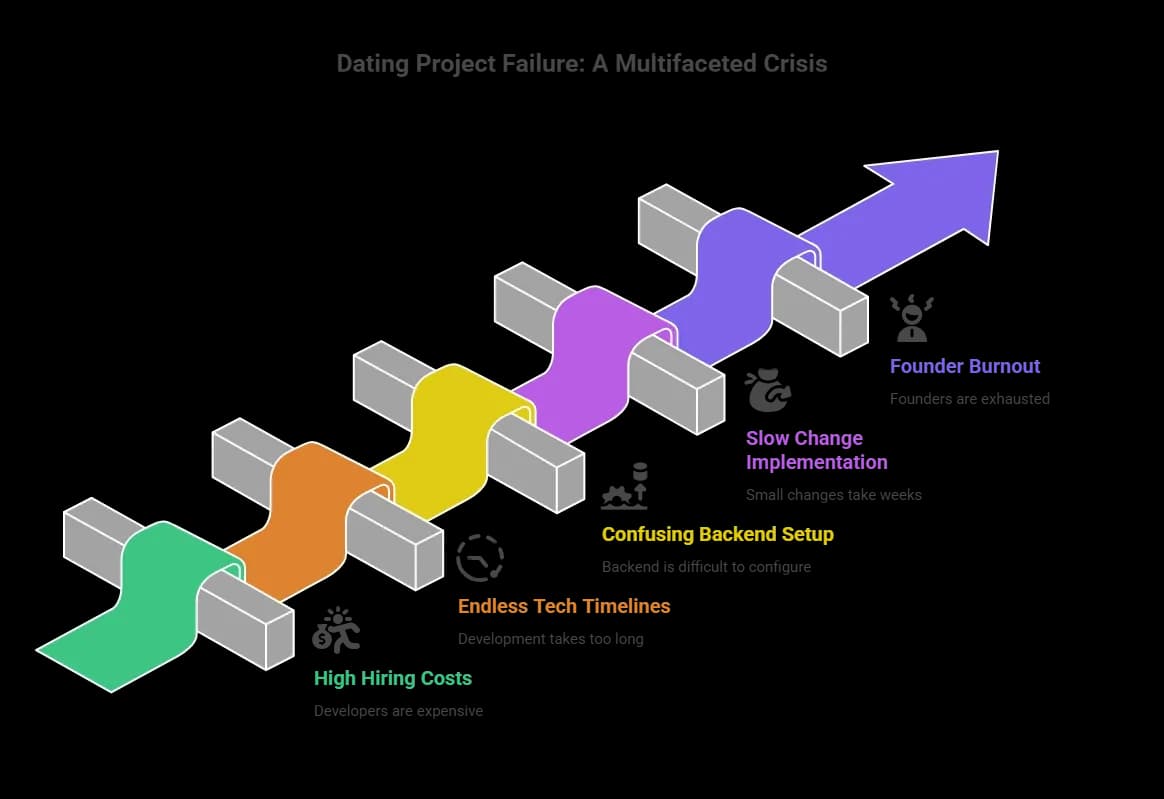
This is why no-code and AI-assisted tools changed the game. Rocket.new enters this space by enabling ideas to turn into working apps quickly.
How does the process work step by step?
Building a dating platform doesn’t need to feel technical or overwhelming. When the process is broken into clear steps, even complex ideas become manageable.
Step one: define the dating idea
Before typing anything, decide what kind of dating experience matters.
Ask simple questions:
- Is this for casual dating or long-term relationship seekers?
- Is it a hookup app or a serious dating site?
- Is it open to everyone, focused on queer women, or limited to niche groups?
- Is the goal casual hookup or meaningful connections?
Clear answers help Rocket.new deliver better results.
Step two: write a natural prompt
No tech language needed. Write like texting a friend.
Example: “Create a dating app where users make detailed profiles, upload photos, match using compatibility scores, chat safely, and block other members if needed.”
Rocket.new reads intent, not keywords.
Step three: choose a layout or template
Templates save time. Rocket.new offers ready structures for social apps.
Templates may include:
- Profile creation screens
- Match cards
- Chat interfaces
- Search filters
- User settings
This reduces low-effort setup work and speeds launch.
Step four: refine with conversation
After the first build, changes are simple.
- Want selfie verification added? Say it.
- Want video chat access? Mention it.
- Want paid tiers with unlimited likes? Ask for it.
Rocket.new responds to changes conversationally.
Step five: launch and test
The app goes live fast. Share it with test users.
Watch how single people interact. Fix issues early.
Rocket.new allows iteration without restarting the entire project.
By turning app creation into a guided conversation, Rocket.new removes friction from the build phase. Instead of getting stuck in technical loops, founders can focus on refining the experience and launching faster with real users shaping the product from day one.
A strong dating platform needs trust and usability. Below are features that keep users active.
| Feature | Why users care |
|---|
| Account creation | Entry point for every single person |
| Profile photos | Visual trust and attraction |
| Detailed profiles | Helps compatible singles connect |
| Matching system | Avoids endless swiping |
| Chat | Where connections grow |
| Safety tools | Reduces fake profiles |
| Search |
These features build confidence and reduce frustration.
Making the dating experience feel human
At its core, dating is emotional, not transactional. When a platform feels too automated or cold, users disconnect quickly. A human-first experience makes people feel seen, understood, and comfortable opening up.
Ways to improve dating experience:
- Ask detailed questions during signup
- Encourage lifestyle preferences
- Limit endless swiping
- Highlight compatibility scores
- Suggest conversation starters
This helps users feel confident instead of lost.
When a dating platform prioritizes emotion over algorithms, users stay longer and connect deeper. Human-centered design doesn’t just create matches; it creates moments that feel real.
Matching systems
Every successful dating platform depends on how well it matches people. A strong matching system doesn’t just connect users; it filters intent, expectations, and compatibility from the start.
Matching systems may consider:
- Age range
- Location
- Dating goals
- Lifestyle habits
- Relationship status
When matching rules are clear and intentional, users trust the platform more. Better matches lead to better conversations, stronger connections, and a higher likelihood of real relationships.
A Reddit user shared this experience about Rocket.new:
“I used Rocket.new to turn a written PRD into an actual working app. It builds screen by screen, and you can choose what to generate next. The free version works, but tokens disappear fast once your app grows.”
This shows speed comes with smart planning.
Rocket.new fits dating app projects especially well because most dating platforms follow repeatable product patterns. Profiles, matching logic, chats, and safety features tend to look similar across apps.
That’s where Rocket.new shines recognizes these common structures and helps assemble them quickly, without starting from scratch.
How Rocket.new Helps in Different Ways
Rocket.new supports multiple ways of building, depending on how you start your project.
-
Using Figma files: If you already have designs, Rocket.new can use them as a reference to generate layouts and functional pages, such as profiles, discovery feeds, and chats.
-
Using natural language prompts You can describe your dating app idea in plain language, and Rocket.new will generate screens, logic flows, and backend structure.
-
Using templates
Pre-built templates help you start with common dating app structures and avoid repetitive setup.
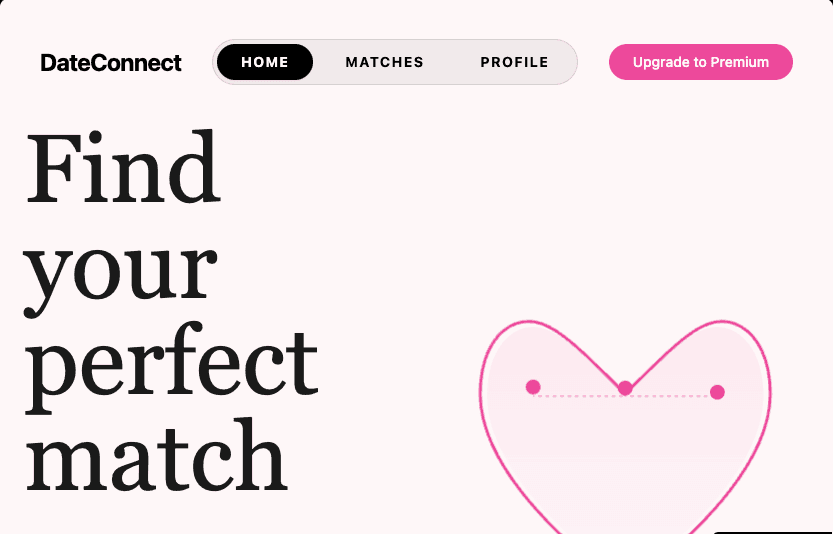
Here's a template called "DateConnect," a modern dating platform that helps you find compatible matches based on shared interests and values, with profile verification, smart filters, and privacy controls built by Rocket.new using NLP.
Top Features
- Prompt to App Creation: Builds apps directly from single prompts
- Figma Import: Converts design files into live, editable layouts
- AI-Powered Backend: Automatically handles logic, data, and workflows
- Custom Domain Support: Publishes projects with a branded domain
- Code Export: Allows developers to extend or customize later
- Live Preview: Shows instant updates while editing
By combining multiple building approaches with features tailored for real-world app needs, Rocket.new gives dating builders the flexibility to move from idea to live product faster without getting stuck in technical complexity.
Practical Use Cases for Dating Builders
These use cases show how dating app founders and builders can use Rocket.new to move faster, test ideas early, and scale features without heavy upfront development.
Launching an MVP: Test a dating idea without building everything. Gather feedback fast.
Building a Free Dating App: Start with a free version. Add paid tiers later.
Creating Premium Upgrades: Add paid tiers for unlimited likes or extra visibility. Premium member options can include profile boosts or advanced search.
Experimenting With New Formats: Try speed-matching, interest-based rooms, or coffee-shop meetups.
Whether you’re validating a concept or expanding an existing platform, Rocket.new helps dating builders iterate quickly and focus on user experience instead of infrastructure.
Why Small Towns and Rural Areas Matter
Most large dating apps focus on big cities and high-density users, often overlooking small towns and rural communities. That creates a clear gap in the market.
People in these areas want meaningful local connections without relying on endless distance filters or matches from far-away cities. A dating app designed specifically for regional use can perform surprisingly well.
Rocket.new makes this easier by allowing builders to create location-focused logic, region-based matching, and community-driven features without complex setup.
How to Create a Dating Site Without Stress?
Building a dating site has traditionally been expensive, time-consuming, and technically complex. Because of these barriers, many strong dating ideas never make it past the concept stage.
Rocket.new changes that remove much of the technical friction. It allows creators to build, test, and launch dating platforms without worrying about servers, infrastructure, or complex setup, so they can focus on users and connections.
Creating a dating site no longer has to be overwhelming. With the right tools and a clear approach, launching a dating platform becomes practical, faster, and achievable even for small teams or first-time builders.