
Struggling with complex state management in React? Discover how Remix simplifies data loading, reduces client state overhead, and streamlines full-stack development for faster, more maintainable applications.
Managing state in a React app can get messy fast. Props pile up. Context chains grow. Data fetching feels disconnected from rendering. Small updates turn into long debugging sessions.
So what if there was a simpler way to handle it?
Remix can help you structure your React apps with more clarity. Remix brings routing, server rendering, and data loading together into a single, clear pattern. Instead of juggling multiple state tools, you work within a unified flow.
In this blog, you will learn practical steps and tips to build cleaner, more maintainable React projects with less friction.
Why Remix for React Projects?
So, why bother with Remix when React already has libraries like Redux or Zustand?
Well, Remix is more than a library. It is a full framework that handles routing, server rendering, and API interactions with ease. That means fewer boilerplate codes and more focus on building user interfaces.
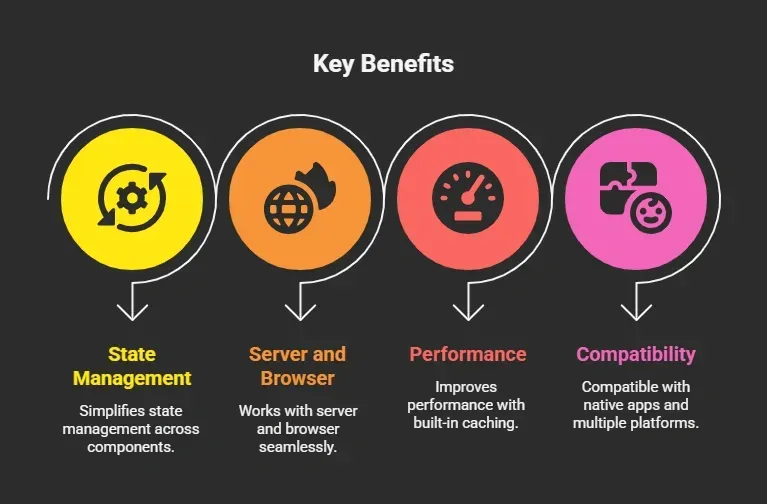
Remix isn’t just another tool in the React toolbox. By handling routing, server rendering, and data fetching out of the box, it reduces repetitive code and keeps state management tidy.
That means faster development, smoother user interfaces, and apps that work consistently across browsers, devices, and platforms.
Setting Up Your First Remix Project
Alright, let’s get your hands dirty. Starting a new app with Remix is surprisingly quick.
Step-by-Step:
- Install Node.js if not already installed.
- Run npx create-remix@latest to scaffold your project.
- Choose your preferred deployment target: own server, cloud platform, or serverless.
- Install dependencies with npm install or yarn.
- Start the dev server with npm run dev.
Remix sets up routing automatically. Each file in the routes folder corresponds to a page. This makes state management across the entire app easier because data can be fetched at the route level.
Understanding Routing and State Management
Routing in Remix is more than URL mapping. Each route can load data on the server, send it to the client, and hydrate React components. That reduces redundant state management.
Route Loader Example:
1export async function loader() {
2 const data = await fetch('https://api.example.com/items');
3 return data.json();
4}Then in the component:
1import { useLoaderData } from '@remix-run/react';
2
3export default function Items() {
4 const items = useLoaderData();
5 return (
6 <ul>
7 {items.map(item => <li key={item.id}>{item.name}</li>)}
8 </ul>
9 );
10}Why this helps:
- Data fetching is centralized per route
- No need for lifting state manually
- Simplifies caching and error handling
By centralizing data fetching at the route level, Remix keeps state management clean and predictable. Components receive exactly what they need without prop drilling, and caching and error handling become much easier.
This approach reduces bugs, simplifies updates, and makes your React app feel more organized and responsive.
Build Tools and Production Mode
Remix uses modern build tools under the hood. It integrates with Vite, Webpack, and esbuild. This ensures fast builds and smooth development.
Common Build Configurations
| Build Tool | Use Case | Notes |
|---|---|---|
| Vite | Fast dev server | Recommended for most React apps |
| Webpack | Large monorepos | Flexible plugin ecosystem |
| esbuild | Lightweight projects | Extremely fast |
In production mode, Remix pre-renders pages on the server and hydrates them on the client. That reduces load time and improves SEO.
Working with Native Apps and Devices
Remix isn’t just for the web. It integrates well with native apps via Expo or React Native. You can fetch data on the server, pass it to your native app, and maintain a consistent state across platforms.
Tips:
- Use route loaders for API calls
- Hydrate state in client components
- Prefer server-side caching for repeated data
This approach works for Android, iOS, and multiple devices without writing separate state logic.
Community Insights
React projects can get messy fast when state and data fetching are scattered all over the code. A Reddit user summed this up well:
“Anyone else feel like React projects get messy with state and data everywhere? It’s like cleaning up after a party you didn’t throw.”
This kind of frustration shows up often in larger React apps. When routing and state aren’t organized, code tends to spread out. With Remix, data loaders and centralized routes reduce clutter.
Rocket.new: Streamlining Your Remix Workflow
Rocket.new can complement Remix projects by letting you share, clone, and collaborate on React apps seamlessly. Its cloud-based platform supports live previews, testing, and code management, making it easier to work across teams.
With Rocket.new, you can instantly share your projects as Remix links.
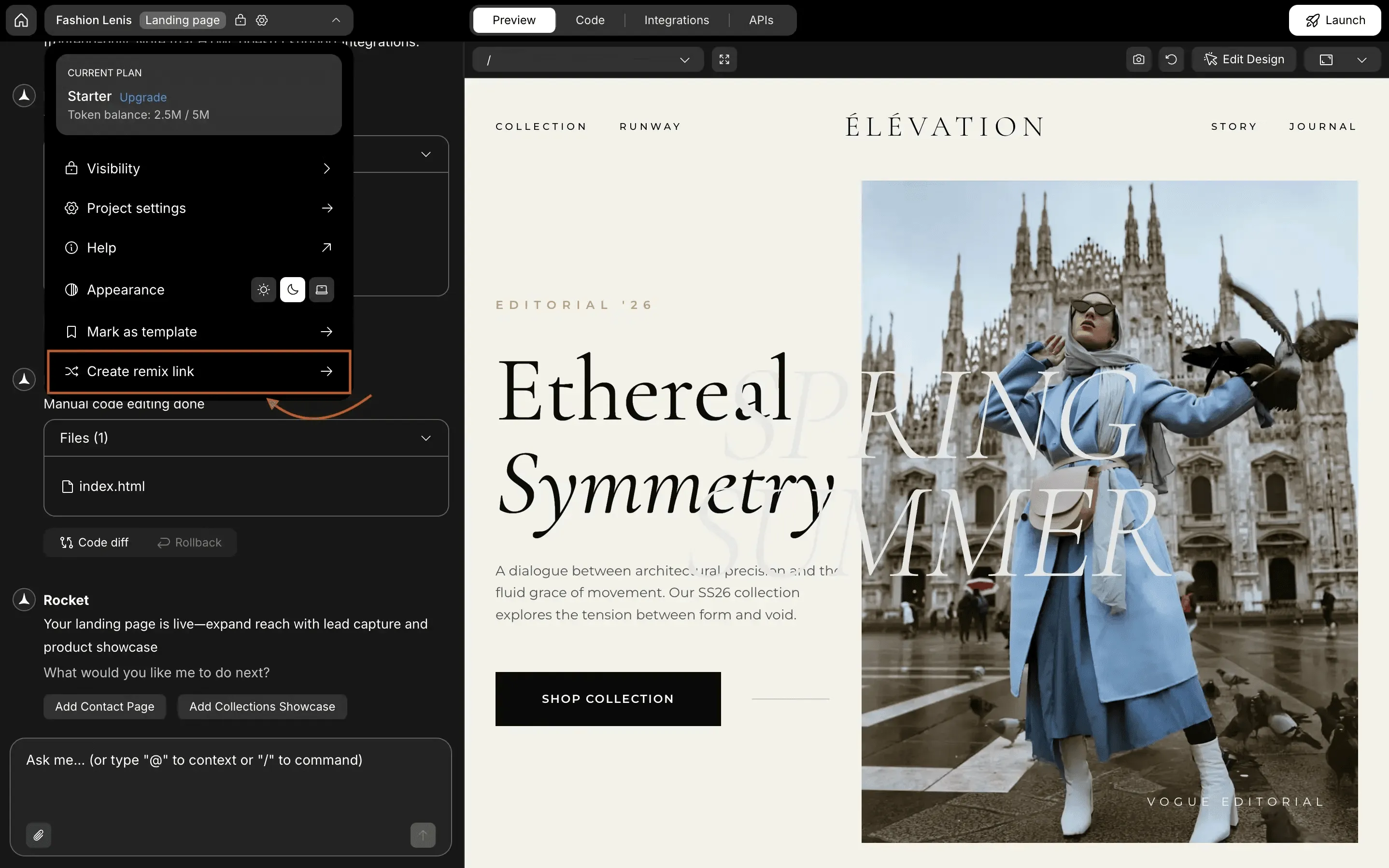
Recipients can clone your app and start building with their own credentials, which makes collaboration and template sharing a breeze. This feature works best on the web browser and is available to paid Rocket.new users.
Using a remix link

When someone shares a remix link with you, you can instantly clone their project to your account.
Learn more: Remix Docs
Top Features:
- Prompt to App Creation: Builds apps directly from single prompts
- Figma Import: Converts design files into live, editable layouts
- AI-Powered Backend: Automatically handles logic, data, and workflows
- Custom Domain Support: Publishes projects with a branded domain
- Code Export: Allows developers to extend or customize later
- Live Preview: Shows instant updates while editing
Rocket.new reduces friction between development and testing, makes state management visible, and simplifies sharing and iterating on Remix-based React apps.
How to Use Remix Efficiently?
State management in React can get messy. Prop drilling, overuse of context, and scattered data fetching create headaches. Apps may behave unpredictably on different routes or devices.
Using Remix, state and data fetching become route-centric. Server loaders, route-level caching, and seamless hydration simplify how React apps handle data. Combine this with tools like Rocket.new, and your workflow becomes smooth and manageable.
How to use Remix is less about rewriting React and more about organizing state and data flow efficiently. Centralizing data fetching at the route level reduces boilerplate, prevents unnecessary re-renders, and keeps your app fast. The framework’s design supports web and native platforms, making state headaches a thing of the past.
Table of contents