Vibe Solutions gives teams a structured, AI-powered path from idea to deployed product. By combining research, app building, and competitor monitoring in one platform, they reduce friction, cut delivery time, and produce better outcomes at every project stage.
Vibe solutions work by connecting the three things every product team needs: a way to validate ideas before building, a way to build without writing every line of code, and a way to stay aware of the market after launch. This guide explains how vibe solutions work in practice, why teams adopt them, and what better outcomes actually look like across real project stages.
What Are Vibe Solutions and Why They Matter
A vibe solution is the result of applying the vibe solutioning approach to a real business problem. Where traditional development separates research, building, and monitoring into different tools and teams, vibe solutioning brings them together into a single, AI-powered workflow.
Rocket.new describes vibe solutioning as a platform practice built on three pillars: Solve for strategic research and validation, Build for generating production-ready web and mobile apps from plain language, and Intelligence for continuous competitor monitoring. The Forrester report shows that teams using connected workflow platforms improved delivery speed by 27%.
For product teams, founders, and developers, understanding how vibe solutions work is now a practical skill, not a niche experiment.
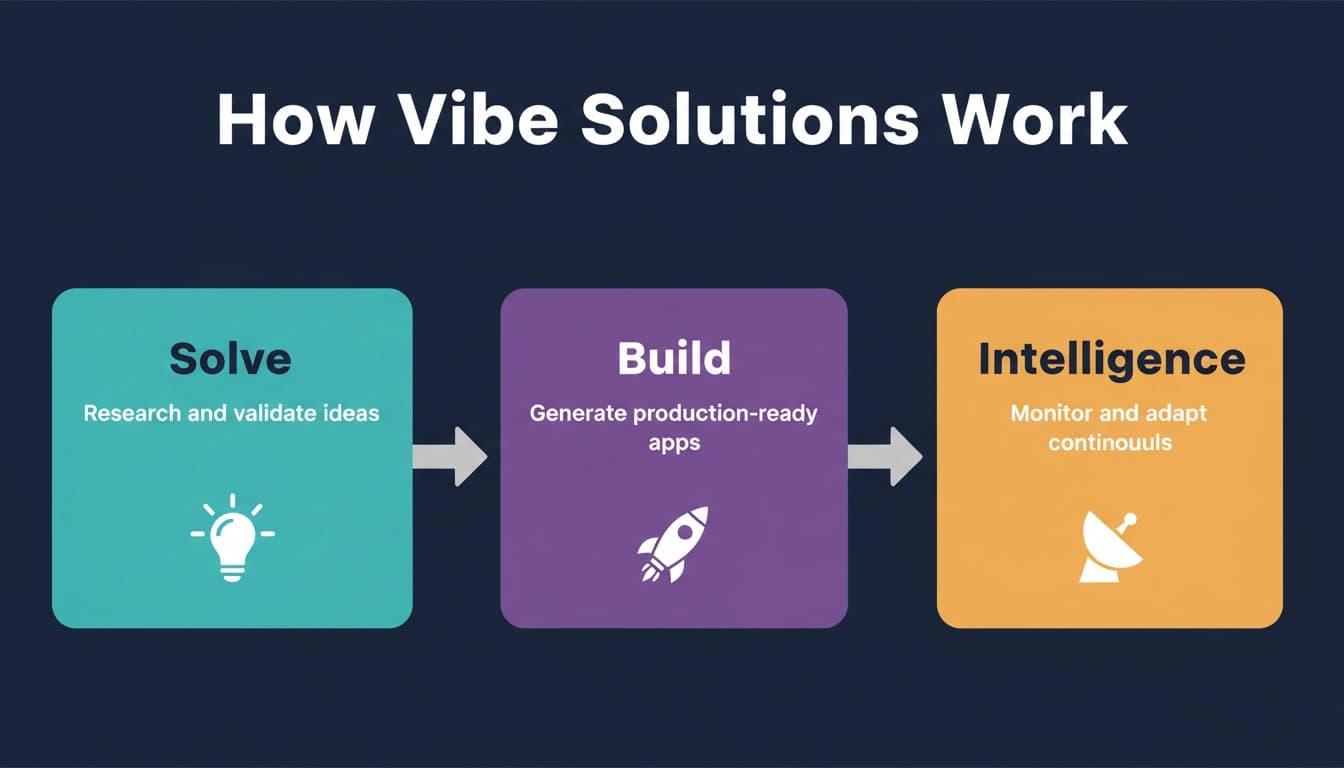 The three pillars of vibe solutions: Solve to research, Build to ship, Intelligence to monitor
How Vibe Solutions Work in Real Settings
The mechanics of a vibe solution start before a single screen is built. A team uses Solve to ask a strategic question, such as "what gaps exist in the customer feedback tool market?" and receives a structured, evidence-backed report with competitive analysis, market sizing, and recommendations. That research then directly informs what gets built.
In the Build stage, the team describes the product in plain language. Rocket.new reads that description, interprets the intent, and generates the full application including screens, navigation, backend logic, and authentication. The team reviews, refines, and iterates without writing every line manually.
After launch, Intelligence monitors competitors continuously across ten pillars, including website changes, hiring signals, pricing shifts, and product updates, so the team always knows what the market is doing and can respond before it affects their position.
Why Teams Lean Toward Vibe Solutions to Save Costs
The logic sits in the mix of clarity, confidence, and speed. Vibe Solutions gives teams a stable structure for every stage of a project, from the first idea through to post-launch monitoring, so they can keep their focus on high-value work. They reduce the gaps between research, building, and market awareness that slow most teams down.
Teams appreciate this approach because it cuts handoff and setup work, leaving more room for creative problem solving:
| Benefit | What It Means in Practice |
|---|
| Research before building | Solve validates ideas with real data before a line of code is written |
| Faster delivery | Plain-language prompts help streamline delivery by replacing weeks of manual development setup |
| Lower cost | Fewer development hours are needed across the full project lifecycle |
| Continuous awareness | Intelligence surfaces competitor moves so teams can adapt in real time |
| Accessible to all teams | Non-technical members can contribute to building and research directly |
This kind of setup suits groups that handle wide data ranges, large marketing campaigns, shifting industry trends, or high-volume software demands. Every part of the workflow grows easier when research, building, and monitoring share the same context.
Builders looking to understand the full picture can explore what vibe solutioning is and its practical applications before diving into a build, especially when connected workflows support faster innovation.
The Role of Strategy and Planning in Vibe Solutions
Every strong vibe solution starts with a well-framed question. Solve takes that question, breaks it into research dimensions, runs parallel agent streams across live data sources, and returns a structured report with an executive summary, supporting evidence, and actionable recommendations.
That report becomes the foundation for the Build stage. Instead of starting from a blank prompt, the team builds from validated insight, defining the outcome without specifying every implementation detail. The platform carries context from Solve directly into Build, so the generated app already reflects what the research found about user needs, competitor gaps, and market positioning.
This connection between research and building is what separates a vibe solution from simply generating code with AI through natural language. Here is how teams commonly apply vibe solutions across different project stages to create an app or feature from validated insight:
| Project Stage | Rocket Pillar | Key Action | Expected Result |
|---|
| Idea Stage | Solve | Validate the idea with market and competitor research | Evidence-backed product direction |
| Draft Stage | Build | Generate an app from a plain-language description | Working prototype in minutes |
| Build Stage | Build | Iterate and refine with follow-up prompts | Production-ready features |
| Review Stage |
How Data Shapes Day-to-Day Vibe Solution Success
Vibe solutions do not rely on instinct. Every decision in the workflow is grounded in data: Solve pulls from live sources to produce research reports, Build tracks version history and performance metrics to support measurable results across iterations, and Intelligence monitors competitor activity across ten pillars simultaneously.
With the right structure, a business can save time and reduce costs while maintaining steady performance. Strong data flows build confidence at every stage, enabling better decisions for customers and allowing the next project to move forward with greater accuracy and less rework.
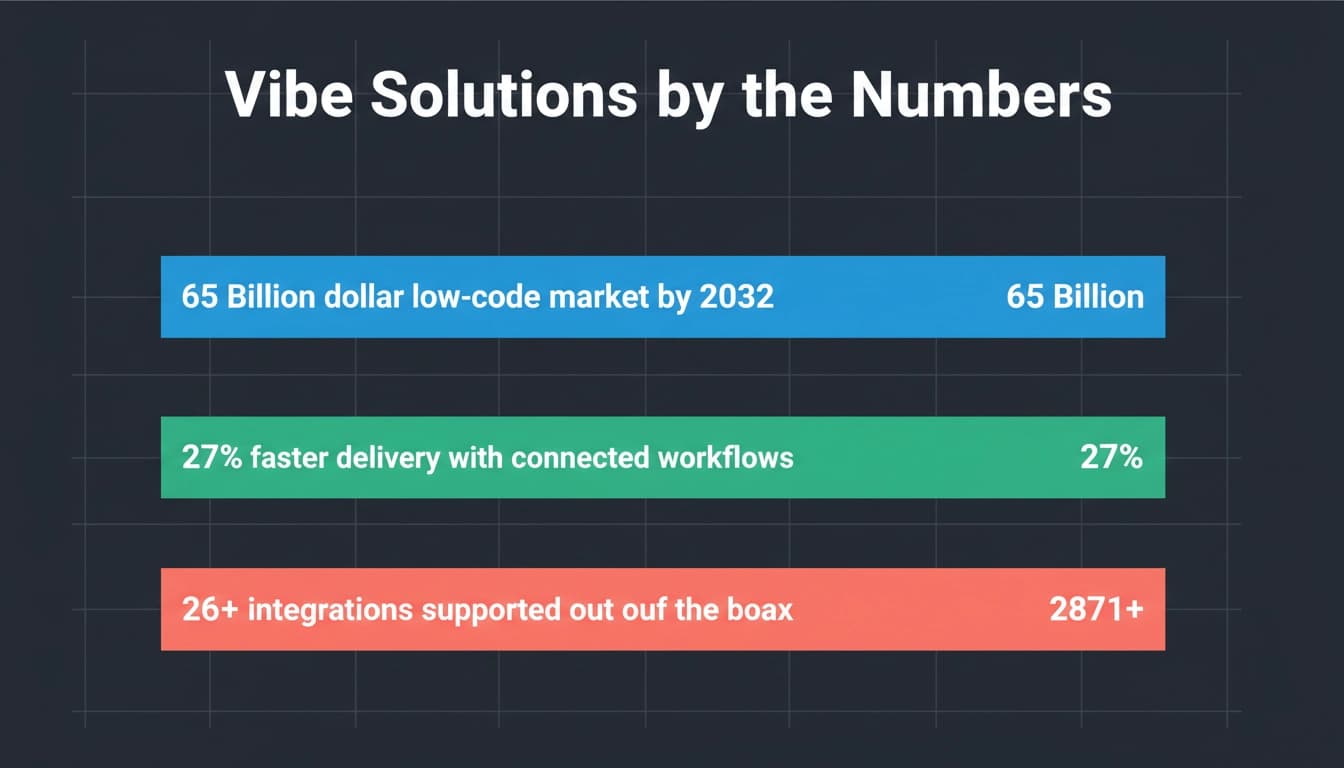 Key data points behind the vibe solutions shift in modern software teams
Projects That Thrive With Vibe Solutions for Creative Problem Solving
Vibe solutions work best when a team needs to move from idea to live product without losing strategic context along the way. SaaS products, internal tools, e-commerce stores, mobile apps, and marketing sites all benefit from the approach because the research, build, and monitoring stages stay connected rather than siloed. Platforms like Rocket.new use structured databases to translate prompts into functional applications.
Over time, the platform accumulates context about the product, the market, and the competition, so each new build starts from a stronger foundation than the last. Builders using vibe solutioning platforms for smarter digital growth consistently report shorter iteration cycles and fewer handoff delays between design and development.
Teams working on mobile products specifically benefit from the end-to-end approach. Rocket.new generates production-ready Flutter apps for iOS and Android from the same prompt, with a generated database and backend to support the app experience across each end-user device, plus direct submission to the App Store and Google Play, removing the need for a separate mobile development workflow entirely.
Vibe Solutions vs Traditional Development
Traditional development separates research, building, and monitoring into distinct phases, often handled by different teams using different tools. A vibe solution collapses those phases into a single connected workflow, where insights from research feed directly into what gets built, and what gets built is continuously informed by what the market is doing.
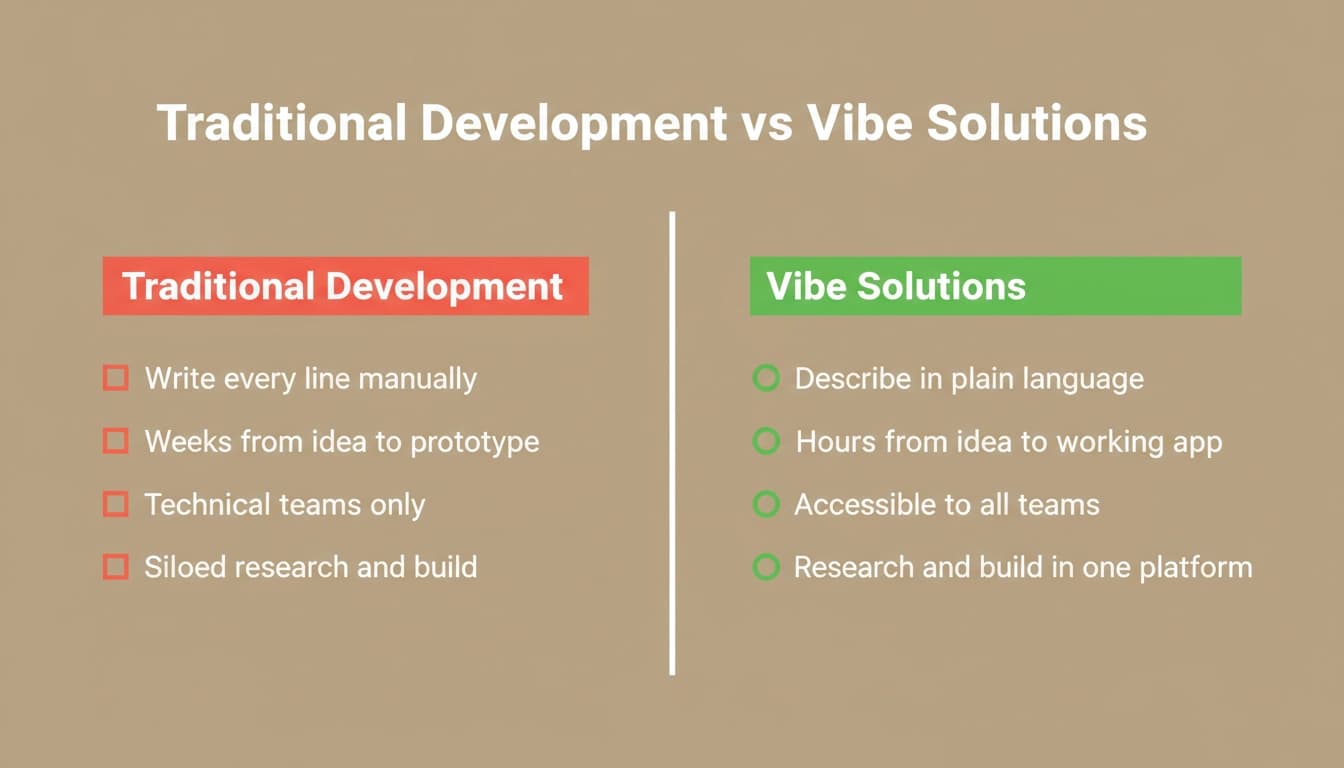 Vibe Solutions compresses the gap between idea and working software
This does not eliminate the need for technical judgment. Code quality, security, and scalability still require human review, and unit tests are crucial for protecting code quality and reliability, but the time from validated idea to first working version shrinks dramatically. The shift from vibe coding to vibe solutions reflects exactly this change: moving from AI-assisted code generation to AI-assisted product delivery and working product functionality.
According to Stack Overflow's developer survey, developers using AI assistance reported saving an average of four hours per week on routine tasks. Across a full product team over a quarter, that compounds into weeks of reclaimed capacity.
A vibe solution is only as strong as the platform delivering it. Disconnected tools force teams to manually transfer context between research, building, and monitoring, which introduces delays, inconsistencies, and blind spots. A platform built on the right technology stack connects all three in one shared system and eliminates that friction entirely.
Teams using Rocket.new get:
- Solve for market research, competitive teardowns, pricing strategy, and PRD generation
- Build production-ready Next.js web apps and Flutter mobile apps from plain language
- Intelligence for always-on competitor monitoring across website, social, hiring, pricing, and product signals
- 26+ connectors for integration across Stripe, Supabase, HubSpot, GitHub, Figma, and other connected services, including legacy APIs that can communicate directly with vibe solutions
- One-click deployment with custom domains and automatic HTTPS
- Integrated visual builders and editors, version history, and one-click rollback
The platform you choose determines whether your vibe solution stays connected from research to launch or fragments into isolated steps. Platforms like Rocket support building full-stack apps directly from a prompt, covering web, mobile, and backend in a single workspace.
For teams weighing their options, understanding how vibe solutioning compares to traditional development helps clarify which approach fits the project type and team skill level.
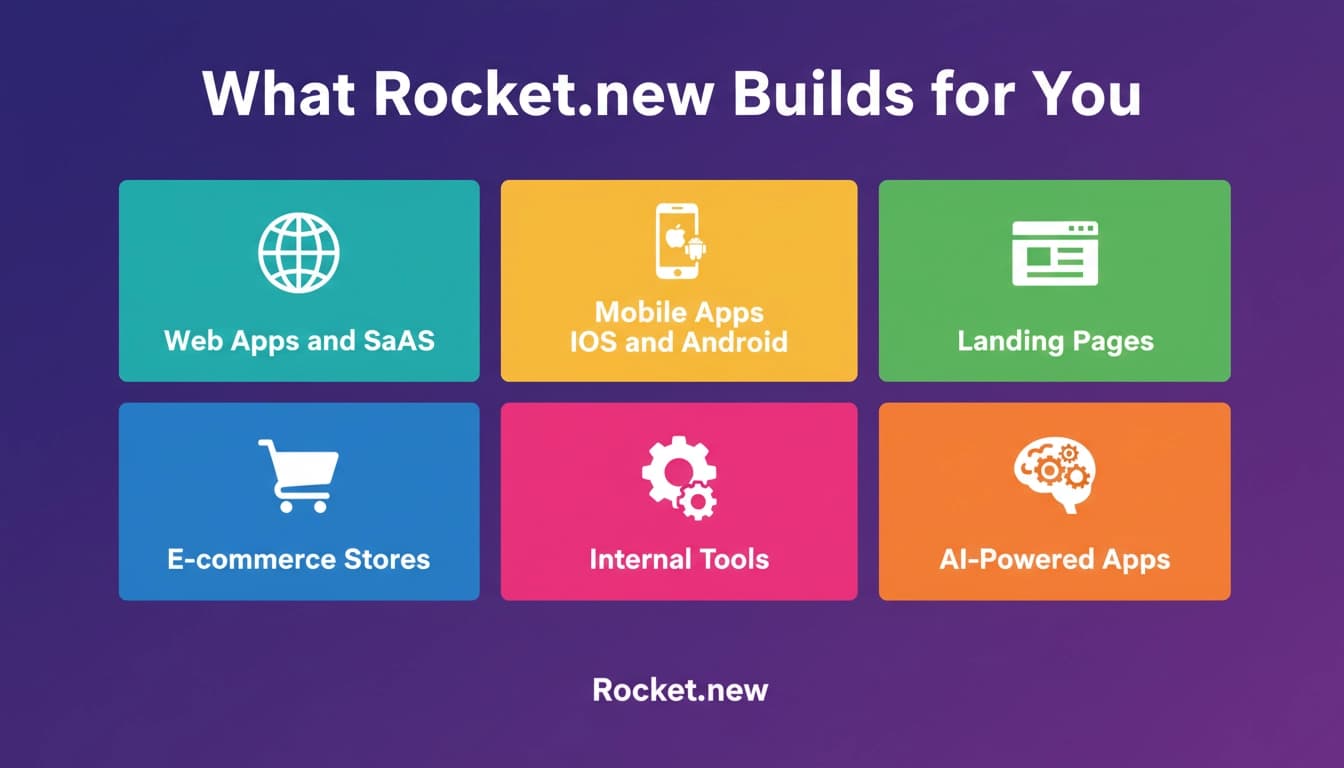 Rocket.new covers every output type a modern product team needs
Practical Tips for Teams Using Vibe Solutions in Plain Language
Teams that get the most from vibe solutions treat each pillar as a deliberate step, not an optional feature. Starting with Solve before opening Build is the single habit that most consistently improves outcomes, because it means the product being built already reflects validated market insight rather than untested assumptions.
A well-framed Solve question produces a report that makes every subsequent Build prompt more specific, more relevant, and more likely to generate something worth shipping, because AI generates stronger outputs when the prompt is precise.
Tips that help:
- Start with Solve, frame a specific business question before writing any Build prompt
- Use Solve reports to define scope, not just validate direction
- Keep Build prompts focused on one feature or screen at a time, then modify the output through follow-up prompts instead of overloading the first request
- Set up Intelligence before launch so competitor signals are already flowing on day one
- Use version history in Build to roll back safely when iterations miss the mark
- Revisit Solve when Intelligence surfaces a significant competitor move
These habits keep development timelines on track and deliver reliable results across every project type. Teams that follow this pattern can also insert generated code or changes into the project workflow more cleanly, so they consistently ship better products faster.
How Vibe Solutions Work for Real Gains
Teams that understand how vibe solutions work gain a steady structure for projects, planning, development, and daily operations. The real gain is not just speed, it is the compounding effect of research informing every build decision and market intelligence informing every product iteration. The rhythm stays consistent, budgets stay in check, and teams keep momentum through every stage of the workflow.
Rocket gives teams a complete platform to apply vibe solutions from first prompt to deployed product. It supports software development, marketing tools, mobile apps, and full-stack builds inside a single workspace without juggling separate tools.
Every partner gets a clear path from idea to finished product, keeping growth steady and expectations grounded. Start building on Rocket.new today and ship your first app faster than you thought possible.