Most products fail because market research and product development happen in separate places. Rocket.new is the world's first vibe solutioning platform that connects research, competitive intelligence, and code generation in one shared context. This blog breaks down the build-measure-iterate cycle and how Rocket.new closes the loop between what teams learn and what they build.
What Happens When You Skip the Research Loop?
Most products don't fail because of bad code. They fail because no one checked whether the market actually wanted them.
The global market research industry reached $150 billion in 2025, a clear signal that validated research has moved from optional to standard for competitive teams. (Source: InsightMark Research)
The teams winning today are not just moving fast. They are moving in the right direction guided by a cycle that connects what they learn to what they build.
Why Market Research Keeps Failing Product Teams
Market research, on paper, should be straightforward. You define your target market, run customer interviews, analyze the data, and make smarter calls.
In practice, it breaks down quickly.
Most teams split their research across separate tools. Spreadsheets handle market sizing. A survey platform collects customer feedback. A manual process tracks competitor websites for competitive intelligence. A separate environment handles code generation.
By the time findings from one stage reach the developers working on the next project, two weeks have passed. Half the context is gone.
Product teams build from assumptions instead of data. Developers ship features customers never asked for. The feedback loop that should drive every stage of the development process never closes.
The problem is not that teams skip research. It is that they run it once as a project instead of running it as an iterative cycle.
The Build-Measure-Iterate Framework Applied to Market Research
The build-measure-iterate framework started in product development, but it applies directly to how teams should run market research and make decisions at every stage.
Stage 1 - Build
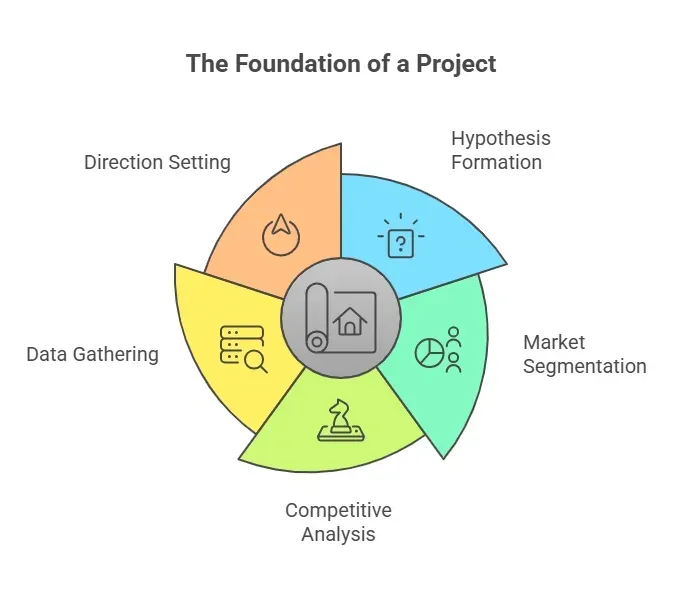
Teams form a clear hypothesis. What business question are we answering? Which market segments are we targeting? What assumptions are we making about our customers and competitors?
Data from social media, competitor websites, customer interviews, and market analysis shape the direction of the project at this stage.
Stage 2 - Measure
Once you have an approach, you test it against the real market. You track how users respond, collect feedback, run market analysis on what is and is not working, and monitor competitors to understand how the wider market is shifting.
Stage 3 - Iterate
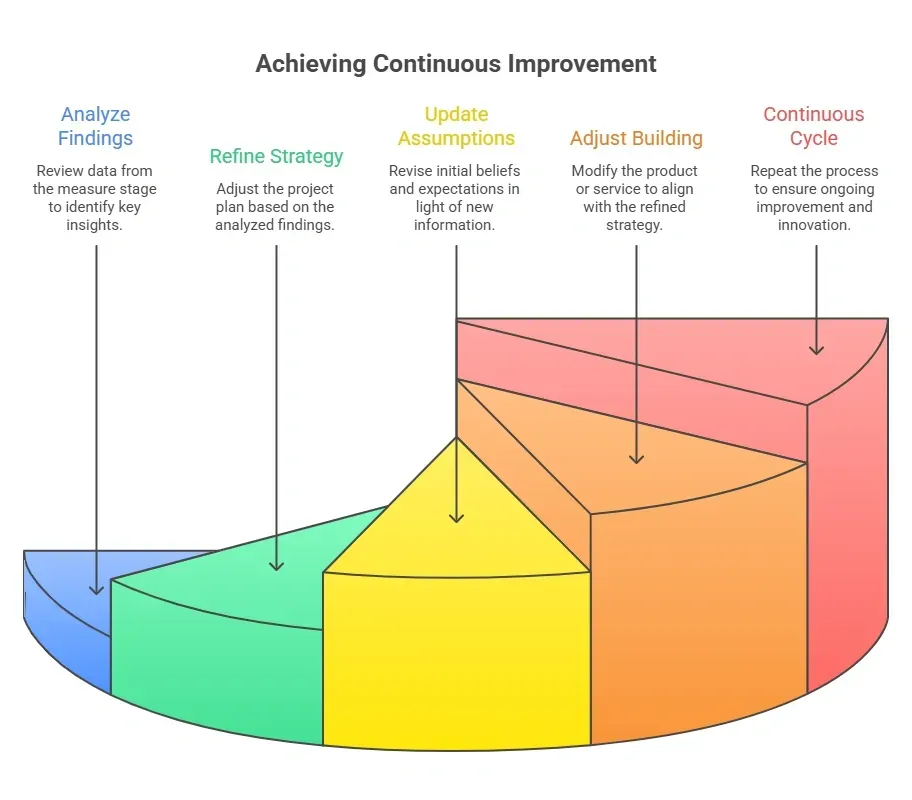
The findings from the measure stage become the input for the next build cycle. Teams refine their strategy, update their assumptions, and adjust what they are building based on what they learned.
This is not a process you run once at the start of a project and move on from. It is a continuous cycle. Teams that keep it running stage after stage, week after week, consistently outperform teams that treat research as a background task.
Where Separate Tools Break the Development Cycle
The build-measure-iterate cycle depends entirely on shared context flowing between stages. Research findings from one project stage have to carry forward into the next. That is where most market research software falls short.
| Research Stage | Tool Teams Typically Use | What Gets Lost |
|---|---|---|
| Market sizing | Spreadsheets | No link to product or code decisions |
| Competitive intelligence | Manual competitor tracking | Slow to update, misses real-time shifts |
| Customer feedback | Survey platforms | Disconnected from the development process |
| Market segments | Analytics dashboards | Context dropped when sharing findings |
| Code generation | Developer IDEs | No market context from research stage |
Each of these tools does its job in isolation. But when market analysis lives in one place and code generation happens in another, the iterative cycle breaks down between project stages.
Developers build without a research context. Researchers produce findings that never reach the team building the product. The project moves forward anyway - just in the wrong market direction.
That is how 43% of startups end up building something nobody wants.
What Artificial Intelligence Changed in Market Analysis
Artificial intelligence has genuinely shifted how fast teams can run market analysis and gather competitive intelligence. According to InsightMark Research, AI tools now analyze data 100 times faster than traditional methods. Analysis that used to take weeks now takes hours.
Eighty-three percent of market research professionals plan to invest in AI tools in 2025. Teams using AI tools for research save an average of 13 hours per week compared to manual methods.
The speed gains are real. But faster research running in separate tools is still fragmented research.
Here is what one researcher at a Fortune 500 company shared in a community thread:
"Our budgets keep getting smaller, we are also being pushed by our executive team to use AI more. Definitely a bunch of really great tools out there that I have been using over the past year."- r/Marketresearch, June 2025 (source)
More artificial intelligence tools exist today than at any point in this industry. That is not the challenge. The challenge is getting them to work together in one place so the iterative cycle stays intact across every project stage.
Rocket.new: One Platform Where Research Connects to Code
Rocket.new is the world's first vibe solutioning platform built around one core idea: the gap between market research and working software should not exist.
Instead of treating research and development as separate project stages, Rocket.new keeps every part of the build-measure-iterate cycle in one platform with shared context. Research findings, competitive intelligence, and code generation live together so nothing gets lost between stages.
Code Generation with Market Context Built In
With most tools, code generation happens in an environment completely separate from research. Developers work from written specifications, not from live market insights.
Rocket.new changes this. When market findings shift when a competitor moves or customer interviews surface a new pattern that context feeds directly into the next build stage. No copy-paste between separate tools. No findings lost in translation.
Vibe Coding for Non-Technical Founders
Rocket.new's vibe coding approach means founders and product teams can go from a business question to a working prototype without writing a line of code.
This closes one of the biggest gaps in software development for non-technical teams - the stage where market research ends and building has to begin. With Rocket.new, those two stages are part of the same project workflow.
Competitor Tracking Inside the Build Cycle
Rather than manually checking competitor websites or tracking market segments across separate dashboards, Rocket.new builds competitor tracking and competitive intelligence directly into the development workflow.
Teams can monitor the market, run iterative market analysis, and feed those findings into their next build cycle without leaving the platform.
Real-Time Collaboration Across the Team
Traditional market research software separates research teams from development teams. Findings from one project stage get packaged into a report and sent across. Context evaporates in transit.
Rocket.new gives both teams one shared context, so insights from customer interviews or market sizing exercises reach developers at the stage where they can actually act on them. Where competitors keep research and code generation in separate lanes, Rocket.new connects research directly to what gets built.
Your Market Research Cycle, Closed
Building for the wrong market is the number one reason products fail. And the root of that business problem is almost always the same: research and development happen in separate places, run by separate teams, using separate tools and the context that should connect them gets lost between project stages.
The Rocket.new approach to market research software: build, measure, iterate gives teams a way to run the full cycle without fragmentation. Research findings inform what gets built. Insights from the measure stage flow directly into the next iteration. The loop stays closed across every stage of the project.
If your team spends weeks on market analysis only to watch those findings go stale before development starts, it is worth asking whether the tools you are using are designed to close that gap or just widen it.
Table of contents
- -Why Market Research Keeps Failing Product Teams
- -The Build-Measure-Iterate Framework Applied to Market Research
- -Stage 1 - Build
- -Stage 2 - Measure
- -Stage 3 - Iterate
- -Where Separate Tools Break the Development Cycle
- -What Artificial Intelligence Changed in Market Analysis
- -Rocket.new: One Platform Where Research Connects to Code
- -Code Generation with Market Context Built In
- -Vibe Coding for Non-Technical Founders
- -Competitor Tracking Inside the Build Cycle
- -Real-Time Collaboration Across the Team
- -Your Market Research Cycle, Closed