
Rocket.new is reshaping competitive intelligence in 2026 by leveraging AI, automation, and real-time data, enabling businesses to gain faster insights, anticipate competitors, and make more strategic, data-driven decisions.
How competitive intelligence shifted from reaction to prediction?
It moved from slow, manual tracking to fast, signal-driven intelligence powered by smart platforms like Rocket.new. Teams no longer wait for quarterly reports or static updates. They act in real time, using live signals and connected data.
According to McKinsey & Company, executives, on average, spend almost 40% of their time making decisions and believe most of that time is wasted.
This blog will help you understand how competitive intelligence works today and how platforms like Rocket.new are shaping smarter, faster decisions.
Why Competitive Intelligence Needed a Change?
For a long time, competitive intelligence was built around manual work and delayed responses.
Teams relied on traditional methods that had worked earlier, but they struggled to keep pace with today’s market and the growing number of competitors.
What was happening:
-
Teams spent hours collecting data from competitor websites, press releases, trade shows, and industry reports
-
Competitive intelligence activities were mostly reactive instead of predictive
-
Competitors began launching features and updates much faster
-
Market trends started shifting quickly, sometimes overnight
-
Social media began influencing product positioning and competitor strategies in real time
-
Competitive intelligence professionals often ended up analyzing data after key changes had already happened
-
Strategic decisions were delayed, affecting overall business strategy
-
Tactical intelligence helped in the short term but did not support long-term planning
This created a clear gap. Businesses needed a smarter process for competitive intelligence that could match the speed of the market and help teams stay ahead instead of reacting late.
The Shift to Predictive Competitive Intelligence
Modern competitive intelligence moved from collecting data to reading signals. Instead of just looking at what competitors did, teams now track why they did it and what comes next.
This is where strategic intelligence plays a role. It combines market research, competitor intelligence, and data from multiple sources.
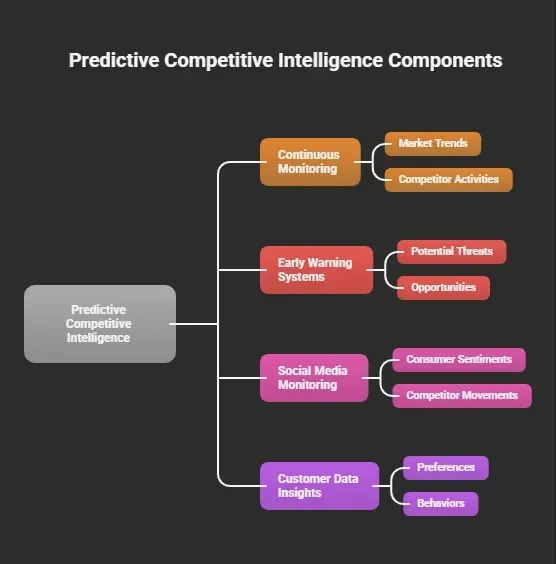 This shift helps teams stay ahead instead of playing catch-up.
What Rocket.new Brings to Competitive Intelligence?
Rocket.new brings a fresh approach to competitive intelligence by shifting focus from scattered efforts to a connected system. It is not just another tool. It works as a vibe solutioning platform that links signals, data, and insights in one place.
What it does:
-
Connects signals from across the market into one system
-
Turns vast amounts of data into actionable insights
-
Reduces reliance on multiple tools by bringing everything into one platform
-
Helps intelligence professionals and product teams work faster
-
Improves visibility across competitors and market movements
This approach changes how teams handle competitive intelligence. Instead of jumping between tools, they get a clear and connected view that supports faster and smarter decisions.
How Rocket.new Intelligence Works?
Rocket.new intelligence follows a structured process that turns scattered data into clear insights, it simplifies how intelligence professionals and product teams handle competitive intelligence across the market.
1. Collecting Data from Multiple Sources
The platform pulls data from:
-
Competitor websites
-
Social media
-
Press releases
-
Industry reports
-
Trade shows
-
Primary sources like interviews
It helps intelligence professionals collect information without manual effort.
2. Signal Detection and Analysis
Rocket.new identifies signals across the market. These signals include:
-
Competitor actions
-
Pricing strategies
-
Product launches
-
Industry developments
Then it performs competitive intelligence analysis to make sense of those signals.
3. Building a Unified View
One of the biggest challenges in competitive intelligence research is scattered data. Rocket.new creates a unified view so product teams and intelligence professionals see everything in one place.
This improves decision making and supports better decisions.
4. Generating Actionable Insights
The system converts raw data into insights. These insights guide:
-
Product positioning
-
Competitive strategy
-
Overall business strategy
That is where the difference really shows.
This step-by-step process helps teams move from collecting data to actually using it. With everything connected, it becomes easier to act faster, make better decisions, and stay ahead of competitors in a fast-moving market.
Key Features
Here’s a quick breakdown:
| Feature | What It Does | Impact |
|---|---|---|
| Signal tracking | Detects competitor signals in real time | Helps teams stay ahead |
| Continuous monitoring | Tracks market and competitors nonstop | Supports strategic decisions |
| Competitive benchmarking | Compares performance across competitors | Improves market share strategy |
| Market intelligence hub | Centralizes data and insights | Gives a unified view |
| Early warning systems | Flags risks and opportunities | Reduces reaction time |
These specific features make competitive intelligence faster and more useful.
From Tactical Intelligence to Strategic Intelligence
Before tools like Rocket.new, teams relied heavily on tactical intelligence. That meant short-term actions based on recent competitor behavior.
Now, strategic competitive intelligence is the focus.
Strategic intelligence looks at:
-
Long-term market trends
-
Competitor strategies
-
Industry trends
This shift helps teams make informed decisions instead of guessing.
Real Impact on Product Teams
Product teams benefit the most from this shift. They use competitive intelligence tools to:
-
Refine product positioning
-
Track competitor actions
-
Adjust pricing strategies
-
Plan launches
Rocket.new helps teams move faster. It connects competitor intelligence with real-time signals.
So instead of asking, “What are competitors doing?”
They ask, “What will competitors do next?”
That’s a big difference.
Competitive Intelligence Activities in 2026
Competitive intelligence activities have changed a lot over time. What used to be slow and manual is now faster and more connected. Let’s simplify how things look today and how the approach has evolved.
Traditional Approach:
-
Manual competitor research
-
Static reports
-
Delayed insights
Modern Approach:
-
Continuous monitoring
-
Signal-based analysis
-
Predictive insights
This shift clearly shows how competitive intelligence has moved forward. It is no longer just about reacting. It is about staying ahead with faster insights and smarter actions.
Why Competitive Intelligence Is Important Today
Competitive intelligence important for every business. It shapes business strategy and improves organizational performance.
It helps with:
-
Understanding market share
-
Tracking competitors
-
Identifying market trends
-
Supporting strategic decisions
Without it, companies risk falling behind.
Ethical Concerns in Competitive Intelligence
With more data comes responsibility.
Ethical concerns include:
-
Misuse of customer data
-
Privacy issues
-
Unfair data collection
Good competitive intelligence professionals rely on primary sources and public data. They avoid unethical practices.
Rocket.new and the Future of Competitive Intelligence
Rocket.new connects everything discussed so far.
It combines:
-
Market intelligence
-
Competitor intelligence
-
Strategic intelligence
It supports intelligence professionals with tools that simplify the process, It also helps teams analyze market trends and respond faster.
How Rocket.new Connects to the Shift from Reactive to Predictive
So, how does Rocket.new connect to the main idea? Reactive competitive intelligence waits for events. Predictive competitive intelligence reads signals early.
Rocket.new enables:
-
Early detection of competitor actions
-
Faster analyzing data
-
Smarter strategic insights
That shift changes how businesses operate.
From Reactive to Predictive with Rocket.new
Traditional competitive intelligence relied on slow processes. Teams spent too much time collecting data and reacting to competitors. This delayed decision making and weakened strategic decisions. Rocket.new changes that by connecting signals, data, and insights in real time. It supports continuous monitoring and builds a unified view, helping intelligence professionals and product teams act faster and plan smarter.
Competitive intelligence in 2026 is now predictive, signal-driven, and focused on action. Rocket.new shows how one platform can shift the entire process. Teams that adapt stay ahead, while others struggle to keep up.
Want to move from reactive to predictive competitive intelligence? Check out Rocket.new and see how it can support smarter, faster decisions.
Table of contents
- -Why Competitive Intelligence Needed a Change?
- -The Shift to Predictive Competitive Intelligence
- -What Rocket.new Brings to Competitive Intelligence?
- -How Rocket.new Intelligence Works?
- -1\. Collecting Data from Multiple Sources
- -2\. Signal Detection and Analysis
- -3\. Building a Unified View
- -4\. Generating Actionable Insights
- -Key Features
- -From Tactical Intelligence to Strategic Intelligence
- -Real Impact on Product Teams
- -Competitive Intelligence Activities in 2026
- -Why Competitive Intelligence Is Important Today
- -Ethical Concerns in Competitive Intelligence
- -Rocket.new and the Future of Competitive Intelligence
- -How Rocket.new Connects to the Shift from Reactive to Predictive
- -From Reactive to Predictive with Rocket.new