
Rocket.new leverages competitor job postings to decode hiring signals, identify emerging priorities, and anticipate strategic shifts, helping businesses make informed decisions and stay ahead in competitive markets.
What can competitor job postings really tell you about strategy?
Quite a lot, actually. The idea behind Rocket.new reads competitor job postings is simple: hiring patterns reflect direction. When companies post roles, they reveal priorities, tech stacks, and plans.
A surge in AI roles, backend engineers, or mobile developers usually signals what’s coming next.
Recent data shows that job postings mentioning AI have increased by over 130% since 2020, with 4.2% of all listings now referencing AI. This sharp shift shows how hiring trends reflect where companies are investing and building next. That makes job postings a strong signal source for strategy.
Let's see how to turn job postings into clear insights and connect them directly to smarter product decisions.
Why are job postings more than hiring signals?
When a company hires for AI engineers, backend specialists, or mobile developers, they’re revealing what they’re building next.
This connects directly to product positioning and growth plans. It’s like getting a preview of their roadmap and yes, this is where market research gets smarter. Instead of surveys and guesswork, you track real actions.
Think about it:
-
A spike in mobile developers? Likely focus on mobile apps
-
Hiring DevOps? Scaling infrastructure
-
UX designers? Improving user experience
Now combine this with AI tools, and suddenly you’re not just reading job postings, you’re interpreting them.
How Rocket.new reads competitor job postings
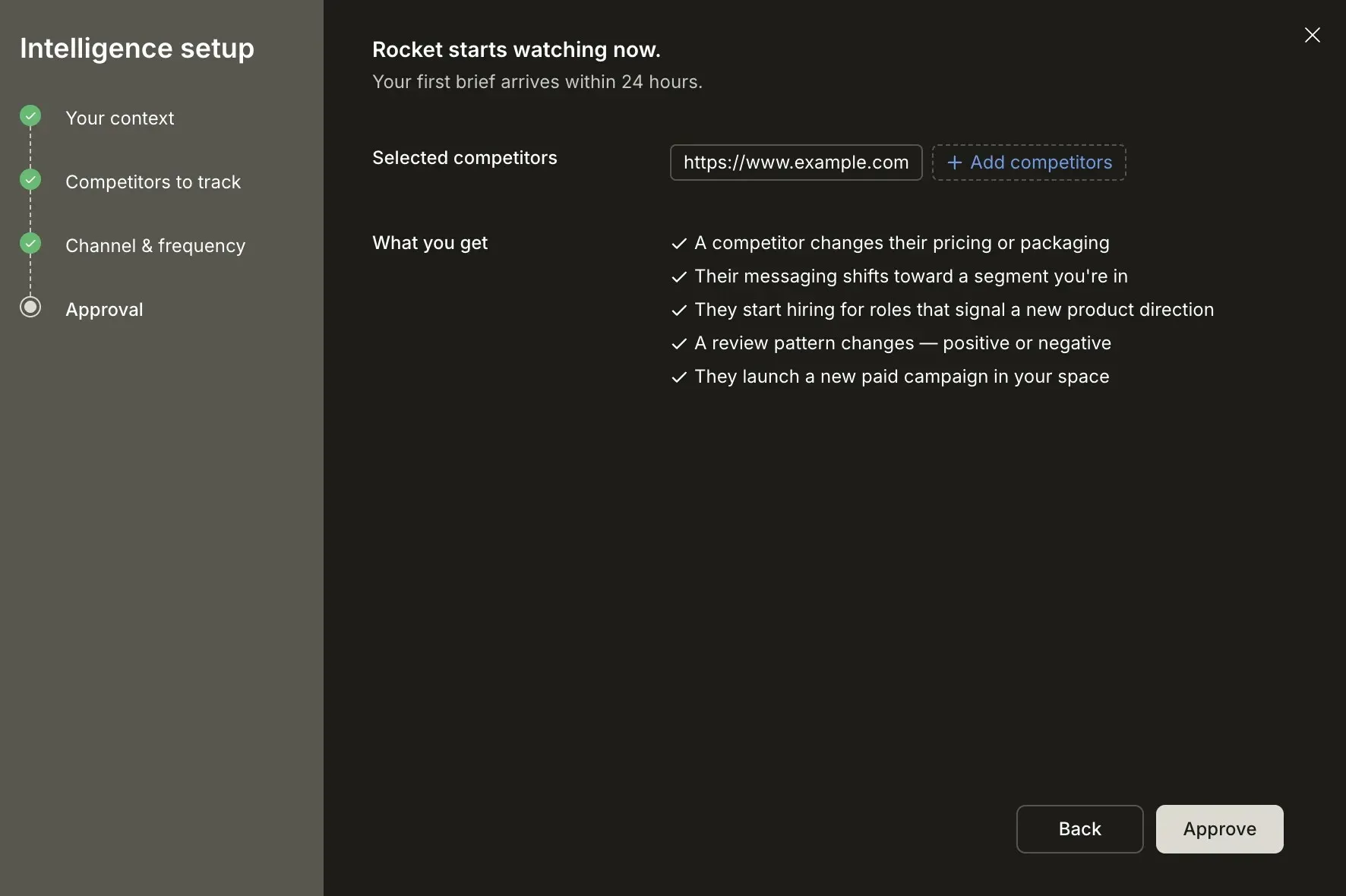
Rocket.new turns scattered hiring data into something you can actually use. Instead of just reading listings, it connects patterns to real strategy.
-
Collect job postings from competitors
-
Analyze roles using natural language understanding
-
Identify trends in hiring
-
Map those trends to product direction
-
Suggest next moves for product teams
You don’t just see data. You understand what competitors are building next and how to respond..
From hiring signals to product strategy
Well, collecting data is one thing. Turning it into action is another.
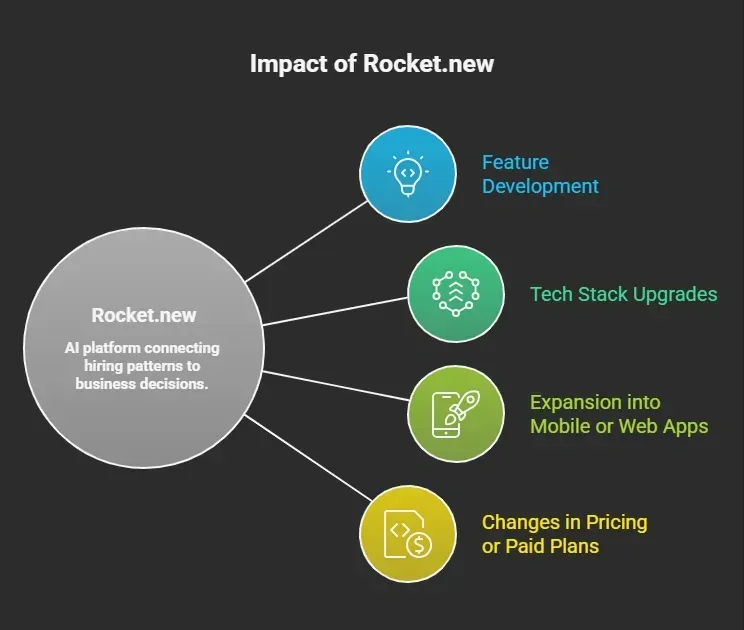 For example: If competitors hire React Native developers, it signals mobile app building direction. That means your team might want to focus on web and mobile apps together.
This is how teams stay ahead without reacting too late.
Rocket.new platform overview and intelligence features
Rocket.new is an all in one platform designed for AI driven development. It combines app building, analytics, and intelligence in one system.
From the official docs, the intelligence layer works through:
-
Signal tracking
-
Pattern recognition
-
Strategy mapping
Key features of Rocket.new
-
Full stack app building with real code output
-
Code generation and code editing in the same environment
-
Github integration for syncing projects
-
Custom domains and custom domain support
-
Access controls for team management
-
Dedicated support for scaling teams
-
Unlimited users in team setups
-
Built-in deployment workflows
-
Support for internal tools and production ready apps
Also, Rocket.new supports code export, code download, and code ownership, so users keep control and yes, both technical users and non technical users can work here using natural language prompts.
Turning competitor signals into real product builds
Rocket.new takes insights from job postings and turns them into clear product actions. Instead of stopping at analysis, it links hiring signals directly to what you should build next.
When competitors hire backend engineers or product roles, it shows where they are investing. Rocket.new reads those signals and helps you act on them without delays.
-
Product improvements: Strengthening backend support; improving app logic
-
New opportunities: Building new internal tools
-
Execution layer: Prompt to UI tool; editable code; production ready code
You move from insight to action without friction. Instead of just observing competitors, you build faster and stay aligned with real market signals.
Job postings to deployed apps workflow
Here’s a simple workflow that shows how job posting signals move from analysis to actual product execution.
| Step | Action | Outcome |
|---|---|---|
| 1 | Analyze job postings | Identify trends |
| 2 | Generate insights | Strategy suggestions |
| 3 | Start app building | Create generated apps |
| 4 | Use Github integration | Sync and manage code |
| 5 | Deploy | Launch production ready apps |
This flow keeps everything connected, so teams can move from data to decisions to deployed apps without breaking momentum.
App building experience inside Rocket.new
Rocket.new focuses on actual building, not just ideas. It gives users a clear way to move from concept to product using simple workflows and flexible tools.
Everything is designed to keep the process smooth, so users can build, adjust, and ship without switching between different setups.
-
Supported builds: Web apps and mobile apps; full stack app generation; quick app generation with minimal effort
-
What you can create: Landing pages; dashboards; internal tools; customer-facing platforms
-
Core capabilities: Same environment; code editing; code generation; handling complex business logic; refining app logic
-
Development flow: Github integration; version control for tracking and updates
The experience stays consistent from start to finish, making it easier to build, update, and manage apps without breaking flow.
Pricing and usage structure
Rocket.new uses a flexible system where usage scales with how much you build. Instead of fixed limits, it follows a credit based usage model, where actions consume credits based on token usage.
-
Plan options: Basic plans for casual users; advanced plans for small teams; enterprise options with advanced security
-
Access and upgrades: Pricing page for details; option to contact sales for custom plans
-
Benefits: Centralized billing; better cost efficiency; support for multiple tools inside one platform
-
Consideration: Cons token usage where heavy usage can consume credits faster
This setup gives flexibility for different users, from individuals to growing teams, while keeping usage predictable and easy to manage.
Community insight
Here’s a perspective from the community that aligns with this idea:
“Job postings are signals. They show what companies are building next.” Linkedin
That captures the idea perfectly. Hiring reflects direction. Tools like Rocket.new help you read those signals faster and act on them.
How Rocket.new supports teams and workflows?
Rocket.new is designed to keep teams aligned and moving fast. It brings everything into one place so different roles can work together without friction or confusion.
-
Who it helps: Web first teams; product managers; developers; founders
-
Team features: Access controls; dedicated support; unlimited users
Teams can build and ship without switching between tools, with everything handled in one platform from insight to deployment.
Real benefits for product teams
Rocket.new helps teams move with clarity by turning signals into direct actions. Instead of guessing or delaying decisions, teams can rely on real data and respond faster with confidence.
-
Faster decisions using actionable insights
-
Better product positioning
-
Ability to build apps based on real signals
-
Faster deploying web applications
-
Improved cost efficiency
And because everything is tied together, teams can go from idea to live app quickly.
Rocket.new Reads Competitor Job Postings
Companies collect a lot of data, but struggle to turn it into clear direction. Job postings are easy to find, yet most teams don’t connect them to real product decisions. This slows down execution and creates missed opportunities when competitors are already moving ahead.
Rocket.new Reads Competitor Job Postings changes that by turning hiring signals into strategy. It uses custom AI agents to interpret patterns and connect them directly to app building. Teams can move from insight to production ready apps with minimal setup. The shift is simple: less guessing, more building.
Want to turn competitor job postings into your next product move? Try Rocket.new and start building based on real signals.
Table of contents
- -Why are job postings more than hiring signals?
- -How Rocket.new reads competitor job postings
- -From hiring signals to product strategy
- -Rocket.new platform overview and intelligence features
- -Key features of Rocket.new
- -Turning competitor signals into real product builds
- -Job postings to deployed apps workflow
- -App building experience inside Rocket.new
- -Pricing and usage structure
- -Community insight
- -How Rocket.new supports teams and workflows?
- -Real benefits for product teams
- -Rocket.new Reads Competitor Job Postings