Rocket.new is the faster path for founders and non-technical teams who need a production-ready live app from a single prompt. Replit is the right pick for experienced developers who want a full cloud IDE with AI assistance. Start with Rocket.new if you want to go from idea to app without writing a line of code.
Rocket.new vs Replit comes down to one question: do you want to describe what you need and get a working app, or do you want to stay in the code and build it yourself?
So you have an app idea, then which platform do you use to build it?
Rocket.new vs Replit, which platform is better for building AI-powered apps, is one of the most common questions in the vibe coding space right now. And it makes sense. Both platforms use AI to help you build apps faster. Both support deployment. Both have free plans. But they are built for very different people with very different goals.
The vibe coding market is projected to reach $4.7 billion by 2027, growing at a compound annual growth rate of 38%. Vibe coding allows users to create applications using natural language prompts instead of traditional coding, enabling non-technical users to describe their desired outcomes in plain language, which the platform then translates into functional code.
That kind of growth means more platforms, more options, and more confusion about which one actually fits your workflow. This blog breaks it down clearly.
What Are These Two Platforms?
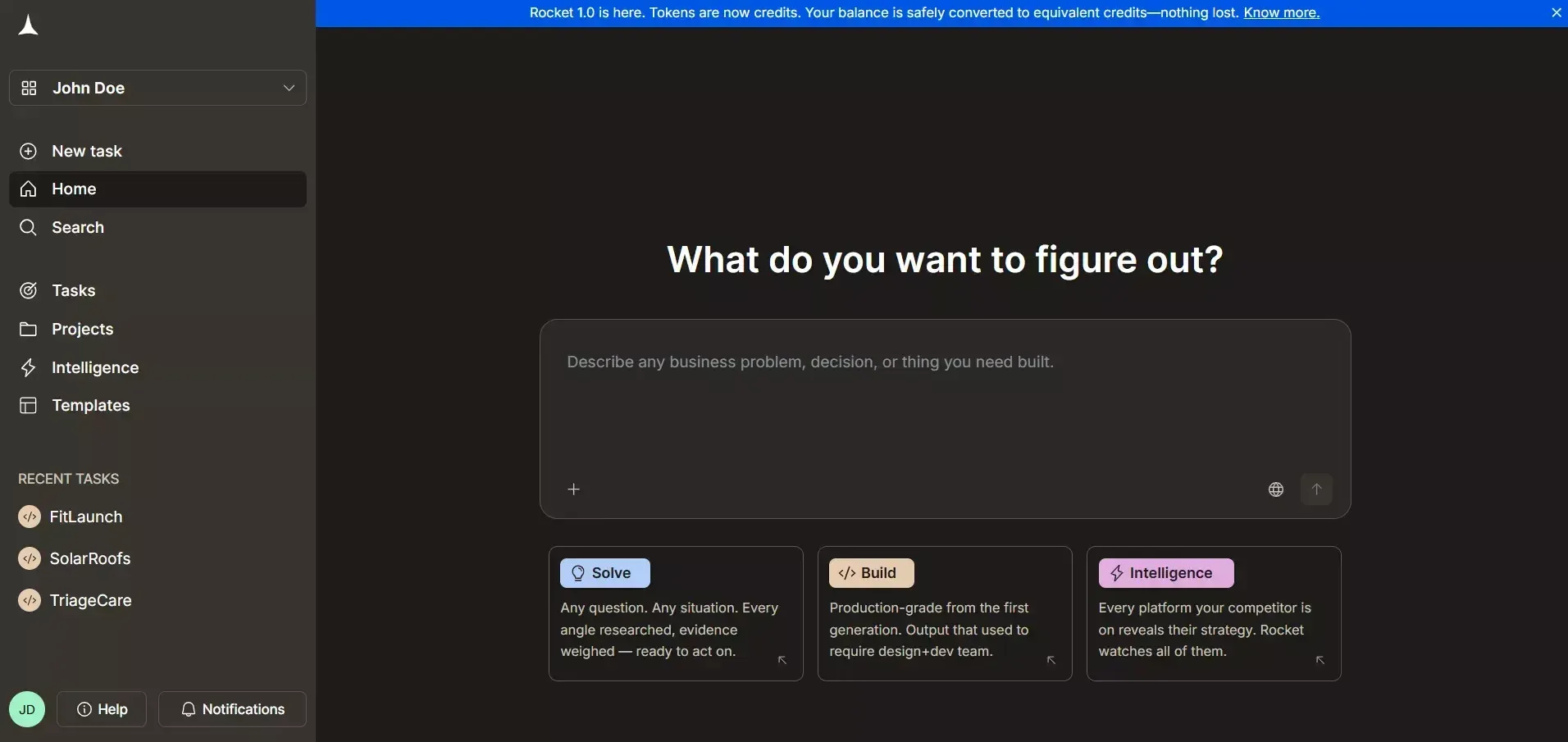
Rocket.new
It is the world's first vibe solutioning platform. It is not just an AI app builder. It covers the full arc from research to building to operating, all inside one shared project context. You describe what you want in plain language, and Rocket generates the entire application. Web apps using Next.js, mobile apps using Flutter, landing pages, internal tools, and customer portals. All of it, from one prompt.
Replit
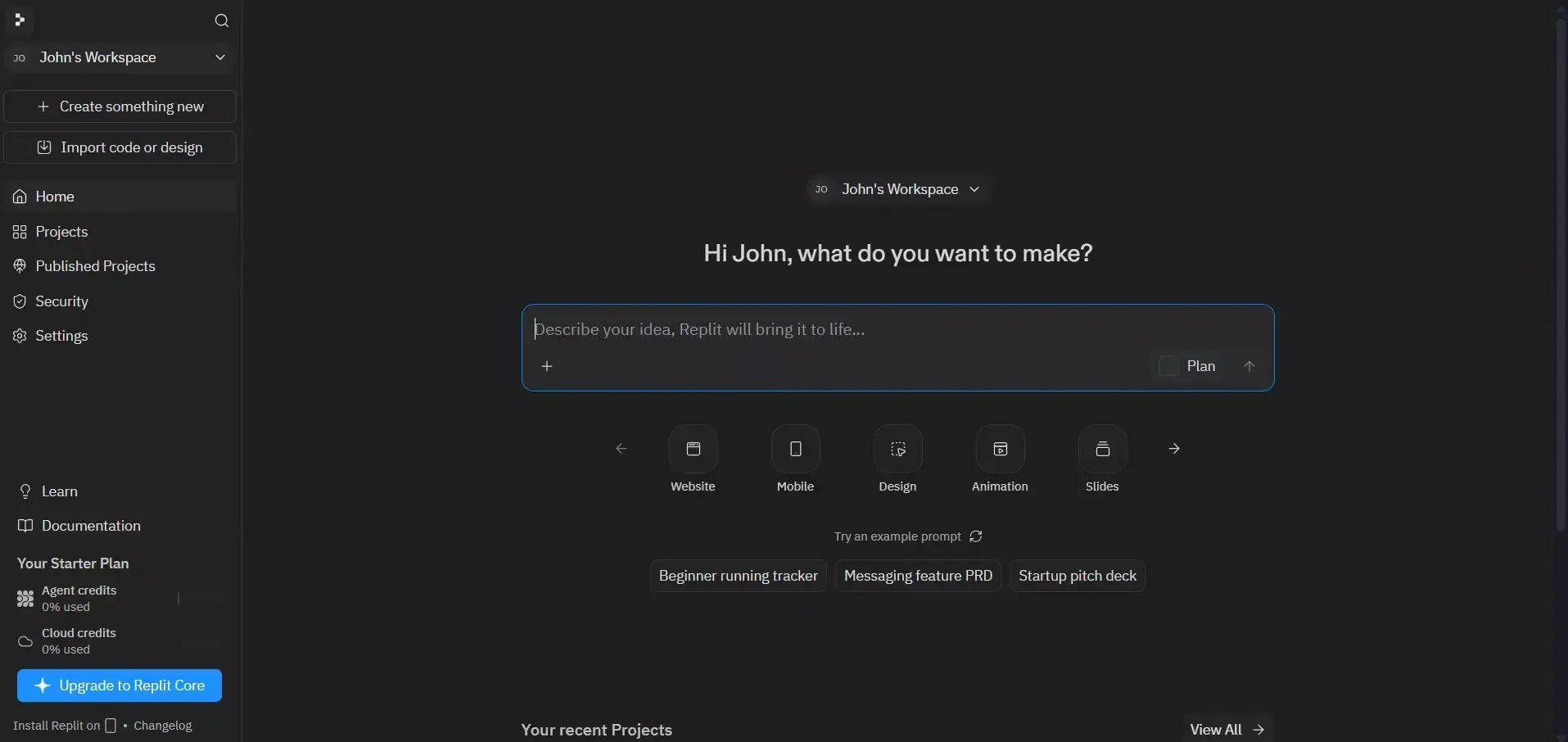
It is a cloud IDE that brings your development environment into the browser and supports over 50 programming languages. Replit offers a complete cloud development environment for debugging and customizing code generated by AI assistants. You write, test, and deploy code without any local setup.
 Here is a quick side-by-side before going deeper:
| Feature | Rocket.new | Replit |
|---|---|---|
| Primary user | Non-developers, founders | Developers, learners |
| App generation | Full app from one prompt | Step-by-step with AI guidance |
| Mobile apps | Native via Flutter | Web-based only |
| Web apps | Next.js | Multiple frameworks |
| Free tier | 1 million tokens | Limited AI agent, 1 published app |
| Paid plans start at | $25/month | $20/month |
| Pricing model | Token-based | Pay-as-you-go |
| Local setup needed | No | No |
| Version control | Built-in | Built-in |
Rocket.new generates entire applications from a single prompt, while Replit requires users to guide each step of the coding process.
How Does the Prompt-to-App Experience Differ?
This is the main difference between the two platforms, and it matters a lot depending on who you are.
Rocket.new generates entire applications from a single prompt. You describe the outcome you want in natural language, and Rocket handles the architecture, the code, the backend logic, and the deployment. No step-by-step guidance needed. Non-developers can describe outcomes rather than implementation details, which significantly lowers the learning curve for app creation. That is the AI app generator model at its best.
Replit works differently. Replit AI assists you through the coding process, but you are still guiding each step. You write or review generated code, test code in the browser, debug, and iterate. It is closer to pair programming with an AI assistant than it is to full app generation.
Vibe coding tools like Rocket.new reduce the barrier to entry for app development, allowing individuals who understand business problems to create their own tools without extensive coding knowledge. Replit is better suited for users who want to learn coding and maintain control over their application's logic.
Who benefits from each approach:
-
Rocket.new: founders, non-technical teams, product managers, operators who need a working app fast
-
Replit: experienced developers who prefer staying in the code, learners who want to understand what the AI is generating, and teams doing multi-language projects
How Does Mobile App Support Compare?
This is one area where the platforms diverge significantly.
Rocket.new supports mobile app development natively through Flutter. That means real native mobile apps, not browser wrappers. It also supports Next.js for web apps, so you can deploy across platforms from the same project context.
Replit handles mobile apps through web-based approaches, which limits native functionality. If your project requires true native mobile apps, Rocket.new is the stronger choice here.
What Do the Paid Plans Look Like?
Both platforms offer a free tier and paid plans, but the structure is quite different.
Free tier comparison:
| Platform | Free Tier Includes |
|---|---|
| Rocket.new | 20 free one-time credits, all Build capabilities, public tasks |
| Replit | Free daily AI agent credits, public projects only, one published app |
Paid plans:
| Plan | Rocket.new | Replit |
|---|---|---|
| Entry paid plan | $25/month (Build: 100 free monthly credits) | $25/month Core ($20/month billed annually) |
| Mid tier | $250/month (Solve + Build: 1,000 monthly credits) | Not available |
| Upper tier | $350/month (Solve + Build + Intelligence: 1,500 monthly credits) | $100/month Pro ($95/month billed annually) |
Rocket.new runs on a credit-based system where credits never expire and unused credits roll over. All plans include unlimited team members with no per-seat fees, making it more predictable for budgeting compared to Replit's pay-as-you-go billing, which can lead to unexpected charges depending on how much AI agent time you use. Additional credits can be purchased on any plan as needed.
Both platforms support one-click deployment to app hosting with custom domains once you are ready to go live.
Replit vs Rocket.new: Who Should Use Which?
Here is the goal-to-platform mapping to make this concrete.
| Your Goal | Best Platform | Why It Works |
|---|---|---|
| Launch an MVP without coding | Rocket.new | Full app from a single natural language prompt |
| Build and learn to code | Replit | Full cloud IDE with step-by-step AI assistance |
| Ship a native mobile app | Rocket.new | Flutter support built in |
| Debug and customize AI-generated code | Replit | Complete development environment for code review |
| Run market research before building | Rocket.new | Vibe solutioning includes research and competitor monitoring |
| Work across 50+ programming languages | Replit | Broad language support with deep customization |
| Predict monthly costs clearly | Rocket.new | Token-based pricing, no surprise bills |
| Build full stack apps with backend logic | Replit | Granular code control with AI assistance |
Steps to decide which platform fits your workflow:
-
Identify whether you want to describe outcomes or write code
-
Check if you need native mobile apps or web apps only
-
Compare your budget against the free tier limits
-
Consider whether you need built-in market research and competitive intelligence
-
Ask if you are learning to code or building to ship
Step-by-Step: How to Start Building on Each Platform
On Rocket.new:
-
Go to Rocket.new and sign up for the free tier
-
Start a new project and type your app idea in plain language, for example: "Build a customer portal. for a fitness studio with booking, payments, and a member dashboard."
-
Rocket generates the full-stack app, including frontend, backend, and deployment configuration.
-
Review the live app, request changes using natural language prompts.
-
Deploy with one click and connect your custom domain.
On Replit:
-
Go to Replit.com and create an account
-
Choose a programming language or framework and create a new Repl
-
Use Replit AI to generate code snippets, debug errors, or suggest logic
-
Test code directly in the browser using the built-in environment with no local setup required
-
Deploy when ready using Replit's hosting
The setup time difference is real. Rocket.new gets you to a live app faster. Replit gives you more hands-on control at each stage.
Who Uses These Platforms? Real Examples by User Type
| User Type | What They Want to Build | How the Platform Helps |
|---|---|---|
| Startup founder | MVP for a SaaS product | Rocket.new generates the full app from a prompt, skipping months of development |
| Freelance developer | Custom client projects with specific logic | Replit offers full code control with AI assistance for faster delivery |
| Small business owner | Booking tool or customer portal | Rocket.new builds it without requiring any coding knowledge |
| A developer learning to code | Practice projects in multiple languages | Replit's community library and tutorials support debugging and growth |
| Product team at a company | Internal tools and dashboards | Rocket.new builds internal tools from natural language descriptions |
Across all user types, the common outcome is faster app creation compared to traditional development. The difference is how much control you want to keep over the generated code.
What Real Users Say About Vibe Coding Tools
The shift toward vibe coding is not theoretical. Developers and non-developers alike are building things they could not have shipped before.
"I came across an article about vibe coding and discovered Rocket.new, it's nothing short of a miracle. I simply described what I wanted in plain English, and within a few hours, I had a working outline of the app." - Property Manager, via Trustpilot
"Rocket is genuinely impressive. I used it to build a complex, multi-feature application with real data models, authentication flows, and business logic — and it delivered far beyond what I expected." - Andrew T. Reilley III, via Trustpilot
"For certain kinds of apps, the answer is yes, and it's closer to real development than anything else I've tested in 2026." - Independent Reviewer, via HostAdvice
For more context on how the vibe coding space is evolving and what real builders are saying, this community roundup of Reddit vibe coding discussions covers honest developer perspectives on the shift from traditional development to prompt-to-app workflows.
Why Rocket.new Goes Beyond a Standard App Builder
Rocket.new is the world's first vibe solutioning platform. That is not just a different label for an AI-powered app builder. It is a different category.
Standard vibe coding tools start at line one of the code. Rocket.new starts before it. The platform includes:
-
Solve: strategic intelligence that researches your business problem before you build
-
Build: production-grade app generation from natural language prompts
-
Intelligence: continuous competitor monitoring across all platforms they operate on
-
Context and Projects: shared memory that compounds across every action in your project
-
Redesign: reimagine and rebuild existing products
Vibe solutioning includes layers for market research and competitor monitoring within the same project context, differentiating it from standard coding tools. You are not just generating code. You are building from validated thinking, which is the part that saves the most time and money.
How Rocket.new applies to specific build scenarios:
-
You have a product idea and want to validate it before writing a line of code: use Solve first
-
You need a full-stack web app without a development team: use Build with a natural language prompt
-
You want to monitor what competitors are doing while you build: use Intelligence inside the same project
-
You need native mobile apps alongside your web app: Flutter support is built in
Choosing the Right Platform for Your AI App Project
The question of Rocket.new vs Replit, which platform is better for building AI-powered apps, does not have a single answer. It has two correct answers depending on who you are.
Choose Replit if you are a developer who wants to stay in the code, debug at every step, and work across multiple languages with AI assistance. Replit offers a powerful development environment with years of community support behind it.
Choose Rocket.new if you want to go from idea to a live app without coding. The platform handles everything from research to deployment, supports native mobile apps, and uses predictable token-based pricing. For founders, operators, and non-technical teams, it is the faster path to a working app.
Both platforms support rapid prototyping and one-click deployment. The real question is whether you want to guide the code or describe the outcome and let the AI handle the rest.
Table of contents
- -What Are These Two Platforms?
- -Rocket.new
- -Replit
- -How Does the Prompt-to-App Experience Differ?
- -How Does Mobile App Support Compare?
- -What Do the Paid Plans Look Like?
- -Replit vs Rocket.new: Who Should Use Which?
- -Step-by-Step: How to Start Building on Each Platform
- -Who Uses These Platforms? Real Examples by User Type
- -What Real Users Say About Vibe Coding Tools
- -Why Rocket.new Goes Beyond a Standard App Builder
- -How Rocket.new applies to specific build scenarios:
- -Choosing the Right Platform for Your AI App Project