Statista is useful for macro market data, but it cannot tell you if your specific product will resonate with real users. This blog makes the case for shipping a working MVP with Rocket.new and using real user feedback as your primary research signal a faster, cheaper, and more accurate approach for early-stage founders.
What If the Data You Actually Need Isn't in a Report?
Most founders start with Statista. Pull a market size number, add it to the pitch deck, and call it market research.
That works for macro context. It doesn't tell you whether your product will work.
According to a 2025 report by Founders Forum Group, 42% of startups fail because they misread market demand they built products nobody actually wanted.
What Statista Is Good For and Where It Stops
Statista is a solid research tool. The Starter plan runs $199/month billed annually, with Personal at $649/month and Professional at $1,399/month. (Statista pricing)
For bootstrapped startups watching their runway, that's a real spend. And what you get back is historical, aggregated data about macro markets not behavioral signals from your actual users.
| Research Method | What You Learn | What You Miss |
|---|---|---|
| Statista / market reports | Market size, trends, competitive intelligence | Whether your product resonates with real users |
| User interviews | Pain points and mental models | How users behave inside a working app |
| Surveys | Stated preferences | Actual usage and user behavior |
| MVP + real users | Real behavioral signals in context | Nothing this is the closest to truth |
Statista covers the first row well. Reaching the fourth row requires a working product in front of real users.
The Problem With Building Before Validating
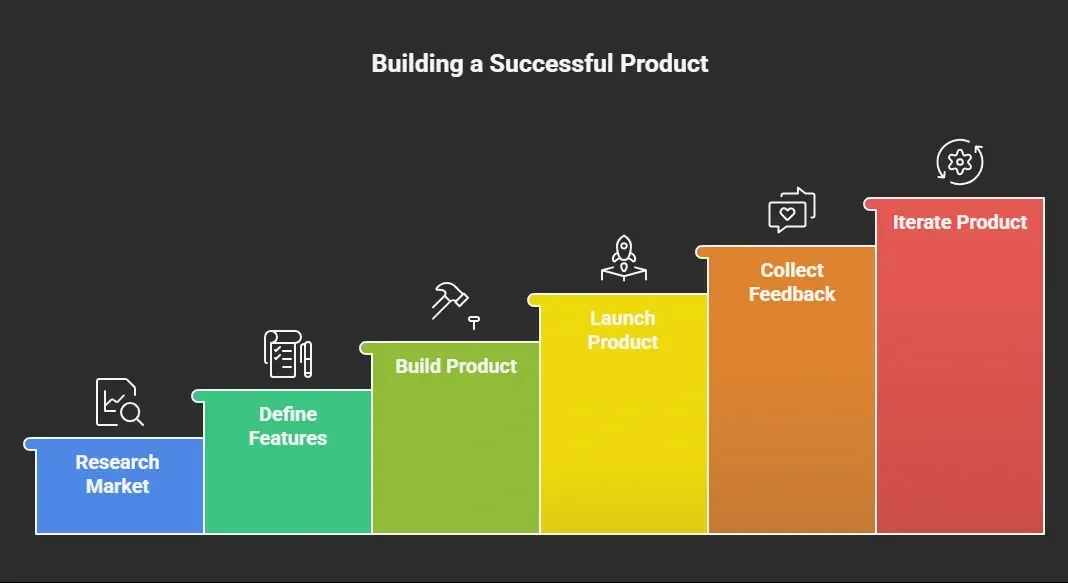
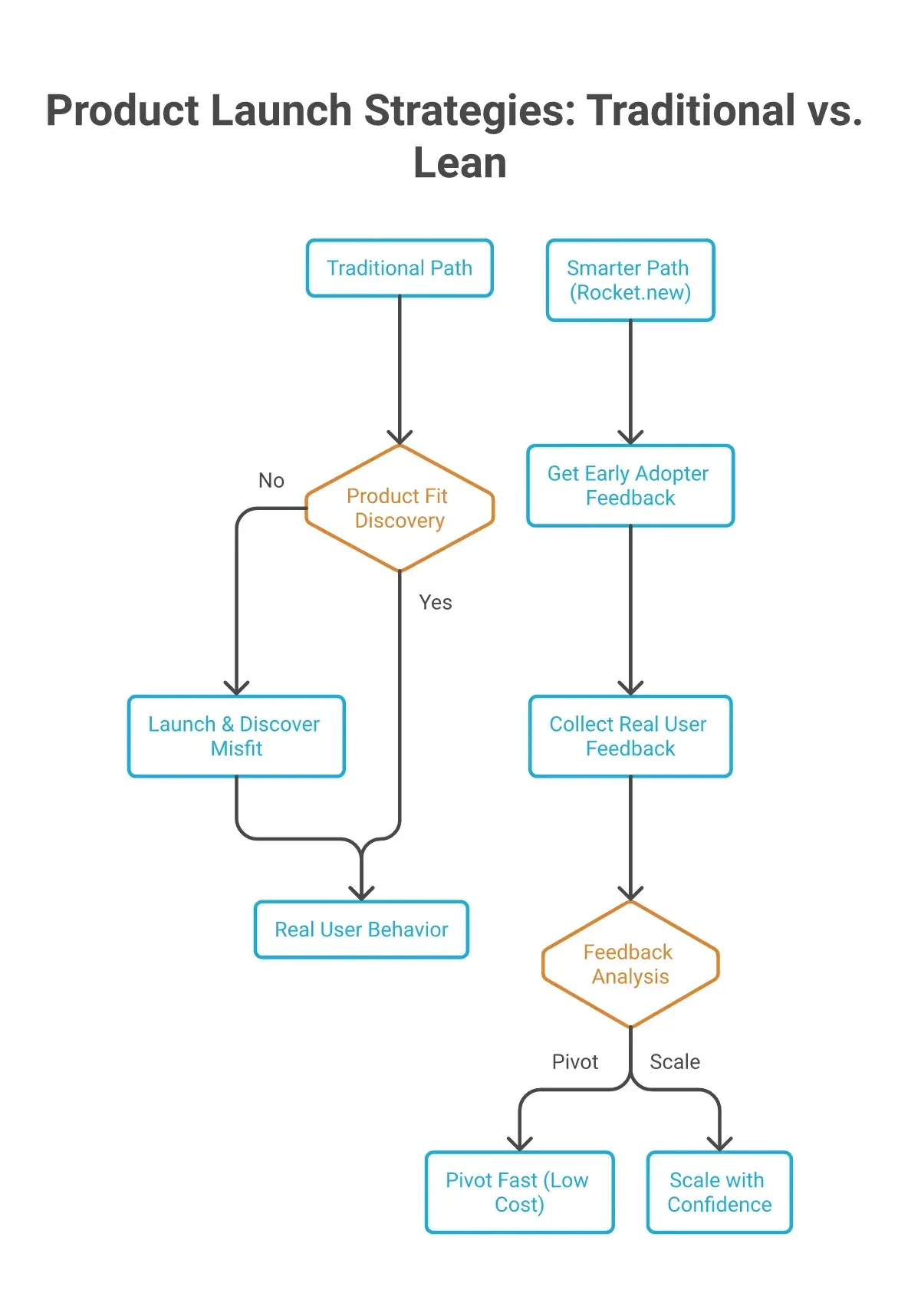
The standard approach looks logical on paper. Research the market, define core features, build the product, then launch and collect feedback.
The issue is the final step. By the time real user feedback arrives, months and significant budget are already spent on assumptions.
The purpose of a minimum viable product is not to build the perfect product it's to build just enough to learn something true. Ship something that delivers your core value. Watch what users click, what they ignore, and what they return for.
That user behavior is your real market research.
Where Other Tools Fall Short
For non technical founders moving fast, most tools require too much investment before you can test anything real.
Bubble has a steep learning curve. The visual programming model takes time to master, which delays your first testable build.
Glide works well for simple spreadsheet-based apps but lacks depth for mobile apps with complex backend logic or native app functionality.
Webflow is strong for websites and landing pages. It is not a full-stack app builder you cannot build working apps with real backend code through Webflow alone.
Replit is built for developers who understand code structure. It's not designed for product managers or non technical users who want to test ideas without writing a single line of code.
The pattern is consistent: these tools ask for technical background or significant time before you can get something real in front of your target audience.
Ship a Rocket.new MVP and Let Users Tell You
Rocket.new is an AI-powered full-stack app builder. Describe your product in plain language, and the platform generates a complete working app frontend, backend code, database logic, and a responsive UI ready for real users.
You go from idea to a working prototype in hours, not months.
AI Agents Across Multiple Platforms
Rocket.new uses AI agents to generate apps that work across web and mobile apps from a single build. One prompt, multiple platforms reached no extra development time.
Generated Code You Own
The generated code is clean, maintainable code. Unlike platforms that lock you into proprietary systems, Rocket.new exports real code your development team can build on when you're ready to scale. No lock-in, no switching costs.
No Technical Background Required
Non technical users describe the app in plain language. The platform handles complex business logic, backend code, and visual design. No software engineer needed on day one.
Built for Early Stage Speed
Rocket.new cuts development time from months to days. For bootstrapped startups and early stage teams with limited runway, getting a working prototype in front of potential customers quickly is how you find product market fit before the budget runs out.
Key Features at a Glance
| Feature | What It Does |
|---|---|
| AI-powered full-stack generation | Builds frontend and backend from a single prompt |
| Multiple platforms output | Web and mobile apps from one build |
| Clean exported generated code | You own the codebase no lock-in |
| Natural language input | No technical background or design files required |
| Fast iteration | Modify and rebuild in minutes |
| AI agents | Build screens and core features in parallel |
What the Community Is Saying
The r/vibecoding community on Reddit shared a firsthand account of using Rocket.new for real MVP development:
"I use GPT to first create a very extensive PRD, and then feed that into rocket.new. It does a really solid job of analyzing everything, and then generates a to-do list where you can pick which screens to create." r/vibecoding — Tried rocket.new for app building
That workflow, from a detailed PRD to a working app in a single session is exactly the kind of rapid prototyping early stage founders need to generate real market research, not a slide deck built on industry reports.
The Feedback Loop That Replaces a Market Report
Once your MVP is live with early adopters, you stop reading reports and start reading your users.
A practical real user feedback loop:
-
Ship the working app to a small group of potential customers
-
Track user behavior where do they go first, where do they stop?
-
Run qualitative feedback sessions through user interviews
-
Separate vanity metrics (page views) from real signals (retention, repeat usage)
-
Ask directly what users would pay this shapes your pricing strategy far better than benchmarks
-
Build more of what your real user base actually uses
This is competitive intelligence no desk research platform can sell you. It comes directly from your users telling you, through their behavior, what matters and what doesn't.
The shift toward building fast and learning from real users is reflected in the market itself. According to Fortune Business Insights, the global low-code development platform market was valued at $37.39 billion in 2025 and is projected to reach $376.92 billion by 2034 at a CAGR of 29.10%. (Fortune Business Insights)
That growth reflects teams choosing to ship quickly and validate with real users over months of desk research before writing a single line of code.
 User Feedback Loop for MVP Validation
Who This Works Best For
Building an MVP with Rocket.new and using real user feedback as primary research fits:
-
Bootstrapped startups testing product ideas without a full development team
-
Non technical founders with a clear idea but no coding background
-
Product managers validating ideas before committing engineering resources
-
Early stage teams building working prototypes for investor demos or Product Hunt launches
-
Solopreneurs building mobile apps or web apps without technical co-founders
Let Users Tell You What Works
Use Statista for what it's built for: macro market data, industry trends, and competitive intelligence at scale. It's a useful tool at the right stage.
But macro data and product validation answer different questions.
The real Statista alternative done right for early stage founders isn't another data platform it's the discipline of shipping a working product early and treating real user feedback as the most reliable source of truth.
Statista can confirm the market is large. Only your users can confirm your product belongs in it.
Build the minimum viable product. Get it in front of early adopters. Watch what they do. Build more of what works.
Sign up now, Rocket.new makes it possible to operate at that speed without a full development team, without hand-coding complex backend logic, and without waiting months to test an idea with potential customers.
Table of contents
- -What Statista Is Good For and Where It Stops
- -The Problem With Building Before Validating
- -Where Other Tools Fall Short
- -Ship a Rocket.new MVP and Let Users Tell You
- -AI Agents Across Multiple Platforms
- -Generated Code You Own
- -No Technical Background Required
- -Built for Early Stage Speed
- -Key Features at a Glance
- -What the Community Is Saying
- -The Feedback Loop That Replaces a Market Report
- -Who This Works Best For
- -Let Users Tell You What Works