
How does context stay connected in AI? AI with context preserves decisions from planning through execution, linking strategy to actions and outcomes so teams stay aligned, reduce gaps, and improve business performance.
What does AI carrying context mean?
It means your ideas don’t get lost after planning. Modern platforms don’t just assist with strategy. They connect decisions, actions, and outcomes across the entire organization. So when a team makes a call, that context stays intact as work moves forward. This leads to clearer direction and fewer gaps.
According to a McKinsey report, companies that connect strategy with execution are 2.4x more likely to outperform peers.
So, what does this actually mean for your business?. This blog will help you understand how to connect decisions, execution, and results practically.
Why Strategic Decision Making Often Falls Apart?
Let’s be honest. Many organizations are great at planning but struggle with execution.
You might have a strong strategic plan, clear strategic objectives, and even defined corporate goals. But somewhere between planning and doing, things get messy.
So, where does it break?
-
Teams lose clarity on strategic decisions
-
Priorities shift in the business environment
-
No one knows how to translate vision into action
-
Progress is hard to monitor progress
This is where the gap in the strategic decision-making process becomes obvious. And yes, this is why organizations fail to turn plans into results.
What Does “Carrying Context” Really Mean?
Let’s simplify it. When we talk about strategy deployment, we’re talking about taking ideas and making them real.
Now imagine this:
A leadership team makes strategic decisions based on a swot analysis, market demand, and internal factors. These decisions shape strategic priorities and breakthrough objectives.
But here’s the key question: Do those decisions stay connected when execution starts?
If not, teams start working in silos. That’s where context is lost.
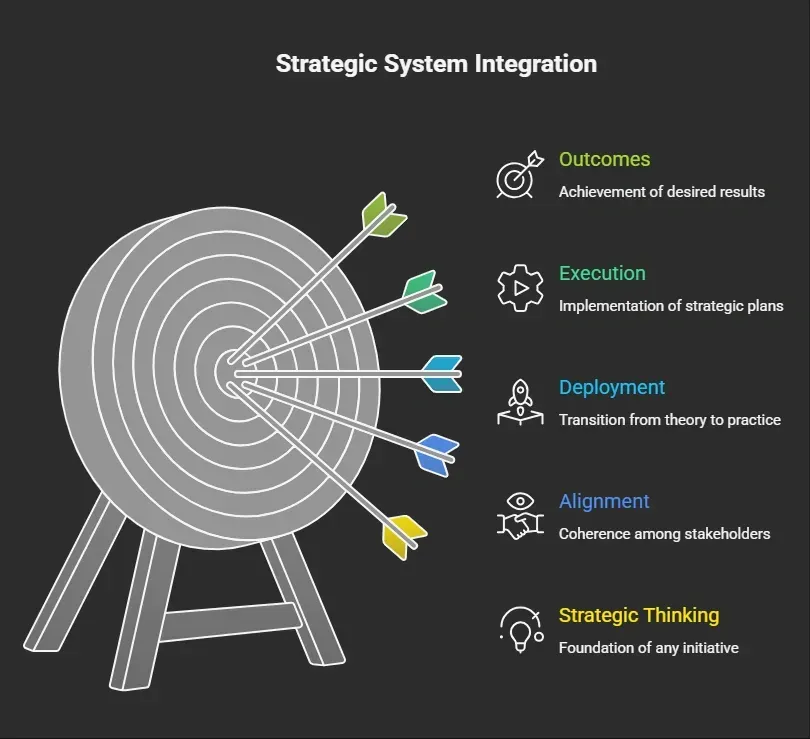 And this connection must exist throughout the organization.
The Shift Toward AI-Driven Strategy Deployment
Now let’s talk about what’s changing. AI platforms are helping companies manage the full strategic process.
Instead of static documents, you now get systems that:
-
Support collaborative decision making
-
Help teams make informed decisions
-
Track actions tied to strategic goals
-
Continuously measure progress
This leads to stronger strategic management and better business success.
Also, AI improves risk management by spotting potential risks early.
The Core Layers of Strategy Deployment
Let’s break down how strategy deployment actually works.
| Layer | What Happens | Why It Matters |
|---|---|---|
| Vision | Define strategic vision and company's mission | Sets direction |
| Planning | Build a strategic plan with long term objectives | Gives structure |
| Alignment | Set strategic priorities and breakthrough objectives | Keeps focus |
| Execution | Run strategy implementation and actions | Drives results |
| Monitoring | Use key metrics to track progress | Keeps accountability |
Each step feeds into the next. That’s the idea behind policy deployment and hoshin planning.
Where Hoshin Planning Brings Strategy to Life
So, where does everything actually come together? This is where hoshin planning steps in. It acts like a bridge between your big ideas and the work happening on the ground. Instead of letting plans sit in documents, it pushes them into action across teams.
If you’ve heard of hoshin planning, you know it’s about connecting strategy with execution.
It helps teams:
-
Focus on breakthrough objectives
-
Align work in the same direction
-
Define annual objectives
-
Drive strategy communication
And yes, it plays a big role in effective strategy deployment.
When done right, hoshin planning keeps everyone aligned, focused, and moving with clarity. It turns strategy into something teams can actually follow every day.
How AI Platforms Like Rocket Bridge Strategy and Execution
So, what does this look like in practice? Let’s take a real-world example of how an AI platform can connect planning with execution.
Rocket is more than just a tool. It works as a structured system that helps teams move from idea to deployment with clarity and direction.
Here’s how it helps:
-
Connects strategic decisions with real development workflows
-
Keeps teams aligned with strategic objectives
-
Supports consistent strategy deployment across projects
-
Reduces gaps between planning and execution
This means teams don’t lose context as they move forward.
Platforms like Rocket make it easier to carry strategy into action, helping teams stay focused, aligned, and consistent from start to finish.
How Rocket Works in Strategy Deployment
So, how does an AI platform actually carry strategy from decision to execution? Let’s look at how Rocket.new approaches this based on its build system.
Here’s a simplified view of how Rocket operates:
-
You start with an idea connected to your business strategy or problem statement
-
The platform structures that idea into a build-ready workflow tied to strategic objectives
-
It generates a clear path for strategy deployment, turning concepts into actionable steps
-
Teams collaborate within the same system, keeping execution aligned with strategic decisions
-
Progress is tracked using built-in visual management, so everyone can monitor progress
This approach turns your strategic plan into a working system where planning and execution stay connected.
Instead of losing context after planning, Rocket keeps every step linked, making the strategy deployment process more structured and visible.
Key Features
Now, what makes this approach practical for teams?
-
Guided workflows designed around the strategy deployment process
-
Built-in capabilities that support ongoing strategy implementation
-
Real-time visibility to monitor progress and adjust when needed
-
Alignment tools that keep the entire organization connected
-
Structured execution that keeps teams moving in the same direction
These features reflect how Rocket is built to support continuous strategy deployment rather than one-time planning.
Closing note: When tools are designed around execution, it becomes easier to connect planning with action and maintain clarity across the entire workflow.
Connecting Rocket to End-to-End Strategy Execution
So, how does this all tie back to the bigger idea? This is where Rocket shows its real value by connecting decisions with actual execution across teams.
Rocket helps in:
-
Translating strategy into clear, actionable steps
-
Linking high-level objectives with day-to-day tasks
-
Supporting resource allocation and committing resources effectively
-
Driving improvement initiatives and setting improvement priorities
It also strengthens organizational strategy and supports teams working throughout the organization.
When strategy stays connected from planning to execution, teams move with clarity. This is where real competitive advantage starts to build.
Tackling Common Challenges in Strategy Deployment
Let’s be real. Even with the right tools, challenges still show up. Many teams struggle to keep things clear and connected when moving from planning to execution.
Some common ones:
-
Poor strategy communication
-
Weak strategic planning process
-
Lack of critical thinking
-
Misaligned corporate strategy
But AI platforms help in overcoming common challenges by keeping decisions, actions, and progress connected across teams.
When everything stays linked, teams spend less time fixing confusion and more time moving forward with clarity.
Why This Matters for Business Leaders
For business leaders, this shift changes how decisions turn into results. It brings more visibility and control into everyday work.
Instead of guessing, they can:
-
Make better strategic choices
-
Improve financial performance
-
Build a stronger competitive edge
-
Keep teams focused on company goals
And most importantly, they can keep the entire organization moving together.
When leaders have clear visibility and alignment, it becomes easier to guide teams and maintain steady progress toward long-term goals.
The Reality of Strategic Context from Decision
The problem is simple. Teams make strong strategic decisions, but the context often gets lost during execution. This creates confusion, slows down progress, and leads to missed business goals. Without clear connections, even the best ideas struggle to turn into real outcomes.
The solution lies in using AI platforms that connect planning with action. They strengthen strategy deployment, support policy deployment, and help teams connect strategy with daily work. When context flows clearly from decision to execution, teams move faster and smarter. That’s how Strategic Context from Decision becomes a real advantage.
Table of contents
- -Why Strategic Decision Making Often Falls Apart?
- -What Does “Carrying Context” Really Mean?
- -The Shift Toward AI-Driven Strategy Deployment
- -The Core Layers of Strategy Deployment
- -Where Hoshin Planning Brings Strategy to Life
- -How AI Platforms Like Rocket Bridge Strategy and Execution
- -How Rocket Works in Strategy Deployment
- -Key Features
- -Connecting Rocket to End-to-End Strategy Execution
- -Tackling Common Challenges in Strategy Deployment
- -Why This Matters for Business Leaders
- -The Reality of Strategic Context from Decision