
Competitor pricing changes are rarely random. When connected with hiring, product launches, and messaging shifts, they reveal strategic intent and future market direction. Rocket.new transforms scattered pricing updates into actionable competitive intelligence for faster business decisions.
What happens when a rival quietly updates their pricing?
Most companies never notice. The change sits in a browser tab nobody checks. But pricing signals carry real weight. McKinsey found that a 1% shift in pricing produces an 8% change in operating profits. Every pricing move is a signal worth reading if you have the right system built to read it.
What Pricing Signals Tell You About Competitor Strategy
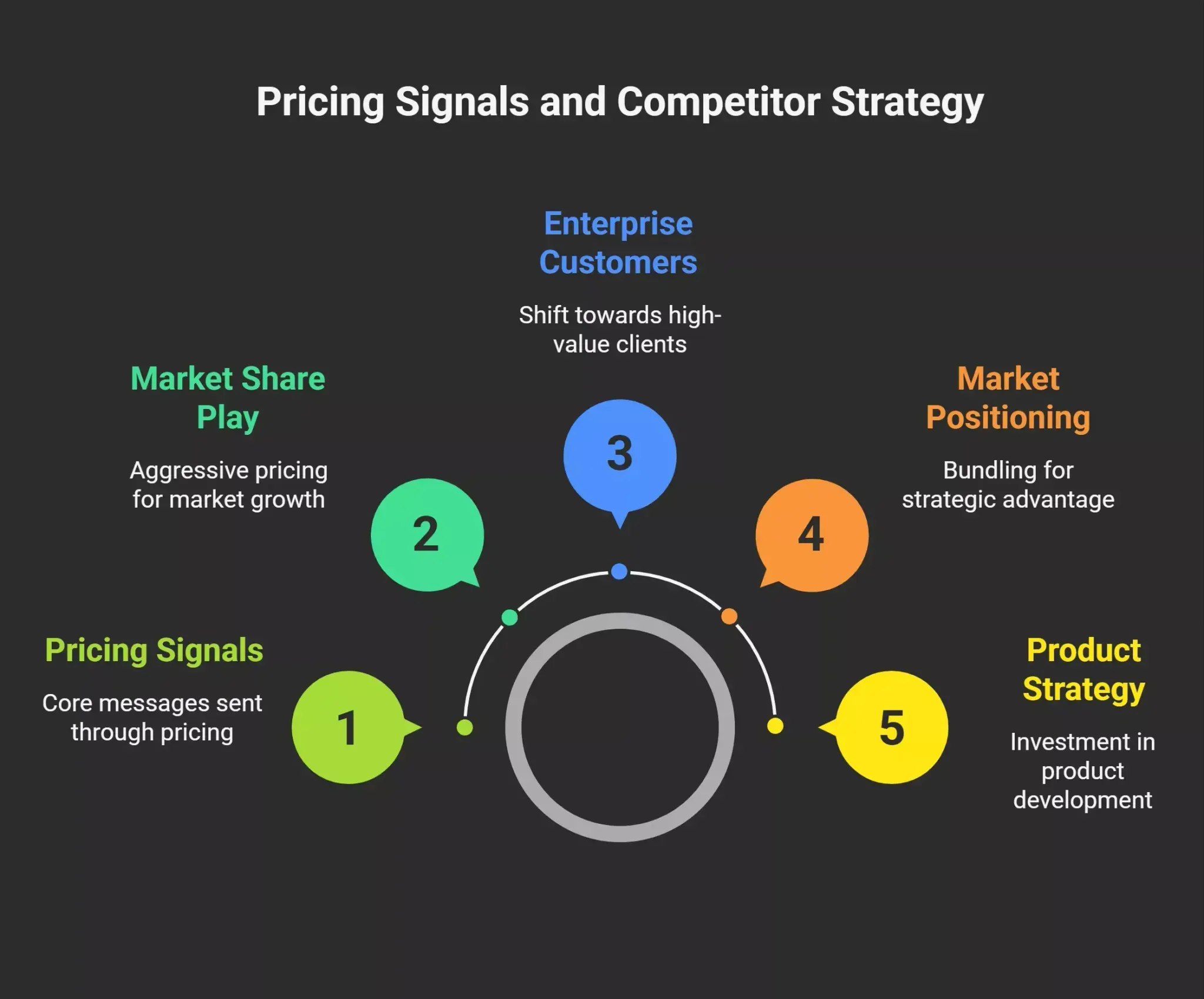
Pricing signals are messages that companies send to the market through their pricing decisions. They indicate confidence, strategic direction, financial health, or competitive positioning.
-
A price increase paired with new features suggests investment in product strategy and business confidence
-
A price drop on entry-level plans often signals an aggressive market share play, and SaaS companies changed pricing over 1,800 times in 2025, with 67% of decreases intended as market share plays
-
Removing a pricing page and switching to "contact us" means a shift toward enterprise customers
-
Bundling previously separate products into new tiers points to a change in market positioning
So the question is not whether pricing changes matter. The question is whether your system connects them to the rest of what that competitor is doing across the market.
The Difference Between a Price Change and a Pricing Signal
Not every pricing change qualifies as a pricing signal. Most adjustments are minor. Context creates the difference, and context requires competitor analysis across multiple signals.
| Factor | Price Change (Isolated) | Pricing Signal (Connected) |
|---|---|---|
| Scope | One plan, small adjustment | Multiple plans, structural redesign |
| Timing | Random, no pattern | Aligned with product launches or hiring activity |
| Context | Isolated from other signals | Connected to movement across channels |
| Action needed | None | Analyze, plan, act |
| Business impact | Minimal | Affects revenue, product strategy, and competitive positioning |
A $2 adjustment on a single plan is a price change. That same $2 adjustment happening alongside new job postings for enterprise reps, updated landing pages, and shifted messaging on social media posts? That is a pricing signal. The tool that connects those scattered signals into a pattern is what builds intelligence.
Why Most Companies Treat Pricing Changes as Background Noise
Most companies collect data across multiple platforms. Few turn it into competitive intelligence.
-
Marketing teams watch social media and landing pages in separate monitoring tools
-
Product teams follow product launches and product updates through RSS feeds
-
Leadership gets a competitive intelligence summary once a quarter, if at all
Crayon's 2025 State of Competitive Intelligence report found that 68% of B2B deals involve a direct competitor, yet the average team rates its competitive preparedness at just 3.8 out of 10. Most teams know they face competition. They lack a tool that helps teams connect the dots.
When competitor analysis lives across multiple platforms, each tool shows one slice of competitor movement. No single team member sees the full picture. Most people rely on periodic check-ins. Most companies run a monthly "competitive review" already outdated by the time the meeting starts.
Competitive intelligence compounds when small pricing signals are tracked consistently over time instead of being treated as isolated updates, revealing what companies are preparing long before public announcements happen.
How Competitor Analysis Turns Scattered Signals Into Strategic Decisions
Competitor analysis becomes actionable intelligence when it answers a business question: "What should we do about this?"
A pricing change alone does not answer that. But a pricing change connected to hiring activity, product updates, and messaging shifts does. This is the triangulation method, which separates market research from competitive intelligence that drives strategic decisions.
-
Competitor analysis built around pricing changes alongside hiring activity spots where rivals invest
-
Monitoring product launches and product updates shows product strategy shifts across the industry
-
Watching social media for messaging changes reveals positioning shifts in real time
-
Connecting scattered signals into a single view makes patterns visible for strategic decisions
A February 2026 report from Info-Tech Research Group stated that competitive intelligence creates value when it aids in competitive conversations, not when it generates reports that go unread.
-
A competitor drops pricing while hiring aggressively: they are making a market share play
-
A competitor raises pricing while posting engineering roles for a new platform: they are funding a product pivot through higher revenue per customer
-
A competitor removes a tier and adds "contact us": they are moving upmarket, away from self-serve customers
Why Continuous Monitoring Compounds Competitive Intelligence
One-off market research gives you a snapshot. Continuous monitoring gives you a trend line built from months of competitor movement signals.
-
The longer the monitoring period, the clearer the patterns become, eventually turning into predictive insights about likely moves before public announcements
-
Weekly pricing changes that look random in isolation reveal a seasonal strategy when tracked across months
-
Hiring activity that seems unremarkable on any given day shows a clear product direction over a quarter
-
Continuous monitoring creates a growing intelligence layer that improves future decision-making by preserving historical context and recognizing patterns over time
Companies that actively monitor pricing signals show 4 to 8% higher profit margins than those that skip systematic competitor analysis. That advantage compounds. Business teams that treat competitive intelligence as a daily practice build a strategic advantage that gets wider every month.
Patterns That Predict Movement
-
A company hiring for a specific industry vertical, say three solutions engineers with healthcare experience, signals an upcoming vertical product and gives you months to adjust your own product strategy
-
Gradual messaging changes across a competitor's website predict a repositioning
-
Small pricing adjustments on lower tiers, combined with hiring for enterprise account executives, signal an upmarket move that shifts market trends in your industry
These patterns only appear when signals are tracked over time and connected across categories. Standalone competitive intelligence tools that only track pricing miss these connections.
What People Are Saying
Andy McCotter-Bicknell, Head of Competitive Intelligence at Apollo.io and founder of the Healthy Competition community, has talked openly about why thinking about competitor analysis matters:
"Your buyers are researching your competitors. Very, very rarely does someone have a problem and buy the first solution they come across." - Source: LinkedIn
His point lands on why pricing signals matter for business growth. If your customers are already comparing you to competitors, you need to know what those competitors are signaling through pricing, hiring, and product decisions. The companies that win competitive deals have a background for the call, not a scramble to check a pricing page five minutes before a conversation.
How Rocket.new Turns Pricing Into a Strategic Signal
Rocket.new treats pricing adjustments as strategic indicators because they are automatically integrated with other business signals. While other AI tools show you that a page changed, Rocket Intelligence connects that change to hiring patterns, product launches, messaging shifts, and social media activity.
Signal clustering on the platform links pricing shifts to simultaneous changes like hiring patterns or messaging updates. Rocket.new filters out insignificant pricing adjustments, allowing teams to focus on genuine market shifts that threaten revenue.
Rocket.new is built as a vibe-solutioning platform with three products on one platform: Solve, Build, and Intelligence.
-
Describe your business problem in natural language, and the platform returns market research, competitor analysis, and a recommendation you can present or build from
-
25k+ templates library, free to use, so customers pick a starting point close to their idea, and the tool adapts it
-
Supports Flutter for mobile apps and Next.js for web apps, with vibe coding built into the workflow
-
Collaboration features built in, so teams share insights, strategic decisions, and intelligence without switching tools
-
3 Products on one platform: Solve handles market research, Build ships production-grade apps, and Intelligence delivers a daily brief on signals
The platform captures intelligence in a continuous workflow, allowing ongoing product decisions based on movements. Rocket.new helps teams move from scattered signals across multiple platforms to one place where every pricing signal, hiring signal, and product update feeds into the next strategic decision.
How Business Teams Can Use Rocket.new
Here is how business teams use the platform to turn pricing signals into business growth and competitive advantage:
-
Before a call, reps check pricing changes alongside recent product updates and hiring activity. They walk into the conversation with confidence and data to support their competitive positioning
-
When a pricing change aligns with hiring signals in a specific industry vertical, product teams use Solve to research the implications and adjust their own product strategy
-
Marketing teams track pricing changes alongside landing page updates and new onboarding experiences, then update their own positioning before customers start asking questions
-
Leadership uses the full signal cluster, pricing plus hiring activity plus product launches, to make strategic decisions about whether to hold or move in a different direction
How to Respond When a Competitor Changes Pricing
Not every pricing change requires action. The wrong move is reacting to every adjustment. The second wrong thing is ignoring all of them. Market research and competitor analysis give you the context to decide how to respond.
-
If a competitor drops pricing across all plans, analyze their hiring activity and product updates. Are they clearing runway for a new product launch, or facing financial pressure? Your response changes depending on the answer
-
If a competitor raises pricing, check whether they added features or shifted their industry positioning. A price increase with no new value signals a gap your business can fill
-
If a competitor restructures their pricing tiers, watch for changes in their team size, customer messaging, and market trends targeting different buyer segments
Business teams that handle competitor movement well track market trends, connect scattered signals, and make strategic decisions with confidence because their system gives them the insights they need.
Pricing Signals and Your Market Position
A pricing change becomes a strategic signal on the right platform because the platform connects it to everything else that the competitor is doing.
When pricing shifts reach a system built to connect them with hiring activity, product launches, social media patterns, and customer targeting changes, what was data becomes intelligence.
That intelligence becomes the foundation for business growth and every strategic decision your company makes.
Sign up now and track competitor pricing, hiring, and product signals in one place with Rocket.new.
Table of contents
- -What Pricing Signals Tell You About Competitor Strategy
- -The Difference Between a Price Change and a Pricing Signal
- -Why Most Companies Treat Pricing Changes as Background Noise
- -How Competitor Analysis Turns Scattered Signals Into Strategic Decisions
- -Why Continuous Monitoring Compounds Competitive Intelligence
- -Patterns That Predict Movement
- -What People Are Saying
- -How Rocket.new Turns Pricing Into a Strategic Signal
- -How Business Teams Can Use Rocket.new
- -How to Respond When a Competitor Changes Pricing
- -Pricing Signals and Your Market Position