Pelvic Health Clinic Landing Page Template
Restore is a single-column landing page template built for pelvic floor physiotherapy clinics. It opens with credential badges, then guides visitors through an interactive symptom checklist funnel that proves clinical understanding before asking for a booking. The result is a trust-first, quiz-driven experience designed to convert hesitant, symptom-aware visitors into booked consultations or captured leads.
by Rocket studio
Quick summary
Restore is a single-column landing page template for pelvic health clinics. It leads with professional credentials, then walks visitors through an interactive symptom checklist. A progress bar builds as users respond. Once complete, a conditional call to action reveals a personalized results offer. The design is soft, clinical, and mobile-first throughout.
Who this template is for
This template suits pelvic floor physiotherapy clinics that treat complex, sensitive conditions. It works best when your audience has already spent time researching symptoms online but has not yet committed to booking.
- Pelvic floor physiotherapists who treat postpartum, perimenopausal, and post-surgical patients
- Allied health clinics looking to convert hesitant visitors through a trust-first funnel
- Practitioners who want their website to demonstrate clinical expertise before asking for a booking
What problem this template solves
Many pelvic health clinics lose potential patients at the first scroll. Visitors arrive already anxious, already dismissed by other providers, and already unsure whether anyone will take their symptoms seriously. A generic clinic page does not reassure them.
- Visitors feel unheard and leave before reaching the booking button
- Generic symptom lists do not prove clinical fluency or build the trust needed to act
- Most clinic pages ask for commitment before earning it
What you get with this template
Restore delivers a complete single-column landing page flow built around an interactive audit experience. Every section is designed to lower hesitation and build confidence step by step.
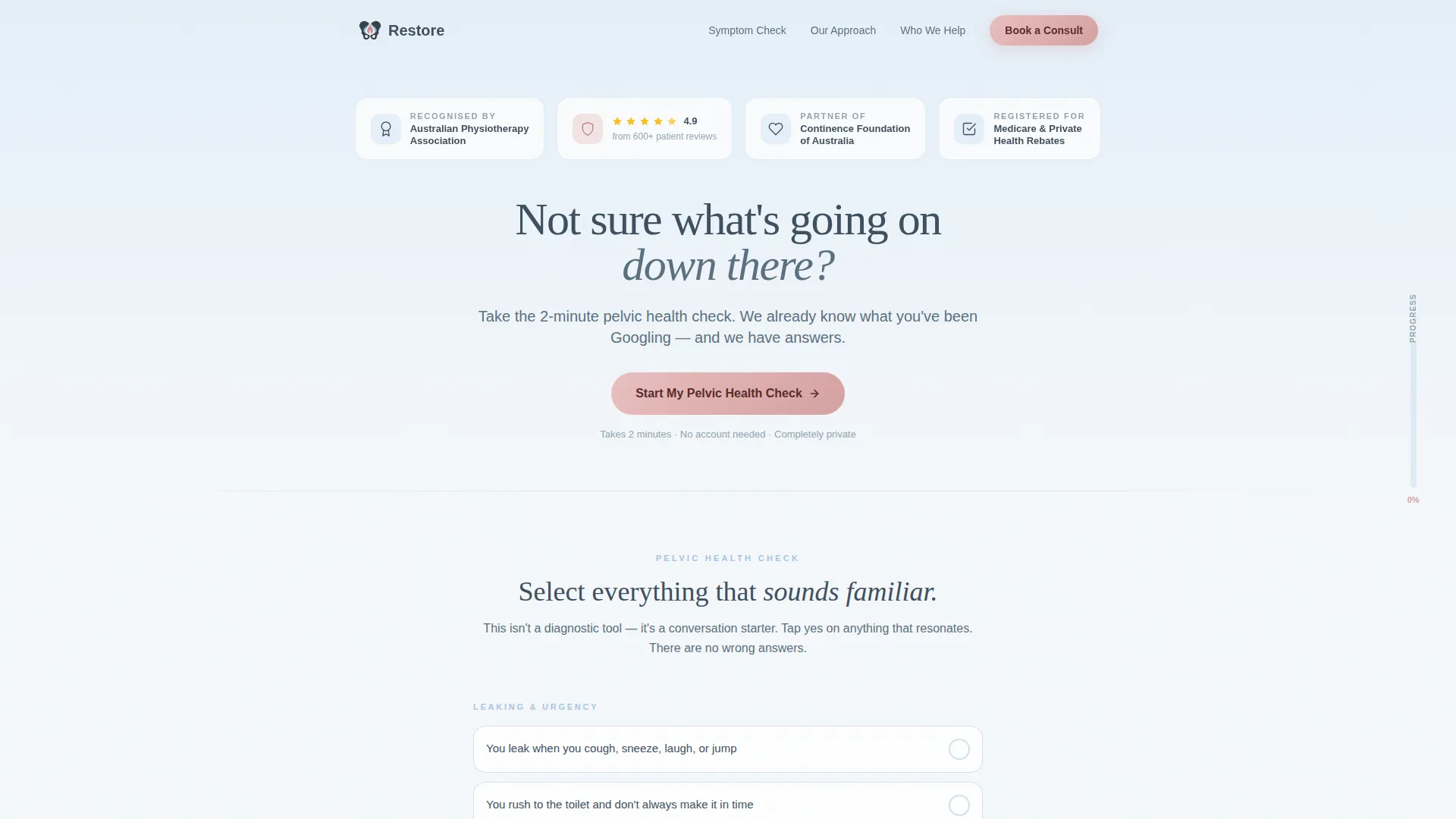
- A credential header with award badge cards, a star-rating display, and a clear opening prompt
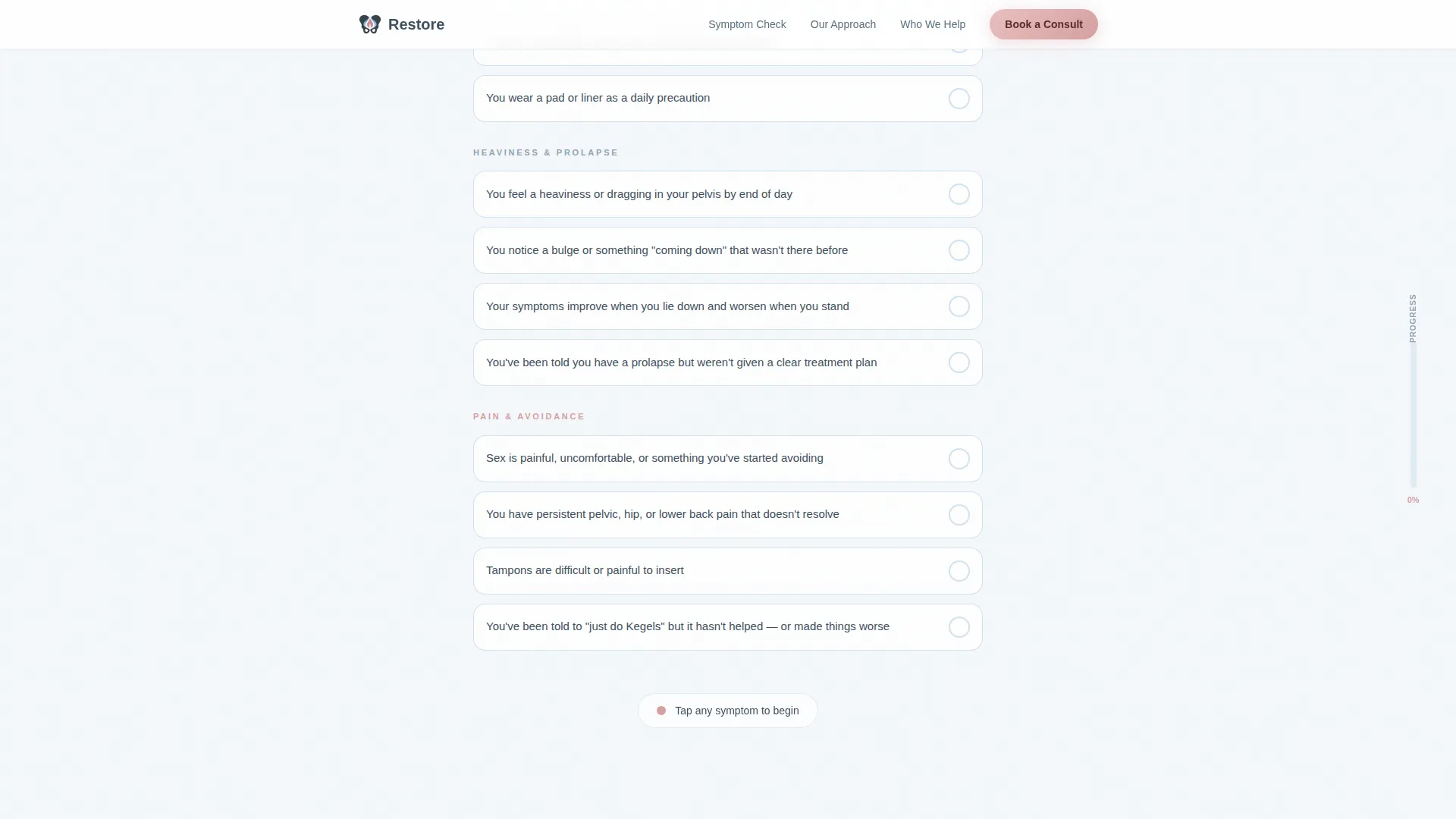
- An interactive symptom checklist with yes/no toggles, a rose-filled progress bar, and clinical reframe paragraphs between checklist clusters
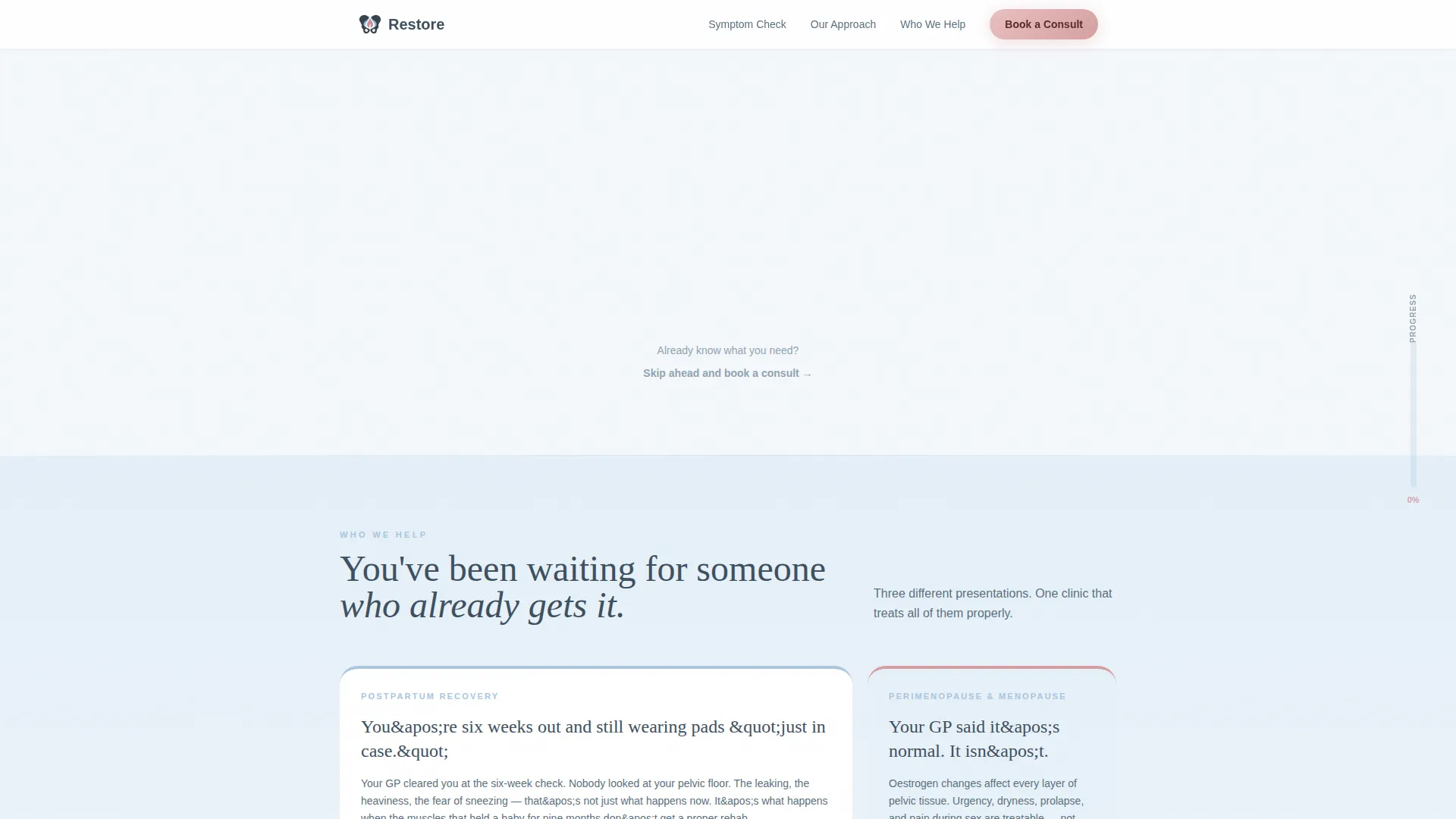
- A conditional "See My Results" call to action that appears only when the checklist is complete, plus a secondary "Skip Ahead and Book a Consult" path for ready visitors
Feature list
This template includes purposeful interactive and visual components grounded in the source brief.
Interactive Symptom Checklist
Each checklist item is a tappable yes/no toggle. Selecting an answer fills the toggle in a quiet rose accent color. The scroll feels like completing a private intake form, not reading a website.
Animated Progress Bar
A progress bar runs along the right margin and fills as visitors answer each symptom question. It creates visible momentum and signals that the experience is nearly complete.
Conditional Call to Action Reveal
The primary "See My Results" button appears only once the progress bar reaches one hundred percent. This timing makes the call to action feel earned, not intrusive.
Award Badge Credential Header
The header opens with frosted-glass badge cards recognizing clinical credentials and a star-rating shield. There is no hero photograph. Credentials do the trust-building first.
Clinical Reframe Paragraphs
Between checklist clusters, short audit-style paragraphs reframe what checked symptoms may indicate. For example, a hypertonic pelvic floor explanation follows a relevant symptom cluster.
Bento-Style Condition Cards
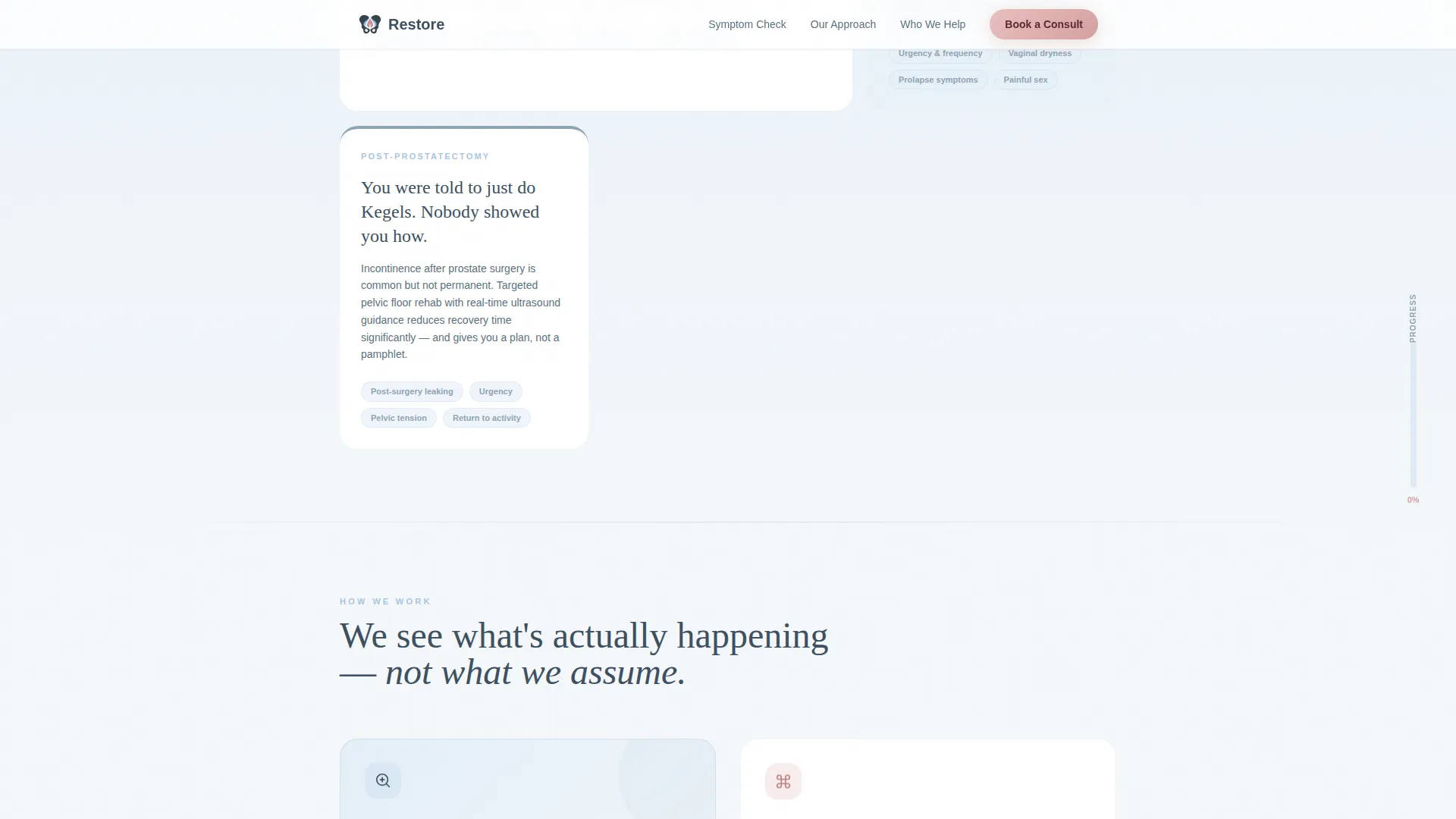
The "What We Treat" section uses asymmetric bento-style cards for postpartum recovery, perimenopause, post-surgical care, and chronic pelvic pain. Each card addresses a distinct patient group.
Page sections overview
| Section | Purpose |
|---|---|
| Credential Badge Header | Opens with trust signals and the checklist entry prompt |
| Symptom Checklist Audit | Interactive yes/no funnel with progress bar and reframe copy |
| What We Treat | Bento cards covering four distinct patient conditions |
| How It Works | Visual split explaining real-time ultrasound and manual therapy |
| Practitioner Trust | Testimonials with patient context and practitioner credentials |
| Footer Row | Single-row linear footer with navigation and contact details |
Design & branding system
The visual identity follows a Soft Gradient theme using a Slate and Sky color system. The palette is calm, clinical, and deliberately unintimidating.
- Deep clinical slate (#3D4F5F) for headings and anchoring text, soft sky (#A8C6DF) washing through section backgrounds as gentle top-to-bottom gradients, cloud white (#F4F7FA) for breathing space between blocks, and quiet rose (#D4A0A0) used exclusively for buttons and progress indicators
- Typography pairs Fraunces (a warm serif for headings) with DM Sans (a clean sans-serif for body copy), reinforcing both clinical credibility and human warmth
- Frosted-glass card backgrounds are used throughout the header badges and condition cards, giving depth without visual noise
Mobile & speed optimization
The template is built mobile-first. The primary audience is postpartum mothers browsing on their phones, so every layout decision prioritizes small-screen readability and tap-friendly interactions.
- The symptom checklist toggles are sized and spaced for comfortable thumb use on mobile screens
- GSAP ScrollTrigger powers reveal animations, progress bar fills, and staggered card entrances at a medium animation intensity
- Interactive checklist components are client-side only, keeping the rest of the page static and lightweight
How this template helps you convert
Restore earns the click before it asks for one. The funnel structure means visitors feel understood by the time they reach the call to action.
- The credential header grants immediate trust, letting anxious visitors lower their guard before reading a single line of body copy
- The symptom checklist proves clinical fluency question by question, so the clinic demonstrates more understanding than many prior medical encounters
- The conditional call to action and the secondary booking link give visitors two clear exit points matched to where they are in their decision
Other information about this template
This template is localized for Australian English and reflects an Australian physiotherapy context throughout the copy and credential references.
- Credential references include the Australian Physiotherapy Association (APA) and a continence foundation partnership, alongside a 4.9-star rating from over 600 reviews
- Social proof uses specific patient quotes with condition context rather than generic testimonials, reinforcing the clinic's claim to specialist understanding
- The lead-capture flow asks for a first name and email in exchange for a personalized pelvic health snapshot delivered as a PDF, creating a soft-commitment conversion path alongside the direct booking option
Theme
Soft Gradient
Creative direction
Checklist & Audit
Color system
Slate & Sky
Style
Single Column Flow
Direction
Quiz/Assessment
Page Sections
Interactive Symptom Checklist
Animated Progress Bar
Conditional Call to Action Reveal
Award Badge Credential Header
Clinical Reframe Paragraphs
Bento-style Condition Cards
Related questions
Who is this landing page template designed for?
How does the symptom checklist funnel work?
Can visitors skip the checklist and book directly?
What sections are included in this template?
Is this template suitable for mobile users?