
Which tools let you launch apps without managing servers? In 2026, AI-driven no‑code and low‑code platforms simplify app deployment, enabling rapid creation, automation, and business-ready solutions with minimal effort.
Which AI tools let you deploy apps in 2026 without servers?
Well, you’re not alone in having this thought. In fact, by 2026, the use of AI app builders and automated deployment platforms has grown massively, and tools are now making deployment almost as easy as writing a prompt.
In fact, one research shows that by 2026, over 70% of new business applications will be built using no‑code or low‑code platforms.
So let’s talk about the top options, what they do, and how they work and can be worked so that you don't need to hassle.
What AI App Deployment Platforms Really Do?
You’ve probably heard about machine learning models and AI models powering smart features in apps. Tools under the category of AI deployment platforms let you combine those models with web apps or native mobile apps without managing servers yourself.
At a basic level, these platforms let you:
-
Describe your app idea in plain language
-
Let AI generate UI, backend logic, and model deployment
-
Connect to multiple AI models if needed
-
Build and launch without manual infrastructure management
-
Get hosting, load balancing, and versioning handled for you
-
Ship to app stores or host as a PWA or web app
Think of them like an AI app builder plus a deployment platform that takes your prompt or design and turns it into something real. Some also include features like workflow automation, experiment tracking, and even model serving frameworks behind the scenes.
A Quick Comparison
The table below gives a quick glance at popular AI deployment platforms and app builders in 2026, highlighting their support for web apps, mobile apps, custom models, and deployment ease.
| Tool | Web Apps | Mobile Apps | Custom Models | Deployment Ease |
|---|---|---|---|---|
| Rocket.new | Yes | Yes | Some support | Very easy |
| Vercel | Yes | No | API only | Easy |
| Firebase + Cloud Run | Yes | Yes | Yes | Moderate |
| Render / Fly.io | Yes | Yes | Yes | Moderate |
| Hugging Face Spaces | Yes | No | Yes | Easy |
Each platform offers a different mix of features depending on whether you prioritize speed, flexibility, or integration with machine learning models.
Let’s take a closer look at each of these platforms and see how they perform in real-world app deployment.
1. Rocket.new: A Prompt‑Driven Powerhouse
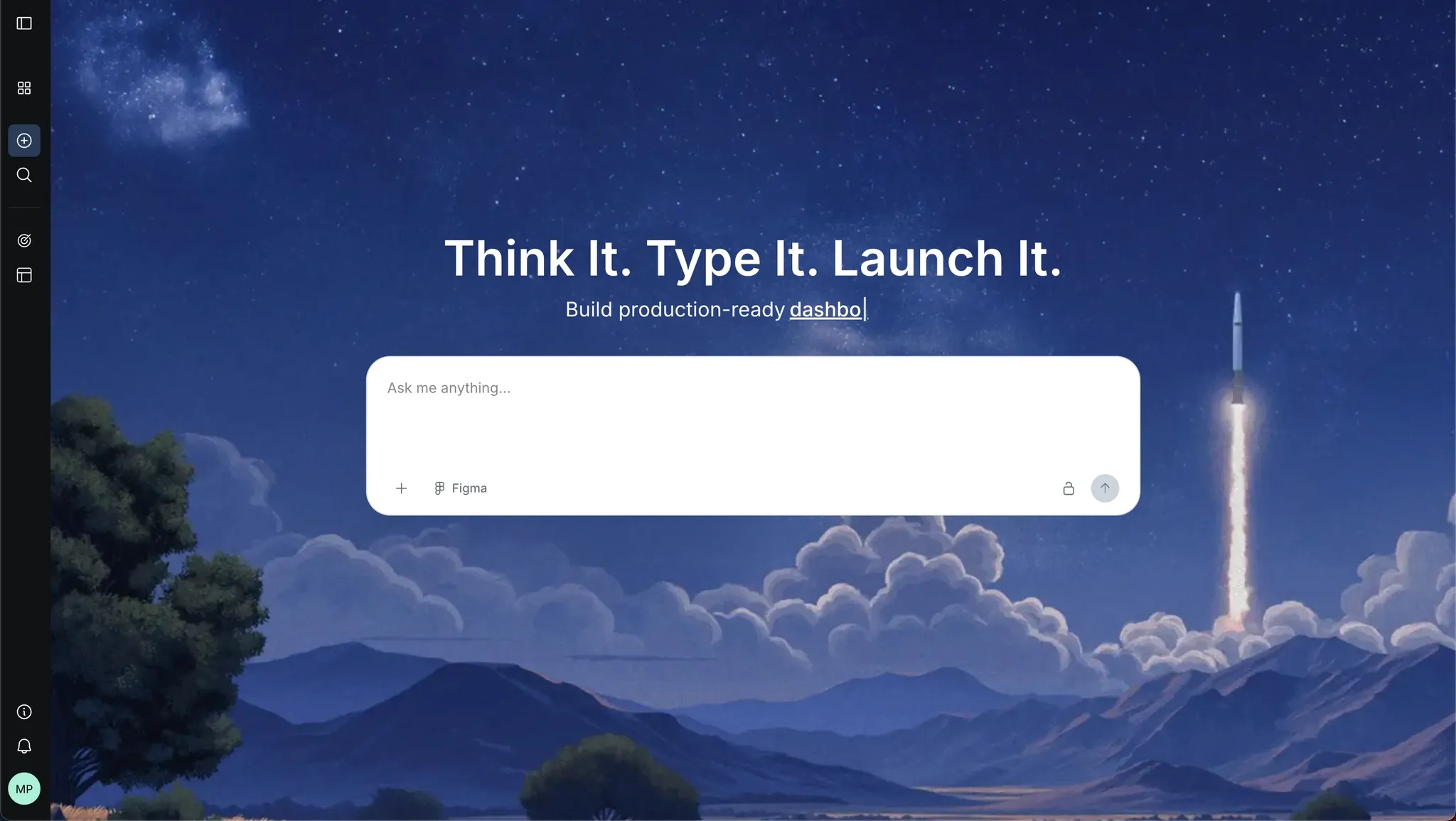 One of the most talked‑about AI builders today is Rocket.new. It’s a vibe solutioning platform that turns natural language prompts into full apps. From web apps to mobile builds, it tackles web apps, internal tools, and even native mobile apps using Flutter.
How it works
You type what you want. Rocket.new reads it and generates a working app with screens, backend logic, and deployable builds. Then you can test, refine, and publish all without servers or complex setup.
Top Features
-
Prompt to app flow: plain text → full app
-
Full‑stack generation (UI + backend + data)
-
Code export for custom tweaks
-
Web apps and mobile apps with Flutter
-
Support for AI app features like auth, storage, APIs
-
Built‑in deployment and hosting
-
Template library for fast starts
-
Internal tools generation
Use Cases
-
Prototype ideas in hours
-
Build internal tools for teams
-
Create dashboards and data apps
-
Get an AI app ready to ship to users
-
Integrate simple machine learning models for features like search or classification
Best For:
Rapid app prototyping, MVPs, and building internal tools for teams. If you want to get an idea live in hours without touching servers, this is your go-to.
Pricing:
Rocket.new has a free tier for small projects and hobby use, plus paid plans for larger teams or advanced features.
Rocket.new shines when speed and simplicity matter. You can get a working AI app live before lunch, which is pretty amazing for prototyping and team demos.
2. Vercel + Serverless Platforms
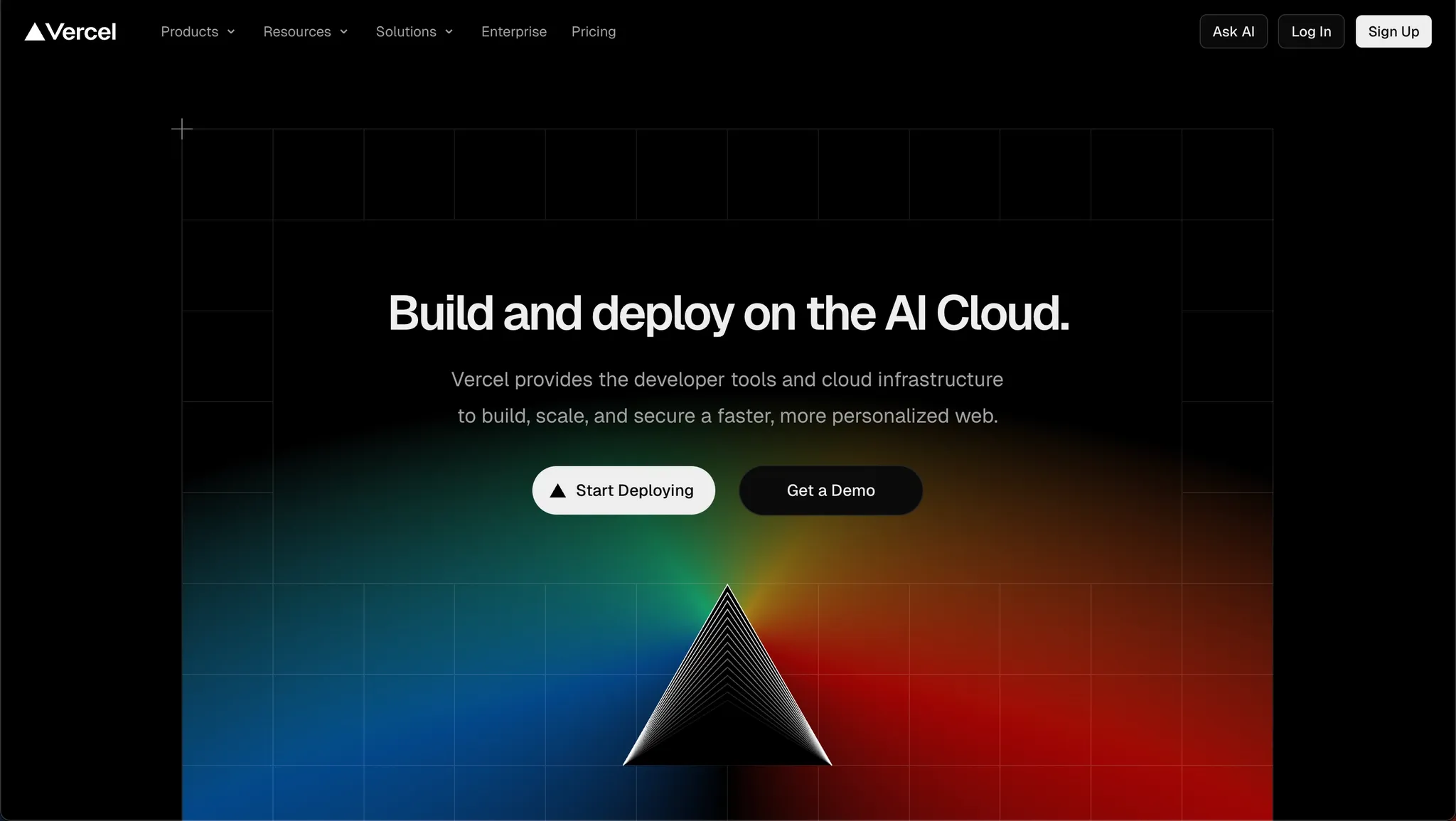 If you’re focused on web apps and want more control over your model deployment, serverless hosting providers like Vercel are big players. These aren’t AI app builders in the prompt‑to‑app sense, but they do make deployment painless.
Why it’s popular
-
Automates hosting and scaling
-
Integrates with Git version control
-
Functions run without servers
-
Easy to plug in machine learning models via APIs
Best For
-
React, Next.js, or static web apps
-
Teams who want lightweight infrastructure without admin
-
Projects that call external AI models via APIs
Pricing:
Free tier available; paid plans unlock team collaboration and advanced scaling.
Vercel is solid if you already have your app code or use an AI builder that gives you code export. Then you push to Vercel and it handles deployment.
3. Firebase and Cloud Run
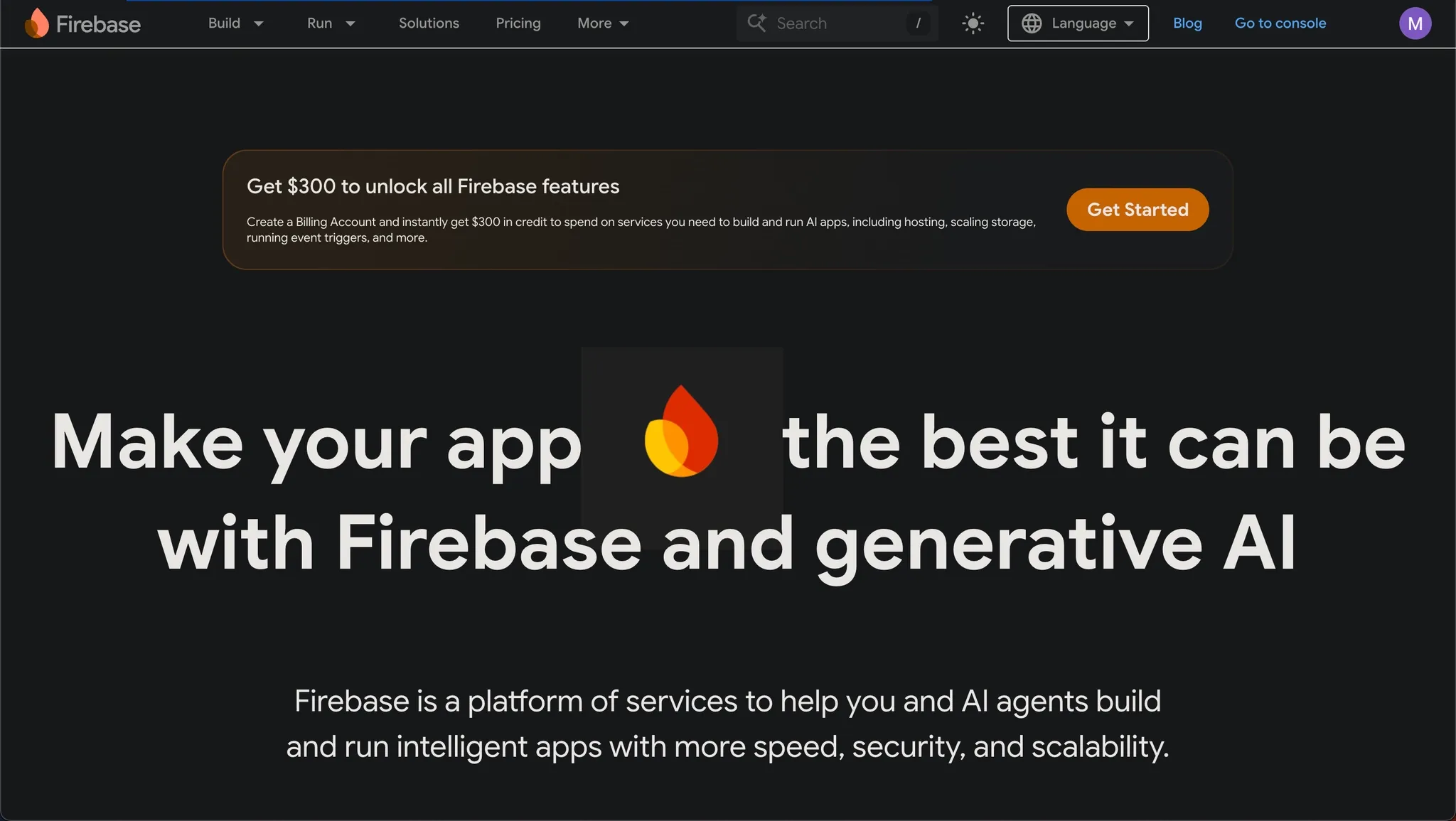 For apps that need AI agents and backend logic with caching and data storage, Firebase paired with Cloud Run is a favorite.
What you get
-
Realtime database and hosting
-
API endpoints for AI models
-
Managed compute for scalable workloads
Firebase gives you realtime data and auth, while Cloud Run manages scalable containers that run your model logic. This combo lets you deploy machine learning models and AI features with less server overhead.
Best For:
Full-stack apps that need realtime data, authentication, and AI agents. Great if you’re building apps that require real user data handling.
Pricing:
Free tier for small projects; pay-as-you-go for higher usage.
It’s great for apps that ingest real user data, integrate external data sources, and use natural language processing in production.
4. Render and Fly.io
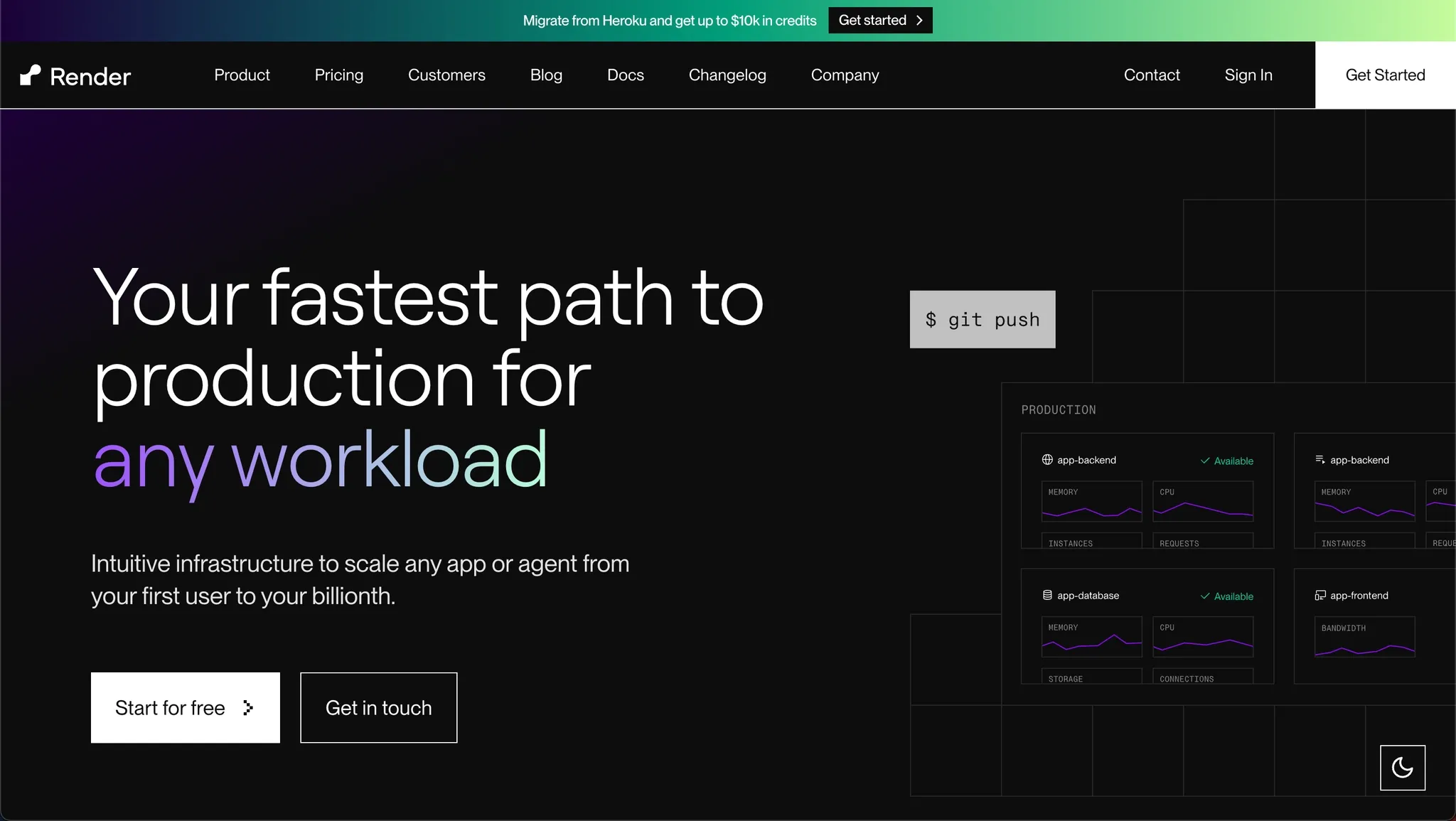 If you want serverless simplicity plus the ability to run custom models inside containers, tools like Render or Fly.io are worth a look.
Best For:
Teams or developers who want custom models, containerized apps, and flexible deployment infrastructure.
Pricing:
Paid plans, scaling with usage.
Both give you deployment pipelines that feel like using an AI app builder but support projects where you write parts of the underlying code.
5. Hugging Face Spaces
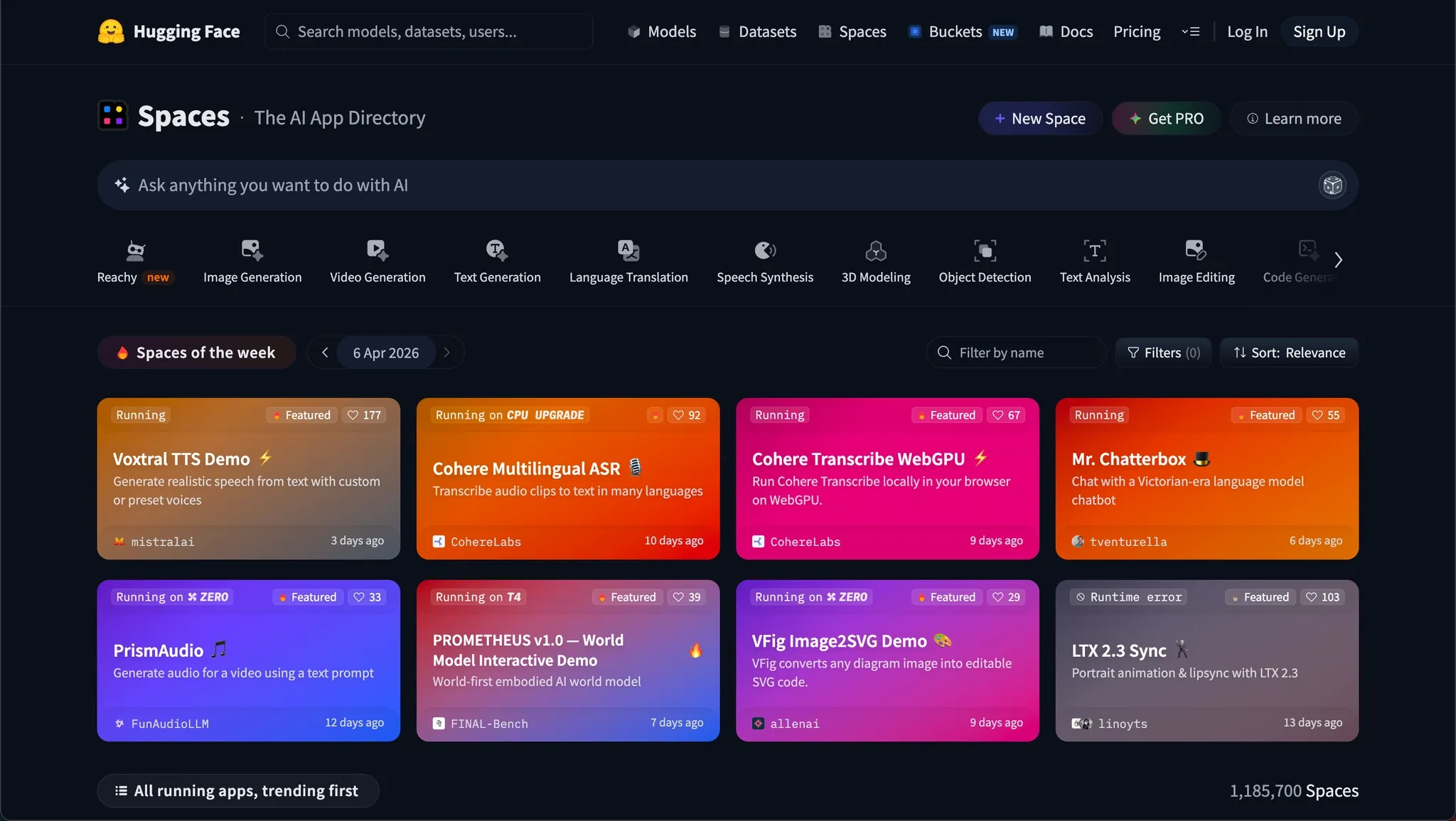 For projects that focus on large language models or transformer models, Hugging Face Spaces is a niche, yet interesting platform.
Why people like it
-
Lets you host model demos and small web UIs
-
Perfect for showcasing pre trained models
-
Works well for interactive AI tools
Best For:
Showcasing large language models or transformer models. Ideal for demos or AI features testing.
Pricing:
Free for public spaces, paid tiers for private spaces.
Tools like this are lighter than full‑stack AI deployment platforms, but super useful for prototype showcasing or AI features in web apps.
How to Pick the Right AI Deployment Platform
So how do you choose?
-
Want something quick from prompt to app? An AI app builder like Rocket.new is great.
-
Need full control and external integrations? Serverless like Vercel or Firebase is better.
-
Building something model‑heavy? Render or Cloud Run works well.
-
Just showcasing AI features in a web interface? Hugging Face is perfect for prototypes.
Each has trade‑offs around customization, scalability, and how much technical knowledge you bring.
Community Insight
Here’s a LinkedIn insight reflects how people in the professional community are using AI.
“going viral” because users can submit a wild idea and get a complete AI app output no endless prompt tweaking, no debugging, just a working multi‑page product from a single input. Linkedin
This insight shows how professionals and builders on LinkedIn are actively talking about using Rocket.new to shift from idea to live application quickly.
The Best AI App Deployment Tools in 2026
The problem with traditional app development and model deployment has always been setup, servers, and wiring everything yourself. You needed years of experience or a big team.
The solution in 2026? Using AI deployment platforms and AI app builders that let you describe what you want, and go live without managing the servers yourself. Tools like Rocket.new and serverless platforms make this possible by handling hosting, model serving, backend, and frontend logic.
With the right mix of builders and platforms, you spend less time wrestling with code and more time getting your AI app into the hands of users.
Table of contents
- -What AI App Deployment Platforms Really Do?
- -A Quick Comparison
- -1\. Rocket.new: A Prompt‑Driven Powerhouse
- -Best For:
- -Pricing:
- -2\. Vercel + Serverless Platforms
- -Pricing:
- -3\. Firebase and Cloud Run
- -Best For:
- -Pricing:
- -4\. Render and Fly.io
- -Best For:
- -Pricing:
- -5\. Hugging Face Spaces
- -Best For:
- -Pricing:
- -How to Pick the Right AI Deployment Platform
- -Community Insight
- -The Best AI App Deployment Tools in 2026