
Rocket’s Intelligence continuously monitors competitors across ten signal pillars, delivers a structured daily brief before your first meeting, and connects every signal directly to Solve and Build through a single shared context, giving your team a live competitive picture on day one.
Most teams get their competitive picture too late. A research firm takes two to three weeks to produce a report, it lands in a shared drive, and by the time someone reads it, the competitor has already moved. According to research published by Sprout Social, 65% of sales opportunities are competitive, yet most businesses still rely on infrequent, manual competitive intelligence that misses the market moves that matter most.
The gap is not a lack of effort. It is a structural problem: build tools, research workflows, and monitoring systems all sit in separate places. Validate an idea, track a competitor, build the app; each step means switching tools and re-explaining context. This post describes how a vibe solutioning platform like Rocket pulls the full arc together, so your team’s intelligence is ready on day one.
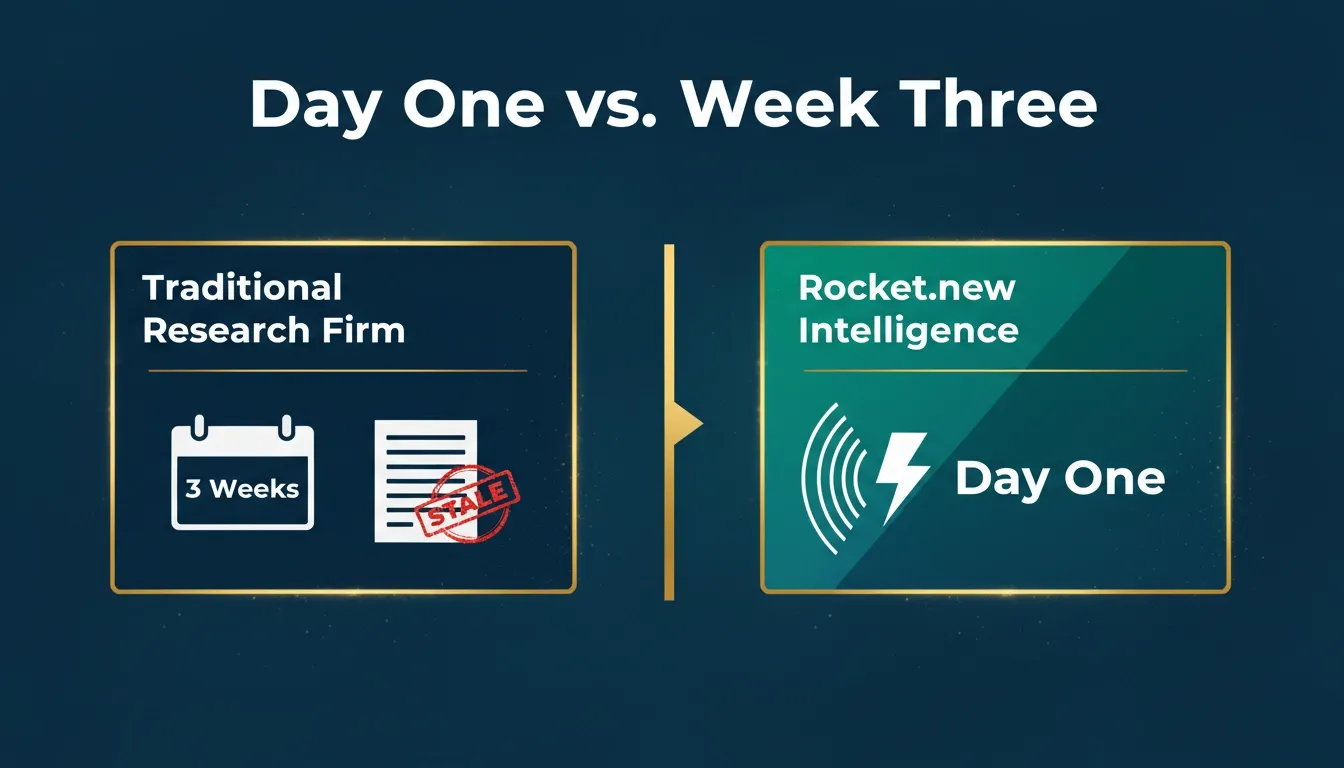 Day one competitive intelligence vs. a three-week research firm timeline
What Does Your Team Really Need from Market Research?
Your team does not need more data. It needs the right intelligence at the right moment, connected to a build decision someone is actively making. Competitive intelligence that arrives too late or lands in the wrong place is not competitive intelligence; it is a history report.
Good market research covers day-by-day pricing changes, hiring signals that reveal where competitors are investing next, social media activity that previews a campaign shift, and product launches that reframe the market overnight. When each signal lands in a separate inbox, spreadsheet, or Slack thread, product teams spend more time finding context than acting on it.
According to Crayon’s competitive intelligence resource guide, most businesses conduct competitive intelligence to win deals, retain customers, and inform strategy, but only when data reaches the right people at the right time. The answer is not more quarterly competitive reports. The answer is a monitoring platform that reads signal clusters and connects to where the building work happens.
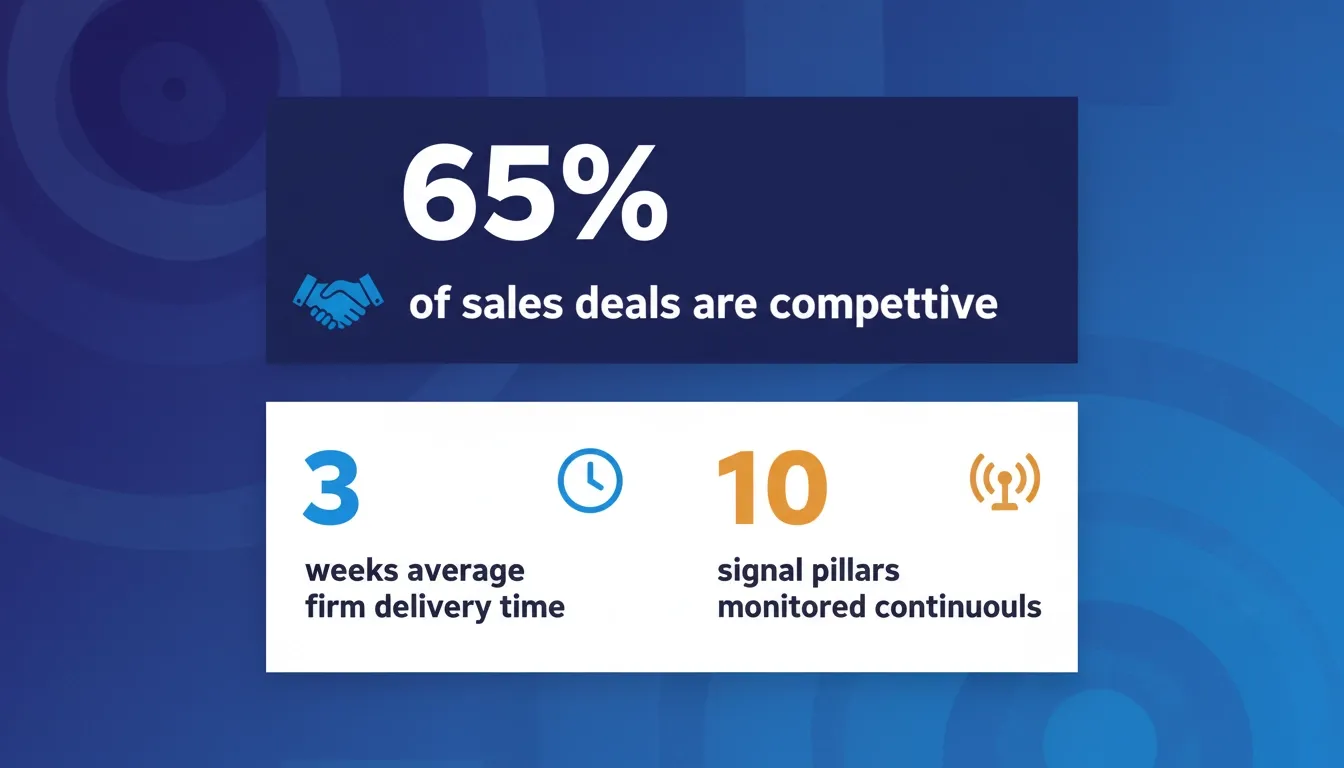 Key numbers that define the competitive intelligence gap
Why Do Separate Tools Always Leave a Gap?
The standard approach to competitive research looks like this: one tool tracks website changes, another pulls social media data, a third watches review platforms, and a fourth monitors ad campaigns. Each works in isolation. Together, they leave the team without a full picture of what competitors are actually doing.
The problem is not the individual tools; it is that traditional competitive intelligence tools operate in silos, so insights stay disconnected across platforms and create a fragmented view instead of one system that connects them.
When a competitor goes quiet on social media, drops pricing on a key plan, and posts six new enterprise sales roles in the same week, those three signals together point to one strategic shift. Seen separately by disconnected tools, they register as nothing.
Vibe coding tools face the same structural problem on the build side. They build apps from a natural language prompt and stop there. They do not read the competitive context, validate the market idea, or surface the signals that should shape the next build decision.
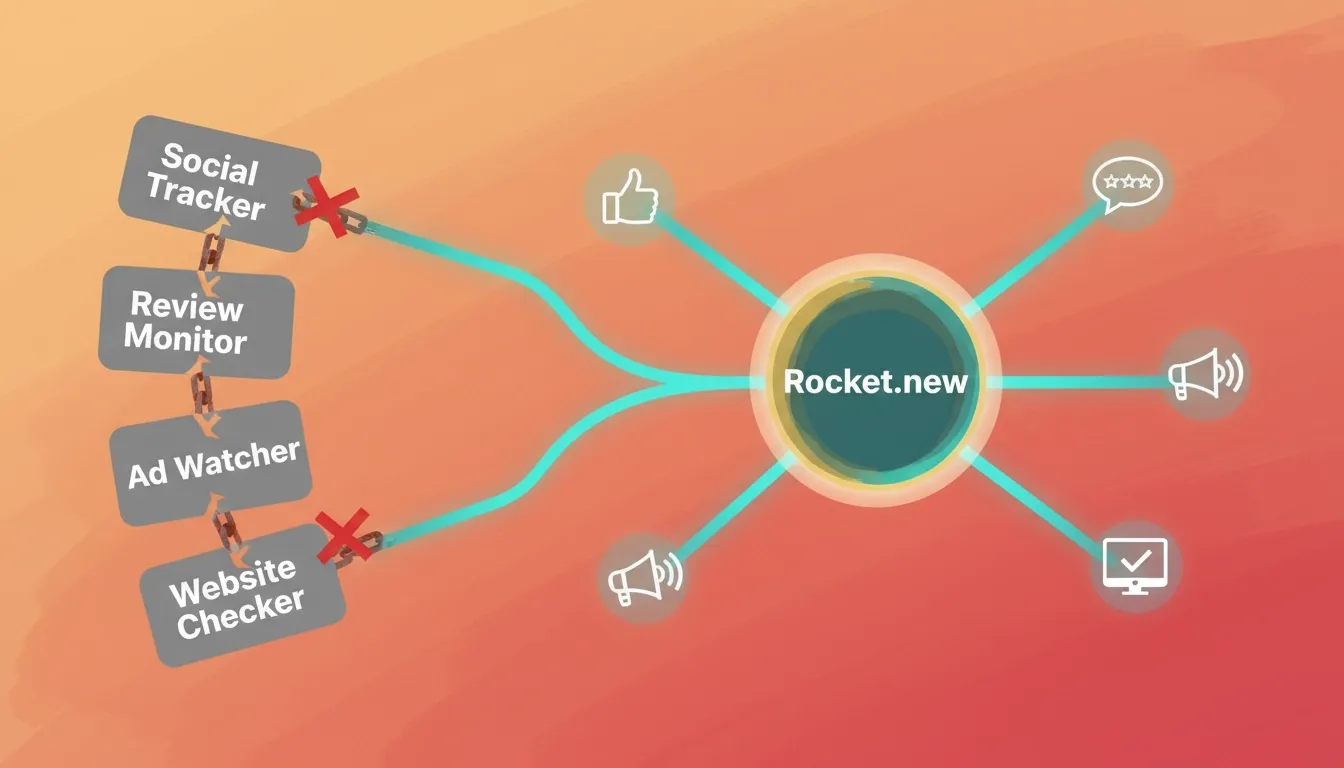 Fragmented tools vs. a unified competitive intelligence platform
What Happens When Signal Streams Stay Disconnected?
Disconnected signals do not just slow teams down. They create blind spots that cost real decisions. Individual data points mean very little in isolation; the cluster is what tells the story.
As Peter Mertens, Director of Market Strategy at Sprout Social, writes in a competitive intelligence analysis by Mention: “A piece of information like your competitor’s next office location might be meaningless individually, but when you aggregate it with other details, these disparate data points tell an important story.”
That story is what most teams never get to read, because their separate tools were never built to connect the dots, and the insights that matter most stay buried across platforms.
How Rocket Gives Teams a Live Competitive Picture on Day One
Rocket Intelligence is an interpretation layer, not an alerting system. Add a competitor by URL, and Rocket continuously monitors them across multiple sources within ten signal pillars, including website updates, job postings, social media, review sites, and ad campaigns.
Every morning, a structured brief lands before the first meeting of the day. Each brief contains three parts: a synthesized paragraph connecting everything that moved across surfaces, the specific observed signals and patterns, and a direct implication written in the context of your competitive position.
It reads signal clusters, not individual changes: when a competitor cuts pricing, goes quiet on social media, and opens enterprise sales roles in the same week, Rocket Intelligence connects those dots before your team asks the question. Across 180 countries, 1.5 million people use Rocket to close the distance between knowing and building.
Sales teams use daily briefs to get background for every account before a call. When intelligence is ready before the meeting, deals close faster. For product teams stitching together four separate tools to get half the picture, this is a game-changer.
What Signal Categories Does the Monitoring Cover?
Rocket Intelligence tracks competitor activity across ten pillars from a single competitive intelligence dashboard: website changes and pricing updates, social media posts and campaigns, news coverage, reviews from customers across G2 and Glassdoor, hiring signals and headcount shifts, ad campaign positioning, traffic patterns, product and technology moves, business and finance signals, and cross-pillar pattern detection.
The value is not in any single signal stream; it is in the interpretation layer that reads all ten at once. When pricing drops, social media volume spikes, and enterprise hiring accelerates together, the platform surfaces that as one signal cluster with a clear implication for your build and strategy. Actionable insights reach the team each morning, ranked by relevance.
How Does the Shared Context Layer Change the Way Teams Act?
This is where Rocket becomes more than a monitoring platform. Every task in Rocket starts from one shared context: the Solve research your team ran last week, the competitor signals from this morning’s brief, and the market shifts Intelligence surfaced yesterday. The handoff between thinking and building is not improved; it is eliminated.
Solve runs research on any business question and feeds that context directly into Build. Web apps, mobile apps, landing pages, and internal tools are all built from the same shared context layer. Instead of re-explaining the competitive picture to a build tool that has never seen it, the context is already loaded.
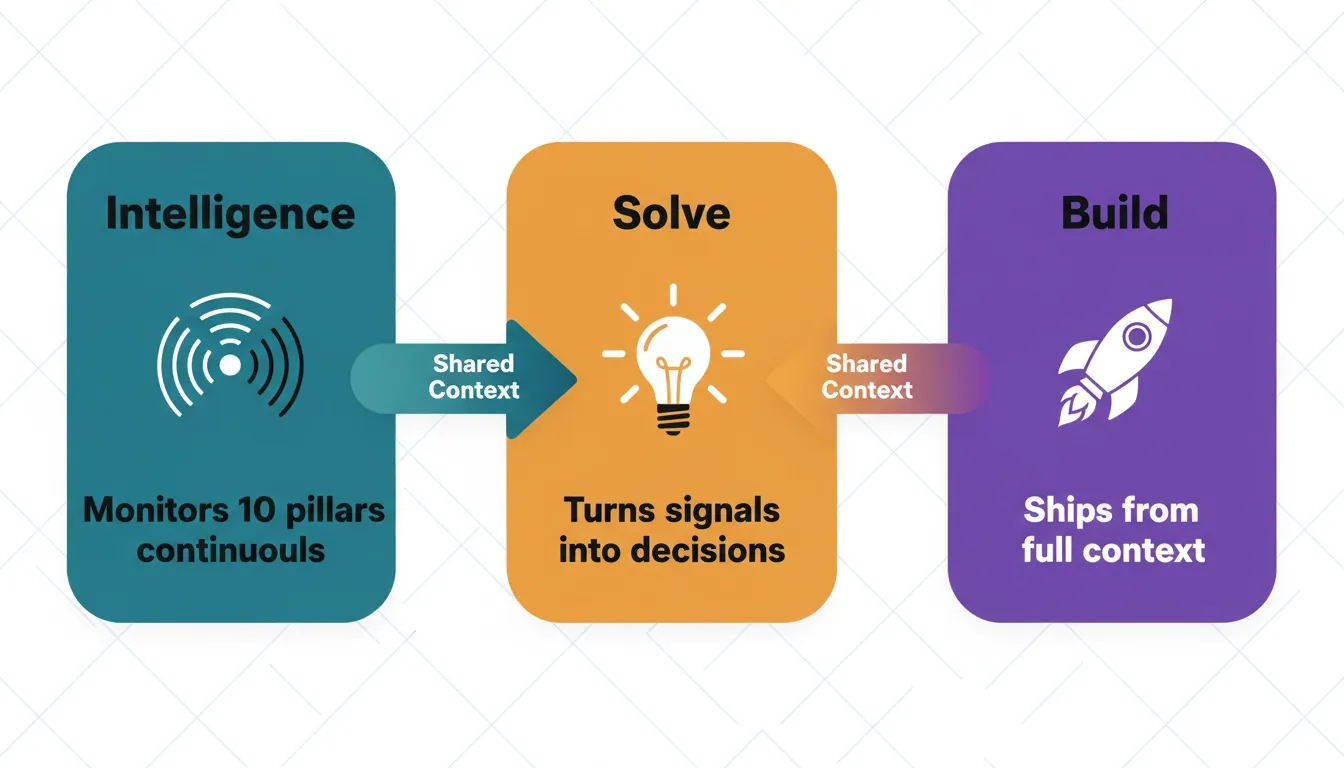 How Intelligence, Solve, and Build share one context layer
| Dimension | Traditional Approach | Rocket |
|---|---|---|
| Research | Static report, delivered weeks later | Continuous monitoring, daily briefs |
| Context | Re-explained per tool, every time | One shared context across every task |
| Build | Separate from research | Starts directly from the competitive context |
| Team alignment | Each function works in silos | One platform, unified system |
| Speed to insight | Two to three weeks | Day one |
App building on Rocket starts from a natural language prompt. Describe the app, and Rocket’s code generation creates web apps, mobile apps, and landing pages from the context already loaded. Solo founders use the free tier to validate an idea fast. Growing teams build toward custom domains, more value from every build, from the first day.
The Competitive Picture Your Team Has Been Missing
The reason a research firm takes three weeks is not the people. It is the process: static documents built once, shared once, then forgotten. Rocket builds a living system instead, one platform where Intelligence monitors competitors, Solve turns signals into decisions, and Build turns decisions into products.
From that point, the team builds with full context every time. The competitive picture your team needs is not hidden. It just needs one shared context to grow from. That is vibe solutioning in practice: the thinking and the building in the same place, from day one.
If your team is still waiting weeks for a competitive picture that arrives stale, Rocket.new is built to solve exactly that. Intelligence, Solve, and Build work from one shared context, so the research your team needs is ready before the first sprint starts. Sign up for free and get your competitive picture on day one.
Table of contents
- -What Does Your Team Really Need from Market Research?
- -Why Do Separate Tools Always Leave a Gap?
- -What Happens When Signal Streams Stay Disconnected?
- -How Rocket Gives Teams a Live Competitive Picture on Day One
- -What Signal Categories Does the Monitoring Cover?
- -How Does the Shared Context Layer Change the Way Teams Act?
- -The Competitive Picture Your Team Has Been Missing