
Lead intelligence transforms raw contact lists into prioritized, action-ready pipeline by layering enriched data, behavioral signals, and intent tracking onto basic prospect records. Sales teams using it consistently reach the right accounts at the right time, shortening cycles and improving qualified lead ratios.
Why do some sales emails get ignored while others start conversations immediately?
The difference is usually context. Lead intelligence software turns raw contact lists into prioritized, action-ready pipeline by adding enriched data, behavioral signals, and intent tracking to basic prospect records.
According to Salesforce's 2026 State of Sales report, 73% of B2B buyers actively avoid sellers who send irrelevant outreach. Irrelevant outreach is almost always a data problem. You do not know enough about the prospect to say something that lands.
That is what separates a generic cold email from a well-timed, relevant one, and lead intelligence tools make that difference possible at scale.
A name, an email, and a company name is not a lead. It is a placeholder. Real pipeline starts when you have enough context to answer the question your sales teams are always asking: is this person worth reaching out to today, or not yet?
-
Lead intelligence data is the enriched layer sitting on top of raw contact records. It tells you whether a contact is a decision maker for this kind of purchase, whether the account is growing or contracting, and whether someone at that company has been researching topics related to your product this week.
-
A good lead intelligence platform does not just tell you who is in your database. It tells you which accounts are ready to buy, which contacts are reachable right now, and which records need a refresh before anyone picks up the phone.
-
Lead intelligence tools collect and surface that context automatically, removing the manual research that slows sales reps down before every call.
-
The difference between a flat contact list and a lead intelligence solution is action-readiness.
Organizations that rely heavily on manual research to fill these gaps pay for it in slower sales cycles and wasted rep time. The ones using sales intelligence software get those answers the moment a new lead enters the system.
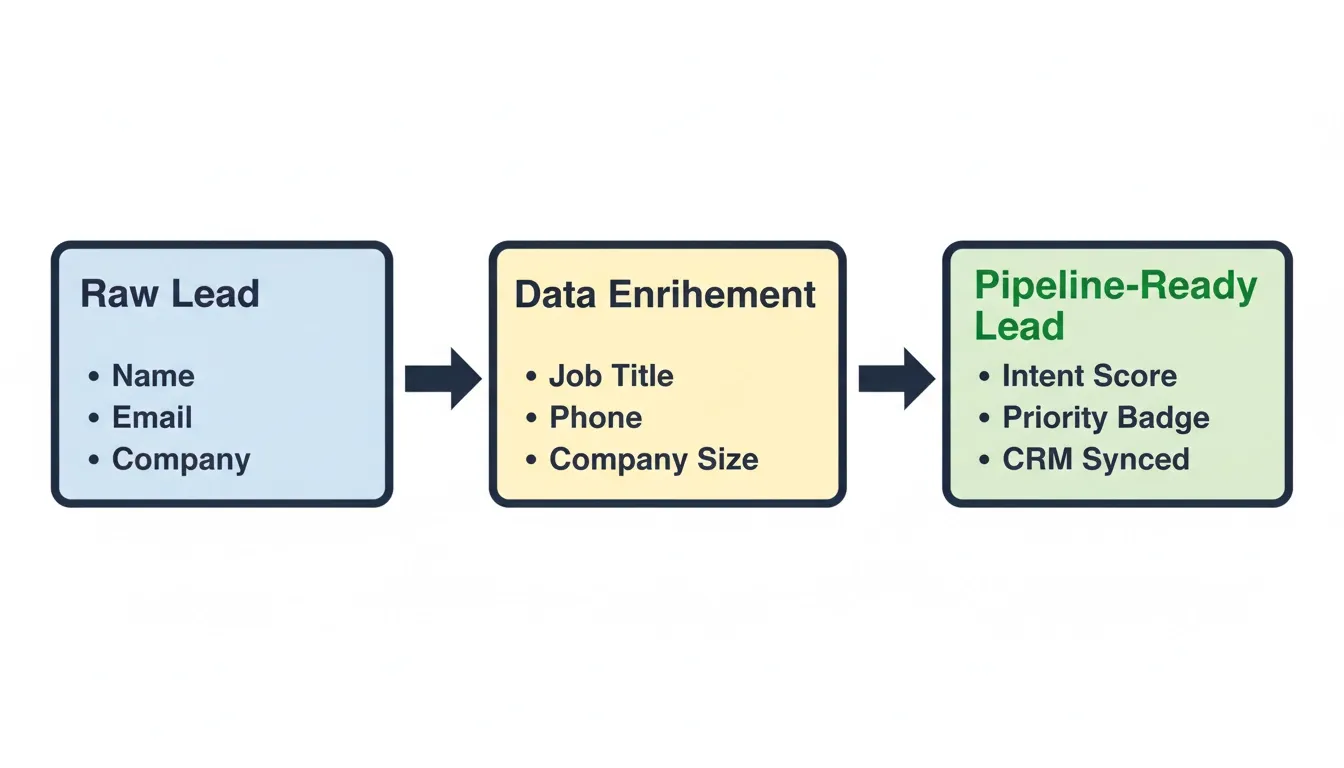
Data Points That Matter for Sales Teams
Not all contact fields carry equal weight, and not all intent signals fire at the same stage of the buyer journey. Knowing which data points separate a warm account from a cold one is what makes lead intelligence data practical rather than theoretical.
Firmographic and Contact Details
This is the foundation layer. Before any scoring or prioritization happens, your records need the basic facts to be correct and current.
-
Job title and seniority: reaching the wrong person at the right company costs a full sales cycle
-
Company size and revenue band: filters low-fit accounts before reps spend time on them
-
Verified emails: outdated emails inflate bounce rates and damage email deliverability over time
-
Direct dials and phone numbers: reps with verified contact details connect at far higher rates than those working through main switchboards
-
LinkedIn profiles: confirms active employment and opens a secondary outreach channel in one place
-
Professional email addresses: confirms the contact is still active at the account before anyone reaches out
Verified contact data at this level gets your team to actual decision makers rather than discovering, after three follow-ups, that the person left the company six months ago. Good lead intelligence tools pull contact details from multiple verified sources and refresh them on a trigger basis, so records stay current without manual updates.
Behavioral and Intent Signals
Firmographic data tells you who someone is. Behavioral signals tell you what they are doing right now.
-
Intent data comes from tracking where your target accounts spend time online. An account researching procurement software three times in one week is sending a clear buying signal.
-
Intent signals from Google Analytics, third-party intent providers, and your own web activity logs help your sales teams separate cold accounts from high intent accounts fast.
-
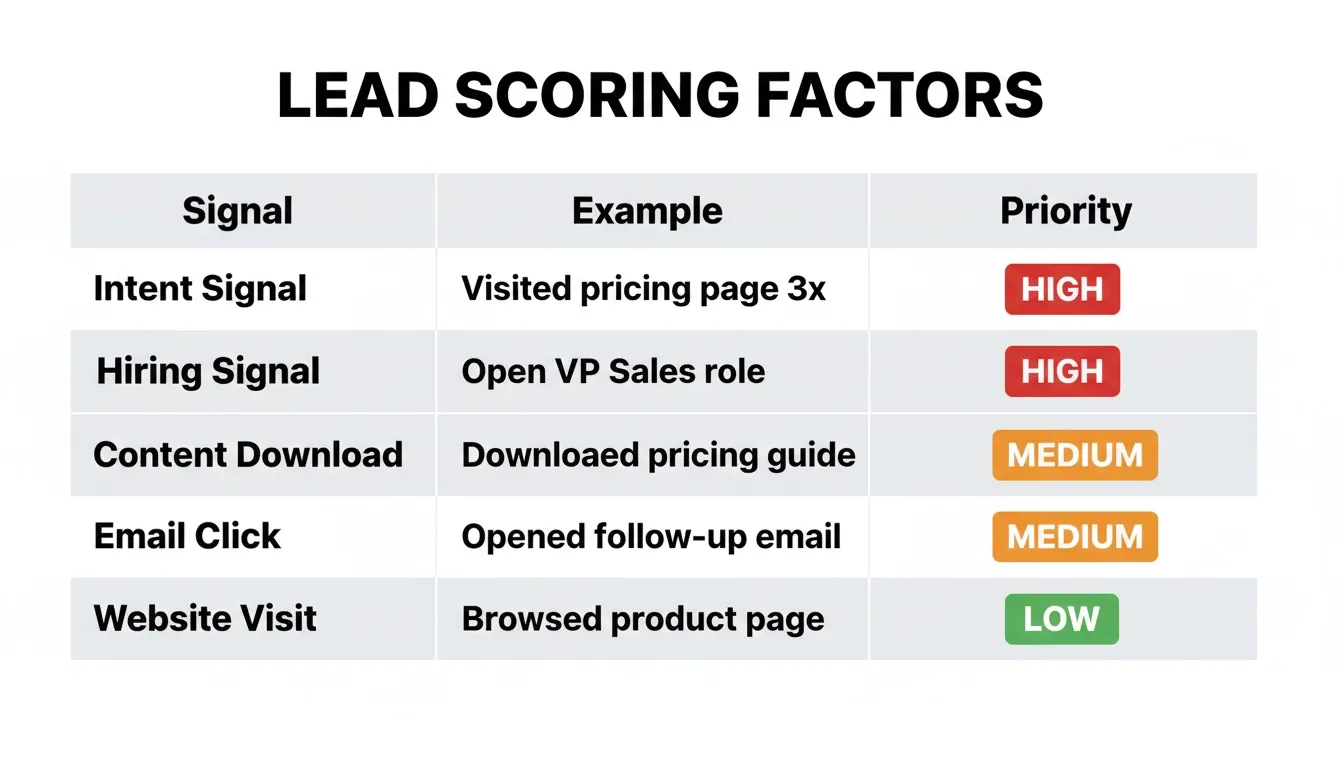
Page visits, content downloads, email click activity, and hiring signals all count as behavioral insights worth tracking.
-
Hiring activity is particularly telling: an open VP of Sales or Head of Revenue role often predicts a tooling decision within the quarter.
When sales engagement tools surface these behavioral insights in real time, reps can reach out at the exact moment a prospect is already thinking about the problem they solve. That timing shift alone changes conversion rates.
The Problem With Incomplete Lead Data
Bad data costs more than most sales teams ever track. Missing fields mean your CRM systems hold records your reps cannot act on confidently. Contact details decay fast — B2B data degrades at roughly 20 to 30% per year due to job changes, promotions, and company restructures.
-
Missing details like outdated emails and unverified phone numbers are not a minor inconvenience. Data accuracy is a revenue issue.
-
Reps waste time on manual research, send emails that bounce, and skip accounts that would have converted with complete records.
-
Bad data actively reduces campaign performance, as bounce rates climb and sender reputation takes damage over time.
"I've watched B2B sales teams waste entire quarters with bad contact data. One sales manager told me his team spent 12 hours weekly just verifying email addresses. That's 624 hours annually." — Mary Jalilibaleh, CompanyURLFinder.com
This is where lead intelligence software earns its place. A lead intelligence platform runs data enrichment and verification in the background, keeping contact data current without anyone spending their mornings in spreadsheets. When data quality slips, campaign performance follows.
How Does Sales Intelligence Software Turn Data Into Decisions?
The gap between having data and acting on it is where most sales teams stall. You might have a lead intelligence platform full of verified contacts, behavioral signals, and intent data, but if that information is not shaping what your reps do each morning, it is not doing its job.
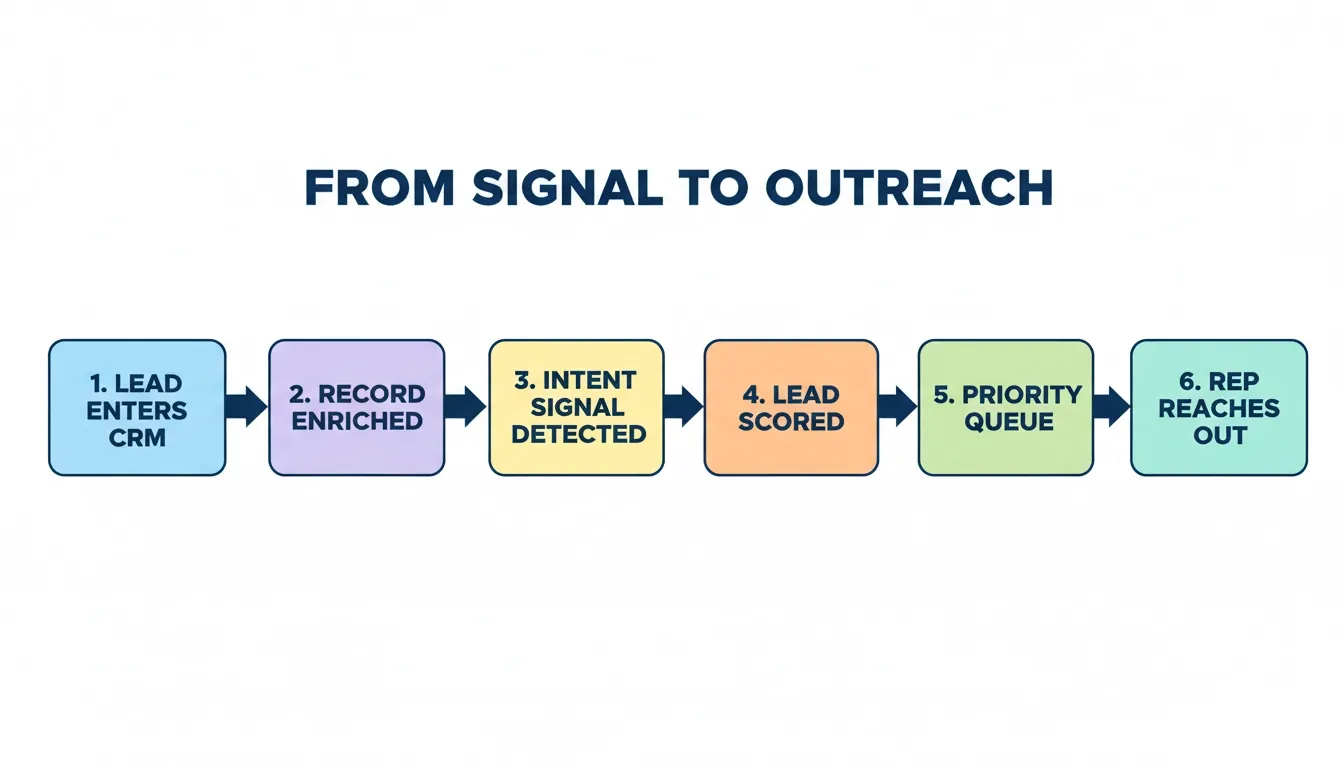
Here is how a well-configured lead intelligence solution converts raw signals into actual pipeline:
Data enrichment fills gaps the moment a lead enters your system. Then the lead scoring model layers intent signals on top to answer one question: should a rep reach out today, or not yet?
-
Marketing automation runs lower-score records through nurture sequences in the background until a new signal lifts their score.
-
Marketing teams and sales teams stop debating which leads are ready. The data makes that call.
-
Lead intelligence systems that connect enrichment, scoring, and CRM sync into a single workflow remove the combining automation problem that hits teams running three or four disconnected tools.
HubSpot's 2026 State of Marketing report found that 37% of marketers say leads now arrive more informed thanks to AI-assisted research. Your lead intelligence tools need to be working just as hard on your side of the conversation, and faster. When everything connects, your sales cycle shortens.
Turning Signals Into Pipeline Action
Understanding the mechanics is one thing. Putting signals to work in real outbound campaigns and account-based marketing programs is where the gains show up in actual revenue numbers.
Lead Scoring and Prioritization
A lead scoring model assigns every prospect a weight based on fit and activity. Lead prioritization means your reps work the highest-scoring accounts first, without manually sorting a flat list each morning.
| Scoring Factor | Signal Type | Weight |
|---|---|---|
| Firmographic fit | Company size, industry, job title match to ICP | High |
| Recency of intent signals | Signal from yesterday vs. three months ago | Very High |
| Content engagement depth | Pricing guide download vs. blog skim | High |
| CRM activity | Prior conversations, meeting notes, follow-ups | Medium |
| Hiring signals | Open VP Sales or revenue leadership role | High |
| Website behavior | Multiple visits to product or pricing pages | High |
This kind of lead prioritization is why sales teams using lead intelligence software consistently report higher qualified leads ratios and better sales performance than those working from static lists. It removes the guesswork from the first decision a rep makes each morning: who do I contact first?
Running Smarter Outbound Campaigns
Once you know which accounts are showing buying signals, outbound campaigns get sharper. Cold outreach becomes targeted outreach. Instead of sending the same message to 500 names, your outbound sales teams work a curated list of target accounts actively signaling interest.
-
Account-based marketing also becomes manageable at scale with the right lead intelligence data.
-
Identify high-potential accounts with buying intent, build a short list of decision makers inside each, and verify their contact details before you sequence outreach through sales engagement tools.
-
The result is outbound campaigns that feel relevant to the person receiving them, not like bulk mail.
Consistent communication across a short list of high-signal accounts beats high-volume spray-and-pray almost every time. Your marketing campaigns get tighter targeting precision, your reps get better-quality conversations, and campaign performance data starts giving you something worth acting on.
Syncing Lead Data With Your CRM
None of this works if the intelligence stays in a silo. The value of a lead intelligence solution depends entirely on it flowing into the tools your team uses every day.
-
When enriched contact data, lead scores, and intent signals sync automatically into your CRM systems, reps do not need to leave their workflow to get context.
-
They see updated lead data, verified contact records, and priority flags right alongside account history.
-
A lead tracking software layer handles this in the background, removing the manual work that slows teams down.
Sales reps who get full context in their CRM spend less time on manual research and more time on meaningful conversations. That is the real payoff of a well-connected lead intelligence solution.
How Rocket Keeps Your Pipeline Ahead
Most teams assume they have a lead generation problem. In most cases, it is a lead intelligence data problem. You have enough leads. What you are missing is the context layer that tells you which ones deserve attention right now and which ones need more time.
Rocket.new's Intelligence feature is built for exactly this. It watches companies on your target list continuously, tracking nine categories of signals in parallel: product changes, pricing shifts, hiring activity, website updates, social signals, news mentions, and competitive movements. The moment a tracked account moves, Rocket connects that signal to your context and delivers the insight framed for your specific role.
What separates Rocket from standard lead intelligence tools:
-
No tool switching. Most intelligence tools require separate platforms for enrichment, scoring, and CRM sync. Rocket's Intelligence feature connects all three layers in one unified system, with shared context that carries through every step.
-
Continuous real-time signal tracking, not weekly batch refreshes. Legacy lead intelligence software typically updates records on weekly or monthly cycles. By the time a rep acts, the buying signal may already be cold.
-
Intel framed for your role. A raw data feed is not actionable. Rocket tells your team what changed at a target account, connects it to related signals across your watch list, and frames the insight around what it means for your market, making it the best lead intelligence software option for teams that need to act fast.
-
Strategy and intelligence in one system. When a competitor shifts pricing or messaging, you need to decide what to do. Rocket Solve uses the same shared context to generate a structured GTM recommendation, so your sales teams can act fast without losing the thread.
-
Automated list building and hiring signal detection. An account opening a VP of Revenue role often has a tooling decision coming within the quarter. Rocket flags this automatically, giving your sales reps early visibility into high-potential accounts before the competition even knows the budget exists.
Where point solutions fall short:
The best lead intelligence software options on the market tend to be strong on one dimension and weak on others. Apollo gives you a large contact database but does not watch your competitors or connect enrichment to strategic signals. ZoomInfo enriches contact records with strong data accuracy but does not generate a GTM response when the market shifts. Cognism provides verified data with solid compliance credentials but does not give you a lead intelligence platform that spans enrichment, scoring, and strategy in one place.
Rocket operates as a competitive advantage that compounds over time. The more context you feed it, the sharper the signal layer gets. Your sales teams stop reacting to what already happened and start anticipating the moves that matter most.
What Should Sales Teams Look for in an Intelligence Tool?
Not every best lead intelligence software option fits every team. Evaluation criteria shift based on team size, existing stack, and whether you primarily run inbound, outbound, or account-based marketing programs.
McKinsey's B2B Pulse research found that 72% of B2B companies selling through seven or more channels grew their market share, which tells you that coverage and connectivity matter as much as data depth alone.
Run this checklist before choosing lead intelligence tools:
| Capability | Why It Matters | What to Check |
|---|---|---|
| Real-time data enrichment | Stale records waste rep time and reduce data accuracy | Does it update on trigger, or only on a monthly batch? |
| Intent data coverage | Third-party behavioral signals widen your coverage | How many intent data networks does it pull from? |
| Lead scoring | Surfaces high-potential accounts without manual triage | Can you customize it to your ICP? |
| CRM connectivity | Context only helps if it lives in your workflow | Does it connect natively to your CRM systems? |
| Contact verification | Verified contact data and verified contacts reduce bounce rates | What is the verification refresh rate? |
| Setup complexity | A steep learning curve delays time-to-value | Can your team get started in under a day? |
| Pricing transparency | Data quality does not require enterprise pricing | Is it per seat, per record, or flat rate? |
The best lead intelligence solutions let your team enrich records, score leads, and push context to your CRM quickly, without weeks of setup. An intuitive interface, clean lead lists, and a direct path from signal to action are what separate lead intelligence tools that deliver from the ones that only look good in a product demo. The right tool is the one your reps actually open every morning.
From Raw Leads to Revenue: Your Pipeline Intelligence Advantage
Sales teams that act on verified contacts, behavioral signals, and real-time context consistently outperform those working from static lists. The difference is not effort. It is the quality of information behind each decision, and whether your tools surface that context before the call or after it.
The technology to build this kind of intelligence layer is more accessible than it has ever been. Pick a lead intelligence platform that connects enrichment, scoring, and CRM sync in one place, and your reps will spend more time on meaningful conversations and less time researching the basics before every call.
Ready to turn your raw leads into a prioritized, conversion-ready pipeline? Start your free trial on Rocket no credit card required.
Table of contents
- -Data Points That Matter for Sales Teams
- -Firmographic and Contact Details
- -Behavioral and Intent Signals
- -The Problem With Incomplete Lead Data
- -How Does Sales Intelligence Software Turn Data Into Decisions?
- -Turning Signals Into Pipeline Action
- -Lead Scoring and Prioritization
- -Running Smarter Outbound Campaigns
- -Syncing Lead Data With Your CRM
- -How Rocket Keeps Your Pipeline Ahead
- -What Should Sales Teams Look for in an Intelligence Tool?
- -From Raw Leads to Revenue: Your Pipeline Intelligence Advantage