Want a faster way to create a modern fintech dashboard? Learn how Rocket.new converts prompts into production apps, using AI tools to visualize data, monitor trends, and speed development efficiently.
Curious about how to quickly build a modern fintech dashboard?
A fintech dashboard can show lots of financial data, charts, and trends without needing to hand-code every line. Rocket.new can help build production-ready applications from natural-language prompts in minutes, not months.
Recent estimates show AI-driven tools are reshaping how apps are built, speeding up development by large margins.
According to Gartner, 75% of developers will use AI-assisted tools by 2026 to analyze trends and create features faster than traditional coding.
So, let’s look at how to make a real-looking dashboard that helps you see trends, monitor financial data, and even predict future events just by describing what you want.
What is a Fintech Dashboard and Why It Matters?
Let's see the fintech dashboard and why it matters for tracking trends and performance.
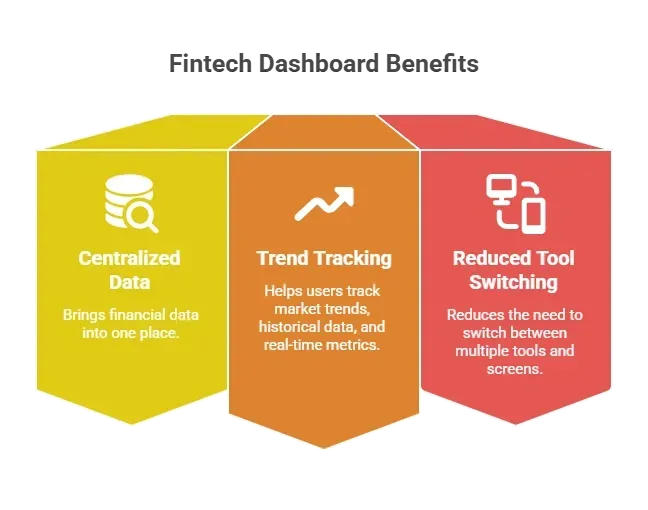
At its core, a fintech dashboard simplifies how financial information is viewed and analyzed. It allows teams to analyze trends, identify patterns, and monitor market conditions from a single interface.
Decision-makers can quickly spot upward and downward trends, as well as short-term fluctuations, across financial markets. This makes it easier to identify areas where performance improves or slows down.
- Real time monitoring of stock prices and digital payments
- Clear visibility into customer behavior and risk indicators
- Easier comparison of past performance with current market signals
This comprehensive view helps analysts and business leaders respond faster. It also supports identifying trends driven by external factors that affect overall business outcomes.
A fintech dashboard turns scattered numbers into clarity. With trends clearly visible and data easy to read, teams can make decisions with more confidence and less guesswork.
Why Real-Time Data Matters for Financial Systems?
In modern financial systems, timing is everything.
Real-time data ensures teams and decision-makers see the freshest information, enabling faster responses, smarter strategies, and safer operations.
Key Benefits of Real-Time Data:
- Instant Market Insights: Track prices and trends as they change within seconds.
- Immediate Customer Actions: Monitor activity in real time, not after the fact.
- Predictive Advantage: Detect patterns and adjust strategies using current plus historical data.
- Enhanced Security: Spot cybersecurity threats, unusual activity, and potential data breaches early.
- Proactive Risk Management: Minimize blind spots and act before small issues escalate.
Real-time data keeps financial systems responsive, secure, and efficient. By combining live updates with historical insights, fintech teams can make smarter, faster decisions and stay ahead of risks.
Core Features Every Dashboard Should Include
Here’s a quick look at what you need:
| Feature | Why It Matters |
|---|---|
| Real Time Metrics | For current conditions and alerts |
| Trend Analysis | To forecast price or customer behavior changes |
| Visual Charts | Helps identify trends and patterns at a glance |
| Financial Statements | For understanding cash flows and statements |
| Custom Filters | So users can focus on what matters most |
| Notification Alerts | To warn of anomalies or risks |
These basics help teams analyze data and prepare for future events, such as sudden market swings or regulatory changes.
Rocket.new: A Fast Way to Build Dashboards
Rocket.new is a platform that generates full, production-ready apps from natural language instructions.
Just describe the kind of dashboards or tools you want, and the system builds much of the structure for you. It can even generate backend code, authentication, APIs, and UI without writing a single line of traditional code.
In simple terms, Rocket.new translates plain language into working web and mobile apps on frameworks like React or Flutter. The idea is to skip repetitive tasks and focus on what matters: your features and data flows.
Top Features
Here are the most useful parts for building a fintech dashboard:
- Prompt to App Creation: Builds apps directly from single prompts
- Figma Import: Converts design files into live, editable layouts
- AI-Powered Backend: Automatically handles logic, data, and workflows
- Custom Domain Support: Publishes projects with a branded domain
- Code Export: Allows developers to extend or customize later
- Live Preview: Shows instant updates while editing
- Reusable Components: Speeds up building with ready-to-use elements
- Command-based actions: Use / and @ to run actions and quickly scope edits.
Rocket.new takes your description and turns it into code you can actually run, edit, or deploy instantly.
How to Plan Your Fintech Dashboard?
The basic planning steps are required before building a fintech dashboard to avoid missing important details later.
- Define the Goal: What trends or metrics matter most? Stocks? Loans? Payments?
- Choose Data Sources: Will you connect to real APIs or use test data?
- User Roles: Who sees what? Admins? Analysts? Customers?
- Security Rules: Think encryption, sensitive data access, regulatory compliance, and protection against cybersecurity risks.
- Interactive Views: What charts do you want? Time series? Pie? Tables?
- Alerts and Predictions: Do you want to predict future events like price swings or potential risks?
Good planning saves time later. When goals, data, and access rules are defined early, the dashboard becomes easier to build, safer to manage, and simpler to scale.
Step-by-Step: Build a Dashboard With Rocket.new
This section outlines how to move from an idea to a working dashboard using Rocket.new without overcomplicating the process.
Step 1: Write Your Prompt
Write something like:
“Build a fintech dashboard that shows real time prices, trend analysis charts, recent financial statements, and market trends. Include alerts for upward trends, downward trends, and short term fluctuations. Connect to our data API and show summary panels.”
Pretty direct stuff. Rocket.new will parse that into features.
Step 2: Preview and Update
The platform will generate UI and backend. After that, preview it. Ask for changes in plain language:
“Add a line chart for historical data here.” “Show customer behaviour trends on top.”
Rocket.new takes those and updates the app.
Step 3: Hook Up Real Data
Connect APIs or data streams to ensure the dashboard displays real-time metrics. You’ll have visuals that show trend analysis and insight panels that help predict future events.
Step 4: Test with Users
Get friends, teammates, or early customers to poke around. Ask them which trends they want to see more clearly, or whether any areas feel slow or confusing.
Step 5: Deploy
When ready, push the dashboard live. Rocket.new handles deployment details so your data views go public or internal quickly.
This step-by-step flow keeps things simple. Clear prompts, quick previews, and early feedback help you move faster while building a dashboard that actually works in real situations.
Real Community Insight
Here’s a real snippet from Reddit where builders share their thoughts on Rocket.new:
"So I’ve been experimenting with rocket.new recently, and I think it’s worth sharing how it works and my experience with it."
This shows that people doing real builds find the idea useful, though they remind you that AI still needs clear input and refinement.
Common Challenges and How to Fix Them
Even the best tools have trade-offs. Knowing the common pain points early helps you avoid wasted credits, messy outputs, and security risks, especially when building fintech dashboards.
Key Challenges & Fixes:
- High token usage: Break tasks into smaller prompts and build features iteratively instead of generating everything at once.
- Rough or generic templates: Use clear, specific prompts and refine layouts step by step rather than relying on default outputs.
- Vague AI results: Precise instructions work better than broad requests. They describe logic, data flow, and UI expectations clearly.
- Unoptimized dashboards: Use tools like Google Analytics or server logs to track user behaviour and fine-tune the front end after launch.
- Security and data risks: Implement strong access control, encryption, and monitoring from day one to protect sensitive financial data.
With better planning and tighter prompts, most of these challenges are easy to manage. A thoughtful approach not only saves time and tokens but also delivers a safer, more reliable fintech product.
Creating a Fintech Dashboard With Rocket.new
Building a fintech dashboard used to be slow and resource-heavy, requiring months of work and multiple developers. Rocket.new solves this by letting you describe your needs in plain language, quickly generating a functional, data-rich dashboard without the usual hassle.
The main takeaway is that you can now launch a live, insightful dashboard fast, monitor market trends and sensitive data, and focus on analysis rather than coding. With Rocket.new, decision-makers get clear, real-time insights that help them spot upward or downward trends effortlessly.
Table of contents
- -What is a Fintech Dashboard and Why It Matters?
- -Why Real-Time Data Matters for Financial Systems?
- -Core Features Every Dashboard Should Include
- -Rocket.new: A Fast Way to Build Dashboards
- -Top Features
- -How to Plan Your Fintech Dashboard?
- -Step-by-Step: Build a Dashboard With Rocket.new
- -Step 1: Write Your Prompt
- -Step 2: Preview and Update
- -Step 3: Hook Up Real Data
- -Step 4: Test with Users
- -Step 5: Deploy
- -Real Community Insight
- -Common Challenges and How to Fix Them
- -Creating a Fintech Dashboard With Rocket.new